

Temnothorax anaphalantus
- Scientific Name
- Temnothorax anaphalantus
- Tribe
- Crematogastrini
- Subfamily
- Myrmicinae
- Author
- Snelling <i>et al.</i>, 2014
- Distribution
- Found in 2 countries
Temnothorax anaphalantus Overview
Temnothorax anaphalantus is an ant species of the genus Temnothorax. It is primarily documented in 2 countries , including Mexico, United States of America. Detailed taxonomic data and occurrence records can be further explored via authoritative databases such as AntWeb or the Global Biodiversity Information Facility (GBIF).
Temnothorax anaphalantus
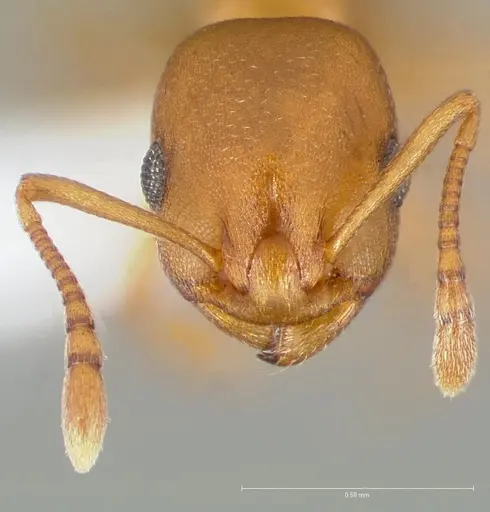
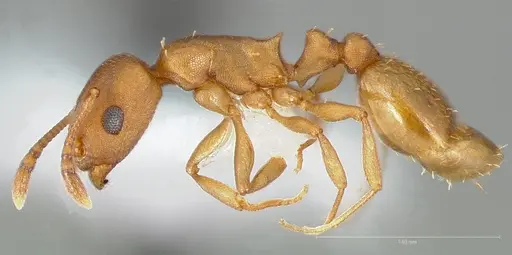
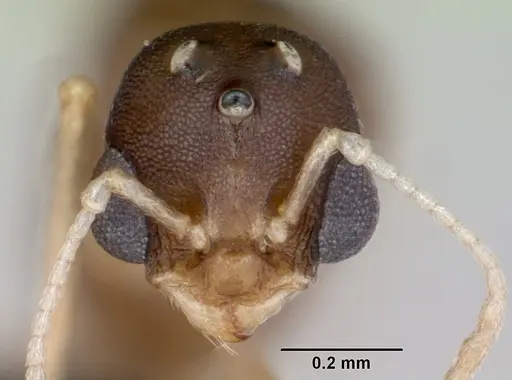
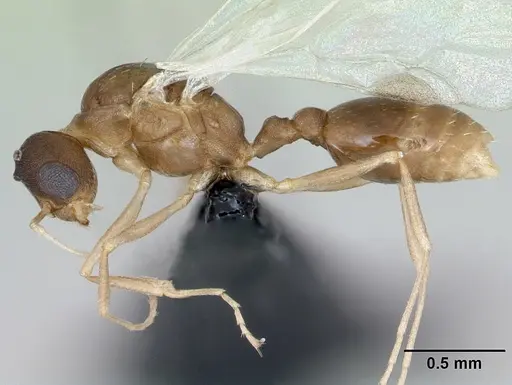
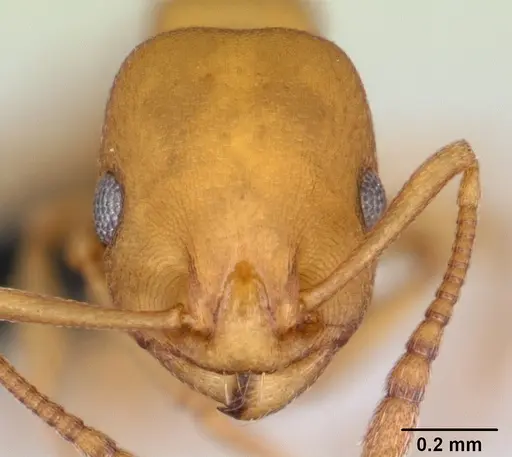
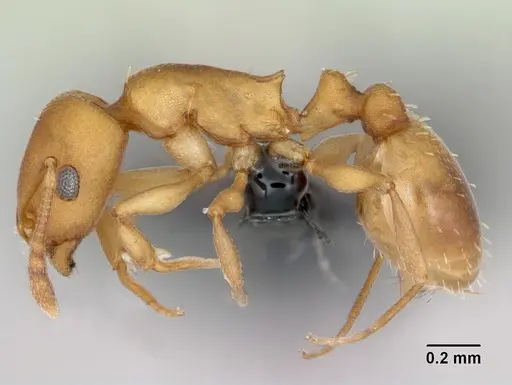
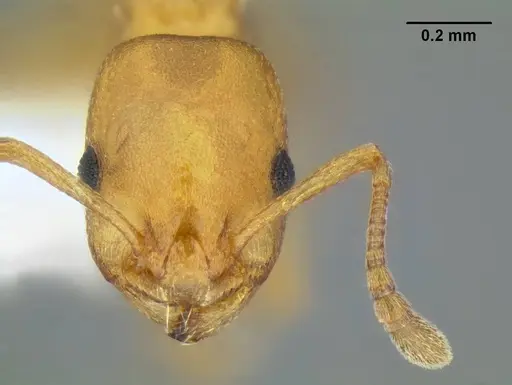
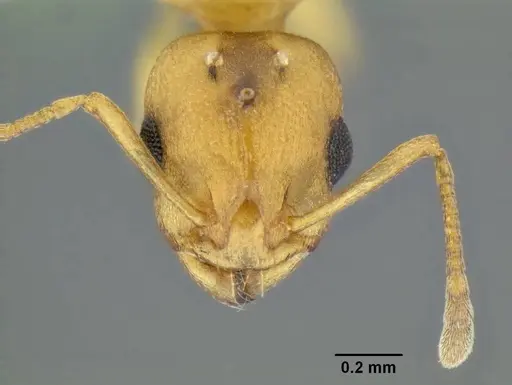
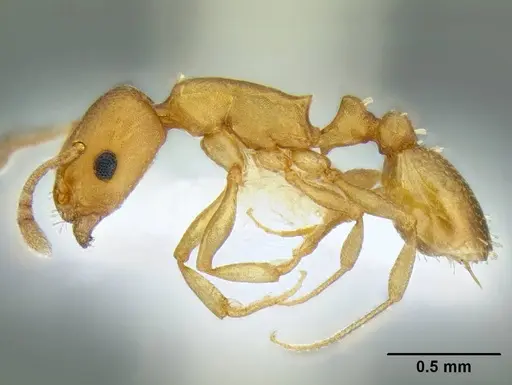
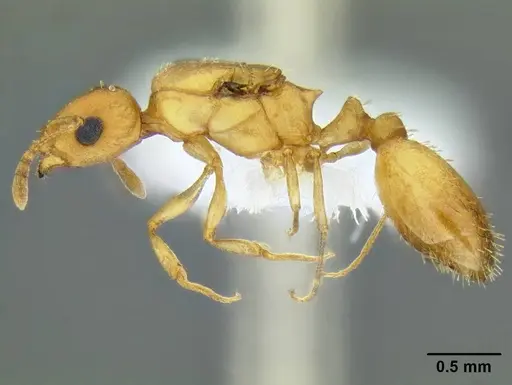
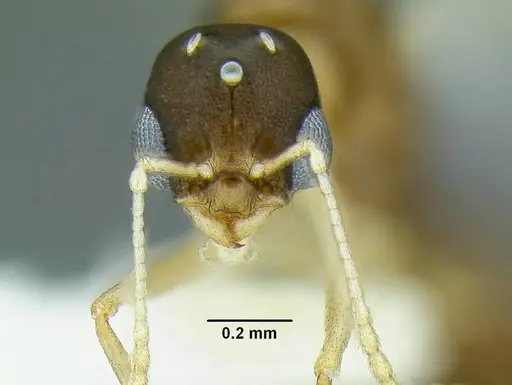
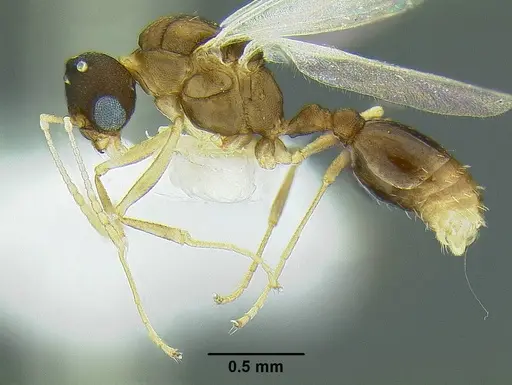
Temnothorax anaphalantus is a tiny ant species native to southern California and Baja California, Mexico. Workers measure just 2-3mm in total body length, with a distinctive yellowish to light brown coloration and a dull, reticulate (net-like) texture on the head and mesosoma [1]. This species is notable for its reduced pilosity, unlike most Temnothorax, it lacks erect setae on the frons and vertex, giving it a nearly bald appearance that inspired its scientific name 'anaphalantus' meaning 'with a bald forehead' [1]. The propodeal spines are thick at the base and nearly as long as the distance between their bases [1].
This species was only formally described in 2014 and remains one of the least studied North American ants. All known specimens come from oak grassland, chaparral, and riparian areas in the mountains of southern California [1][2]. The single documented nest was collected from dead wood in montane chaparral, suggesting this species nests in pre-existing cavities rather than excavating soil [1].
Quick Summary
- Difficulty: Unknown, likely Easy to Medium based on genus typical behavior
- Origin & Habitat: Southern California (Los Angeles, Orange, San Diego, San Bernardino counties) and Baja California, Mexico. Found in oak grassland with coastal scrub and riparian areas, chaparral, and cottonwood riparian zones [1][2].
- Colony Type: Unconfirmed, likely single-queen (monogyne) colonies typical of the genus
- Size & Growth:
- Queen: Approximately 3-4mm (WL 1.18mm) [1], estimated from limited measurements
- Worker: 2-3mm (HL 0.596-0.670mm, WL 0.662-0.746mm) [1]
- Colony: Unknown, likely under 500 workers typical for small Temnothorax
- Growth: Unknown, likely moderate like related species
- Development: Estimated 6-10 weeks at optimal temperature based on genus patterns (Direct development data unavailable for this species, estimates based on typical Temnothorax development)
- Antkeeping:
- Temperature: Aim for room temperature in the low 20s°C (around 20-24°C). No specific thermal studies exist for this species, but related California Temnothorax species thrive at typical indoor temperatures [3].
- Humidity: Keep nest substrate moderately moist but not waterlogged. In nature they inhabit dead wood in chaparral areas, dry summers with occasional moisture from coastal fog and riparian zones. Provide a moisture gradient so ants can choose their preferred conditions.
- Diapause: Likely yes, most California Temnothorax species require a winter rest period. Provide 2-3 months at 10-15°C during winter months [3].
- Nesting: Natural nesting occurs in dead wood, twigs, branches, or under bark in chaparral habitats [1]. In captivity, a small Y-tong (AAC) nest or test tube setup with tight chambers scaled to their tiny size works well. Avoid large open spaces.
- Behavior: Temperament is typical of the genus, generally peaceful and non-aggressive. Workers are small and slow-moving. They likely use tandem-running recruitment to guide nestmates to food sources, as documented in related Temnothorax species [3]. Escape risk is moderate due to their tiny size, use standard barriers and ensure any connections between outworld and nest are snug.
- Common Issues: Very limited captive care information exists, this species has never been kept in captivity by hobbyists, Tiny size makes escape prevention important, use fine mesh and tight-fitting lids, Wild-caught colonies may carry parasites or pathogens since the species has never been studied in captivity, Growth rate is unknown, which may frustrate keepers expecting quick development, Single known nest sample means we lack data on typical colony size and behavior
Discovery and Description
Temnothorax anaphalantus was only formally described in 2014 by Snelling, Borowiec, and Prebus, making it one of the newest ant species recognized in North America [1]. The species name comes from Greek 'anaphalantos' meaning 'with a bald forehead, ' referring to the most distinctive feature that sets it apart from other western Temnothorax, the complete absence of erect setae on the frons and vertex [1]. This reduced pilosity, combined with the dull reticulate sculpture on the head and mesosoma and the thick propodeal spines, makes this species easily distinguishable from related species in the region [1].
The type locality is Baldy Road in Los Angeles County, California, at an elevation around the San Gabriel Mountains [1]. Only a handful of specimens have ever been collected, all from southern California and Baja California, Mexico [2]. This makes T. anaphalantus one of the rarest and least-studied ants in the United States.
Natural History and Habitat
What we know about this species comes from just a handful of specimens collected in the early 1990s and early 2000s. Most specimens came from pitfall traps in oak grassland areas that also included coastal scrub and riparian vegetation [1]. One nest was collected from dead wood in montane chaparral, this is the only confirmed nesting record for the species [1]. Additional records come from chaparral habitats and cottonwood riparian areas [2].
The habitat type (chaparral) is characterized by hot, dry summers and mild, wet winters typical of southern California coastal mountains. The ants likely experience extreme summer drought and rely on fog drip or limited moisture from their wood nest sites. During winter, temperatures in their mountain habitat can drop significantly, which likely triggers a diapause (winter rest) period.
Identification and Distinction
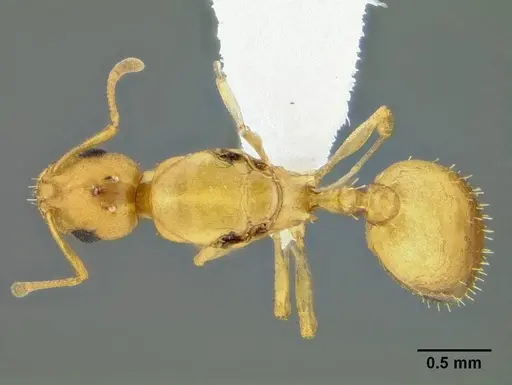
Identifying T. anaphalantus requires close examination under magnification. The key identifying features are: head and mesosoma with a dull, reticulate (net-like) surface texture without obvious rugae (wrinkles), erect setae completely absent from the frons and vertex, propodeal spines that are thick at the base and nearly as long as the distance between their bases, and petiole node that is rounded in profile [1]. The body color ranges from yellowish to light brown, with the gaster often darker posteriorly [1].
In Mackay's identification key to southwestern ants, this species would run to Temnothorax silvestrii from Arizona, but can be distinguished by its greatly reduced pilosity, lack of rugae, and much thicker, shorter propodeal spines [1]. For antkeepers, these identification features are mostly academic, the species is so rare in the hobby that most keepers will never encounter it.
Keeping Temnothorax anaphalantus in Captivity
Since this species has never been kept in captivity, all care recommendations are educated guesses based on what we know about related Temnothorax species and their natural habitat. Start with standard Temnothorax care: keep the nest at room temperature (around 20-24°C), provide moderate humidity in the nest chamber, and offer a winter diapause period of 2-3 months at 10-15°C [3].
For nesting, provide small cavities, these ants naturally nest in dead wood, so a Y-tong (AAC) nest with narrow chambers or a properly set up test tube works well. The chambers should be scaled to their tiny 2-3mm worker size. Feed them small protein sources like fruit flies, pinhead crickets, or other tiny arthropods, along with occasional sugar water or honey [3].
The biggest challenge with this species is simply obtaining a colony, they are extremely rare in the wild and have never been collected specifically for the antkeeping hobby. If you do obtain a colony, document your observations carefully as they would be valuable contributions to our understanding of this poorly known species.
Related Species and Taxonomic Context
Temnothorax anaphalantus belongs to the Temnothorax andrei-clade, a group of related species defined through modern phylogenetic analysis [1]. The genus Temnothorax contains over 400 species worldwide and is known for its small size, diverse nesting habits, and often complex social structures.
In California, Temnothorax diversity is highest in the mountains and chaparral habitats of the southern part of the state. Several other rare species exist in this region, many of which were also described or revised in the 2014 study that described T. anaphalantus [1]. The andrei-clade specifically includes species that share certain morphological traits and likely share evolutionary history.
For antkeepers interested in exploring Temnothorax, more common species like Temnothorax ambiguus or Temnothorax rugatulus are much better choices for learning the genus, as they are well-established in captivity and have documented care requirements.
Frequently Asked Questions
How do I keep Temnothorax anaphalantus ants?
Since this species has never been kept in captivity, care recommendations are based on related Temnothorax species. Keep nest temperature around 20-24°C, provide moderate humidity, and offer a winter diapause period. Use a small nest with tight chambers scaled to their 2-3mm size. Feed small protein sources and sugar water. This species is extremely rare and has never been collected for the antkeeping hobby.
Where does Temnothorax anaphalantus live?
This species is known only from southern California (Los Angeles, Orange, San Diego, and San Bernardino counties) and Baja California, Mexico. They inhabit oak grassland, chaparral, and riparian areas in the mountains [1][2].
How big do Temnothorax anaphalantus colonies get?
Colony size is unknown, only a single nest has ever been collected. Based on related small Temnothorax species, colonies likely reach a few hundred workers at most. The queen measures around 3-4mm, workers are 2-3mm [1].
Do Temnothorax anaphalantus ants sting?
Temnothorax ants have a functional stinger but are not aggressive and rarely use it. These tiny ants are considered harmless to humans. Their sting is mild at worst [3].
What do Temnothorax anaphalantus ants eat?
Diet is unconfirmed for this specific species, but Temnothorax generally are omnivorous. They likely feed on small insects, arthropods, and honeydew from aphids or scale insects. In captivity, offer small live prey like fruit flies or pinhead crickets, plus sugar water or honey [3].
How long does it take for Temnothorax anaphalantus to develop from egg to worker?
Development time is unconfirmed for this species. Based on typical Temnothorax development patterns, expect roughly 6-10 weeks from egg to first worker at optimal temperature (around 20-24°C).
Do Temnothorax anaphalantus need hibernation?
Likely yes, most California Temnothorax species require a winter rest period. Provide 2-3 months at 10-15°C during winter months to simulate their natural seasonal cycle in chaparral habitats [3].
Is Temnothorax anaphalantus a good species for beginners?
No, this species is not recommended for beginners. It was only described in 2014,has never been kept in captivity, and almost no captive care information exists. Additionally, wild colonies are extremely rare and protected. Choose more established species like Temnothorax ambiguus or Lasius niger for starting out.
Can I find Temnothorax anaphalantus in the wild?
This species has only been collected from a handful of locations in southern California and Baja California. It is extremely rare and would require specific research permits to collect. The single known nest was found in dead wood in montane chaparral [1]. Do not attempt to collect this or any native species without proper permits.
Why is Temnothorax anaphalantus so hard to find?
This species was only formally described in 2014,meaning it was previously unrecognized by science. It appears to have a very restricted range in the mountains of southern California, and its small size and cryptic nesting habits make it difficult to detect. Fewer than 20 specimens have ever been documented [1][2].
References

This caresheet is licensed under CC BY-SA 4.0 .
CASENT0005695
View on AntWeb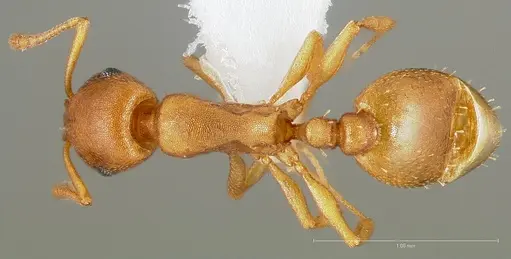
CASENT0118167
View on AntWeb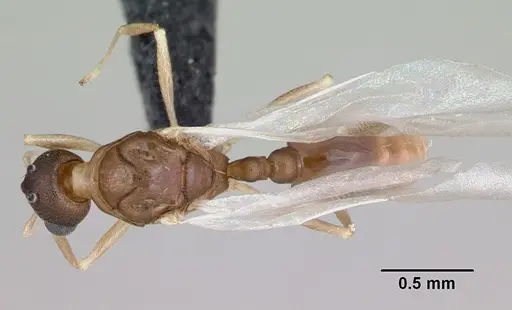
CASENT0118168
View on AntWeb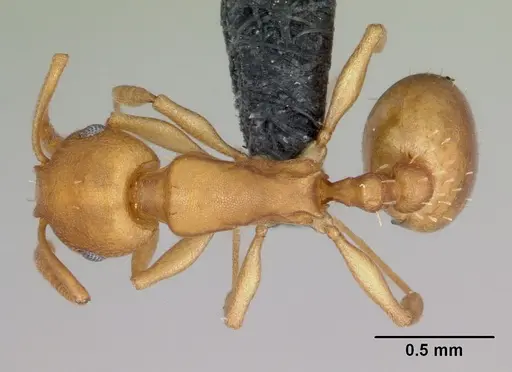
CASENT0339237
View on AntWeb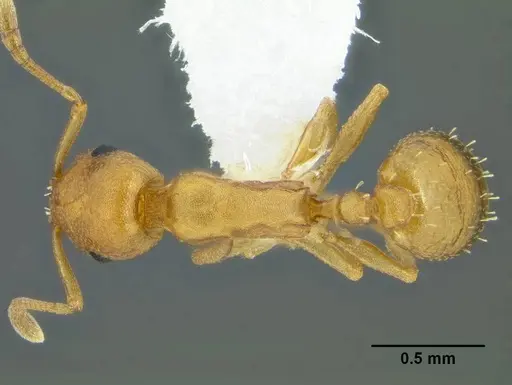
CASENT0339238
View on AntWeb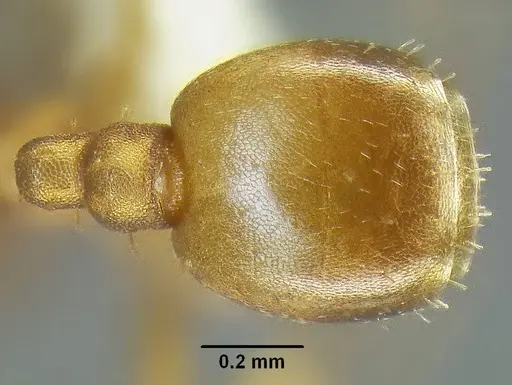
CASENT0339242
View on AntWeb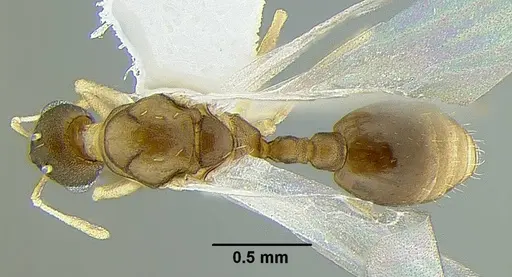
Literature
Loading...Loading products...