

Solenopsis salina
- Scientific Name
- Solenopsis salina
- Tribe
- Solenopsidini
- Subfamily
- Myrmicinae
- Author
- Wheeler, 1908
- Distribution
- Found in 2 countries
Solenopsis salina Overview
Solenopsis salina is an ant species of the genus Solenopsis. It is primarily documented in 2 countries , including Mexico, United States of America. Detailed taxonomic data and occurrence records can be further explored via authoritative databases such as AntWeb or the Global Biodiversity Information Facility (GBIF).
Solenopsis salina
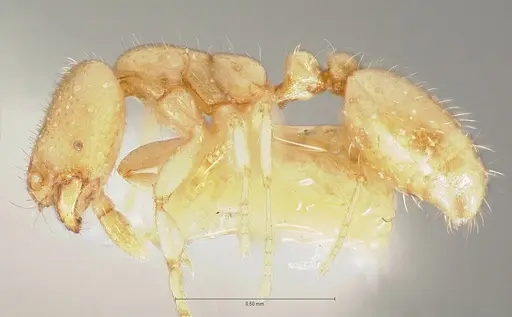
Solenopsis salina is a tiny thief ant belonging to the Solenopsis molesta species complex. Workers measure just 1.4-1.5mm and are typically yellow to pale brown in color, making them one of the smaller ant species you'll encounter in the hobby [1]. Queens are considerably larger at 4.9-5.2mm and have a medium brown body with a dark brown head. This species gets its 'thief ant' name from its habit of nesting near and raiding other ant colonies to steal brood and food, they essentially live as social parasites in close association with host species like Formica oreas and Pheidole porcula [1].
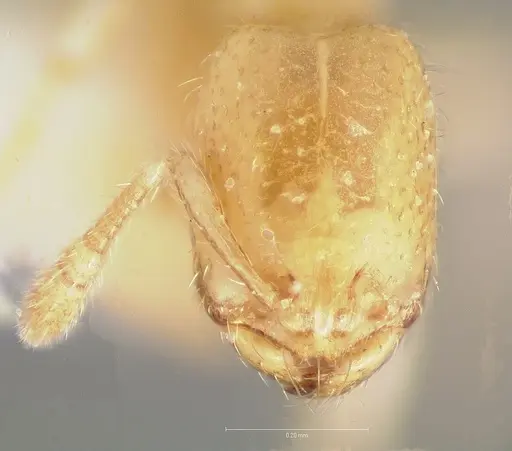
These ants are found across the southwestern United States and into northern Mexico, with documented populations in Texas, Colorado, New Mexico, Nevada, and Chihuahua, Mexico. They prefer nesting under large stones in areas ranging from creosote desert scrub to grassland and pine-oak forests, often in dark brown sandy or rocky loam soils [1]. The species can be identified by its distinctive blunt, inwardly curved clypeal teeth on the head and coarse punctures on the head capsule, these features help separate it from similar species like Solenopsis texana and Solenopsis molesta [1].
Quick Summary
- Difficulty: Easy
- Origin & Habitat: Southwestern United States and northern Mexico, found in Texas, Colorado, New Mexico, Nevada, and Chihuahua, Mexico. They nest under stones in desert scrub, grassland, and pine-oak forests in dark brown sandy or rocky loam soils [2][3][4].
- Colony Type: Monogyne, single queen colonies. Queens are slightly larger than workers and serve as the sole reproductive in established colonies.
- Colony: Monogyne
- Founding: Claustral
- Size & Growth:
- Queen: 4.9-5.2mm [1]
- Worker: 1.4-1.5mm [1]
- Colony: Likely several hundred workers based on related species in the molesta complex [1]
- Growth: Moderate, estimated based on similar small Solenopsis species
- Development: Estimated 6-8 weeks at optimal temperature based on genus patterns (Development time inferred from related Solenopsis species, specific data for S. salina is not available)
- Antkeeping:
- Temperature: Keep at room temperature, roughly 20-25°C. This species comes from temperate regions with hot summers and cold winters, so they can tolerate a range but prefer moderate warmth [1].
- Humidity: Moderate humidity, they naturally nest under stones in soils that range from dry desert to mesic (moderately damp) areas. Keep the nest substrate lightly moist but not waterlogged, with some drier areas available.
- Diapause: Yes, as a temperate species from the southwestern US, they will need a winter rest period. Reduce temperature to around 10-15°C for 2-3 months during winter.
- Nesting: Test tubes work well for founding colonies. Due to their very small size, they need tight-fitting connections and small chambers. Y-tong (AAC) nests or small acrylic setups with narrow passages work well for established colonies.
- Behavior: Thief ants by nature, they are small predators and scavengers that will attempt to raid neighboring ant colonies for brood and resources. Workers are active foragers that readily take protein foods and sugar. They have a functional stinger (Myrmicinae) but due to their tiny size, the sting is mild and rarely felt by humans. Their small size means escape prevention is critical, they can squeeze through remarkably small gaps [1].
- Common Issues: escape prevention is critical due to their very small 1.5mm size, use fine mesh barriers and tight-fitting lids, colonies grow slowly and beginners may lose patience, don't overfeed or disturb the nest frequently, they may struggle in overly humid conditions, ensure good ventilation and allow substrate to dry between waterings, wild-caught colonies may carry parasites from their parasitic lifestyle, quarantine new colonies and monitor health
Housing and Nest Setup
For Solenopsis salina, you'll want to start with a simple test tube setup for the founding colony. The queen will seal herself in a chamber and remain there until her first workers emerge, this claustral founding typically takes 4-6 weeks. Because workers are only 1.5mm tall, use test tubes with a small diameter and ensure any cotton plug is packed tightly enough to prevent escape while still allowing air flow.
Once the colony reaches 20-30 workers, you can connect the test tube to an outworld (foraging area) or move them to a small formicarium. Y-tong (AAC) nests work exceptionally well for these tiny ants because the chambers can be scaled appropriately. If using acrylic or plaster nests, ensure the passages are narrow, wide tunnels make them feel insecure and may cause stress. The outworld should be simple with minimal vertical space since these small ants can easily fall and become trapped. [2][1]
Feeding and Diet
Solenopsis salina is a generalist feeder that will accept both protein and sugar sources. In the wild, they are known to raid other ant colonies for brood and will scavenge from various food sources. For your colony, offer small protein items like fruit flies, pinhead crickets, small mealworms, or commercially available ant protein mixes. Since they are so tiny, portion sizes should be very small, a single fruit fly or tiny piece of mealworm is enough for a small colony.
For sugar, offer a drop of sugar water or honey water, but remove it within 24 hours to prevent mold. These ants have a functional stinger but rarely sting humans due to their small size. Feed every 2-3 days for established colonies, removing any uneaten prey after 24 hours. During founding, the queen does not eat, she survives entirely on her stored fat reserves until the first workers emerge. [1]
Temperature and Seasonal Care
Keep your Solenopsis salina colony at room temperature, ideally in the 20-25°C range. This matches their natural habitat in the southwestern US and Mexico where they experience hot summers but also cold winters. They can tolerate temperatures slightly outside this range, but growth and activity will slow at cooler temperatures.
During winter, this species requires a diapause (hibernation) period. Reduce temperatures gradually to around 10-15°C and maintain this for 2-3 months. You can accomplish this by moving the colony to a cooler location like an unheated garage or basement, or using a small refrigerator set to the appropriate temperature. Do not feed during diapause and minimize disturbance. Resume normal temperatures in spring when you see increased activity, this typically triggers the queen to begin laying eggs again. [3][1]
Behavior and Colony Dynamics
The defining behavior of Solenopsis salina is their 'thief ant' lifestyle, they naturally nest in close association with other ant species and will attempt to raid neighboring colonies for brood. In your setup, this manifests as vigorous foraging and a tendency to explore. Workers are active and will quickly discover food sources, communicate with nestmates, and recruit others.
Despite their small size, these ants are determined foragers and will attempt to escape if given the chance. Their tiny 1.5mm bodies can squeeze through gaps that seem impossible. Always use fluon (ant barrier) on container rims and ensure your outworld has a secure lid. The colony will establish a clear division of labor with the queen focused on egg-laying and workers handling all other tasks including foraging, nursing brood, and nest maintenance. [1]
Frequently Asked Questions
How long does it take for Solenopsis salina to raise their first workers?
From founding (when the queen seals herself in) to first workers emerging typically takes 4-6 weeks at room temperature (20-25°C). This is typical claustral founding behavior where the queen uses stored fat reserves to survive without foraging. The first workers, called nanitics, will be smaller than normal workers but will immediately begin helping with colony tasks.
Can I keep Solenopsis salina in a test tube setup?
Yes, test tubes work perfectly for these ants. Use a small-diameter test tube since workers are only 1.5mm. Fill it about one-third with water and use cotton as a barrier, pack it tightly enough that the tiny workers cannot push through. Keep the tube horizontal in a dark, quiet location until the colony establishes.
How big do Solenopsis salina colonies get?
Based on related species in the molesta complex, colonies likely reach several hundred workers at maturity. They are not among the largest Solenopsis species, that distinction belongs to the fire ant (Solenopsis invicta). Expect moderate growth over 1-2 years to reach a colony size of 100-300 workers.
Do Solenopsis salina need hibernation?
Yes, as a temperate species from the southwestern US, they require a winter diapause period. Reduce temperatures to 10-15°C for 2-3 months during winter. You can achieve this by moving the colony to a cool basement, garage, or using a small refrigerator set to the appropriate temperature. Stop feeding during this period and minimize disturbance.
What do Solenopsis salina eat?
They are generalist feeders that accept both protein and sugar. Offer small protein sources like fruit flies, tiny mealworms, small crickets, or commercial ant protein mixes. For sugar, provide sugar water or honey water. Due to their tiny size, portions should be very small, a single fruit fly or a speck of protein is sufficient for a small colony.
Are Solenopsis salina good for beginners?
Yes, they are considered a good beginner species. They are small, easy to house, and relatively forgiving of minor care mistakes. The main challenge is their tiny size requiring excellent escape prevention. They are not aggressive and don't require specialized equipment beyond standard antkeeping supplies.
Why are my Solenopsis salina escaping?
Their small 1.5mm size allows them to squeeze through incredibly tiny gaps. Check all connections, lids, and barrier applications. Use fine mesh (at least 0.5mm or smaller) for any ventilation. Apply fluon or petroleum jelly to all rim surfaces. Even a microscopic gap is enough for them to escape. Inspect your setup thoroughly and seal any potential escape routes.
When should I move my colony to a formicarium?
Move them when the test tube becomes crowded or you see workers constantly exploring the cotton barrier. For Solenopsis salina, this is typically around 30-50 workers. A Y-tong (AAC) nest or small acrylic formicarium with narrow chambers works well. Ensure any connecting tubes are small diameter to prevent escape during the transfer.
How do I identify Solenopsis salina from similar species?
Solenopsis salina can be identified by their yellow to pale brown color, very small size (1.4-1.5mm workers), and distinctive blunt clypeal teeth that curve inward. They have coarse punctures on the head and short minor funicular segments (less than 0.12mm). These features help separate them from similar species like Solenopsis texana (which has straight teeth) and Solenopsis molesta (which has longer funicular segments).
How often should I feed my Solenopsis salina colony?
Feed small amounts of protein every 2-3 days for established colonies. Remove any uneaten prey after 24 hours to prevent mold. Keep sugar water or honey water available continuously but replace it every few days. During founding (while the queen is sealed in), do not feed at all, she does not eat until her first workers emerge.
References

This caresheet is licensed under CC BY-SA 4.0 .
CASENT0005937
View on AntWeb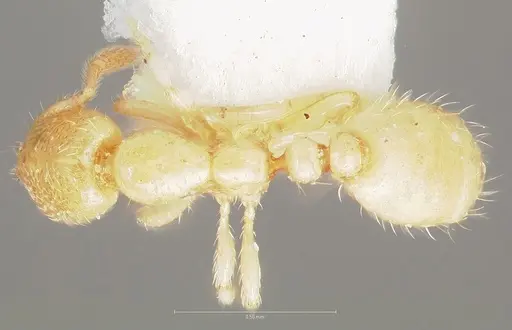
Literature
Loading...Loading products...