

Oxyopomyrmex polybotesi
- Scientific Name
- Oxyopomyrmex polybotesi
- Tribe
- Stenammini
- Subfamily
- Myrmicinae
- Author
- Salata & Borowiec, 2015
- Distribution
- Found in 1 countries
Oxyopomyrmex polybotesi Overview
Oxyopomyrmex polybotesi is an ant species of the genus Oxyopomyrmex. It is primarily documented in 1 countries , including Türkiye. Detailed taxonomic data and occurrence records can be further explored via authoritative databases such as AntWeb or the Global Biodiversity Information Facility (GBIF).
Oxyopomyrmex polybotesi
Oxyopomyrmex polybotesi is a tiny, recently described ant species from the Dodecanese islands of Greece and the Turkish coast. Workers measure just 0.68-0.73mm in head length, making them among the smaller ants in the hobby. They are entirely black in color with a distinctive rectangular head, short antennae, and short triangular propodeal spines. This species was only formally described in 2015,named after the giant Polybotes from Greek mythology, who according to legend was crushed under Nisyros island by Poseidon, the very island where this species was discovered [1].
Nothing is known about the biology of this ant in the wild. Based on its genus placement in the Stenammini tribe, it likely shares traits with related seed-harvesting ants, but this remains unconfirmed. The type locality on Nisyros is a rocky Mediterranean island at 270m elevation, where it coexists with other Mediterranean ant species including Messor wasmanni (a seed harvester) and Cataglyphis nodus [1]. This suggests it may prefer warm, dry, rocky habitats typical of the Aegean region.
Quick Summary
- Difficulty: Unknown, insufficient data
- Origin & Habitat: Dodecanese islands, Greece (Nisyros) and İzmir, Turkey. Found at 270m elevation on rocky Mediterranean island habitat with co-occurring species like Messor wasmanni and Cataglyphis nodus [1][2].
- Colony Type: Colony structure is unconfirmed. Only the worker caste has been described. Nothing is known about queen number or colony size in the wild.
- Size & Growth:
- Queen: Unknown, queen has not been described
- Worker: 0.68-0.73mm head length (workers) [1]
- Colony: Unknown, no colony collections documented
- Growth: Unknown
- Development: Unknown, no development data exists (Development timeline has not been studied. Based on typical Myrmicinae patterns from similar Mediterranean species, expect 6-10 weeks at optimal temperature, but this is purely estimated.)
- Antkeeping:
- Temperature: Likely prefers warm conditions typical of Mediterranean islands. Start around 24-28°C and observe colony activity. Related Oxyopomyrmex species are found in warm, dry habitats.
- Humidity: Likely prefers dry to moderately humid conditions. Keep nest substrate slightly moist but allow drying periods between waterings. Avoid overly damp conditions.
- Diapause: Likely requires a winter rest period given its Mediterranean distribution. Based on related species from similar climates, expect 2-3 months at 10-15°C during winter.
- Nesting: No specific nesting data exists. Based on type locality (rocky island) and co-occurring species, they likely nest in soil under stones or in shallow crevices. A naturalistic setup with flat stones or a Y-tong/plaster nest with dry chambers would be appropriate starting points.
- Behavior: Behavior is completely unstudied in captivity. Based on genus placement and worker size, they are likely timid and not aggressive. Their tiny size (under 1mm) means escape prevention must be excellent, they can squeeze through extremely small gaps. Foraging style is unknown but likely involves ground-level activity.
- Common Issues: no biological data exists, all care is speculative and experimental, tiny size makes escape prevention critical, use fine mesh barriers, queen has never been described, wild colonies cannot be collected, no information on founding behavior or colony development, related species may have specific humidity requirements that are unknown
Species Discovery and Taxonomy
Oxyopomyrmex polybotesi was formally described in 2015 by Sebastian Salata and Lech Borowiec based on workers collected from Nisyros island in the Dodecanese archipelago of Greece. The species name honors Polybotes, a giant from Greek mythology who was defeated by Poseidon during the Gigantomachy (battle between giants and gods). According to legend, Poseidon crushed Polybotes beneath Nisyros island, the exact location where this ant was discovered [1].
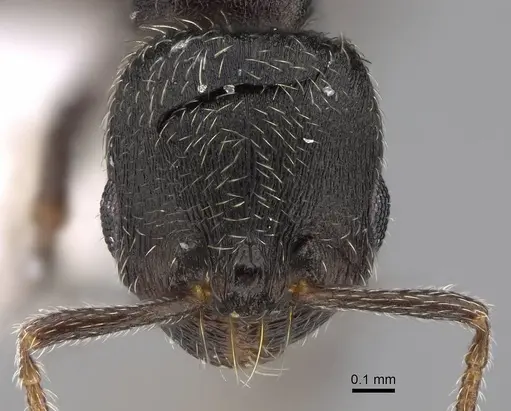
The genus Oxyopomyrmex belongs to the tribe Stenammini within the Myrmicinae subfamily. This genus contains several Mediterranean species known for their small size and distinctive morphology. O. polybotesi can be distinguished from related species by its shiny gena (cheek area) without rugosity, the presence of longitudinal striae on the lateral surfaces of the pronotum, and the distinctly punctate propodeum [1].
Distribution and Habitat
This species is known only from the Dodecanese islands of Greece, specifically Nisyros, and from İzmir in western Turkey [1][2]. The type locality is Moni Evangelistrias on Nisyros island at approximately 270 meters elevation. Nisyros is a volcanic island in the Aegean Sea with a typical Mediterranean climate, hot, dry summers and mild, wet winters.
At the type locality, researchers found several other ant species co-occurring: Aphaenogaster sporadis, Aphaenogaster subterraneoides, Cataglyphis nodus, Camponotus baldaccii, Crematogaster ionia, Lepisiota frauenfeldi, Messor wasmanni, Plagiolepis pygmea, and Tetramorium cf. semilaeve [1]. The presence of Messor wasmanni (a seed harvester) suggests similar ecological preferences, though O. polybotesi biology remains completely unknown.
Identification and Morphology
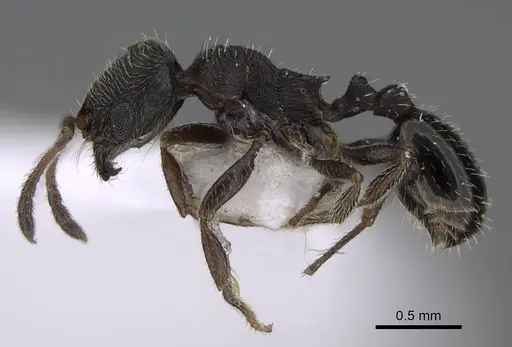
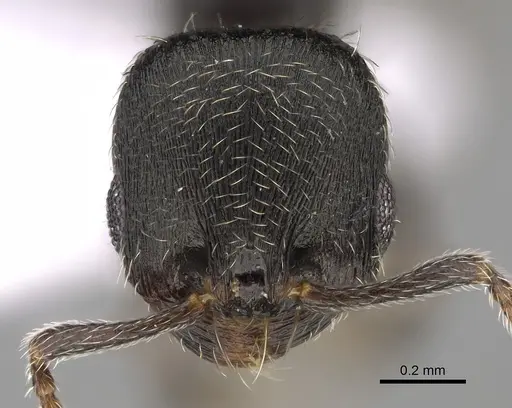
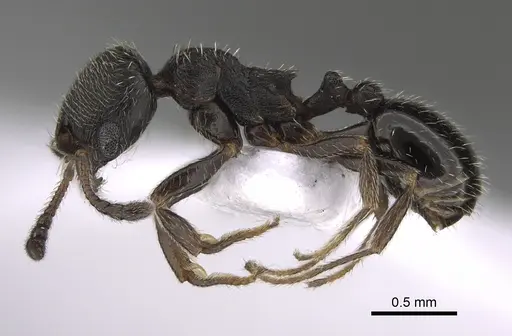
Workers of Oxyopomyrmex polybotesi are tiny, measuring only 0.68-0.73mm in head length [1]. They are entirely black in color, including the head, thorax, and abdomen. The antennal scapes are smoked black to brown toward the apex, with funiculus segments 1-7 being brown and segments 7-10 smoked black [1].
The head is rectangular and longer than wide, with distinctive elongate eyes that strongly narrow downward and reach the anteroventral margin of the head. The scape (first antennal segment) is short, about 0.7 times the width of the head. The propodeal spines are short and triangular. A key distinguishing feature is the shiny gena without rugosity, which separates this species from the similar O. pygmalioni [1].
Current State of Knowledge
It must be emphasized that absolutely nothing is known about the biology of Oxyopomyrmex polybotesi. This is one of the least studied ant species in the hobby, with no published information on colony structure, founding behavior, diet, development, or any other aspect of its natural history. The species was described in 2015,and only the worker caste has been documented [3].
For antkeepers, this means keeping O. polybotesi is entirely experimental. All care recommendations are based on inference from related species in the genus Oxyopomyrmex and the Stenammini tribe, as well as assumptions from the Mediterranean climate of its range. There are no established protocols for breeding this species, and no queen has ever been described or collected. This species is not currently available in the antkeeping hobby and would require field collection in Greece or Turkey to obtain.
Speculative Care Recommendations
Given the complete lack of biological data, any care advice for Oxyopomyrmex polybotesi must be treated as highly speculative. Based on the genus placement in Stenammini (which includes seed-harvesting ants like Messor) and the Mediterranean climate of its range, a reasonable starting point would be:
Temperature: Keep nest around 24-28°C, with a slight gradient allowing the ants to self-regulate. The Aegean climate is warm for most of the year.
Humidity: Likely prefers drier conditions than many tropical ants. Keep substrate slightly moist but allow drying periods. Good ventilation is important.
Nesting: A naturalistic setup with stones placed on soil or a Y-tong/plaster nest with dry chambers would be appropriate. The rocky island habitat suggests they may nest under stones or in shallow soil.
Diet: Based on genus and related species, likely accepts seeds and small insects. However, this is purely inferred and not confirmed.
Diapause: Given the Mediterranean distribution, a winter rest period of 2-3 months at 10-15°C is likely beneficial.
Frequently Asked Questions
Is Oxyopomyrmex polybotesi available in the antkeeping hobby?
No, this species is not currently available in the antkeeping hobby. It was only described in 2015 and has never been cultured in captivity. No queen has ever been described, making captive breeding impossible at this time.
Where does Oxyopomyrmex polybotesi live in the wild?
Only known from Nisyros island in the Dodecanese, Greece, and İzmir in western Turkey. The type locality is Moni Evangelistrias on Nisyros at 270m elevation [1][2].
How big are Oxyopomyrmex polybotesi workers?
Workers are extremely tiny, measuring only 0.68-0.73mm in head length [1]. This makes them among the smallest ants in the antkeeping hobby.
What do Oxyopomyrmex polybotesi eat?
This is completely unknown. Based on genus placement in Stenammini (which includes seed-harvesting ants like Messor), they may accept seeds and small insects, but this has never been documented.
Do Oxyopomyrmex polybotesi queens have wings?
Unknown, the queen caste has never been described. Only workers are known from scientific collections [3].
Can I keep multiple Oxyopomyrmex polybotesi queens together?
This is unknown. No information exists about colony structure. The queen has never been described, so there is no way to determine whether they are monogyne (single queen) or polygyne (multiple queens).
What temperature should I keep Oxyopomyrmex polybotesi at?
No specific data exists. Based on the Mediterranean climate of their range, a temperature in the range of 24-28°C would be a reasonable starting point. Observe colony behavior and adjust accordingly.
Does Oxyopomyrmex polybotesi need hibernation?
Likely yes, given its Mediterranean distribution. A winter rest period of 2-3 months at 10-15°C is probably appropriate, similar to other Mediterranean ant species, though this has never been studied.
Are Oxyopomyrmex polybotesi aggressive?
Unknown. Based on their tiny size, they are likely timid and not aggressive. However, no behavioral observations have been documented.
How long does it take for Oxyopomyrmex polybotesi to develop from egg to worker?
Unknown, no development data exists for this species. Without any observations of captive colonies, there is no timeline to reference.
Is Oxyopomyrmex polybotesi difficult to keep?
Difficulty cannot be assessed, this species has never been kept in captivity. There is no biological data whatsoever to guide care. It would be entirely experimental and not recommended for any keeper until more is known.
Can I collect Oxyopomyrmex polybotesi from the wild?
This would require permits. The species is known only from Nisyros island in Greece and İzmir in Turkey. Collecting ants from protected areas or without proper permits is illegal in most jurisdictions. Additionally, since no queen has ever been described, finding a mated queen would be extremely difficult.
References

This caresheet is licensed under CC BY-SA 4.0 .
CASENT0922692
View on AntWeb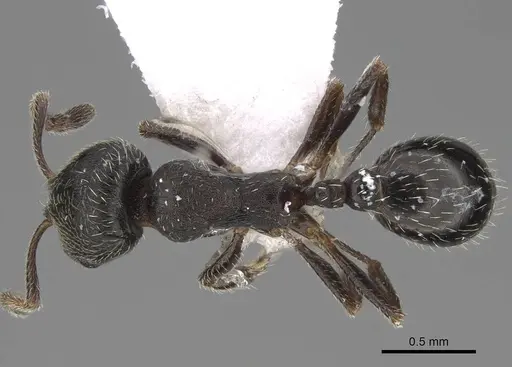
CASENT0923229
View on AntWeb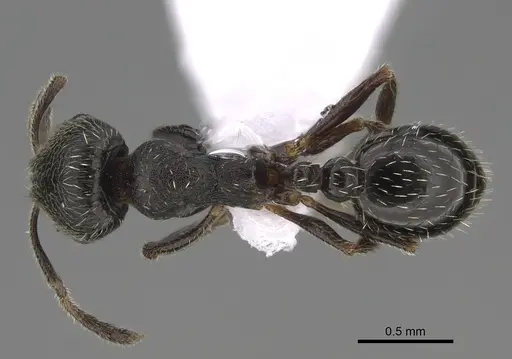
Literature
Loading...Loading products...