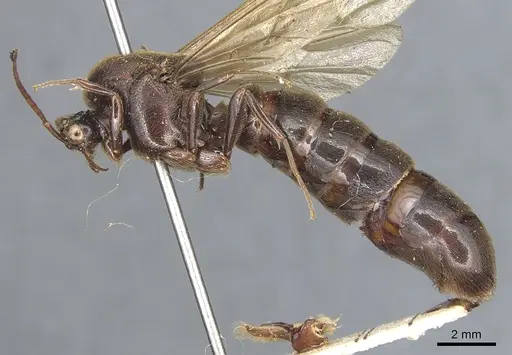
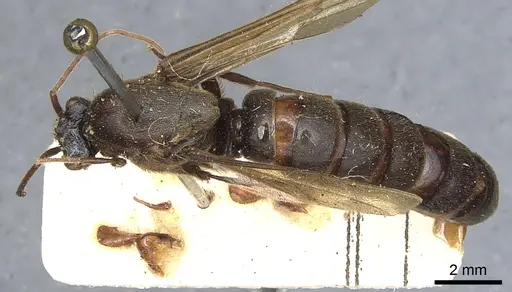
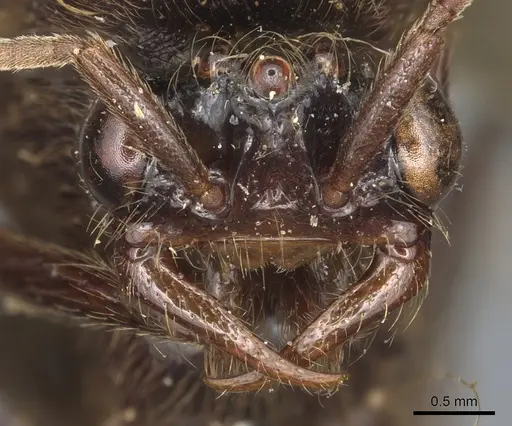
Neivamyrmex maxillosus - "Army Ant (specifically a Neivamyrmex species, often called 'Legionary Ant')"
Neivamyrmex maxillosus is a species of army ant belonging to the Dorylinae subfamily. Like other Neivamyrmex, these ants are nomadic, meaning they do not build permanent nests. Instead, they establish temporary 'bivouacs' each night before moving on. They are primarily subterranean but may forage above ground at night or on cloudy days. Their diet consists mainly of the larvae and pupae of other ant species. Queens are wingless, while males possess wings.
- Difficulty: Expert
- Origin & Habitat: Central United States to southern Argentina in Predominantly subterranean, but can forage above ground in various environments, including desert-grassland habitats..
- Colony Type: Monogyne (typically, though some Neivamyrmex species can be polygynous), colony fission (new queens leave with a large number of workers from their natal colony) founding.
- Size & Growth:
- Queen: Not specified
- Worker: Not specified
- Colony: Large (tens of thousands to hundreds of thousands, with related species like N. nigrescens reaching 80,000 to 140,000 workers).. Fast (due to nomadic lifestyle and predatory nature) growth.
- Antkeeping:
- Temperature: Due to their wide range, a stable temperature around 22-28°C would likely be suitable, mimicking their natural warm environments..
- Humidity: High humidity is crucial, especially for their subterranean bivouacs. Likely needs 70-90%..
- Diapause: Not required. Not specified at Not specified.
- Nesting: Requires a highly adaptable and large setup that can accommodate their nomadic phases, such as a large vivarium or a series of interconnected, movable chambers. They do not build permanent nests but establish temporary bivouacs..
- Behavior: High (towards other ants/prey) aggressiveness.
- Common Issues: Inability to provide adequate nomadic space, Lack of sufficient and appropriate live prey (other ant brood), Colony collapse due to unsuitable conditions or stress, Escape risk, Maintaining high humidity and appropriate temperature in a nomadic setup.
Keeping Neivamyrmex maxillosus, or any true army ant for that matter, presents an extreme challenge for antkeepers. These ants are notoriously difficult, if not impossible, to sustain long-term in a typical captive setup due to their fundamental biological requirements. Their nomadic lifestyle demands constant movement and a vast foraging area, which is simply not replicable within standard formicaria. They need to establish a new 'bivouac' almost daily, making fixed housing utterly unsuitable for their natural behaviors and needs.
A major hurdle in keeping these fascinating predators is their specialized diet. Neivamyrmex species feed almost exclusively on the brood (larvae and pupae) of other ant species. This necessitates a continuous and massive supply of live ant colonies, which is an impractical and unsustainable feeding regimen for the average hobbyist. A mature colony can consume hundreds of thousands of prey animals daily, quickly depleting any confined food source.
The sheer size that a Neivamyrmex maxillosus colony can reach is another significant obstacle. Related species like Neivamyrmex nigrescens can number in the hundreds of thousands of workers. Housing such an enormous, active colony would require an enclosure spanning many acres to even remotely mimic their natural foraging range and nomadic movements. This scale of housing is beyond the capabilities of even dedicated research facilities, let alone a home setup. Attempts to keep true army ants in captivity have almost universally failed.
Their foraging behavior is also highly specialized; they conduct organized raids, often subterranean, to find and subdue other ant colonies. Replicating this complex predatory behavior and ensuring consistent prey availability while avoiding escapes in a captive environment is incredibly complex. The risk of these highly mobile and aggressive ants escaping their enclosure is also a serious concern, as they can quickly overwhelm a household and pose a threat to other captive colonies.
For these reasons, Neivamyrmex maxillosus and other true army ants are not recommended for antkeeping. While the allure of observing these incredible creatures is strong, their specific needs make them unsuitable for the hobby. Focus should instead be placed on species whose biological requirements can be ethically and practically met in a captive setting, ensuring both the well-being of the ants and the success of the antkeeper.
Frequently Asked Questions
Are Neivamyrmex maxillosus good beginner ants?
Absolutely not. Neivamyrmex maxillosus, like all true army ants, are among the most challenging ant species to keep due to their nomadic nature and highly specialized predatory diet. They are considered expert-level, and honestly, are practically impossible to sustain long-term in a home antkeeping setup.
How do Neivamyrmex maxillosus colonies start?
Unlike many ant species where a queen establishes a new colony on her own, Neivamyrmex queens found new colonies through a process called colony fission. This means a new queen leaves her original colony accompanied by a large group of workers, forming a new, smaller colony.
What do army ants like Neivamyrmex maxillosus eat?
These army ants are highly specialized predators, primarily feasting on the larvae and pupae (brood) of other ant species. They will raid and decimate other ant colonies to sustain their massive numbers.
Do Neivamyrmex maxillosus build permanent nests?
No, they don't. Neivamyrmex maxillosus are nomadic ants. They constantly move, setting up temporary 'bivouacs' each night from their own bodies before resuming their search for food. This constant movement is a defining characteristic of army ants.
Can I keep Neivamyrmex maxillosus in a regular formicarium?
A standard formicarium is completely unsuitable for Neivamyrmex maxillosus. Their nomadic lifestyle requires an expansive, dynamic environment that allows for constant movement and the establishment of temporary bivouacs. Replicating this in captivity is virtually impossible for the average antkeeper.
How large can a Neivamyrmex maxillosus colony get?
While specific numbers for N. maxillosus can be elusive, related Neivamyrmex species like N. nigrescens can have colonies ranging from 80,000 to 140,000 workers. This indicates that N. maxillosus colonies can also be incredibly large.
Do army ants sting?
Yes, army ants are capable of stinging. While their primary method of subduing prey is through overwhelming numbers and powerful mandibles, they do possess a sting.
What is a 'bivouac' in army ant keeping?
A bivouac is the temporary nest structure formed by army ants when they are in their statary phase (a resting period between nomadic phases). The ants link their own bodies together to create a living shelter for the queen and brood.
Are there any Neivamyrmex species that are easier to keep?
While some Neivamyrmex species are slightly smaller than others, all true army ants within the genus share the fundamental nomadic and highly predatory behaviors that make them incredibly difficult, if not impossible, for long-term captive care. There isn't an 'easy' Neivamyrmex species for antkeeping.
Why are army ants like Neivamyrmex maxillosus so hard to keep?
The main difficulties stem from their immense colony sizes, insatiable predatory appetites requiring constant live prey (other ant brood), and their fundamental nomadic behavior which necessitates vast, ever-changing environments that cannot be replicated in typical antkeeping setups.