

Neivamyrmex fuscipennis
- Scientific Name
- Neivamyrmex fuscipennis
- Subfamily
- Dorylinae
- Author
- Smith, 1942
- Distribution
- Found in 2 countries
Neivamyrmex fuscipennis Overview
Neivamyrmex fuscipennis is an ant species of the genus Neivamyrmex. It is primarily documented in 2 countries , including Mexico, United States of America. Detailed taxonomic data and occurrence records can be further explored via authoritative databases such as AntWeb or the Global Biodiversity Information Facility (GBIF).
Neivamyrmex fuscipennis
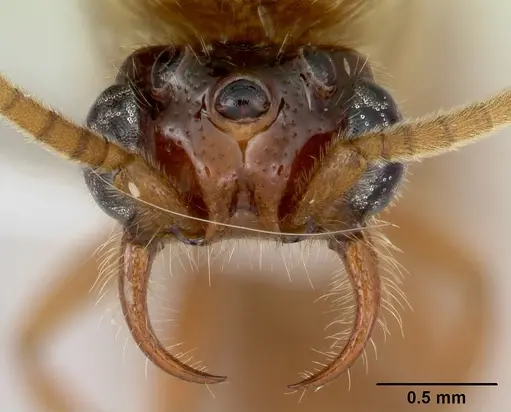
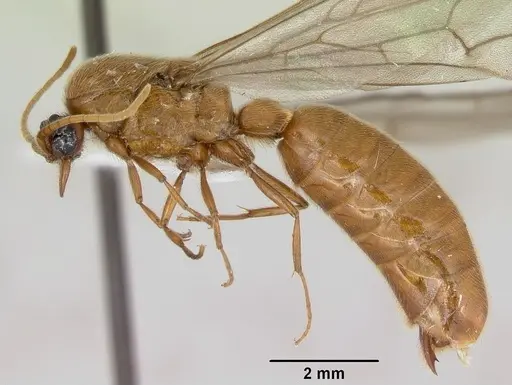
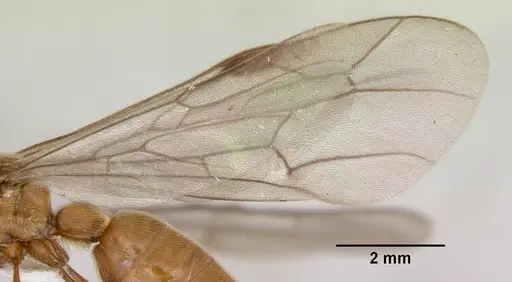
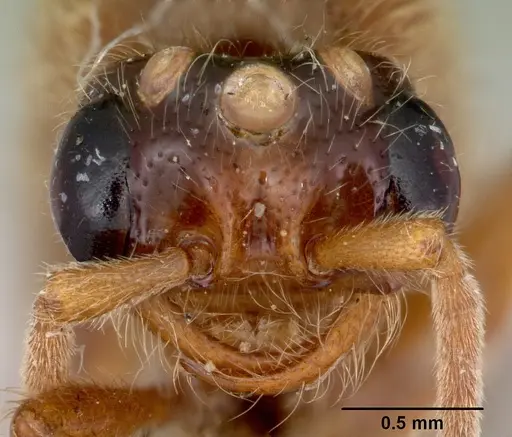
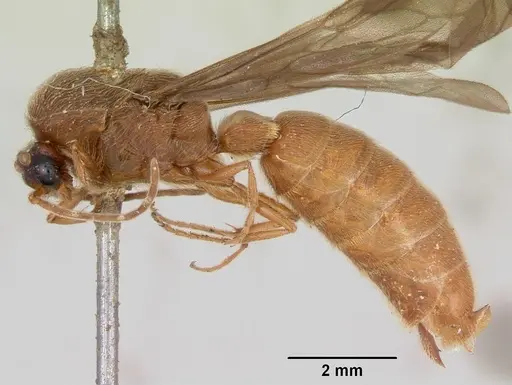
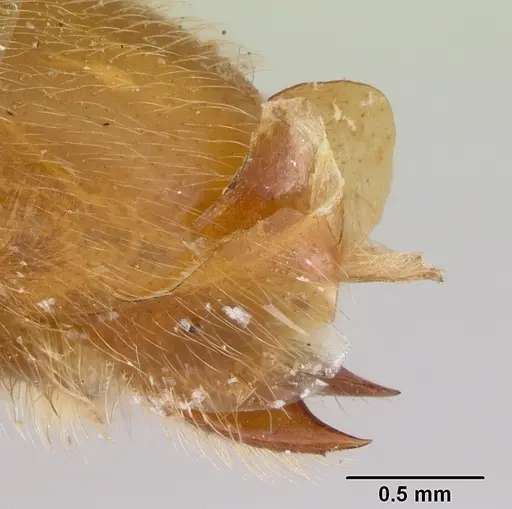
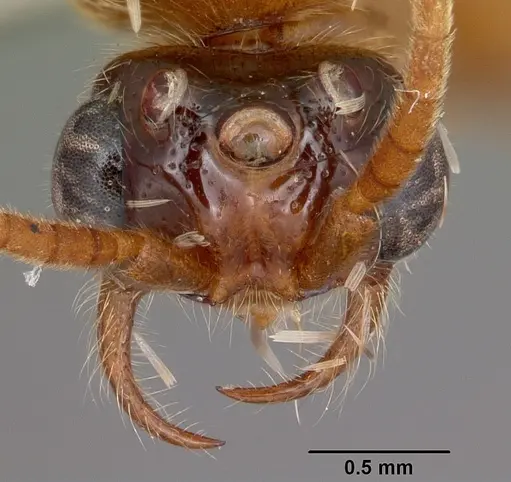
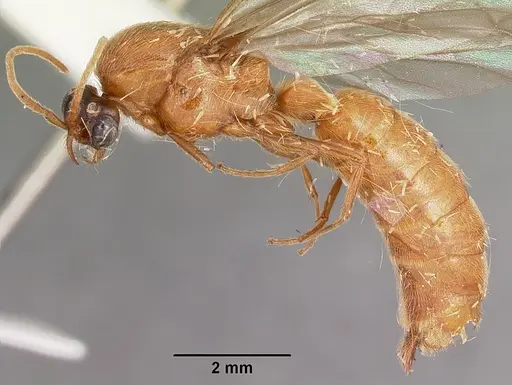
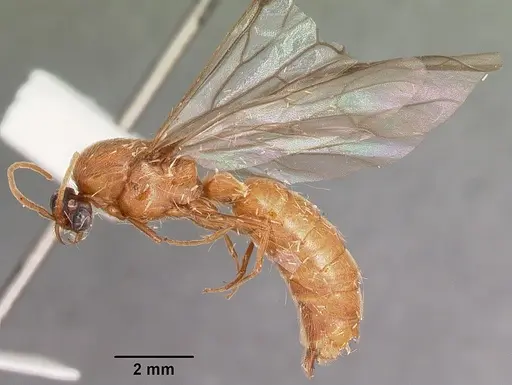
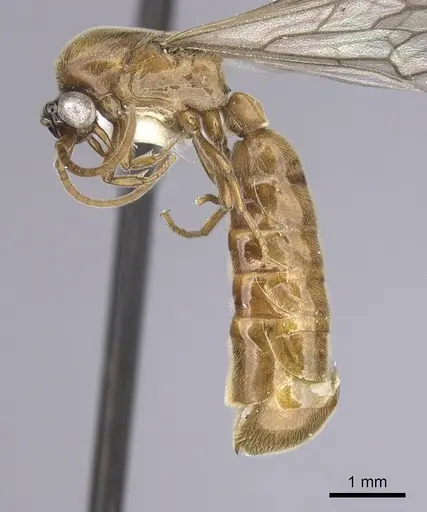
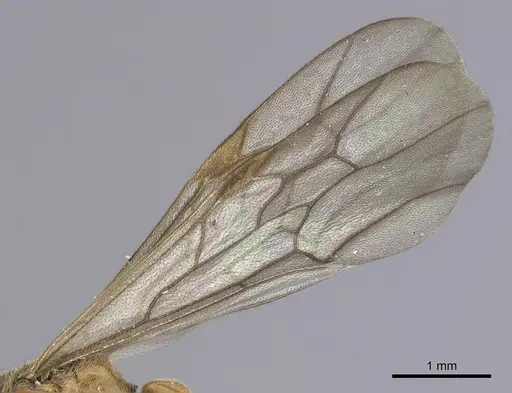
Neivamyrmex fuscipennis is a mysterious army ant species from the American Southwest and Mexico. Males are the only known caste, they reach about 10mm in length with a slender body, long curved mandibles, and deeply darkened wings. The body is yellowish-brown with a darker blackish head. These ants inhabit desert scrubland and riparian canyons with oaks, pines and junipers from Kansas down through Texas, New Mexico, Arizona, and into central Mexico. What makes this species extraordinary is that workers have never been documented, only males have been collected, typically attracted to lights at night. This suggests N. fuscipennis may be a parasitic army ant whose queens invade and take over colonies of other Neivamyrmex species, making the workers nearly impossible to distinguish from their hosts [1][2].
Quick Summary
- Difficulty: Expert
- Origin & Habitat: Desert scrub and riparian canyons from Kansas and Texas west to Arizona, south to central Mexico. Found in creosotebush scrub and canyon areas with oaks, pines and junipers between 990-1850m elevation [3][1].
- Colony Type: Unknown, only males have ever been collected. The complete absence of worker specimens suggests possible social parasitism, where queens take over host colonies of other Neivamyrmex species [1].
- Size & Growth:
- Queen: Unknown, queens have never been documented [3]
- Worker: Unknown, workers have never been collected or described [3]
- Colony: Unknown [3]
- Growth: Unknown [3]
- Development: Unknown, no colony has ever been documented [3] (This species has never been documented in captivity. Workers have never been collected in the wild, making any development timeline purely speculative.)
- Antkeeping:
- Temperature: Unknown, no captive colonies exist to establish requirements. Based on habitat range in the American Southwest and central Mexico, a range of 20-28°C would be a reasonable starting point if colonies were ever discovered [3].
- Humidity: Unknown, no data available on worker preferences. Desert and canyon habitats suggest moderate to low humidity tolerance [3].
- Diapause: Unknown, no colony observations exist. Most Neivamyrmex species in temperate regions do undergo seasonal cycles, but this species' biology is too poorly known to confirm [3].
- Nesting: Unknown, no natural nesting records exist. Army ants typically form temporary bivouacs rather than permanent nests, but worker behavior for this species is completely unstudied [3].
- Behavior: Completely unknown. Males are attracted to lights at night and have been collected flying from May to August. As an army ant (Dorylinae), they would likely be predatory if workers existed, but no behavioral observations of any caste have been documented [3][1].
- Common Issues: no documented captive colonies exist, this species has never been kept in captivity, workers have never been collected or described in scientific literature, possible social parasitism makes finding or identifying colonies extremely difficult, males only appear during nuptial flights, making species detection dependent on light trapping, lack of worker specimens means no established care parameters exist
The Mystery of Neivamyrmex fuscipennis
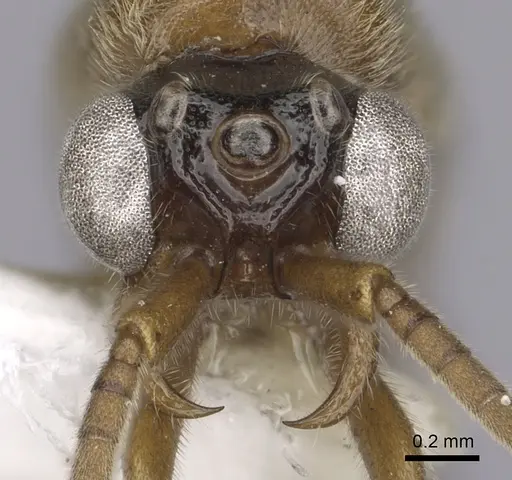
Neivamyrmex fuscipennis represents one of the most enigmatic ant species in North America. Despite being described in 1942,absolutely no worker specimens have ever been collected or documented. Every scientific record consists of male ants captured at lights between May and August. This is extraordinarily rare in myrmecology and strongly suggests this species practices temporary social parasitism, meaning the queen invades and takes over colonies of other Neivamyrmex species, making her workers indistinguishable from the host species [1]. The males are distinctive: around 10mm long with a slender build, very long curved mandibles that taper to sharp points, and wings that are deeply and uniformly darkened. The body is yellowish-brown with a notably darker blackish head. Males have been collected across a wide range from Kansas and Texas west to Arizona, and south through Chihuahua, Durango, Oaxaca, Puebla, and Morelos in Mexico at elevations between 990-1850m [2][1].
Why Workers Have Never Been Found
The complete absence of worker specimens is the defining mystery of this species. Several explanations are possible. First, the species may be a temporary social parasite, the queen invades a host colony, kills or replaces the host queen, and uses host workers to raise her brood. In this scenario, the mixed colony's workers would be a mix of host and parasite workers, making them nearly impossible to identify without genetic analysis. Second, the species may be extremely rare or localized. Third, workers may have behavioral patterns that make them difficult to collect, army ants are often nomadic and may pass through areas only briefly. The fact that only males have been collected (attracted to lights) suggests the species follows the typical army ant pattern of nuptial flights, but the worker caste remains entirely unknown [1][3].
Distribution and Habitat
Neivamyrmex fuscipennis occupies a range spanning the American Southwest into central Mexico. In the United States, they are found in Kansas, eastern Texas, New Mexico, and the Chiricahua Mountains of Arizona. In Mexico, they have been recorded from Chihuahua, Durango, Oaxaca, Puebla, Morelos, and San Luis Potosí. They inhabit diverse environments including creosotebush desert scrub, riparian canyons with oaks, pines and junipers, tropical deciduous forest, and even urban areas. Elevation ranges from near sea level in Texas to 1850m in central Mexico. Males have been collected flying in March, June, July, and August, with the primary season being May through August [3][1][2].
Current Scientific Status
The taxonomic history of this species has been complicated. Originally described by M.R. Smith in 1942 as Eciton (Neivamyrmex) fuscipennis, the authorship was confused for decades with earlier references to Wheeler (1908). The species was later redescribed as Neivamyrmex fuscipennis by Borgmeier in 1953,but this was synonymized with N. fuscipennis by Snelling and Snelling in 2007. The holotype and paratype males are housed in the United States National Museum, with additional specimens in the Museu de Zoologia da Universidade de São Paulo. The lectotype was designated by Watkins in 1975 from specimens collected by G.W. Belfrage in Texas [2][4].
Frequently Asked Questions
Can I keep Neivamyrmex fuscipennis as a pet ant?
No. This species has never been documented in captivity and workers have never been scientifically described. There are no established care guidelines, and no one has ever successfully collected or maintained a colony of this species. It is not currently possible to keep this ant.
Why have workers never been found for Neivamyrmex fuscipennis?
Scientists believe this species may practice temporary social parasitism, the queen invades colonies of other Neivamyrmex species, kills the host queen, and uses the host workers to raise her brood. This would make the workers nearly identical to the host species and extremely difficult to identify without genetic analysis [1].
What does Neivamyrmex fuscipennis look like?
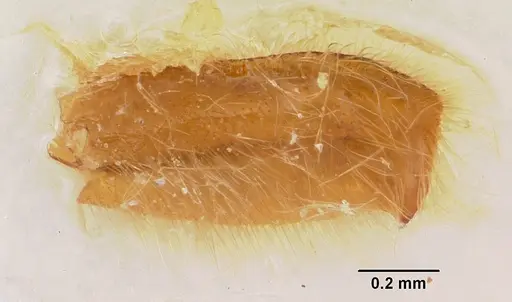
Only males are known. They are approximately 10mm long with a slender build. They have very long, curved, sickle-shaped mandibles that taper to sharp points. The body is yellowish-brown with a darker blackish head. The wings are deeply and uniformly darkened (infuscated). The antennae have a long, thin funiculus [3].
Where does Neivamyrmex fuscipennis live?
This species ranges from Kansas and eastern Texas, west to Arizona, and south through central Mexico (Chihuahua, Durango, Oaxaca, Puebla, Morelos, San Luis Potosí). They inhabit desert scrubland and riparian canyons with oaks, pines and junipers between 990-1850m elevation [2][1].
When do Neivamyrmex fuscipennis males fly?
Males have been collected flying from May to August, with some records in March. They are attracted to lights at night, which is how most specimens have been collected [3][1].
Is Neivamyrmex fuscipennis dangerous?
Unknown, no workers have ever been documented, so their sting ability and temperament are completely unknown. As army ants (Dorylinae), they would likely be predatory if workers existed, but this is entirely speculative [3].
How big do Neivamyrmex fuscipennis colonies get?
Unknown, no worker colonies have ever been documented. Colony size cannot be estimated without any data on the worker caste [3].
What do Neivamyrmex fuscipennis eat?
Unknown, no workers have ever been observed feeding. As army ants in the subfamily Dorylinae, they would likely be predatory on other insects if workers existed, but this is entirely speculative based on related species [3].
Are Neivamyrmex fuscipennis army ants?
Yes, they belong to the subfamily Dorylinae, which includes all army ants. However, unlike typical army ants that form large nomadic colonies, this species appears to have a very different lifestyle, possibly involving social parasitism of other army ant species [1].
Can I find Neivamyrmex fuscipennis in the wild?
Extremely unlikely. Only males have ever been collected, and only by light trapping at night during summer months. Even professional entomologists have never documented workers of this species. It would require expert knowledge and likely genetic analysis to identify if workers were found [1].
References

This caresheet is licensed under CC BY-SA 4.0 .
CASENT0103460
View on AntWeb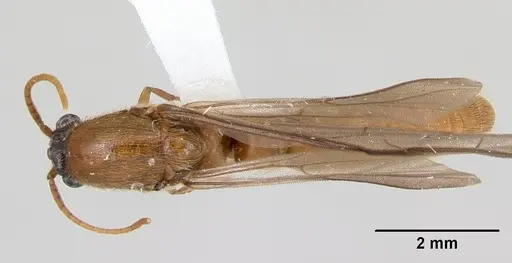
CASENT0103461
View on AntWeb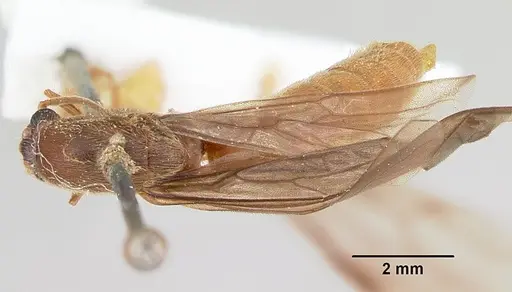
CASENT0104679
View on AntWeb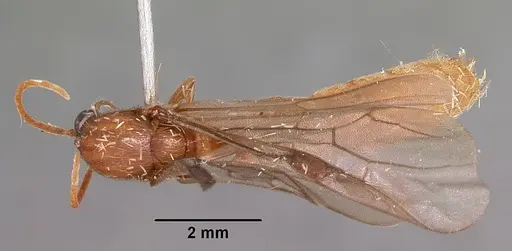
CASENT0249483
View on AntWeb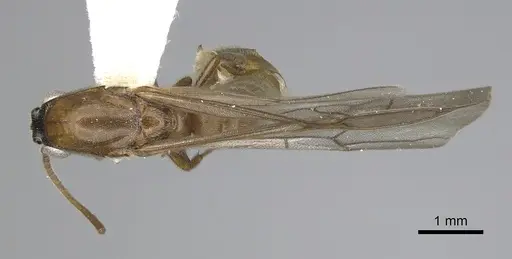
Literature
Loading...Loading products...