

Monomorium nitidiventre
- Scientific Name
- Monomorium nitidiventre
- Tribe
- Solenopsidini
- Subfamily
- Myrmicinae
- Author
- Emery, 1893
- Distribution
- Found in 4 countries
Monomorium nitidiventre Overview
Monomorium nitidiventre is an ant species of the genus Monomorium. It is primarily documented in 4 countries , including Egypt, Greece, Libya. Detailed taxonomic data and occurrence records can be further explored via authoritative databases such as AntWeb or the Global Biodiversity Information Facility (GBIF).
Monomorium nitidiventre
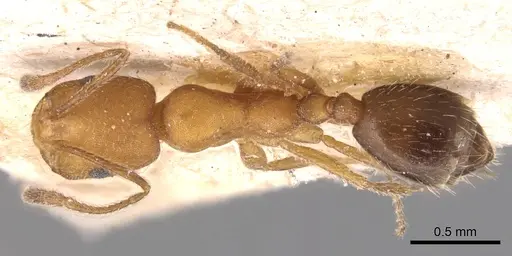
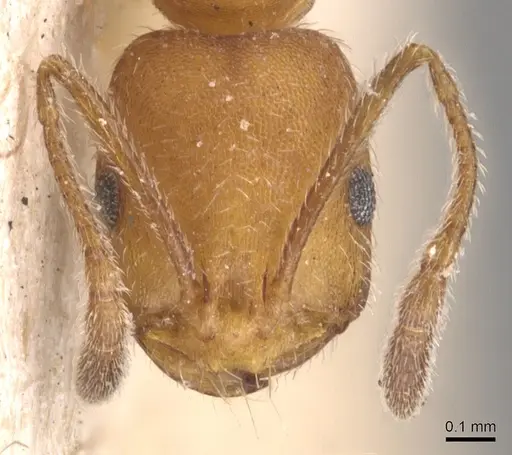
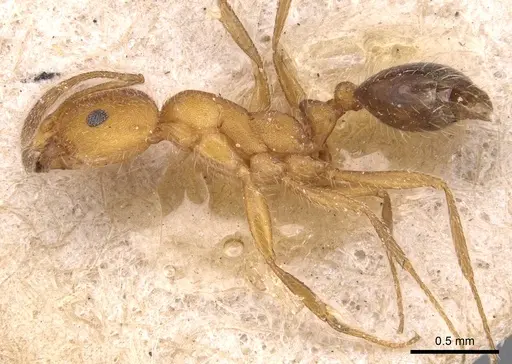
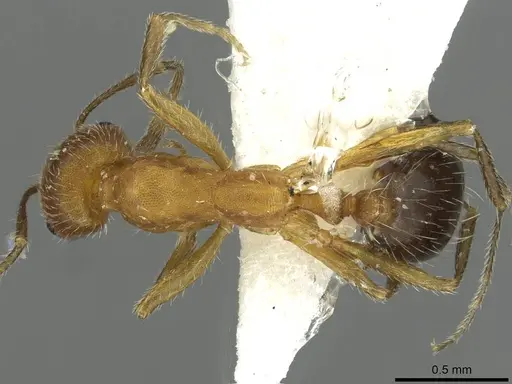
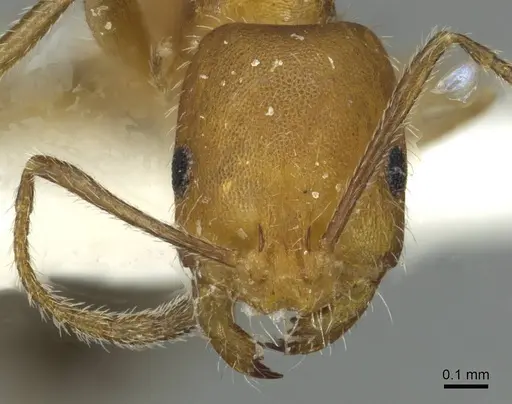
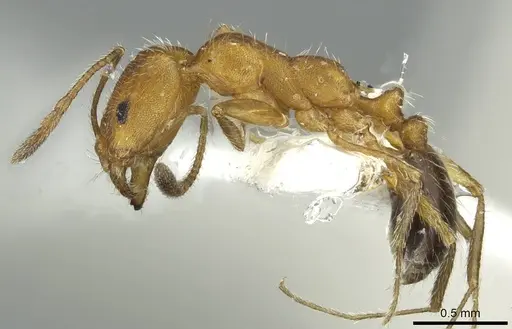
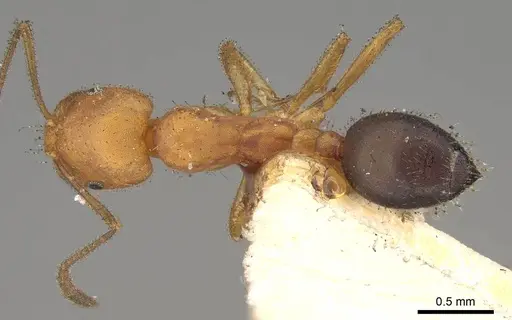
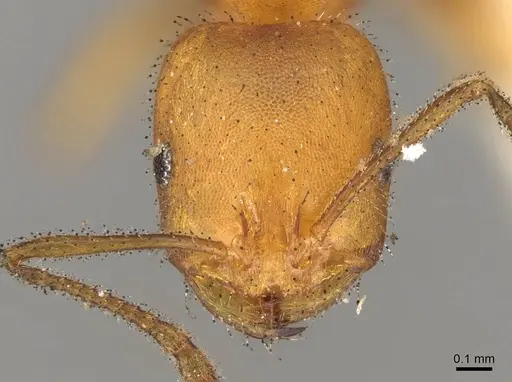
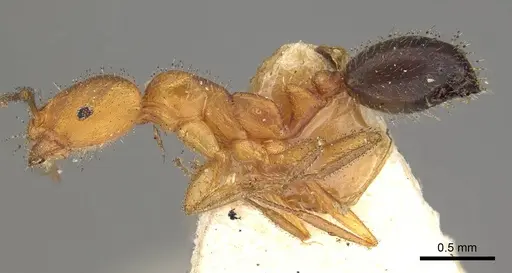
Monomorium nitidiventre is a small ant species belonging to the Myrmicinae subfamily, part of the Monomorium salomonis species group. Workers measure approximately 3-4mm, with a distinctive color pattern featuring a black gaster that contrasts sharply with the reddish-brown head, alitrunk, and petiole nodes. The species has dense reticulate-punctate sculpture on the head and alitrunk, while the gaster is more shining. This ant is found across the Middle East and North Africa, including Egypt, Iran, Kuwait, Saudi Arabia, United Arab Emirates, and Yemen, with one record from a beach habitat. Little is documented about its specific biology in the wild, but it is known to tend the aphid Aphis craccivora, indicating a mutualistic relationship with honeydew-producing insects.
Quick Summary
- Difficulty: Unknown, species has not been documented in captive antkeeping
- Origin & Habitat: Native to the Middle East and North Africa, found in Egypt, Iran, Kuwait, Saudi Arabia, United Arab Emirates, and Yemen. One specimen was collected on a beach. The species prefers arid to semi-arid habitats typical of the Arabian Peninsula and surrounding regions [1][2][3].
- Colony Type: Colony structure is unconfirmed. Based on genus patterns, likely single-queen (monogyne) colonies, but this has not been directly studied.
- Size & Growth:
- Queen: Estimated 5-6mm based on genus patterns, not directly measured for this species
- Worker: Approximately 3-4mm (HL 0.75-0.90mm, HW 0.67-0.91mm from type descriptions) [4]
- Colony: Unknown, no colony size data available for this species
- Growth: Unknown, no development data available
- Development: Estimated 6-8 weeks based on typical Monomorium genus development patterns (No direct development data exists for this species. Estimates based on related species in the genus.)
- Antkeeping:
- Temperature: Based on origin (Middle East/North Africa), likely prefers warm conditions around 24-30°C. Provide a thermal gradient allowing ants to self-regulate.
- Humidity: Arid-adapted species, keep nest substrate moderately dry, similar to other Monomorium species from desert regions. Avoid excessive moisture.
- Diapause: Unknown, no specific data on overwintering requirements. May tolerate cooler temperatures during winter months based on its range extending to northern regions, but this is unconfirmed.
- Nesting: No specific nesting data exists. Based on genus patterns, likely nests in soil or under stones in natural habitats. For captivity, standard test tubes or acrylic nests work well. Avoid overly humid conditions.
- Behavior: No specific behavioral observations documented for this species. Based on genus patterns, likely a relatively docile species with moderate foraging activity. Workers are small (3-4mm), so escape prevention should be considered due to their size. The species is known to tend aphids (Aphis craccivora), suggesting they forage for honeydew and may accept sugar sources [5][6].
- Common Issues: no captive husbandry data exists, this species has not been kept in captivity by hobbyists, wild-caught colonies may have unknown parasites or diseases since biology is unstudied, very limited distribution data makes accurate care recommendations difficult, Greek records may be misidentifications, ensure correct species identification if obtaining specimens
Species Identification and Range
Monomorium nitidiventre is a member of the Monomorium salomonis species group, specifically the bicolor complex. Workers are small ants measuring approximately 3-4mm with a distinctive appearance: the head, alitrunk (middle body section), and petiole nodes are reddish-brown, while the gaster (abdomen) is black or blackish, creating a sharp contrast. The head and alitrunk have dense reticulate-punctate sculpture, while the gaster is more shining with only superficial sculpture. The clypeus (face plate) is widely emarginate (notched), and the propodeal furrow is exceptionally well-defined with raised side margins. This species was originally described from Egypt and Yemen, with later records from Iran, Kuwait, Saudi Arabia, and the United Arab Emirates. Records from Greece are considered likely misidentifications of the similar species M. subopacum [1][7][8].
Distribution and Habitat
This species is found across the Middle East and North Africa. Confirmed records exist from Egypt (type locality), Iran (southern regions), Kuwait, Saudi Arabia, United Arab Emirates, and Yemen. Specimens have been collected in various habitats including beach environments and wadi (valley) systems. In the UAE, specimens were collected from areas near al-Jazirat al-Hamra and Wadi Wurayah in March and April 2005 [2][3]. In Iran, workers have been found associated with the aphid Aphis craccivora on Chenopodium album plants in the Mashhad region [6]. The species appears to prefer arid to semi-arid habitats typical of the Arabian Peninsula region.
Ecology and Associations
Monomorium nitidiventre is known to participate in mutualistic relationships with aphids. Specifically, it has been documented tending the cowpea aphid (Aphis craccivora) in Iran [5][6]. This means the ants protect aphids from predators and in return collect the honeydew they produce as a sugar source. This association has been recorded in agricultural areas where the aphids feed on Chenopodium album (a common weed). Additionally, one study in Egypt documented this ant species associated with a weevil (Curculionidae Apion sp.) and an unidentified dipteran, indicating potential myrmecophile relationships [9]. These associations suggest the species forages actively and will likely accept both sugar sources and small protein prey in captivity.
Captive Care Recommendations
Since no captive husbandry data exists for this species, care recommendations must be inferred from related Monomorium species and the species' known distribution. Based on its Middle Eastern origin, this ant likely prefers warm, relatively dry conditions. Keep the nest area at approximately 24-30°C with a thermal gradient allowing workers to regulate their temperature. Humidity should be moderate, avoid the saturated conditions preferred by tropical species. Provide a standard test tube setup or acrylic formicarium with moderate moisture. For feeding, offer sugar water or honey as a constant energy source, supplemented with small protein sources like fruit flies, pinhead crickets, or other small insects. The species' small size (3-4mm workers) means escape prevention should be a priority, use fine mesh and secure barriers. Given the complete lack of documented captive breeding, this species is not recommended for beginners or for anyone seeking well-established care protocols.
Taxonomic History
Monomorium nitidiventre was originally described by Emery in 1893 as a subspecies of Monomorium bicolor. Over time, it has been treated as a subspecies of both M. bicolor and M. subopacum by various authors. It was elevated to full species status by Collingwood in 1985 and has undergone several taxonomic changes. The name Monomorium nitidiventre, described by Collingwood and Agosti in 1996 from Yemen, was later synonymized with M. nitidiventre by Sharaf et al. in 2021 [8]. The species belongs to the Monomorium salomonis species group, which contains many similar-looking ants that can be difficult to distinguish in the field. Accurate identification often requires examination of the clypeal structure, propodeal furrow, and pilosity (hair distribution) under magnification.
Frequently Asked Questions
Is Monomorium nitidiventre a good species for beginners?
No. This species is not recommended for beginners because no captive husbandry data exists, it has never been documented being kept in ant colonies by hobbyists. The biology is poorly studied, making reliable care recommendations impossible. If you want a Monomorium species with established care protocols, consider more common species like Monomorium pharaonis (the Pharaoh ant) or Monomorium carbonarium.
What do Monomorium nitidiventre ants eat?
Based on their known association with the aphid Aphis craccivora, they likely consume honeydew as a primary sugar source. They probably also supplement their diet with small insects and other protein sources. In captivity, offer sugar water or honey as a constant sugar source, along with small protein prey like fruit flies, springtails, or tiny crickets.
How big do Monomorium nitidiventre colonies get?
The maximum colony size is unknown, no colony size data has been documented for this species. Based on related Monomorium species, colonies likely reach several hundred to a few thousand workers, but this is purely speculative.
What temperature do Monomorium nitidiventre ants need?
Temperature requirements are unconfirmed for this species. Based on their Middle Eastern and North African distribution, they likely prefer warm conditions around 24-30°C. Provide a thermal gradient so workers can self-regulate by moving between warmer and cooler areas of the nest.
Where is Monomorium nitidiventre found?
This species is found across the Middle East and North Africa, including Egypt (type locality), Iran, Kuwait, Saudi Arabia, United Arab Emirates, and Yemen. Records from Greece are considered likely misidentifications of similar species.
How long does it take for Monomorium nitidiventre to develop from egg to worker?
Development time is unconfirmed, no direct observations exist. Based on typical Monomorium genus patterns, expect approximately 6-8 weeks from egg to first worker at optimal warm temperatures, but this is purely an estimate.
Can I keep multiple Monomorium nitidiventre queens together?
Colony structure has not been studied for this species. The number of queens per colony is unknown, so combining unrelated queens is not recommended. Without data on whether they accept multi-queen arrangements, it's best to start with a single queen.
Do Monomorium nitidiventre ants need hibernation?
Diapause or hibernation requirements are unknown. Their range includes regions with cooler winters (northern parts of their range), so they may tolerate or require a cool period, but no specific data exists. Observe your colony's behavior and adjust accordingly if they become less active during winter months.
Is Monomorium nitidiventre available in the antkeeping hobby?
This species is extremely rare in the antkeeping hobby, likely not available at all. No documented captive colonies exist, and the species has not been studied enough for reliable breeding protocols. If you're interested in this genus, more common Monomorium species are readily available from suppliers.
References

This caresheet is licensed under CC BY-SA 4.0 .
Literature
Loading...Loading products...