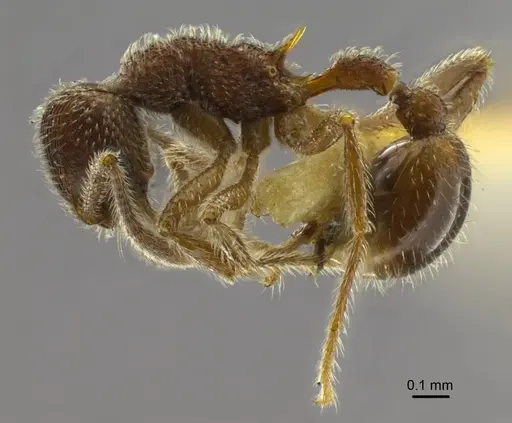
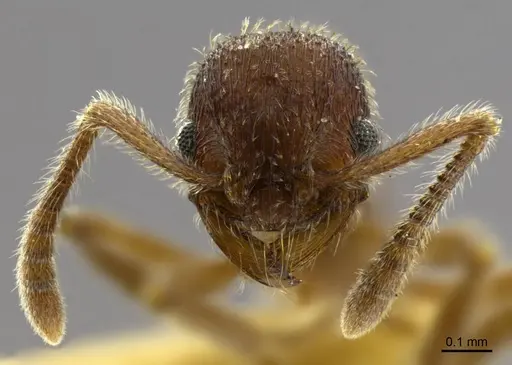
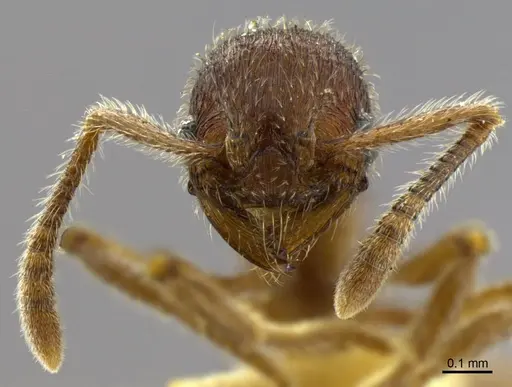
Hylomyrma longiscapa - "None known"
Hylomyrma longiscapa is a fascinating Neotropical ant species, often characterized by its cryptic nature and preference for living within leaf litter. These ants are noted for their distinctive physical features, including a long scape (the first segment of the antenna) and intricate striations on their body, which help distinguish them from similar species. Workers typically measure around 4.65 to 5.08 mm in total length, with queens being similar or slightly larger. When disturbed, Hylomyrma workers are known to exhibit thanatosis, a behavior where they feign death, making them blend in with their surroundings. Observations of their colonies in the wild are rare, contributing to their mysterious appeal in the antkeeping community.
- Difficulty: Hard
- Origin & Habitat: Neotropical Region: Brazil, Colombia, Ecuador, French Guiana, Guyana, Peru, Suriname (type locality), Venezuela. in These ants inhabit forested areas, including the Atlantic Forest, tropical rainforests (Amazon), 'Cerrado' (Brazilian savanna), and semideciduous forest enclaves. They are frequently found in leaf-litter samples, indicating a preference for nesting in leaf litter, fallen logs, rotten wood, or shallow natural cavities within the superficial soil layers..
- Colony Type: Monogyne (single queen), claustral founding.
- Size & Growth:
- Queen: 4.6-5.5mm
- Worker: 4.65-5.08mm
- Colony: Small (tens). Slow growth.
- Antkeeping:
- Temperature: Maintain temperatures between 24-28°C (75-82°F). As a tropical species, they thrive in a consistently warm environment..
- Humidity: High humidity is crucial for this species, ideally ranging from 70-90%. Adequate moisture in the nesting area is essential to prevent desiccation and support brood development..
- Diapause: Not required. Not specified at Not specified.
- Nesting: Given their natural habitat, these ants prefer setups that mimic leaf litter, rotten wood, or shallow soil. Naturalistic formicaria with deep substrate, or setups that allow for high moisture gradients, such as those made from y-tong or specific types of acrylic nests with ample hydration, are suitable. They are known to nest in fallen twigs in the wild..
- Behavior: Low aggressiveness.
- Common Issues: Humidity fluctuations, Lack of suitable substrate for nesting, Finding appropriate small prey, Difficulty of observation due to cryptic nature.
Keeping Hylomyrma longiscapa is often a challenging endeavor for antkeepers due to their inherent cryptic nature. These ants are masters of camouflage, frequently found within leaf litter in their natural habitats. A peculiar behavior they exhibit when disturbed is 'thanatosis,' where workers will feign death and become incredibly still, resembling small debris. This behavior, while fascinating, can make observing their colony dynamics and even locating them within a foraging area quite difficult, requiring patience and a keen eye from the antkeeper.
When it comes to feeding, Hylomyrma longiscapa are primarily insectivores with a taste for very small prey. Observations from related Hylomyrma species suggest they readily accept tiny invertebrates such as fruit flies (Drosophila spp.), springtails (Collembola), and the larvae, pupae, and imagos of various flies and beetles. Providing a consistent supply of appropriately sized live insects is paramount for their health and colony growth. They forage solitarily, so you might not see large groups swarming prey, but rather individual workers venturing out to find sustenance.
Their nesting preferences in the wild are quite specific, favoring leaf litter, decaying wood, or shallow soil cavities. This informs their captive care, as setting up a formicarium that accurately mimics these conditions is vital for their well-being. A naturalistic setup with a deep, moist substrate that allows them to excavate their own chambers, or a specialized formicarium designed for high humidity and substrate, would be ideal. Avoid overly large or open setups that might stress these shy ants, opting instead for a more contained and humid environment.
A unique aspect of the Hylomyrma genus, including H. longiscapa, is the presence of 'intercastes.' These are individuals that display a mix of worker and queen-like characteristics. While some Hylomyrma species, like H. primavesi, are known to have only ergatoid (wingless) queens, H. longiscapa typically has winged or dealate queens, alongside these intriguing intercastes. Understanding their caste development is still an ongoing area of research, and observing these variations within your own colony can offer a rare glimpse into the complex social structures of these ants.
Frequently Asked Questions
What kind of food do *Hylomyrma longiscapa* colonies thrive on?
These fascinating ants are primarily insectivorous, and their diet in the wild consists of very small invertebrates. In a captive setup, your Hylomyrma longiscapa will appreciate tiny live feeders like fruit flies (Drosophila), springtails (Collembola), or even small beetle larvae. It’s important to offer prey that's appropriately sized for their small workers; they’re not big hunters, so think 'miniature snacks'!
Where do *Hylomyrma longiscapa* naturally build their nests?
In their natural South American habitats, Hylomyrma longiscapa are quite particular about their nesting sites. They're often found cozying up in the leaf litter, inside decaying logs, or in shallow pockets within the soil. This tells us they prefer humid, naturalistic environments for their homes, whether that's in a test tube during founding or a more permanent formicarium setup.
How challenging are *Hylomyrma longiscapa* to keep for an antkeeper?
They’re definitely on the harder side for antkeeping. Their cryptic nature means they love to hide, making observations tricky. Plus, getting their humidity and substrate just right to mimic their natural leaf litter and shallow soil environments can be a real balancing act. They're a rewarding species for experienced keepers, but not ideal for beginners.
What's the typical size of a *Hylomyrma longiscapa* colony?
Compared to some other popular ant species, Hylomyrma longiscapa colonies tend to stay quite small. They usually number in the tens, so don’t expect a supercolony with thousands of workers. This smaller colony size means they have a slower growth rate, which can be a plus for keepers with limited space.
Do *Hylomyrma longiscapa* ants have a sting?
Yes, as members of the Myrmicinae subfamily, Hylomyrma longiscapa possess a sting. While their small size means any sting would likely be mild for humans, it's always wise to handle any ant species with care and caution, especially when performing nest maintenance or introducing food.
What type of formicarium is best suited for *Hylomyrma longiscapa*?
To truly cater to their needs, a naturalistic formicarium with a deep substrate layer that mimics leaf litter and moist soil is highly recommended. Y-tong or specialized acrylic nests that can maintain consistently high humidity levels (70-90%) are also excellent choices. The key is to provide a stable, humid environment that allows for tunneling and hiding.
Do *Hylomyrma longiscapa* need a diapause period?
No, Hylomyrma longiscapa are a tropical species native to warm, consistent climates in South America. Therefore, they do not require a diapause or hibernation period. Maintaining stable warm temperatures and high humidity year-round is essential for their continuous development.
What are 'intercastes' in *Hylomyrma longiscapa*?
'Intercastes' are fascinating individuals found within Hylomyrma colonies that exhibit traits of both workers and queens. For H. longiscapa, these might be larger workers with some queen-like characteristics. While most colonies will have a primary winged queen, the presence of intercastes adds another layer of intrigue to observing their social structure and caste development.
How active are *Hylomyrma longiscapa* in a captive setup?
Due to their cryptic and shy nature, Hylomyrma longiscapa aren't typically a highly active species that will constantly be visible in your outworld. They tend to be more reclusive, spending much of their time within the nest or foraging individually. Patience is a virtue when observing these fascinating, hidden gems of the ant world.
What are the ideal temperature and humidity ranges for keeping *Hylomyrma longiscapa*?
For optimal health and growth, aim for temperatures between 24-28°C (75-82°F). Humidity is even more critical; maintain a high range of 70-90%. Consistency in these parameters is key to preventing common issues like mold or dehydration, especially given their natural rainforest and forest floor habitats.