

Formica curiosa
- Scientific Name
- Formica curiosa
- Tribe
- Formicini
- Subfamily
- Formicinae
- Author
- Creighton, 1935
- Common Name
- Curious Mound Ant
- Distribution
- Found in 1 countries
Formica curiosa Overview
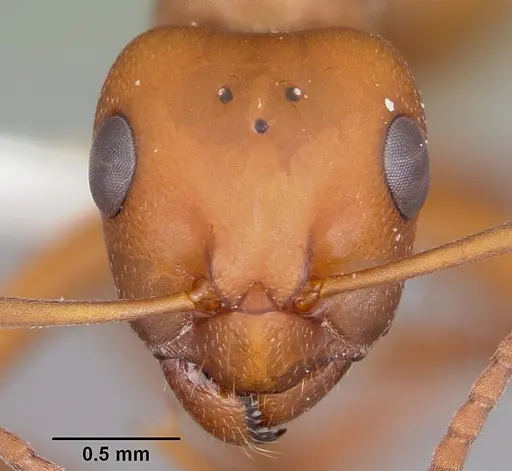
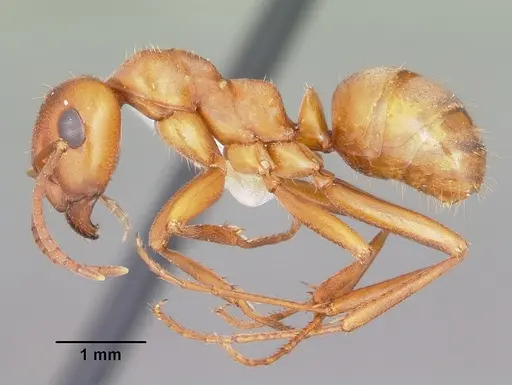
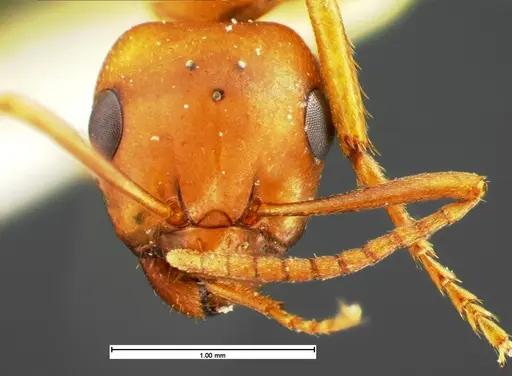
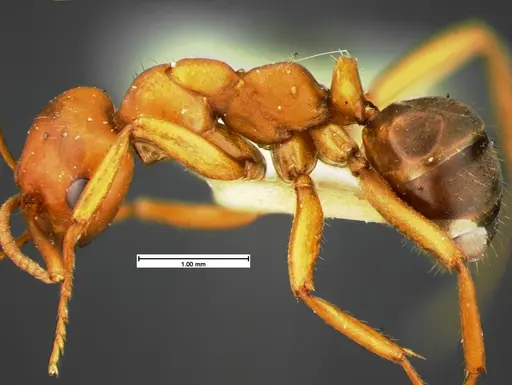
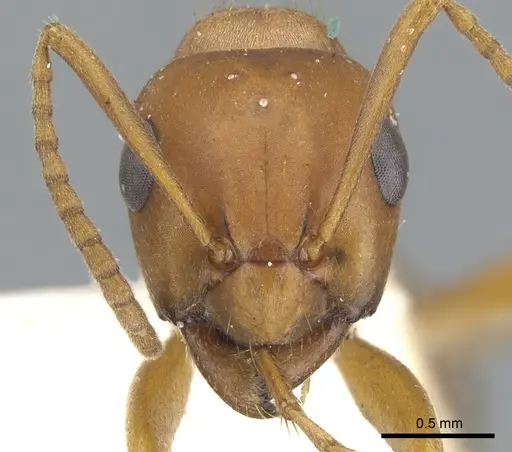
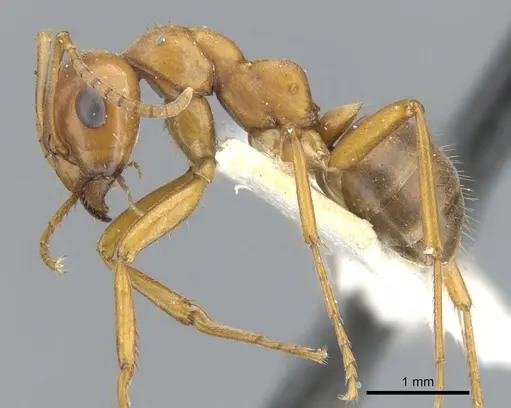
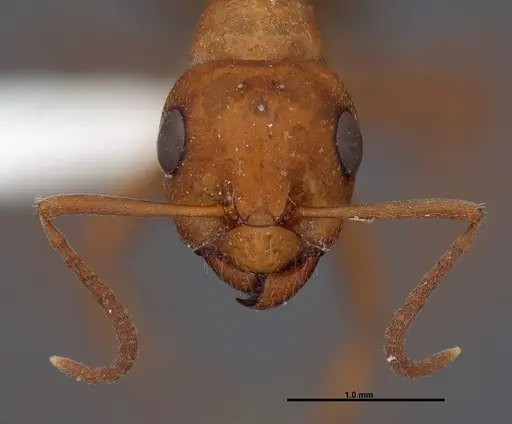
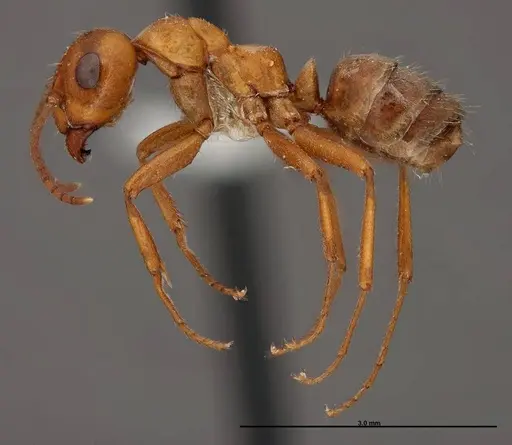
Formica curiosa (commonly known as the Curious Mound Ant) is an ant species of the genus Formica. It is primarily documented in 1 countries , including United States of America. Detailed taxonomic data and occurrence records can be further explored via authoritative databases such as AntWeb or the Global Biodiversity Information Facility (GBIF).
Formica curiosa - "Curious Mound Ant"
Formica curiosa is a medium-sized black ant native to the Pacific Northwest of North America. Workers are typically dark brown to black, measuring around 4-7mm. This species is a facultative slave-maker, it can function without slaves but strongly prefers to have them. The colony founding queen invades nests of other Formica species (particularly those in the neogagates, fusca, and pallidefulva groups), kills the host queen, and uses the existing workers to raise her first brood. Once established, slave-making workers conduct raids to capture more host brood. This makes them one of the more challenging Formica species to keep, as they require a host species to thrive long-term [1][2].
Quick Summary
- Difficulty: Expert
- Origin & Habitat: Western North America, Montana to Washington and Oregon, south to northern Nevada, north into British Columbia. Found in cool desert habitats and sclerophyllous shrubland [1].
- Colony Type: Facultative slave-maker. Colonies start with a single founding queen who invades a host Formica colony. Once established, colonies grow through raiding behavior to acquire more slave workers.
- Colony: Monogyne
- Queen: Socially parasitic, Temporary parasitic
- Special: Slave-making
- Size & Growth:
- Queen: Estimated 7-9mm based on genus Formica patterns
- Worker: Estimated 4-7mm based on genus Formica patterns [2]
- Colony: Estimated up to several thousand workers based on related Formica species
- Growth: Moderate
- Development: Estimated 6-8 weeks at optimal temperature based on Formica genus patterns (Development time depends heavily on host worker assistance during founding)
- Antkeeping:
- Temperature: Keep at room temperature (20-24°C). They tolerate cooler conditions than many ants due to their northern distribution. A gentle gradient is recommended.
- Humidity: Moderate humidity (40-60%). They prefer drier conditions similar to their cool desert habitat.
- Diapause: Yes, they require a winter dormancy period of 3-4 months at 5-10°C, mimicking their natural cold-season cycle
- Nesting: Y-tong (AAC) nests or formicaria with chambers scaled to their medium size. They do well with moderate substrate depth and minimal moisture. Avoid overly damp conditions.
- Behavior: These ants are aggressive and territorial. Slave-making workers will actively raid other Formica colonies for brood. Workers are medium-sized and can defend themselves, though they lack a painful sting. They are active foragers and will establish well-defined foraging trails. Escape risk is moderate, standard barrier methods work well for this size [3].
- Common Issues: Host species requirement, colonies struggle without slave workers and need a host Formica species to function long-term, Aggressive colony founding, the queen must successfully invade a host nest, which often fails in captivity, Parasitic fungus risk, they can be infected by Laboulbenia formicarum, which while not usually fatal, can affect worker health [3][4], Difficult to establish, even successful invasions may fail if the host colony is too small or weak, Winter dormancy is mandatory, colonies that don't receive proper hibernation may decline or fail to produce reproductives
Understanding Slave-Making Behavior
Formica curiosa is a facultative slave-maker, meaning it can survive without slaves but performs much better with them. This is a complex social structure that creates unique challenges for antkeepers. The founding queen must locate and invade a colony of another Formica species, typically species in the neogagates, fusca, or pallidefulva groups. She enters the host nest, kills or displaces the host queen, and tricks the host workers into accepting her by producing chemicals that mimic the host colony's scent. The host workers then raise her brood as if it were their own. Once the first slave-made workers emerge, they begin conducting raids on nearby Formica colonies to capture more pupae and larvae. These captured brood are raised as slave workers who continue foraging and nest maintenance while the slave-making species focuses on reproduction and raiding [1][2].
Housing and Nest Setup
These ants do well in Y-tong (AAC) nests or acrylic formicaria with medium-sized chambers. Because they are a more advanced species, the nest should have multiple chambers to allow for colony expansion. Provide a water test tube as an outworld water source. Temperature should be maintained at 20-24°C, they tolerate cooler conditions better than tropical species. Humidity should be moderate (40-60%), avoiding overly damp conditions that can promote mold. Outworld setup should include a foraging area with easy access to protein food sources. Escape prevention is straightforward for this medium-sized ant, standard fluon barriers on smooth surfaces are effective [1].
Feeding and Nutrition
Formica curiosa is omnivorous like most Formica species. They readily accept sugar sources (honey water, sugar water) and protein sources (insects, small arthropods). In captivity, they should be fed a balanced diet: offer sugar water or honey consistently, and provide protein prey 2-3 times per week. Because they rely on host workers for much of their nest maintenance, ensuring good nutrition is critical for colony health. Live prey is preferred but they will accept pre-killed insects. Remove uneaten prey after 24-48 hours to prevent mold [1].
Host Species Requirements
This is the most critical aspect of keeping F. curiosa successfully. You must provide a host Formica species for the colony to function properly long-term. Suitable host species include Formica fusca, Formica pallidefulva, or other species from the neogagates group. The host colony should be established and have at least 20-50 workers when introducing the slave-maker. Some keepers recommend introducing the slave-making queen to a host colony that already has brood at various stages, as this increases acceptance. The host workers will raise the slave-maker's first brood, and these emerging workers will begin raiding behavior. Without a host colony, the slave-maker colony will struggle to maintain itself [1][2].
Seasonal Care and Hibernation
As a temperate species from the Pacific Northwest, Formica curiosa requires a winter dormancy period. Reduce feeding in late autumn as temperatures drop. Provide hibernation at 5-10°C for 3-4 months (typically November through February in the Northern Hemisphere). During hibernation, the colony should be kept in a cool, dark location such as an unheated garage or basement. Ensure the nest substrate remains slightly moist during hibernation, do not let it dry out completely. Return to normal temperatures gradually in spring. Colonies that skip hibernation may become stressed and fail to produce reproductive castes [1].
Health Concerns and Parasites
This species can be infected by the parasitic fungus Laboulbenia formicarum. While infections are not usually fatal, heavily infested workers may have reduced foraging efficiency. The fungus appears as tiny dark structures on the ant's body. Infected workers continue foraging but the fungus can spread to other workers through direct contact. Maintain good hygiene, remove dead workers promptly, and avoid introducing wild-caught Formica colonies that might carry infections. If you suspect a fungal issue, isolate affected colonies and improve ventilation [3][4].
Frequently Asked Questions
Can I keep Formica curiosa without a host species?
No, this is a slave-making species that requires host Formica workers to function long-term. While they can survive briefly without slaves, colonies typically decline without host workers to help with nest maintenance and foraging.
How do I introduce a slave-making queen to a host colony?
Introduce the founding queen to an established host colony (at least 20-50 workers) with brood present. The queen will need to kill or displace the host queen and convince host workers to accept her. Success rates vary, providing a colony with diverse brood stages improves chances.
What host species work best for Formica curiosa?
Species from the Formica neogagates, fusca, and pallidefulva groups are natural hosts. Formica fusca and Formica pallidefulva are the most commonly used in captivity. Avoid using aggressive or too-small host colonies.
How long does it take for a colony to establish?
Colony establishment depends heavily on successful host adoption. The founding phase takes several months, with the first workers appearing in 6-8 weeks if successful. Full colony development with raiding behavior may take 1-2 years.
Are Formica curiosa good for beginners?
No, this is an expert-level species due to their slave-making requirements. They need a host species, proper hibernation, and more complex colony management than typical ants. Beginners should start with easier species like Lasius niger or Formica fusca.
Do they need hibernation?
Yes, as a temperate species from the Pacific Northwest, they require 3-4 months of winter dormancy at 5-10°C. Skipping hibernation can lead to colony decline and failure to produce reproductives.
How big do colonies get?
Mature colonies can reach several thousand workers, though exact numbers are not well documented. Growth is moderate and depends heavily on successful slave acquisition through raiding behavior.
What temperature do they need?
Keep at room temperature (20-24°C). They tolerate cooler conditions better than tropical ants due to their northern distribution. A temperature gradient is beneficial but not required.
Why are my ants dying?
Common causes include: failed host adoption, improper hibernation, fungal infections from Laboulbenia, or insufficient nutrition. Check that the host colony is healthy and large enough. Ensure proper seasonal cycle and adequate protein feeding.
References

This caresheet is licensed under CC BY-SA 4.0 .
CASENT0104770
View on AntWeb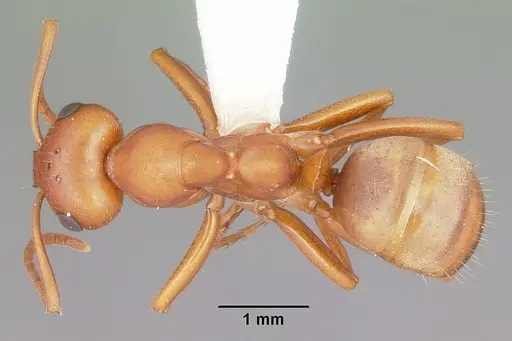
CASENT0105595
View on AntWeb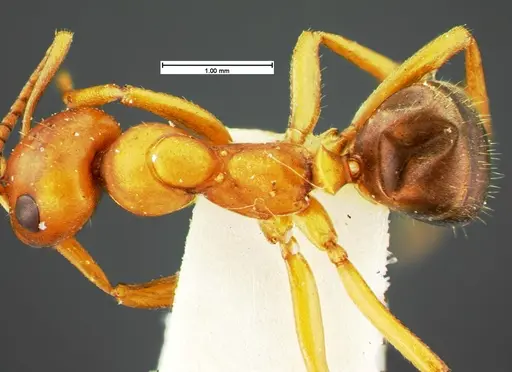
CASENT0903280
View on AntWeb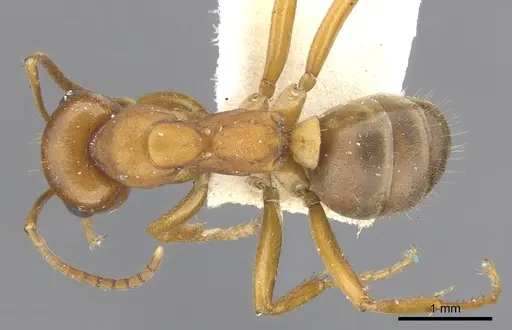
FMNHINS0000083063
View on AntWeb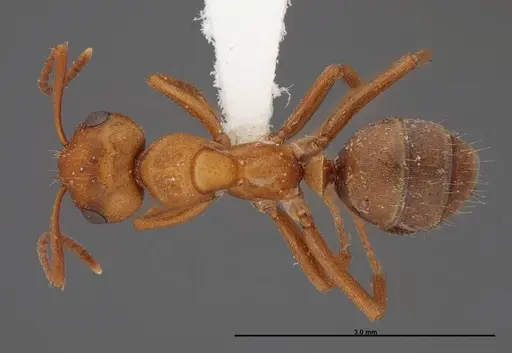
Literature
Loading...Loading products...