

Dorymyrmex reginicula
- Scientific Name
- Dorymyrmex reginicula
- Tribe
- Leptomyrmecini
- Subfamily
- Dolichoderinae
- Author
- Trager, 1988
- Common Name
- Dwarf Queen Pyramid Ant
- Distribution
- Found in 1 countries
Dorymyrmex reginicula Overview
Dorymyrmex reginicula (commonly known as the Dwarf Queen Pyramid Ant) is an ant species of the genus Dorymyrmex. It is primarily documented in 1 countries , including United States of America. Detailed taxonomic data and occurrence records can be further explored via authoritative databases such as AntWeb or the Global Biodiversity Information Facility (GBIF).
Dorymyrmex reginicula - "Dwarf Queen Pyramid Ant"
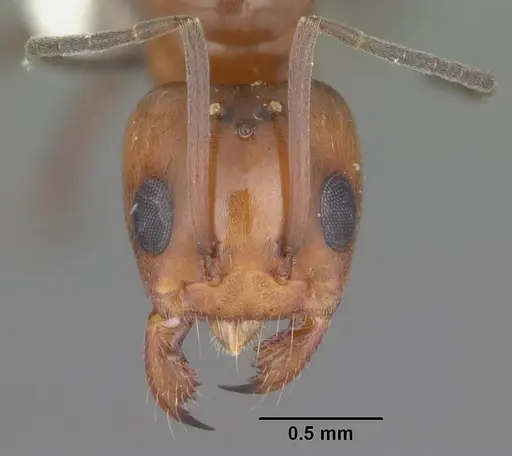
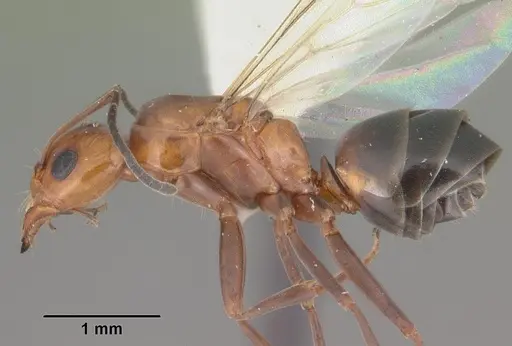
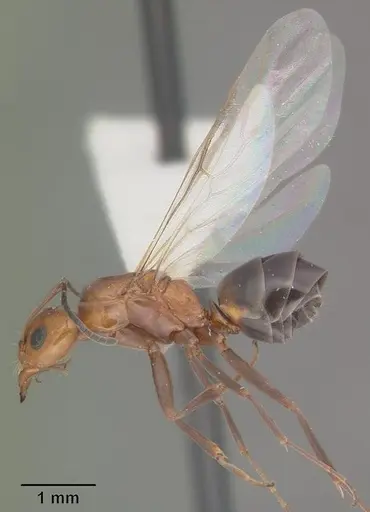
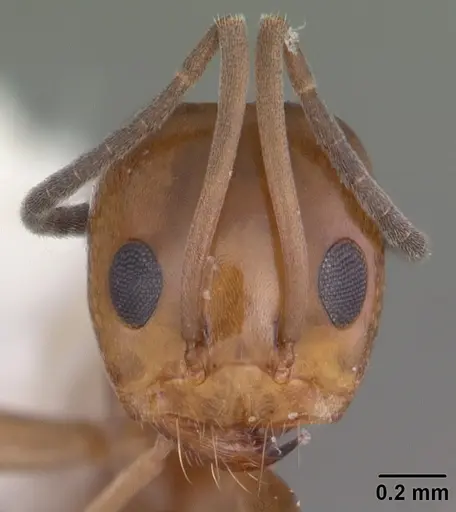
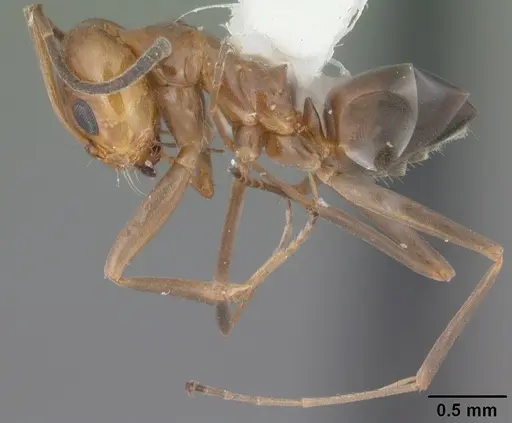
Dorymyrmex reginicula is a tiny, rarely encountered ant species native only to Florida. Workers measure just 0.95-1.05mm with a distinctive appearance featuring a narrower, shinier reddish head compared to similar species, and slightly longer scapes. The queen is unusually small for the genus, the smallest known Dorymyrmex queen, which inspired its scientific name 'reginicula' (little queen). This species is a social parasite, meaning it invades and lives within colonies of another ant species (Dorymyrmex bureni, and possibly Dorymyrmex bossutus) rather than founding its own colony. Workers are stingless. [1][2][3]
Quick Summary
- Difficulty: Expert
- Origin & Habitat: Central Florida peninsula from southern Highlands County north into Volusia County. Found in sandy habitats typical of Dorymyrmex species. [2]
- Colony Type: Social parasite, lives within host colonies of Dorymyrmex bureni. The species cannot form independent colonies. [1]
- Queen: Socially parasitic
- Size & Growth:
- Antkeeping:
- Temperature: Unknown for this species. Based on related Dorymyrmex species and Florida habitat, likely 22-28°C. Start in this range and observe colony activity.
- Humidity: Unknown. Related Florida Dorymyrmex species typically prefer dry to moderately humid conditions.
- Diapause: Unknown. Florida species may have reduced activity in cooler months but true hibernation is unlikely given the subtropical climate.
- Nesting: This is a social parasite that lives within host colonies. In captivity, you would need to maintain both the parasite and host species together. Natural nests would be within host colony structures. [1]
- Behavior: Social parasite behavior, lives within host colonies of Dorymyrmex bureni. Workers are small and likely forage alongside host workers. Stingless. The species is rarely encountered in the wild, making up less than 6% of ant samples in studies. [3][1]
- Common Issues: this species is a social parasite and cannot form independent colonies, keeping it requires maintaining host species Dorymyrmex bureni, the species is rarely encountered and difficult to locate in the wild, no captive breeding data exists for this species, extremely small size makes observation and care challenging, host-parasite relationship dynamics in captivity are unknown
Understanding Dorymyrmex reginicula
Dorymyrmex reginicula is one of the most unusual ant species you could consider keeping, it's a social parasite that cannot survive on its own. This means the queen invades an existing colony of another species (Dorymyrmex bureni, and possibly Dorymyrmex bossutus) and lives among the host workers. The host colony essentially raises the parasite's brood alongside their own. This is fundamentally different from most ant species where a queen founds a new colony alone. [1] The species is endemic to Florida, meaning it's found nowhere else on Earth. It's also rarely encountered, in one major study of Florida ants, it made up less than 6% of samples collected. [3] The workers are tiny at under 1mm, and the queens are remarkably small, the smallest of any known Dorymyrmex species, which is why the species name means 'little queen.' [1]
The Challenge of Keeping a Parasitic Ant
Keeping Dorymyrmex reginicula is not recommended for any keeper, even experienced ones. Unlike typical ants where you can establish a colony with a single queen, this species requires you to maintain TWO species simultaneously, the parasite and its host Dorymyrmex bureni. The parasite queen must be introduced to an established host colony, and even then, host colonies may reject or kill the intruding queen. The dynamics of how the host workers respond to the parasite in captivity are completely unstudied. There's no established protocol for successful colony establishment, no data on how long the relationship lasts, or what happens when the host queen dies. This is truly a species for scientific study rather than hobby keeping. [1]
Identification and Distinction from Similar Species
Dorymyrmex reginicula is easily confused with the more common Dorymyrmex smithi (formerly Dorymyrmex medeis). Key distinguishing features include: workers have a narrower, shinier head with less pubescence on the sides, a brighter reddish color on the head and thorax, and slightly longer scapes (the antennae segments). The queens are definitively identified by their small size and narrow, slender head, Dorymyrmex smithi queens are significantly larger with a very broad head. If you find what appears to be this species in Florida, careful comparison of these features is necessary for accurate identification. [1]
Natural History and Distribution
This species is known only from central Florida, with documented populations from Alachua County (Gainesville area) south through Highlands County. It's found in the central peninsular region of the state. The species was described by James Trager in 1988,who determined its parasitic relationship with Dorymyrmex bureni. It has not been recorded outside Florida, making it a truly endemic species. The type specimens were collected in November 1975. In the wild, it's considered a rare species, making up a small percentage of ant samples even in dedicated surveys. [2][1]
Frequently Asked Questions
Can I keep Dorymyrmex reginicula as a pet ant?
No, this species is not suitable for ant keeping. It's a social parasite that cannot form independent colonies, you would need to maintain both this species AND its host Dorymyrmex bureni together. No established protocol exists for this, and the species is extremely rare in the wild. This is a species for scientific study only. [1]
What does Dorymyrmex reginicula eat?
Like other Dorymyrmex species, they likely forage for honeydew and small insects. One study recorded them collecting honeydew from Diaphorina citri nymphs (a psyllid). However, since they live within host colonies, they likely share the host's food sources. [4]
Where is Dorymyrmex reginicula found?
Only in central Florida, from Gainesville area (Alachua County) south to Highlands County. It's endemic to Florida and not found anywhere else in the world. [2][1]
How do I identify Dorymyrmex reginicula?
Look for workers around 1mm with a narrower, shinier reddish head compared to similar species like Dorymyrmex smithi. The scapes are slightly longer. Queens are very small (about 1mm) with a narrow, slender head, much smaller than other Dorymyrmex queens. Accurate identification requires comparing multiple specimens. [1]
Is Dorymyrmex reginicula endangered?
The conservation status is not formally listed, but the species is considered rare and has a very limited range (only central Florida). Its dependence on host colonies and specific habitat requirements make it vulnerable. It's not a species you're likely to encounter. [2][1]
What is a social parasite ant?
A social parasite is an ant species that lives within another ant colony and relies on the host workers to raise its brood. Unlike slave-making ants that raid other colonies, social parasites typically integrate peacefully with the host. Dorymyrmex reginicula invades Dorymyrmex bureni colonies and lives alongside the host workers. [1]
Can I catch a queen and start a colony?
No. Unlike most ant species, you cannot start a colony with a single Dorymyrmex reginicula queen. She cannot found a colony alone, she must invade an existing host colony. Even if you could find a queen (they're rarely encountered), she'd need a host Dorymyrmex bureni colony to survive. This makes captive establishment essentially impossible. [1]
References

This caresheet is licensed under CC BY-SA 4.0 .
CASENT0103899
View on AntWeb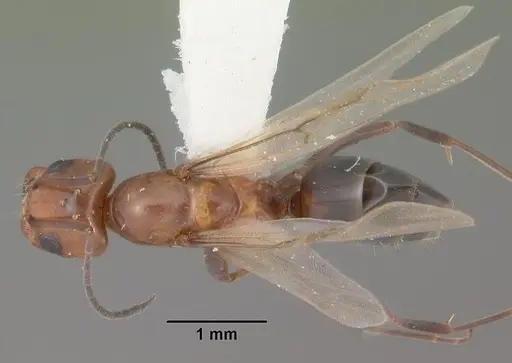
CASENT0103900
View on AntWeb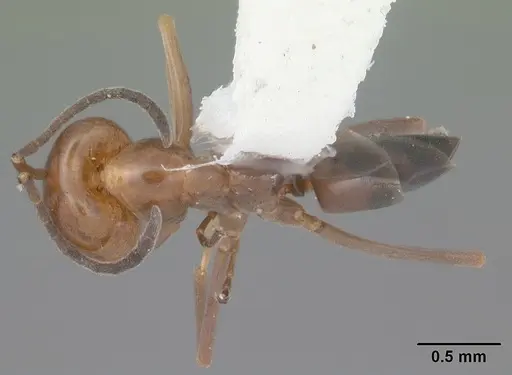
Literature
Loading...Loading products...