

Dorymyrmex medeis
- Scientific Name
- Dorymyrmex medeis
- Tribe
- Leptomyrmecini
- Subfamily
- Dolichoderinae
- Author
- Trager, 1988
- Common Name
- Usurper Pyramid Ant
- Distribution
- Found in 1 countries
Dorymyrmex medeis Overview
Dorymyrmex medeis (commonly known as the Usurper Pyramid Ant) is an ant species of the genus Dorymyrmex. It is primarily documented in 1 countries , including United States of America. Detailed taxonomic data and occurrence records can be further explored via authoritative databases such as AntWeb or the Global Biodiversity Information Facility (GBIF).
Dorymyrmex medeis - "Usurper Pyramid Ant"
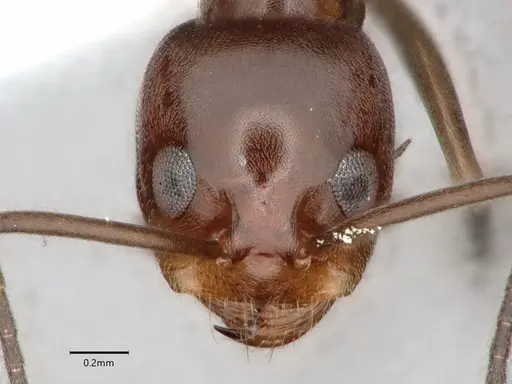
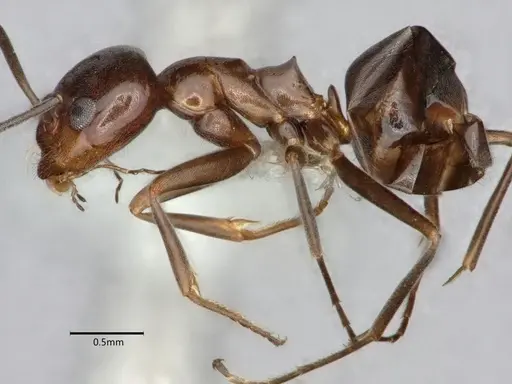
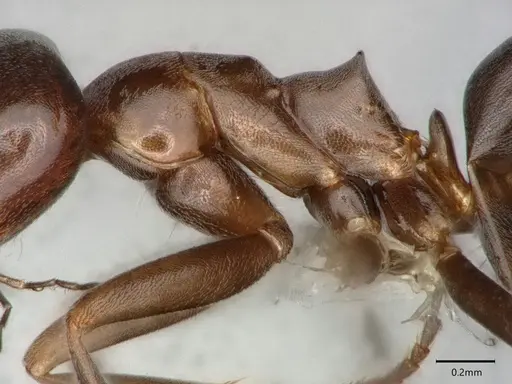
Dorymyrmex medeis is a small, dark brown to nearly black pyramid ant native to the southeastern United States. Workers measure around 2-4mm and have a distinctive sharp angle on the mesonotum that helps identify them [1]. This species is one of the most biologically well-known Dorymyrmex species due to its unique social parasitic relationship with its host species, Dorymyrmex bureni [2].
What makes D. medeis truly fascinating is its temporary social parasitism, newly mated queens invade colonies of D. bureni, get accepted by workers, and the host workers raise the parasite's offspring. Over time, the D. bureni workers die off, leaving a pure D. medeis colony. This is one of the first documented cases of what researchers call 'incipient dulosis', an early stage in the evolution of slave-making behavior in ants [2].
Quick Summary
- Difficulty: Expert
- Origin & Habitat: Southeastern United States, found throughout Florida and South Carolina in habitats like dunes, old fields, roadsides, lawns, pastures, and unpaved roadbeds [2][3]. They prefer the same habitats as their host species, D. bureni.
- Colony Type: Temporary social parasite, colonies form by invading D. bureni colonies. Mature colonies are polydomous, occupying multiple nests spanning a meter or more apart, with one colony having up to 400 nest entrances [2].
- Colony: Monogyne
- Queen: Socially parasitic, Temporary parasitic
- Size & Growth:
- Queen: Estimated 4-6mm based on genus typical size
- Worker: 2-4mm [1]
- Colony: Large colonies with hundreds of workers and multiple nest entrances [2]
- Growth: Moderate
- Development: Estimated 6-8 weeks based on related Dorymyrmex species (Development not directly studied, estimate based on genus patterns for subtropical Dorymyrmex species)
- Antkeeping:
- Temperature: Keep around 24-28°C, they thrive in warm conditions typical of their southeastern US range
- Humidity: Moderate humidity around 50-70%. They inhabit areas from recently cleared land to mesic forests [3]
- Diapause: No true diapause required, mating flights occur year-round from February through October [2]
- Nesting: This species cannot found colonies independently. You must obtain a queen that has already been accepted by D. bureni workers or an established mixed colony. Natural nests are in soil with multiple entrances. In captivity, provide a setup with multiple connected chambers or allow them to integrate with D. bureni host colonies
- Behavior: Highly aggressive ants that dominate their territories and allow few other ant species to nest nearby [2]. They are effective predators, only 3% of newly mated fire ant queens escape predation from D. medeis [2]. They protect and tend at least 27 species of honeydew-producing insects [2]. Escape risk is moderate due to their small size, use standard barrier methods. They are active foragers and will readily hunt small prey.
- Common Issues: This species requires a D. bureni host colony, you cannot start a colony from a lone queen since they cannot found colonies independently, Mixed colonies are fragile and often fail, three observed wild mixed colonies all disappeared within weeks of discovery [2], They are aggressive and may escape if not properly contained, Because they are social parasites, obtaining a colony requires either finding an established mixed colony or introducing a D. medeis queen to D. bureni workers, They may be harder to find than common D. bureni, they occur throughout SC but much more rarely [1]
Understanding Dorymyrmex medeis as a Social Parasite
Dorymyrmex medeis is one of the few ant species that cannot establish a colony on its own. Unlike most ants where a queen seals herself in a chamber and raises her first workers alone, D. medeis queens must invade an existing colony of their host species, Dorymyrmex bureni. The queen enters the D. bureni nest and is accepted by the workers, who then raise her offspring instead of their own [2].
This creates a temporary mixed colony containing both D. bureni and D. medeis workers. Over time, the D. bureni workers die off naturally or are replaced, eventually leaving a pure D. medeis colony. Researchers have observed this process in the wild and successfully replicated it in captivity by introducing a D. medeis queen to about 50 D. bureni workers, the workers accepted her without aggression and raised around 20 D. medeis workers within a few weeks [2].
For antkeepers, this means you cannot simply collect a mated queen and expect her to found a colony. You either need to find an established mixed colony in the wild, or establish a D. bureni colony first and then introduce a D. medeis queen.
Housing and Nest Setup
Housing D. medeis requires a fundamentally different approach than most ant species because of their parasitic lifestyle. You have two main options: either locate and collect an established mixed colony in the wild (difficult but possible), or establish a D. bureni colony and introduce a D. medeis queen.
If maintaining a mixed colony, provide a naturalistic setup with multiple connected chambers or allow the ants to expand into multiple test tubes connected by tubing. In the wild, mature colonies occupy multiple nests up to a meter apart, so they appreciate having various interconnected spaces [2]. Use standard escape prevention, while not particularly strong climbers, their small size means they can slip through loose connections.
If keeping D. bureni as hosts, house them in a standard setup appropriate for that species, test tubes with water reservoirs work well. Once you introduce the D. medeis queen, monitor for acceptance. The host workers should accept her without aggression if the introduction is done carefully.
Feeding and Diet
Dorymyrmex medeis are aggressive predators and omnivores. In the wild, they hunt various small invertebrates and are particularly effective at preying on newly mated queen ants, studies show they capture and kill 97% of fire ant queens that land within their territory [2]. They also tend honeydew-producing insects, protecting at least 27 species of Homoptera in 7 families [2].
In captivity, feed them small protein sources like fruit flies, small crickets, and other tiny insects. Offer sugar water or honey as a carbohydrate source, especially since they protect and farm honeydew-producing insects in the wild. Feed protein prey 2-3 times per week and keep a constant sugar water supply. Remove uneaten prey after 24-48 hours to prevent mold.
Temperature and Seasonal Care
As a southeastern US species, D. medeis prefers warm conditions. Keep the colony at 24-28°C for optimal activity and development. They are active year-round in their native range, with mating flights occurring from February through October on warm, humid, overcast afternoons [2].
Unlike many temperate ant species, they do not require a true diapause period. However, you can reduce temperatures slightly during winter months (around 18-20°C) to slow activity and simulate natural seasonal changes, but this is not strictly necessary. The key is to maintain warmth and avoid cold temperatures that would suppress their activity.
Behavior and Colony Dynamics
Dorymyrmex medeis colonies are polydomous, a single colony maintains multiple nest entrances that can span over a meter apart. Research documented one exceptionally large colony with up to 400 separate nest entrances [2]. The queen and eggs are typically found in one or a few central nests, while workers and older brood occupy the peripheral nests.
These ants are highly aggressive and territorial. They protect their territories fiercely and will attack intruding ants. Studies show they dramatically reduce the success of competing ant species, only 3% of fire ant queens successfully escape their predation [2]. This aggressive behavior extends to their relationship with the host D. bureni, once established, they gradually replace the host workers.
For keepers, this means D. medeis colonies can be robust once established, but the founding process is challenging and the mixed-colony stage is particularly fragile.
Frequently Asked Questions
Can I keep Dorymyrmex medeis as a pet ant?
Yes, but this is an expert-level species. Unlike most ants, D. medeis cannot found colonies independently, they require a host colony of Dorymyrmex bureni to establish. You either need to find an established mixed colony in the wild or establish D. bureni first and introduce a D. medeis queen.
How do I start a Dorymyrmex medeis colony?
You cannot start from a lone queen. Your options are: 1) Find and collect an established mixed D. medeis/D. bureni colony in the wild (they have multiple nest entrances), or 2) Establish a D. bureni colony, then carefully introduce a D. medeis queen. The workers should accept her if done without aggression.
What do Dorymyrmex medeis eat?
They are omnivorous predators. Feed small protein sources like fruit flies, tiny crickets, and other small insects 2-3 times per week. Also provide sugar water or honey constantly, as they farm honeydew-producing insects in the wild.
Do Dorymyrmex medeis need hibernation?
No, they do not require a true diapause. They are active year-round in their native southeastern US range, with mating flights occurring from February through October. You can reduce temperatures slightly in winter but it is not necessary.
How long does it take for Dorymyrmex medeis to establish?
The timeline is not directly studied, but based on the parasitic lifestyle, expect several months to a year for a mixed colony to transition to a pure D. medeis colony. The mixed colony stage is fragile, many fail during this transition.
Are Dorymyrmex medeis aggressive?
Yes, they are highly aggressive and territorial. They dominate their areas and allow few other ant species to nest nearby. They are effective predators that capture and kill most competing ant queens that enter their territory.
Where can I find Dorymyrmex medeis in the wild?
They are found in the southeastern United States, particularly Florida and South Carolina. Look in the same habitats as their host D. bureni: dunes, old fields, roadsides, lawns, pastures, and unpaved roadbeds. They are rarer than D. bureni but can have large numbers in localized areas when found.
Can I keep multiple Dorymyrmex medeis queens together?
This has not been documented and is not recommended. In the wild, colony founding occurs through individual queens invading host colonies. Multiple unrelated queens would likely fight and would not form a polygynous colony.
What temperature should I keep Dorymyrmex medeis at?
Keep them warm at 24-28°C. As a southeastern US species, they thrive in warm conditions. Avoid cold temperatures that would reduce their activity and health.
Why are my Dorymyrmex medeis dying?
The most likely cause is failure of the mixed colony stage. Temporary social parasitic colonies are fragile, three out of four observed wild mixed colonies disappeared within weeks. Ensure your D. bureni host colony is healthy and the introduction was done without stress. Also check for proper humidity and temperature.
References

This caresheet is licensed under CC BY-SA 4.0 .
CASENT0841122
View on AntWeb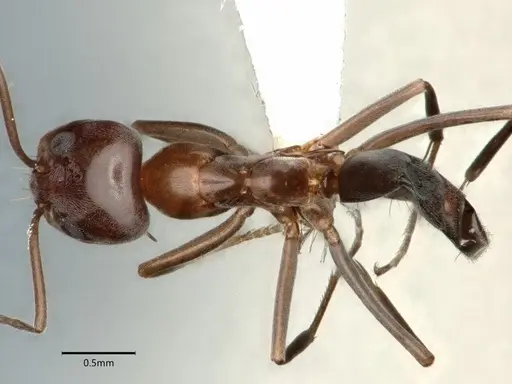
Literature
Loading...Loading products...