

Chelaner punctulatus
- Scientific Name
- Chelaner punctulatus
- Tribe
- Solenopsidini
- Subfamily
- Myrmicinae
- Author
- Heterick, 2003
- Distribution
- Found in 1 countries
Chelaner punctulatus Overview
Chelaner punctulatus is an ant species of the genus Chelaner. It is primarily documented in 1 countries , including Australia. Detailed taxonomic data and occurrence records can be further explored via authoritative databases such as AntWeb or the Global Biodiversity Information Facility (GBIF).
Chelaner punctulatus
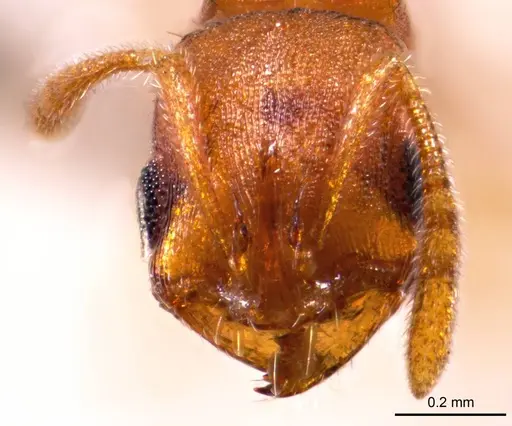
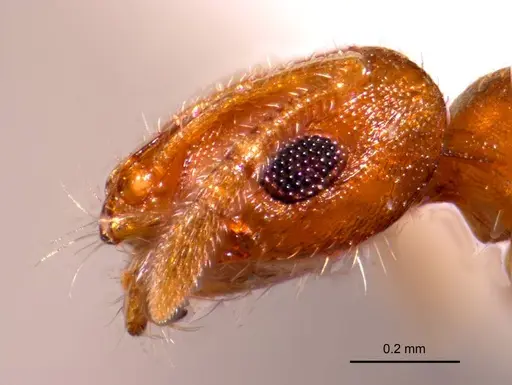
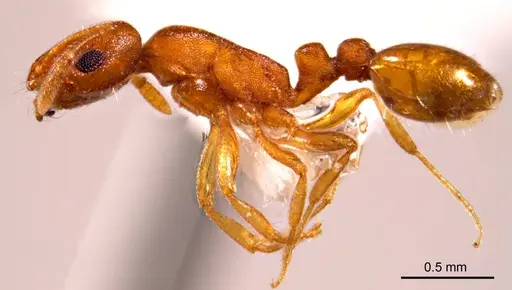
Chelaner punctulatus is a tiny, yellowish ant native to the arid interior of Western Australia. Workers measure just 1.7-1.9mm in total length, making them one of the smaller Australian Myrmicinae [1]. The species is distinguished by its large eyes (about twice the width of the antennal scape), shagreenate (finely roughened) sculpture, and orange-yellow coloration with a yellow gaster [1]. Only four specimens have ever been collected, all from a single sand dune location 102km southeast of Newman in Western Australia's Mid West Region [1]. This ant belongs to the Chelaner rubriceps species-group, characterized by their five mandibular teeth and compact postpetiole [1]. The extreme rarity of this species in the wild means virtually nothing is known about its biology in captivity, it represents a true collector's challenge for experienced antkeepers.
Quick Summary
- Difficulty: Expert
- Origin & Habitat: Endemic to the Mid West Region of Western Australia, specifically collected from sand dunes 102km SE of Newman. The ant fauna of this area shows greater affinity with far northern and north-eastern Australia than with the adjacent Pilbara Region [1]. This suggests preferences for warmer, more tropical-influenced conditions despite being in an arid interior region.
- Colony Type: Unknown, only four workers have ever been documented. Based on genus placement in Solenopsidini, likely forms small colonies with single queens (monogyne), but this is unconfirmed.
- Size & Growth:
- Queen: Unknown, no queens have been described
- Worker: 1.69-1.90mm total length (HML), head 0.58-0.61mm, head width 0.47-0.50mm [1]
- Colony: Unknown, likely small based on related species in the rubriceps group
- Growth: Unknown
- Development: Unknown, likely 4-8 weeks based on typical Monomorium/Chelaner patterns in warm conditions (No direct data exists. Related Australian Monomorium species typically complete development in 4-8 weeks at optimal temperatures.)
- Antkeeping:
- Temperature: Likely prefers warm conditions (24-30°C) based on the northern Australian affinities of this species [1]. Provide a temperature gradient allowing workers to select their preferred zone.
- Humidity: Low to moderate, sand dune habitat suggests drier conditions. Keep nest substrate moderately dry with a small moisture zone for flexibility.
- Diapause: Unknown, no data on overwintering requirements. Western Australian interior experiences mild winters, so a reduced activity period may occur but is unconfirmed.
- Nesting: Natural nesting is unconfirmed, but collected from sand dunes suggests they nest in soil or under stones in dry, sandy substrates. A test tube setup with a sand-filled outworld or a small acrylic nest with dry to moderately moist substrate would be appropriate.
- Behavior: No behavioral data exists for this species. Based on related Monomorium, they are likely relatively docile, non-aggressive foragers that hunt small prey and tend honeydew-producing insects. Their large eyes suggest they may be more visually oriented than many Myrmicinae. Escape prevention should be excellent given their small size, they can easily slip through standard barriers.
- Common Issues: extreme rarity in the wild makes obtaining this species nearly impossible, no captive husbandry data exists, all care is speculative, very small size creates significant escape risk, slow growth and small colony sizes typical of the genus may frustrate beginners, lack of information on proper humidity and temperature ranges
Discovery and Rarity
Chelaner punctulatus is one of the rarest ants in Australia, with only four specimens ever collected. All specimens came from a single pitfall trap in a sand dune 102km southeast of Newman in Western Australia's Mid West Region, collected during August 1997 as part of a CALM (Conservation and Land Management) survey [1]. The species was originally described as Chelaner punctulatus by Brian Heterick in 2003,then reclassified to Chelaner in 2019 when genetic analysis revealed it belonged in a different genus [2]. The ant fauna of the collection area shows greater affinity with far northern and northeastern Australia than with the nearby Pilbara Region, suggesting this species may have a much wider distribution in remote areas that haven't been surveyed [1].
Identification and Morphology
Workers are tiny at 1.69-1.90mm total length, with a rectangular head and large eyes that are about twice the width of the antennal scape [1]. The species is distinguished from other Chelaner in the rubriceps group by its combination of shagreenate (finely roughened) and finely microreticulate sculpture, plus its notably large eyes [1]. The head, alitrunk, and nodes are orange-yellow while the gaster and legs are yellow [1]. They have 12 antennal segments with a 3-segmented club, and five mandibular teeth [1]. The worker caste appears monomorphic, meaning all workers are roughly the same size and shape [1]. The propodeum (the section behind the waist) is bluntly angulate without distinct processes, and the metanotal groove is virtually absent [1].
Related Species and Taxonomy
Chelaner punctulatus belongs to the Chelaner rubriceps species-group, which is characterized by the shape of the petiolar node, five mandibular teeth, and a compact postpetiole [1]. It closely resembles Chelaner leae and Chelaner centralis but can be separated by its larger eyes and shagreenate sculpture [1]. Interestingly, the exotic Pharaoh ant (Monomorium pharaonis) has similar body sculpture, but can be distinguished by its different node shape and the presence of a distinct metanotal groove [1]. The genus Chelaner was separated from Monomorium based on genetic analysis, and this species was reclassified in 2019 [2].
Housing and Captive Care
Since no captive husbandry data exists for this species, care must be inferred from related Australian Monomorium and general Solenopsidini biology. A test tube setup works well for founding colonies, with a small outworld containing sand or soil for foragers. Given the sand dune collection locality, keep the nest substrate on the drier side (moderately moist, not wet) with a small water tube for humidity. Temperature should be warm, aim for 24-30°C with a gradient, as the northern Australian affinities of this species suggest warmth is beneficial [1]. Feed small live prey like fruit flies, springtails, or tiny crickets, plus occasional sugar water or honey. Because of their tiny size, excellent escape prevention is essential, use fluon on edges and fine mesh barriers.
Challenges for Antkeepers
This species represents an extreme challenge even for experienced antkeepers. The primary difficulty is simply obtaining the species, only four specimens have ever been documented, and no colonies are known to exist in captivity. There is absolutely no captive breeding data, no information on nuptial flight timing, and no established protocols for their care. Every aspect of keeping this species would be experimental. Additionally, their tiny size (under 2mm) makes them difficult to house and easy to lose through escapes. For these reasons, Chelaner punctulatus should only be attempted by expert antkeepers who are prepared for a high-risk, experimental project with uncertain outcomes. If you do obtain this species, meticulous record-keeping would contribute valuable knowledge to the antkeeping community.
Frequently Asked Questions
How do I get Chelaner punctulatus ants?
This is extremely difficult, only four specimens have ever been collected, all from a single sand dune in Western Australia. The species is virtually unavailable in the antkeeping hobby. If available at all, it would only be from specialized Australian collectors who have access to the remote collection site.
What do Chelaner punctulatus ants eat?
No feeding data exists for this species. Based on related Monomorium, they likely accept small live prey (fruit flies, springtails, tiny crickets) and sugar sources (honey water, sugar water). Offer a varied diet and observe what they accept.
What temperature do Chelaner punctulatus ants need?
Likely warm conditions around 24-30°C based on the northern Australian affinities of this species. Provide a temperature gradient so workers can select their preferred zone.
How big do Chelaner punctulatus colonies get?
Unknown, no colony has ever been documented. Based on related species in the rubriceps group, colonies are likely small, probably under 100 workers.
Are Chelaner punctulatus good for beginners?
No, this species is absolutely not suitable for beginners. It is one of the rarest ants in existence with zero captive husbandry data. Only expert antkeepers should attempt this species, and only if they can obtain specimens.
How long does it take for Chelaner punctulatus to develop from egg to worker?
Unknown, no development data exists. Based on typical Monomorium/Chelaner patterns in warm conditions, estimate 4-8 weeks, but this is purely speculative.
Do Chelaner punctulatus need hibernation?
Unknown, no data on overwintering requirements. The Western Australian interior has mild winters, so a reduced activity period may occur but has not been documented.
What type of nest should I use for Chelaner punctulatus?
A small test tube setup or acrylic nest would be appropriate given their tiny size. The sand dune collection locality suggests they prefer drier conditions, keep the substrate moderately dry with a small moisture zone available.
Can I keep multiple Chelaner punctulatus queens together?
Unknown, colony structure has never been studied. Based on related Monomorium, they likely form single-queen colonies, but this is unconfirmed. Do not attempt combining unrelated queens without data.
References

This caresheet is licensed under CC BY-SA 4.0 .
ANTWEB1008681
View on AntWeb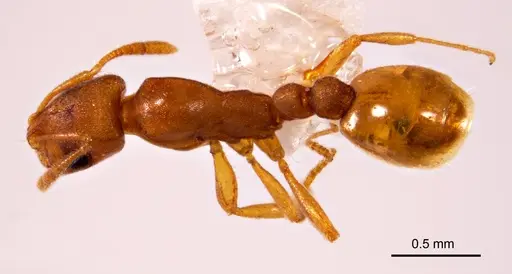
Literature
Loading...Loading products...