

Azteca nanogyna
- Scientific Name
- Azteca nanogyna
- Tribe
- Leptomyrmecini
- Subfamily
- Dolichoderinae
- Author
- Longino, 2007
- Distribution
- Found in 1 countries
Azteca nanogyna Overview
Azteca nanogyna is an ant species of the genus Azteca. It is primarily documented in 1 countries , including Costa Rica. Detailed taxonomic data and occurrence records can be further explored via authoritative databases such as AntWeb or the Global Biodiversity Information Facility (GBIF).
Azteca nanogyna
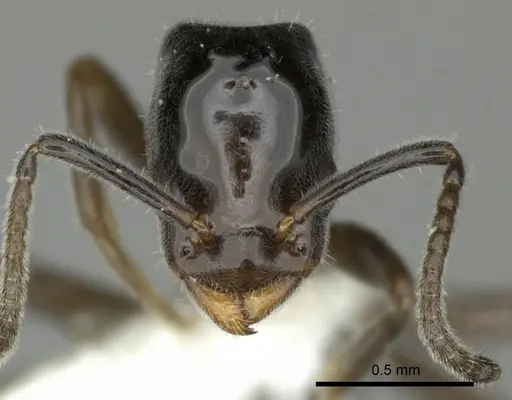
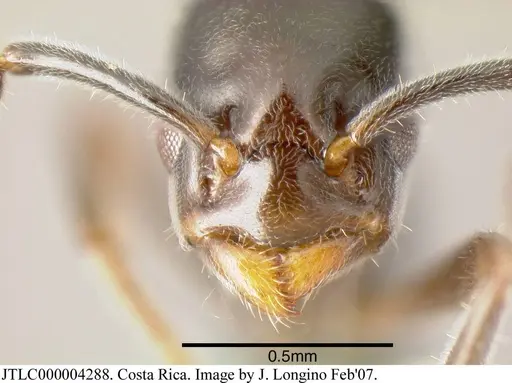
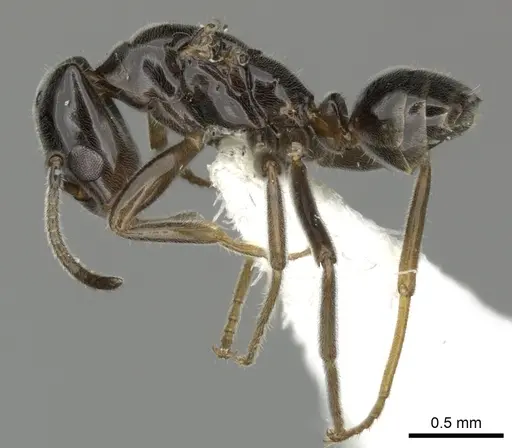
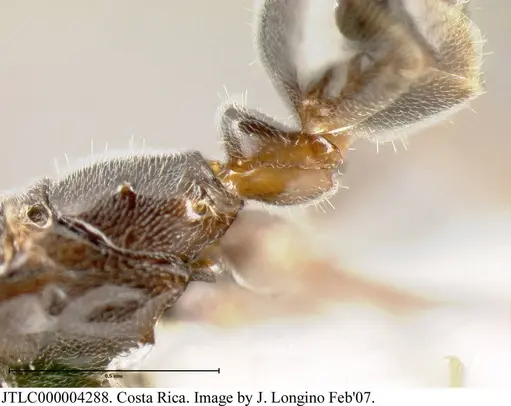
Azteca nanogyna is an extremely rare ant species known only from a single queen specimen collected in Costa Rica. The queen measures just 0.86mm in head length, making it the smallest queen ever documented in the entire Azteca genus. The species belongs to the aurita group and displays a uniform dark brown coloration with a smooth, highly polished body surface covered in sparse white pubescence. The narrow head and coloration ally it with Azteca lanuginosa and Azteca schimperi. This species was described in 2007 by John T. Longino from a specimen collected in tropical moist forest at 600m elevation in Guanacaste, Costa Rica. The extremely small size of the queen has led researchers to suspect that A. nanogyna may be a workerless social parasite, meaning it may rely on host colonies to survive rather than founding its own. No workers, males, or colonies have ever been documented.
Quick Summary
- Difficulty: Not Recommended
- Origin & Habitat: Costa Rica, Guanacaste Conservation Area at 600m elevation, tropical moist forest [1][2]
- Colony Type: Unknown, possibly workerless social parasite based on queen morphology [2]
- Size & Growth:
- Queen: 0.86mm head length (HLA) [1][2]
- Worker: Unknown, workers have never been documented
- Colony: Unknown, colony has never been observed
- Growth: Unknown
- Development: Unknown, workers may not exist (Single queen specimen collected, no workers documented. Species may be a workerless social parasite.)
- Antkeeping:
- Temperature: Unknown, no temperature data available for this species
- Humidity: Unknown, no humidity data available. Based on Costa Rican tropical moist forest habitat, likely requires high humidity similar to other Azteca species
- Diapause: Unknown, no seasonal data available
- Nesting: Unknown, no nesting observations exist. Other Azteca species nest in carton nests, plant stems, or ant gardens [3]
- Behavior: Unknown, behavior has never been documented. Other Azteca species are arboreal foragers with complex relationships with coccoid Hemiptera and some Cecropia plants [3]. Escape risk cannot be assessed without workers.
- Common Issues: This species is known only from a single queen specimen, no workers have ever been documented, Researchers suspect this may be a workerless social parasite, making captive establishment likely impossible, No biological or behavioral information exists for this species, Attempting to keep poorly known species can result in colony failure and wasted resources, This species should be left to professional researchers rather than collected for antkeeping
Why This Species Is Not Recommended for Antkeeping
Azteca nanogyna should not be kept by hobbyist antkeepers for several critical reasons. First and most importantly, this species is known from a single queen specimen collected in 2003, no workers, males, or colonies have ever been documented in the scientific literature. The describing researcher, John T. Longino, specifically noted that the extremely small size of the queen suggests the possibility that A. nanogyna is a workerless social parasite [2]. This means the species may not be capable of independent colony founding at all, instead relying on host ant colonies to survive. Even if this is not the case, the complete lack of biological data means no one knows what to feed them, what temperature they need, or how to establish a colony. Attempting to keep such a poorly known species would almost certainly result in colony failure and represents a waste of both the ants and the keeper's time and resources.
What We Know About This Species
The entire scientific knowledge of Azteca nanogyna comes from a single queen specimen collected by John Noyes in Costa Rica's Guanacaste Conservation Area at 600m elevation in February 2003. The specimen was captured using a screened sweep net in tropical moist forest [1][2]. The queen measures just 0.86mm in head length (HLA), making it the smallest queen ever documented in the genus Azteca, which contains over 100 known species [2]. The species was formally described in 2007 as a member of the Azteca aurita group, characterized by uniform brown color, short scape, and short erect pilosity on various body parts [4]. The color and narrow head resemble Azteca lanuginosa and Azteca schimperi. Beyond these morphological details, absolutely nothing is known about this species' biology, behavior, colony structure, or requirements.
Related Species and General Azteca Biology
While A. nanogyna itself is a mystery, other Azteca species are relatively well-studied and provide context for understanding this genus. Azteca ants are exclusively arboreal (tree-dwelling), found throughout the Neotropics from Mexico to Argentina [3]. They construct diverse nest structures including carton nests (papery material made from plant fibers), occupy live and dead plant stems, and form ant gardens, complex structures made from roots, leaves, and debris held together with antifungal secretions [3]. Many Azteca species have developed mutualistic relationships with coccoid Hemiptera (scale insects), tending them for honeydew. Some species, like Azteca coeruleipes and Azteca instabilis, form famous partnerships with Cecropia trees, where the ants protect the tree from herbivores in exchange for shelter and food bodies called Beltian bodies [3]. Foraging strategies vary from generalized predators to specialized plant inhabitants. However, none of this information directly applies to A. nanogyna, whose biology may be entirely different given its possible parasitic nature.
Conservation and Ethical Considerations
Given that only a single specimen of Azteca nanogyna has ever been collected, any collection of this species for antkeeping purposes would be scientifically irresponsible. The species may already be extremely rare or potentially extinct, and removing individuals from the wild could push it closer to elimination. Professional myrmecologists (ant scientists) have spent decades searching for additional specimens without success. If you are interested in keeping Azteca species, consider well-established alternatives like Azteca instabilis or other Dolichoderinae species that have documented care requirements. For species like A. nanogyna that exist only in museum collections, the most responsible approach is to appreciate them through scientific literature rather than attempting to keep them in captivity. Hobbyist antkeepers should prioritize species with established care protocols and avoid supporting collection of poorly known species that may be threatened or parasitic.
Frequently Asked Questions
Can I keep Azteca nanogyna as a pet ant?
No. This species is not recommended for antkeeping. It is known only from a single queen specimen collected in 2003,and no workers have ever been documented. Researchers suspect it may be a workerless social parasite, making captive establishment likely impossible. There is no biological or behavioral information available to guide successful husbandry.
Has anyone successfully established an Azteca nanogyna colony?
No. No colony, workers, or males of this species have ever been documented. The only known specimen is the holotype queen housed in a museum collection in Costa Rica.
What does Azteca nanogyna eat?
Unknown. No feeding observations or dietary information exists for this species. While other Azteca species are known to tend Hemiptera for honeydew and are generalist foragers, A. nanogyna's biology may be entirely different if it is indeed a social parasite.
Where does Azteca nanogyna live?
This species is known only from Costa Rica's Guanacaste Conservation Area at 600m elevation in tropical moist forest. The exact location is Estacion Maritza, near 10°58'N,85°30'W.
Why is Azteca nanogyna so small?
The queen measures just 0.86mm in head length, making it the smallest Azteca queen ever documented. The species name 'nanogyna' literally means 'tiny queen' (from Greek 'nano' meaning dwarf). This small size, unusual for the genus, is what led researchers to suspect it might be a workerless social parasite.
Are Azteca nanogyna queens parasitic?
Possibly. The describing researcher John T. Longino noted that the extremely small queen size suggests the possibility that A. nanogyna is a workerless social parasite. This means it may invade host ant colonies rather than founding its own. However, this remains unconfirmed as no host species or colony has ever been observed.
What is the best nest type for Azteca nanogyna?
Unknown, no nesting information exists for this species. Other Azteca species are arboreal and nest in carton structures, plant stems, or ant gardens, but A. nanogyna biology is completely unknown.
Are Azteca nanogyna good for beginners?
No. This species is completely unsuitable for beginners or any antkeeper. There is no documented care information, and the species may be impossible to keep in captivity. Beginners should choose species with established care protocols like Lasius niger, Camponotus species, or other well-documented ants.
References

This caresheet is licensed under CC BY-SA 4.0 .
JTLC000004288
View on AntWeb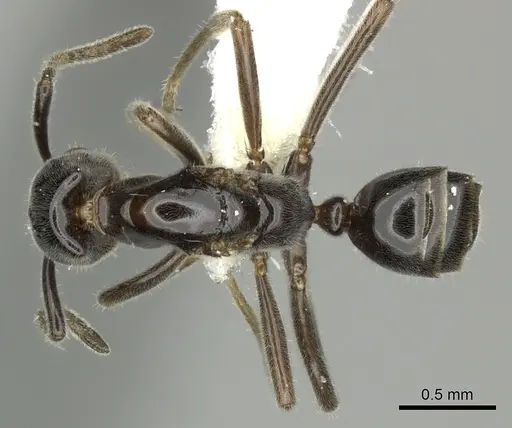
Literature
Loading...Loading products...