

Azteca aurita
- Scientific Name
- Azteca aurita
- Tribe
- Leptomyrmecini
- Subfamily
- Dolichoderinae
- Author
- Emery, 1893
- Distribution
- Found in 3 countries
Azteca aurita Overview
Azteca aurita is an ant species of the genus Azteca. It is primarily documented in 3 countries , including Brazil, Panama, Peru. Detailed taxonomic data and occurrence records can be further explored via authoritative databases such as AntWeb or the Global Biodiversity Information Facility (GBIF).
Azteca aurita
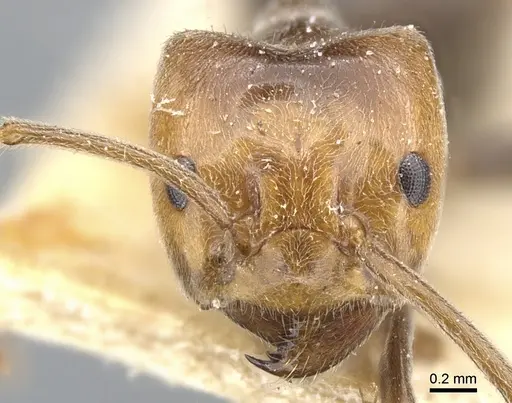
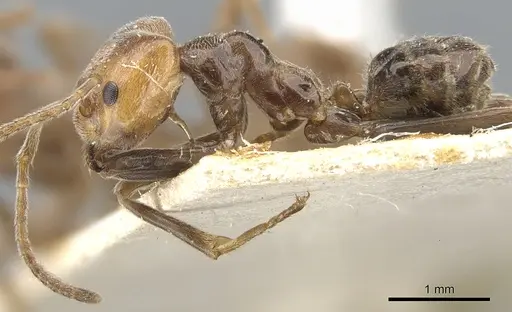
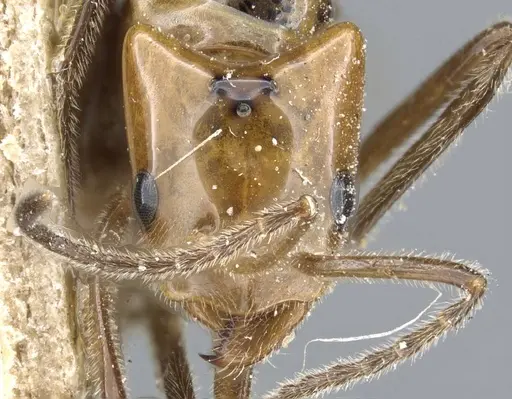
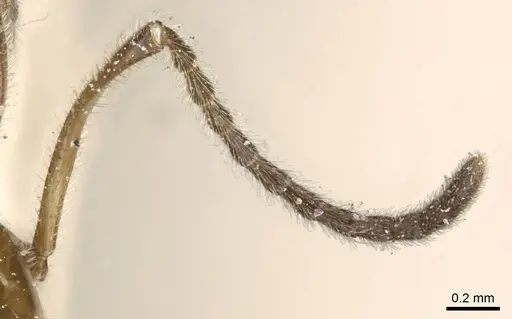
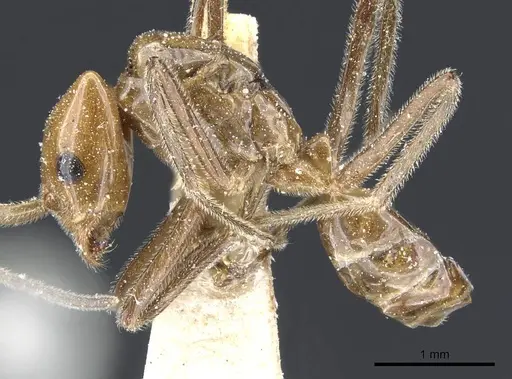
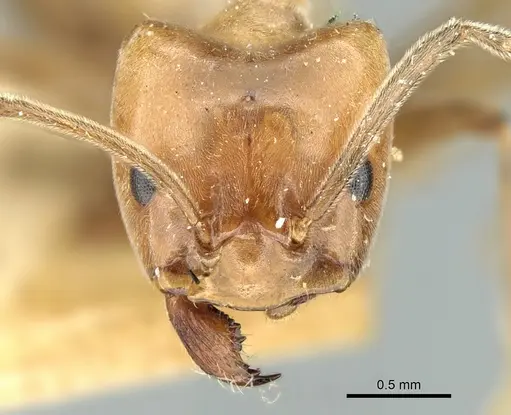
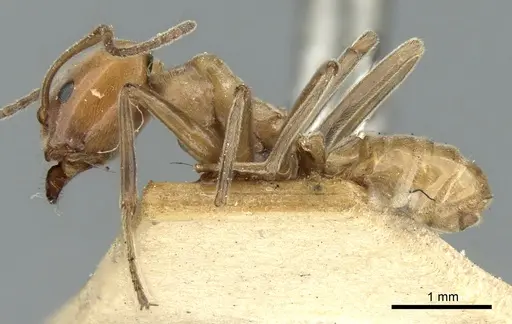
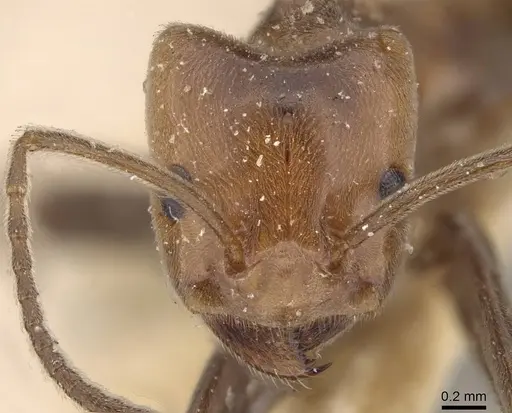
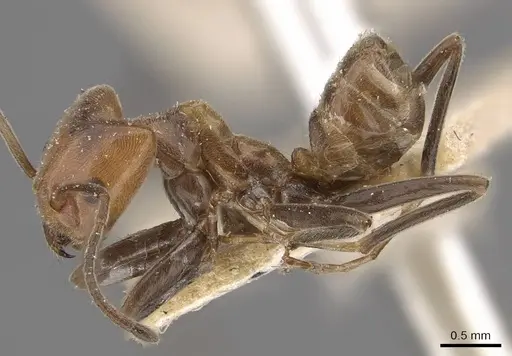
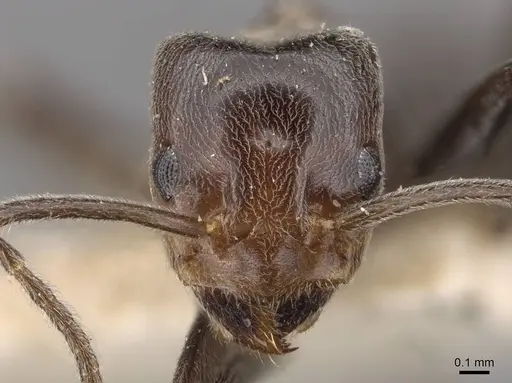
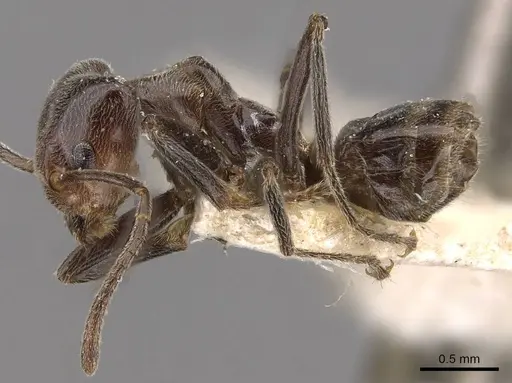
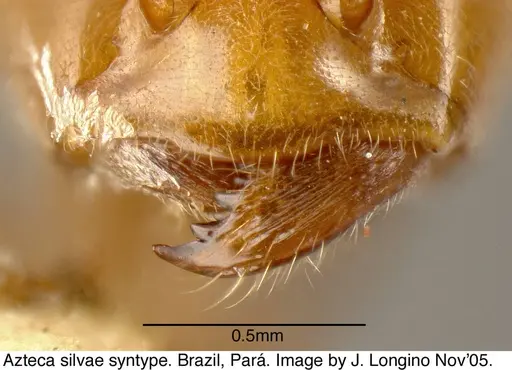
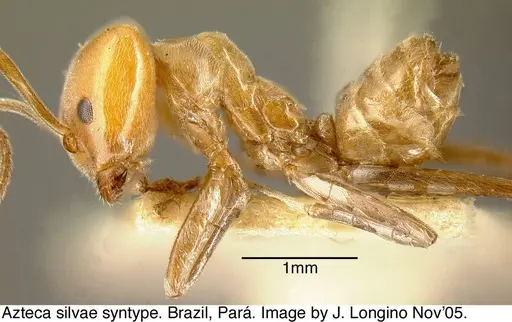
Azteca aurita is a small, shiny orange ant that lives in the trees of Central and South American rainforests. Workers measure about 4mm long with slender bodies, long legs, and a polished, almost hairless appearance that reflects light [1][2]. They range from Panama through Colombia to the Brazilian Amazon and Peru, inhabiting lowland tropical forests below 1000 meters elevation [3][4][5]. Unlike many of their Azteca relatives that cultivate gardens of plants on their nests, A. aurita builds distinctive large carton nests that hang from tree branches like papery lanterns, deliberately keeping the surface bare of any epiphytes or plant growth [2][6]. These nests are constructed from a papery material made of chewed plant fibers and ant secretions, and wild nests have been measured up to 70cm tall,40cm wide, and 20cm thick attached to tree trunks [7].
Quick Summary
- Difficulty: Expert
- Origin & Habitat: Lowland tropical forests of Panama, Colombia, Brazil, Peru, Bolivia, and Costa Rica [3][4][8][9][10][5]
- Colony Type: Unconfirmed
- Size & Growth:
- Queen: Approximately 5-6mm total length (head length 1.25-1.30mm) [2]
- Worker: Approximately 4mm total length [1] (head length 1.11-1.32mm [2])
- Colony: Unknown, wild nest dimensions suggest large colonies possible [7]
- Growth: Unknown
- Development: Estimated 6-10 weeks at 25-28°C (No direct studies available, estimate based on tropical Dolichoderinae patterns. Nanitic workers may emerge slightly faster.)
- Antkeeping:
- Temperature: 24-28°C year-round with minimal fluctuation (inferred from tropical lowland habitat) [3]
- Humidity: High humidity 70-80%, with moist substrate and good ventilation to prevent mold in tropical conditions
- Diapause: No, tropical species that remains active year-round
- Nesting: Arboreal carton nests, requires vertical space, branches, and materials for nest construction [7][2]
- Behavior: Arboreal tree-dwellers that rarely descend to ground, fast-moving and agile, maintains complex relationships with scale insects (coccoid Hemiptera) for honeydew [11], small size and climbing ability requires excellent escape prevention
- Common Issues: maintaining stable tropical heat and humidity year-round without dangerous fluctuations., providing suitable materials for carton nest construction such as plant fibers, wood pulp, or paper., meeting vertical space requirements, they need height and branches, not horizontal floor space., excellent escape prevention is mandatory due to small size and expert climbing ability on all surfaces.
Carton Nest Construction and Arboreal Housing
In nature, Azteca aurita builds impressive pendant carton nests that hang from tree branches, creating papery structures that can reach 70cm in height [7]. Unlike some Azteca that form 'ant gardens' covered in epiphytes, A. aurita keeps its nest surface deliberately bare of plants [2][6]. The nest material is a papery carton made from plant fibers, ant secretions, and sometimes soil particles.
In captivity, you must provide a vertical arboreal setup rather than a traditional horizontal formicarium. Use a tall enclosure with plenty of branches, twigs, and vertical cork bark. Offer nesting materials like shredded paper, coconut fiber, or wood pulp that the workers can use to construct their characteristic carton nests. They will likely build against the glass or on provided branches, creating enclosed chambers. Ensure the setup has excellent ventilation but maintains high humidity, as stagnant tropical air causes mold while dry conditions desiccate the colony.
Temperature and Tropical Climate Needs
As a lowland tropical species from Panama to Amazonian Brazil, Azteca aurita requires warm, stable conditions year-round [3][4]. Keep the nest area between 24-28°C with minimal daily fluctuation. A heating cable or heat mat placed on one side of the enclosure creates a beneficial gradient, but ensure it doesn't dry out the nest material completely.
These ants do not require and should not receive any winter cooling or diapause period. They remain active throughout the year. Temperatures below 20°C will likely stress the colony and halt brood development, while temperatures above 30°C may be tolerated if humidity is high and ventilation is adequate, but aim for the mid-20s as a safe target.
Feeding and Hemiptera Tending
Azteca species maintain complex feeding relationships with scale insects and other coccoid Hemiptera (small sap-sucking bugs) that produce honeydew [11]. In captivity, provide a constant source of sugar water or honey water, offered in a protected feeder to prevent drowning. They likely accept small live prey such as fruit flies, springtails, and tiny crickets, though their predatory behavior is less emphasized than their honeydew collection.
If possible, maintaining a small culture of mealybugs or scale insects on a plant cutting in the outworld provides natural food, though this requires careful management to prevent pest escape. Without live Hemiptera, ensure constant access to liquid sugars and offer protein 2-3 times weekly in the form of small insects or insect parts.
Behavior and Temperament
These are true arboreal ants that spend their lives in the canopy, descending to the ground only rarely [11]. They are fast-moving, agile climbers that will explore every corner of their enclosure. While Dolichoderinae ants lack stingers, they may defend their carton nests vigorously by biting or spraying formic acid if disturbed.
Their small size (4mm) combined with arboreal agility means escape prevention must be flawless. Use fine mesh ventilation (stainless steel, not plastic screen they can chew), tight-fitting lids with locking mechanisms, and Fluon or PTFE barriers on all vertical surfaces. Even a small gap in the lid will result in escapees exploring your home.
Growth and Development Timeline
No studies have documented the exact development time from egg to worker for Azteca aurita. Based on patterns from other tropical Dolichoderinae ants, expect approximately 6-10 weeks at optimal temperatures (25-28°C) for the first workers to emerge from founding. Colonies likely grow at a moderate to fast pace once established, given the large nest sizes observed in the wild [7], but specific colony size limits are unknown.
The first workers (nanitics) may be smaller than subsequent generations and will help expand the carton nest and tend to the queen and brood. As the colony grows, they will require increasingly larger vertical spaces and more extensive branching structures to accommodate their arboreal lifestyle.
Frequently Asked Questions
Can I keep Azteca aurita in a test tube setup?
No, test tubes are unsuitable for this species. Azteca aurita is arboreal and builds large carton nests on branches. They need a vertical enclosure with climbing structures, branches, and materials to build their papery nests. A test tube provides none of the vertical space or nest-building opportunities they require.
How long until Azteca aurita first workers arrive?
The exact timeline is unstudied, but based on related tropical species, expect approximately 6-10 weeks at 25-28°C. Cooler temperatures will significantly slow development. The first workers (nanitics) will be small and will immediately begin helping to construct the carton nest.
Can I keep multiple Azteca aurita queens together?
This is unknown for this specific species. Combining unrelated queens is not recommended unless you have confirmed data showing this species accepts multiple queens. Most Azteca species are monogyne (single queen), so assume one queen per colony unless proven otherwise.
Are Azteca aurita good for beginners?
No, they are an expert-level species. They require specialized arboreal setups, constant tropical heat and humidity, materials for carton nest construction, and excellent escape prevention. Their specific needs make them challenging for first-time ant keepers.
Do Azteca aurita need hibernation or diapause?
No. As a tropical species from Central and South America, they remain active year-round and do not require cooling or hibernation. Maintain stable warm temperatures (24-28°C) throughout the year.
What do Azteca aurita eat?
They primarily feed on honeydew from scale insects and other Hemiptera [11]. In captivity, provide constant sugar water or honey water, plus small protein sources like fruit flies, springtails, or tiny cricket pieces 2-3 times per week.
How big do Azteca aurita colonies get?
The maximum colony size is unknown, but wild nests measuring 70cm tall suggest they can reach large sizes with thousands of workers [7]. In captivity, expect them to eventually need a very large vertical enclosure to accommodate their carton nest construction.
Why are my Azteca aurita dying?
Common causes include: temperatures too low or fluctuating (they need stable tropical heat), humidity too dry (they need moist tropical conditions), lack of vertical space (they are arboreal and need to climb), or starvation (they need constant sugar sources). Check your heating and humidity levels first.
References

This caresheet is licensed under CC BY-SA 4.0 .
CASENT0903011
View on AntWeb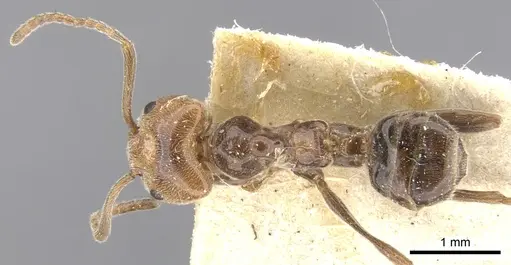
CASENT0905107
View on AntWeb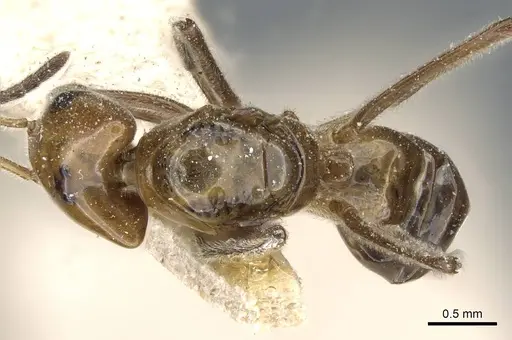
CASENT0906233
View on AntWeb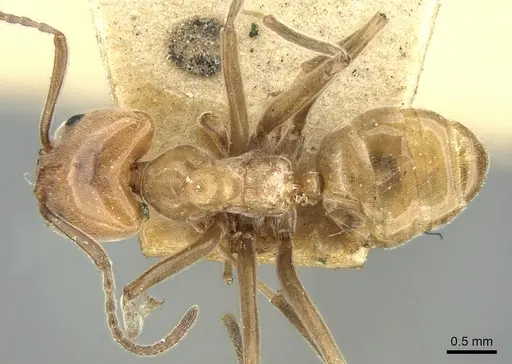
CASENT0909598
View on AntWeb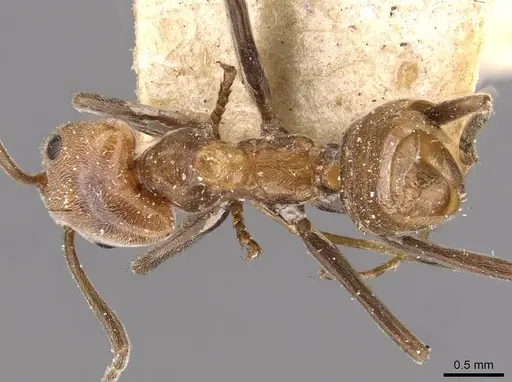
CASENT0909599
View on AntWeb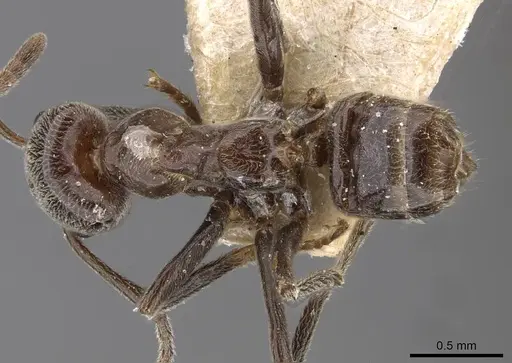
JTL073590
View on AntWeb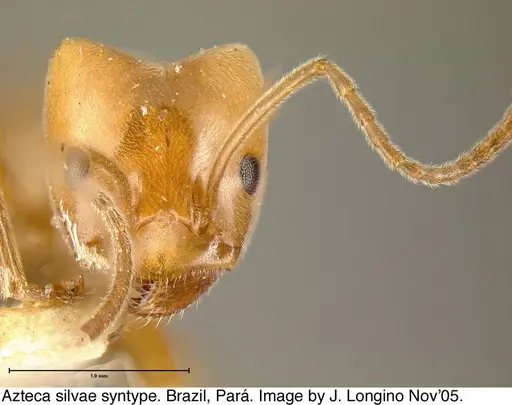
Literature
Loading...Loading products...