

Tyrannomyrmex legatus
- Scientific Name
- Tyrannomyrmex legatus
- Tribe
- Solenopsidini
- Subfamily
- Myrmicinae
- Author
- Alpert, 2013
- Distribution
- Found in 1 countries
Tyrannomyrmex legatus Overview
Tyrannomyrmex legatus is an ant species of the genus Tyrannomyrmex. It is primarily documented in 1 countries , including Sri Lanka. Detailed taxonomic data and occurrence records can be further explored via authoritative databases such as AntWeb or the Global Biodiversity Information Facility (GBIF).
Tyrannomyrmex legatus
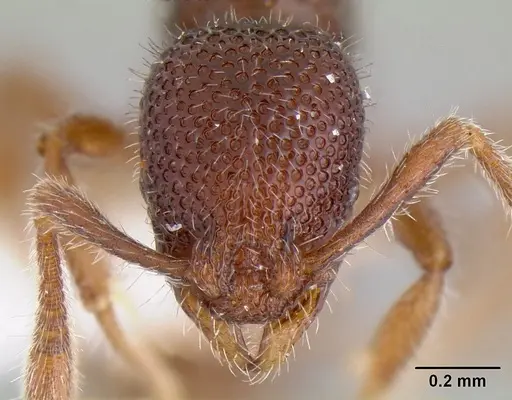
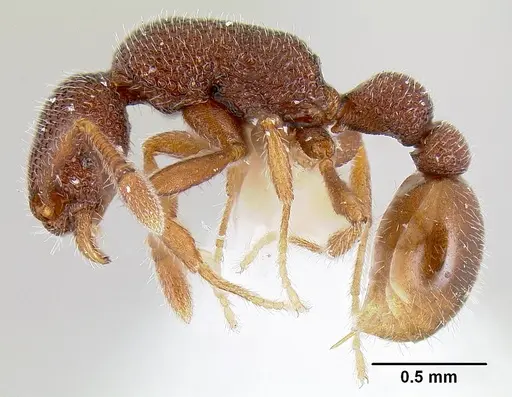
Tyrannomyrmex legatus is an exceptionally rare tiny ant species known from only a single specimen collected in Sri Lanka. Workers measure just 3.04mm in total length, with a reddish body and lighter reddish appendages [1]. The species is characterized by its 11-segmented antennae with an ill-defined 3-segmented club, small eyes composed of only 4-5 ommatidia, and a body covered in large round foveolae (tiny pits) from which long erect white hairs emerge [1]. Based on its small eyes and toothless mandibles, researchers believe this ant is probably subterranean and predaceous, hunting small prey underground [1]. The genus Tyrannomyrmex contains only a handful of species, all of which are known from single or very few specimens, making this one of the most poorly understood ant groups in existence.
Quick Summary
- Difficulty: Expert
- Origin & Habitat: Sri Lanka, specifically the Sinharaja Forest Reserve in the wet zone of southern Sri Lanka. Found in lowland dipterocarp undisturbed forest near a stream at 432-571m elevation [1][2].
- Colony Type: Unknown, only a single worker has ever been documented. The colony structure (single queen vs multiple queens) has not been studied.
- Size & Growth:
- Queen: Unknown, no queen has ever been described [1]
- Worker: 3.04mm total length (HW 0.52mm) [1]
- Colony: Unknown, only a single worker known
- Growth: Unknown
- Development: Unknown (No data exists on development. Related Monomorium species typically develop in 4-8 weeks at warm temperatures, but this is a rough estimate only.)
- Antkeeping:
- Temperature: Likely requires warm, stable conditions similar to other tropical Solenopsidini. Based on its Sri Lankan lowland forest origin, aim for 24-28°C. No direct data exists.
- Humidity: Likely requires high humidity given its collection from leaf litter in a wet forest zone near a stream. Keep substrate consistently moist but not waterlogged.
- Diapause: Unknown, being a tropical species from Sri Lanka, it likely does not require hibernation, but this is unconfirmed.
- Nesting: Probably nests in soil or rotting wood in leaf litter. A naturalistic setup with moist substrate or a Y-tong/plaster nest would likely work. The species appears to be subterranean.
- Behavior: Likely secretive and subterranean based on its reduced eyes (only 4-5 ommatidia) and edentate mandibles [1]. Probably predaceous, hunting small prey underground. Escape risk is low given its tiny size but this is speculative. Temperament is completely unknown.
- Common Issues: extreme rarity makes obtaining this species nearly impossible, no captive breeding records exist, no established husbandry guidelines, subterranean lifestyle means they may rarely emerge, making observation difficult, predaceous diet may require live small prey which can be challenging to provide, single known specimen means virtually nothing is known about their actual care requirements
Discovery and Rarity
Tyrannomyrmex legatus represents one of the most enigmatic ant species in the world, known from a single worker specimen collected in 2006 by Nihara R. Gunawardene from leaf litter in Sri Lanka's Sinharaja Forest Reserve [1]. The species was formally described in 2013 by Gary D. Alpert, making it one of the most recently described ant species [1]. What makes this species particularly fascinating is that all three known Tyrannomyrmex species (T. rex, T. dux, and T. legatus) have been described from single specimens collected via Winkler sack extraction of leaf litter samples [3]. This pattern suggests the genus is extremely rare, possibly existing at very low population densities, or perhaps living almost entirely underground where they rarely encounter humans. The genus name 'Tyrannomyrmex' translates to 'tyrant ant', while 'legatus' refers to a military commander appointed by the Roman Senate, both names reflect the imposing (but tiny) nature of these mysterious ants.
Identification and Morphology
Tyrannomyrmex legatus can be distinguished from its congeners by several key features. Unlike T. rex which is almost completely lacking pilosity on the mesosomal dorsum, T. legatus has the entire dorsal surface covered with long erect hairs [3]. The foveolation (tiny pit-like structures) is more pronounced than in T. rex, with large round foveolae almost touching each other on the head, mesosoma, petiole, and postpetiole [1]. The most distinguishing feature compared to T. dux is the shape of the petiole, which is much more robust in T. legatus, with an abrupt anterior slope of the node and a conspicuous anteroventral projection that is absent in T. dux [3]. Workers measure just 3.04mm total length, making them smaller than many other Myrmicinae. The small eyes (only 4-5 ommatidia) and edentate (toothless) mandibles suggest a subterranean, predatory lifestyle [1].
Phylogeny and Relatives
Molecular phylogenetic studies have revealed that Tyrannomyrmex belongs to the tribe Solenopsidini within the subfamily Myrmicinae, and is sister to the genus Monomorium, specifically Epelysidris brocha and Erromyrma latinodis [4][5]. This relationship is strongly supported (PP 1.00 BS 94), meaning Tyrannomyrmex is essentially a very ancient lineage that split off from the Monomorium lineage deep in ant evolutionary history [4]. The genus Monomorium contains many well-known species including the invasive little black ant (Monomorium carbonarium) and various tropical species. Understanding this phylogenetic position helps antkeepers appreciate that while Tyrannomyrmex is extremely rare in collections, it represents an ancient and distinct branch of ant evolution that split from its more common relatives tens of millions of years ago.
Distribution and Habitat
Tyrannomyrmex legatus is currently known only from Sri Lanka, specifically the Sinharaja Forest Reserve in the island's wet zone [2]. The single known specimen was collected at an elevation of 432-571 meters in a lowland dipterocarp undisturbed forest near a stream at the bottom of a slope [1]. The collection occurred during the drier period of the year using Winkler sacks, a method that extracts ants from leaf litter samples [1]. Sri Lanka's wet zone receives high rainfall and maintains high humidity year-round, creating ideal conditions for moisture-dependent ant species. The Sinharaja Forest Reserve is a UNESCO World Heritage Site and represents one of the last remaining primary rainforests in Sri Lanka, making it a biodiversity hotspot where many species remain undiscovered.
Likely Biology and Behavior
While no direct observations of living colonies exist, researchers have inferred several aspects of Tyrannomyrmex biology from morphology. The small eyes with only 4-5 ommatidia strongly suggest a subterranean or cryptozoic lifestyle, these ants likely spend most of their time underground or hidden within leaf litter, soil, or rotting wood [1]. The edentate (toothless) mandibles are unusual among predatory ants and may indicate a specialized diet, possibly feeding on soft-bodied prey or perhaps even fungal materials [1]. The genus is likely predaceous, hunting small invertebrates in the dark, humid microhabitats beneath the forest floor. The complete lack of any observation of queens, males, or colony founding behavior in any Tyrannomyrmex species suggests these ants may live in very small colonies with only a few individuals, or that their colonies are extremely difficult to locate in their natural habitat.
Keeping Considerations
Tyrannomyrmex legatus is not a species that any antkeeper should expect to keep, it is virtually unavailable in the antkeeping hobby and may never have been kept in captivity. However, for the theoretical keeper, the biology suggests a setup mimicking moist tropical forest floor conditions would be appropriate. A naturalistic terrarium with moist soil, leaf litter, and pieces of rotting wood would likely replicate their natural habitat. Given their likely subterranean nature and small size (3mm), they would need tight escape prevention despite being poor climbers. Temperature should be warm (24-28°C) matching Sri Lankan lowland conditions, and humidity should be high (70-80%) to match the wet zone forest. Diet would likely need to be small live prey, perhaps springtails or small fruit flies, based on the inferred predatory nature. However, all of this remains speculative as no living specimen has ever been studied in captivity.
Frequently Asked Questions
Can I keep Tyrannomyrmex legatus as a pet?
No. This species is virtually unavailable in the antkeeping hobby and has never been documented in captivity. Only a single worker specimen has ever been collected, making it one of the rarest ants in the world. Even professional myrmecologists have never maintained a living colony.
How big do Tyrannomyrmex legatus colonies get?
Unknown. Only a single worker has ever been documented. Based on related Monomorium species, colonies might reach dozens to a few hundred workers, but this is entirely speculative.
What do Tyrannomyrmex legatus ants eat?
Likely predaceous on small invertebrates. The edentate (toothless) mandibles suggest they may have a specialized diet, possibly soft-bodied prey or fungal material. No direct observations of feeding exist.
Where is Tyrannomyrmex legatus found?
Only known from Sri Lanka, specifically the Sinharaja Forest Reserve in the wet zone at 432-571m elevation. Collected from leaf litter in lowland dipterocarp forest near a stream.
How long do Tyrannomyrmex legatus workers live?
Unknown. No living specimens have ever been studied. Related Monomorium species typically have workers live several months to a year, but this cannot be confirmed for Tyrannomyrmex.
Do Tyrannomyrmex legatus need hibernation?
Unlikely. Being a tropical species from Sri Lanka's wet zone, they probably do not require a diapause period. However, this is unconfirmed as no living colonies have ever been studied.
What is the best nest type for Tyrannomyrmex legatus?
Unknown. Based on morphology suggesting a subterranean lifestyle, a naturalistic setup with moist soil and rotting wood or a Y-tong/plaster nest would be the most reasonable guess. However, no captive husbandry has ever been documented.
Are Tyrannomyrmex legatus aggressive?
Unknown. No living specimens have ever been observed. The small eyes and cryptic lifestyle suggest they are secretive rather than aggressive.
How many queens does Tyrannomyrmex legatus have?
Unknown. No queen has ever been documented. The colony structure (single queen vs multiple queens) remains completely unstudied.
Why is Tyrannomyrmex legatus so rare?
The genus Tyrannomyrmex appears to exist at extremely low population densities, possibly living almost entirely subterranean lives where they rarely encounter humans. All three known species are known from only single specimens collected from leaf litter. They may also have very small, cryptic colonies.
Can I find Tyrannomyrmex legatus in the wild?
Extremely unlikely. They have only been found once in Sri Lanka's Sinharaja Forest Reserve, and the region requires special access. Even professional entomologists rarely encounter this species. Additionally, collecting native ants in Sri Lanka would require proper permits.
References

This caresheet is licensed under CC BY-SA 4.0 .
CASENT0106177
View on AntWeb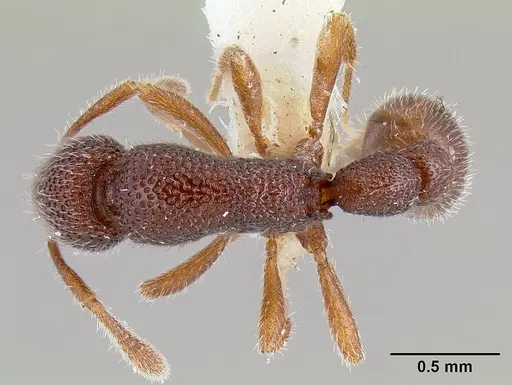
Literature
Loading...Loading products...