

Erromyrma latinodis
- Scientific Name
- Erromyrma latinodis
- Tribe
- Solenopsidini
- Subfamily
- Myrmicinae
- Author
- Mayr, 1872
- Distribution
- Found in 9 countries
Erromyrma latinodis Overview
Erromyrma latinodis is an ant species of the genus Erromyrma. It is primarily documented in 9 countries , including China, Indonesia, India. Detailed taxonomic data and occurrence records can be further explored via authoritative databases such as AntWeb or the Global Biodiversity Information Facility (GBIF).
Erromyrma latinodis
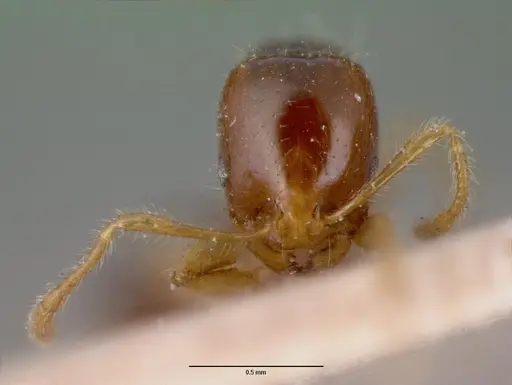
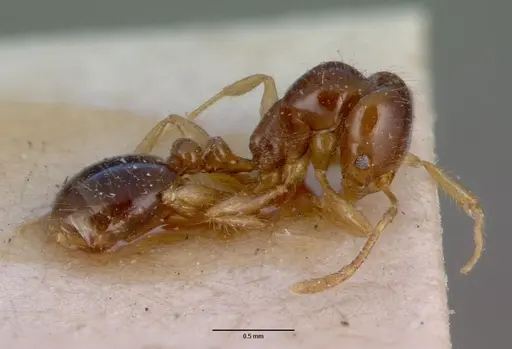
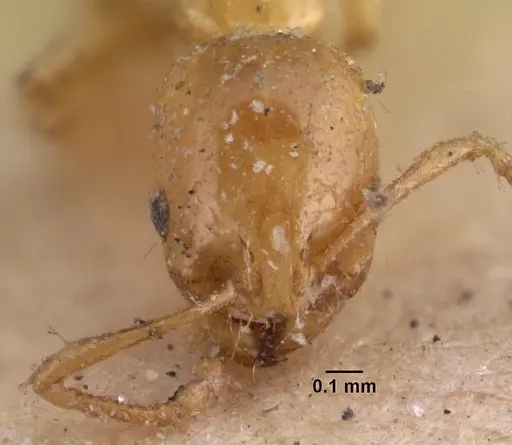
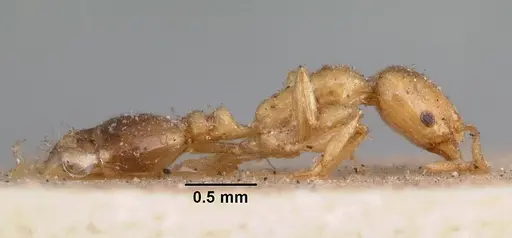
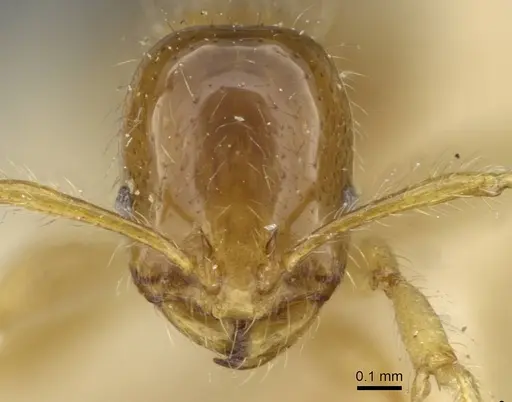
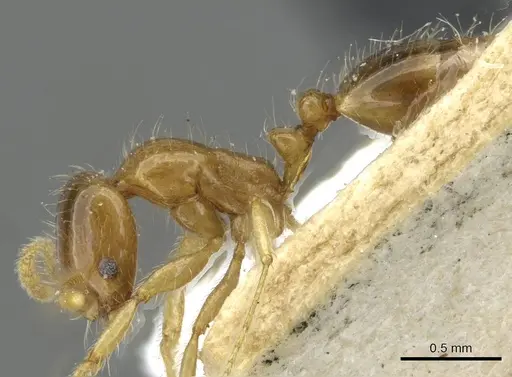
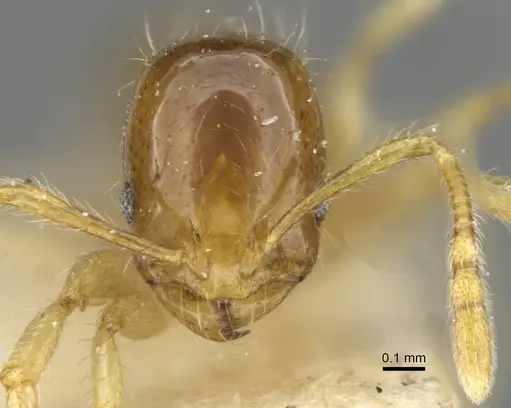
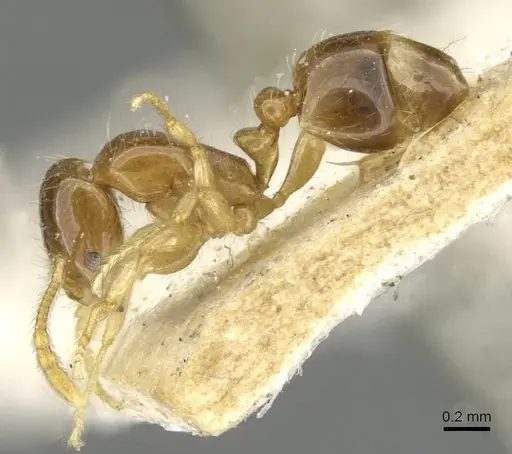
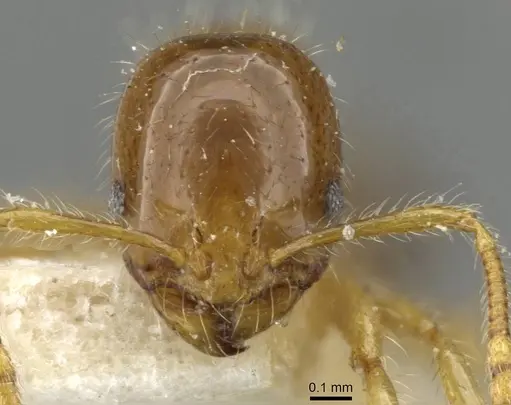
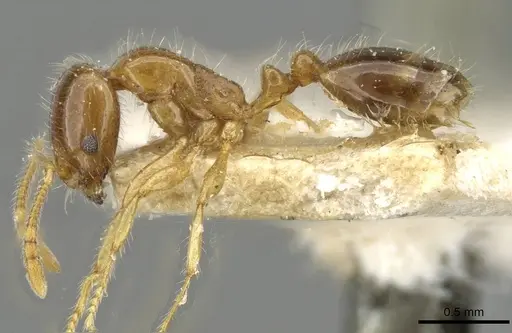
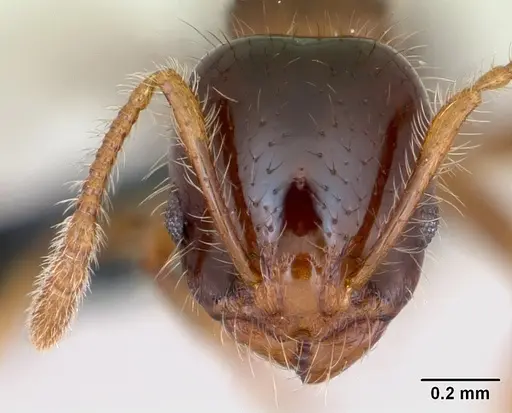
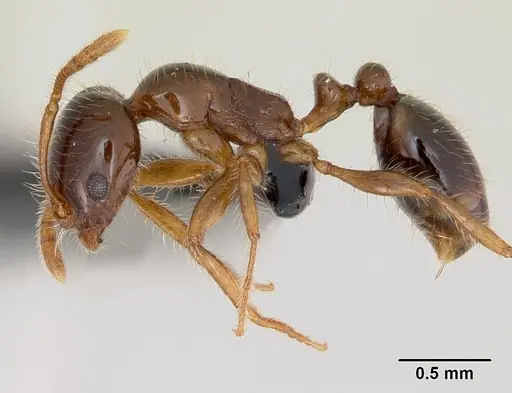
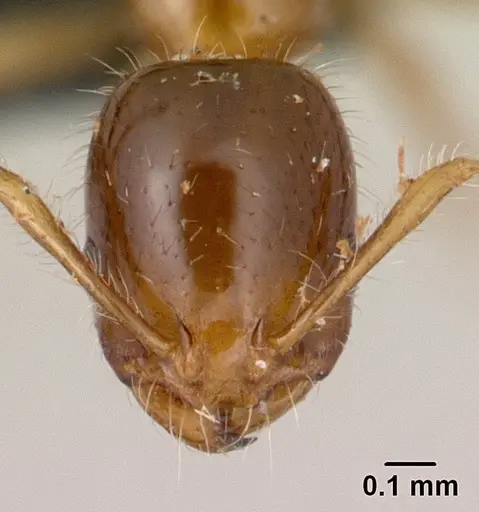
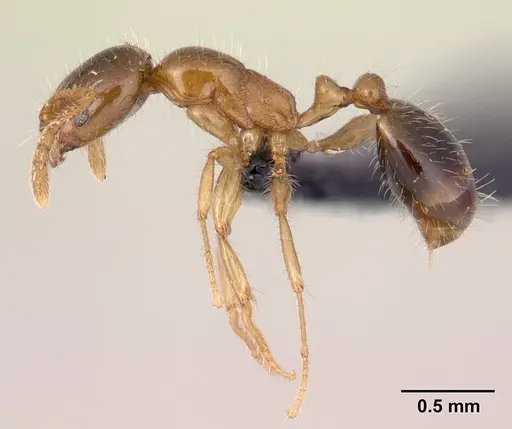
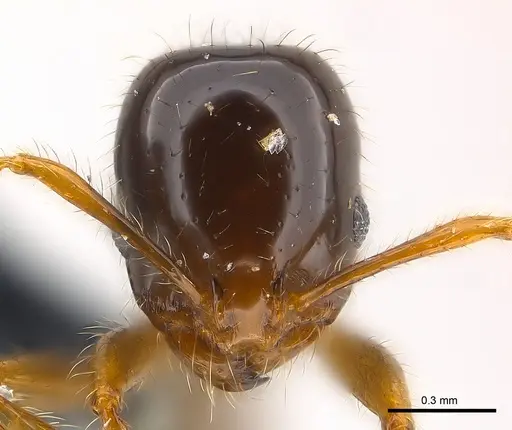
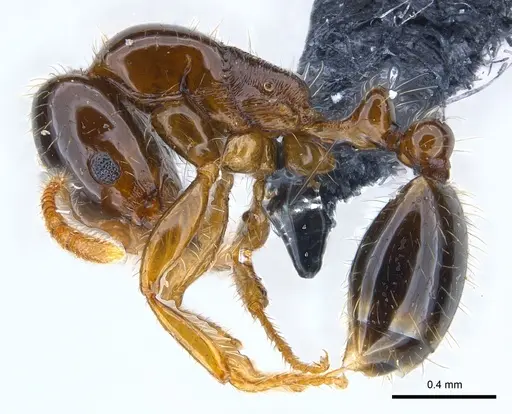
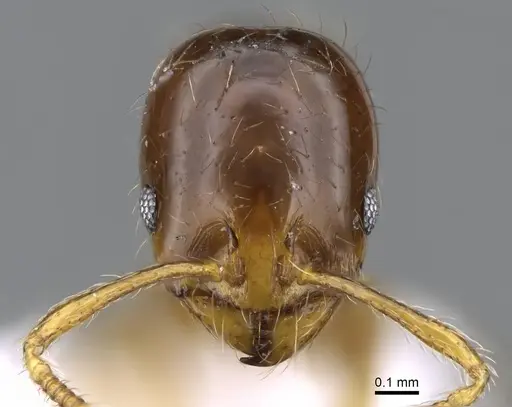
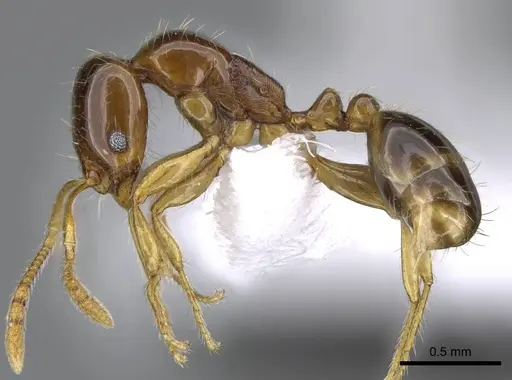
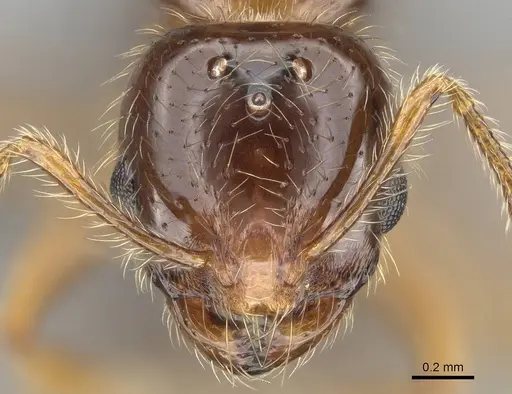
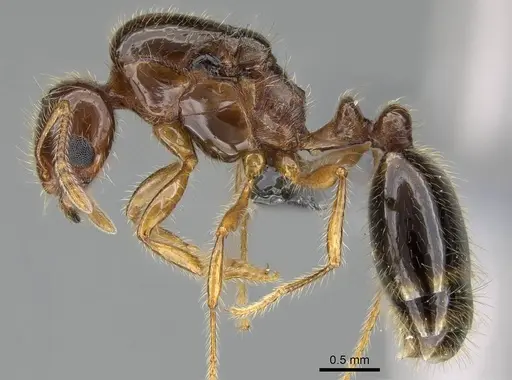
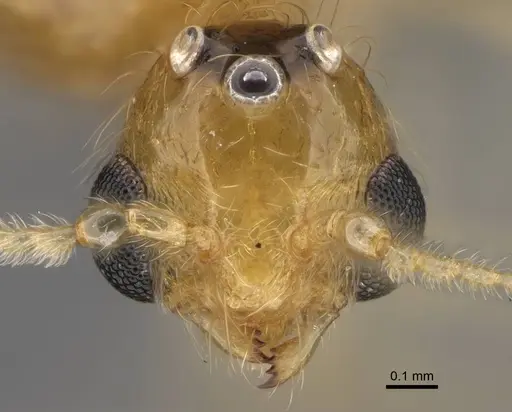
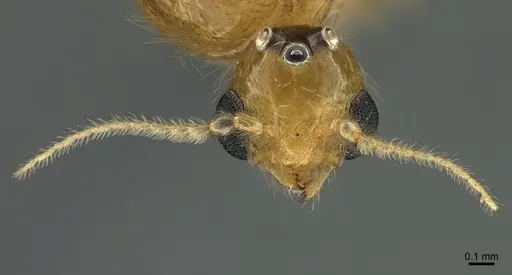
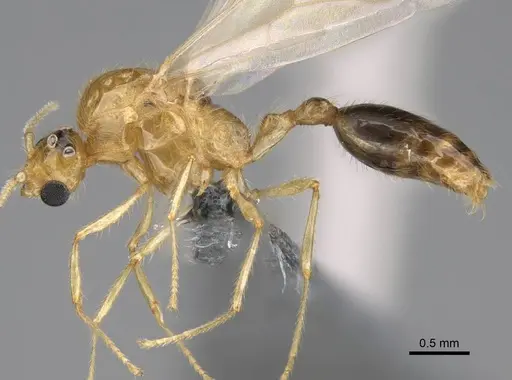
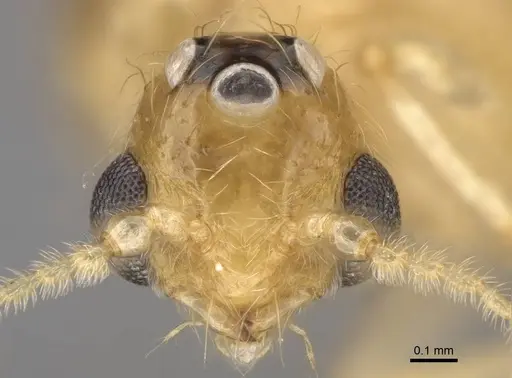
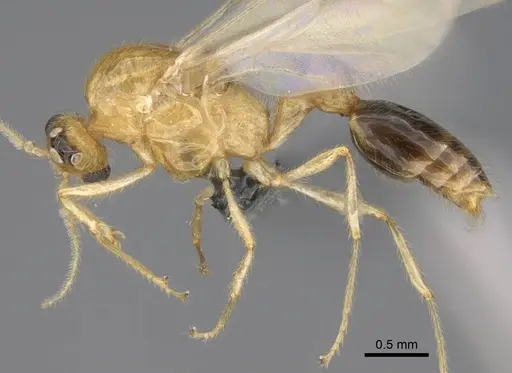
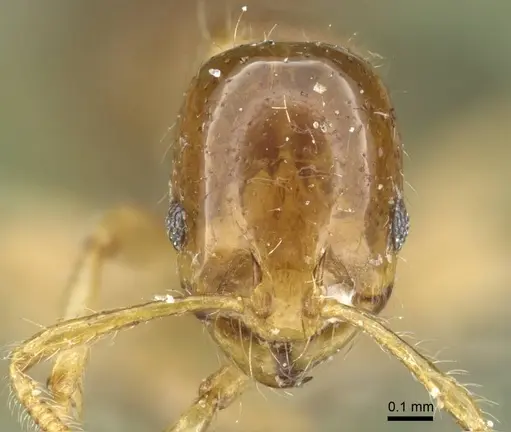
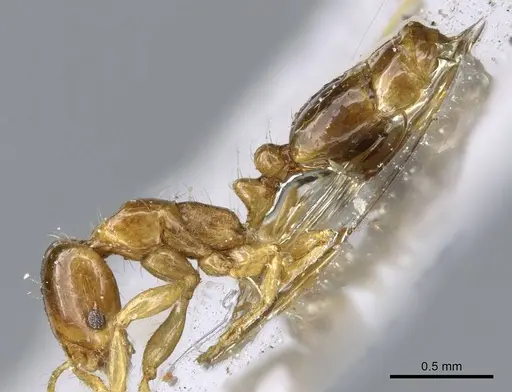
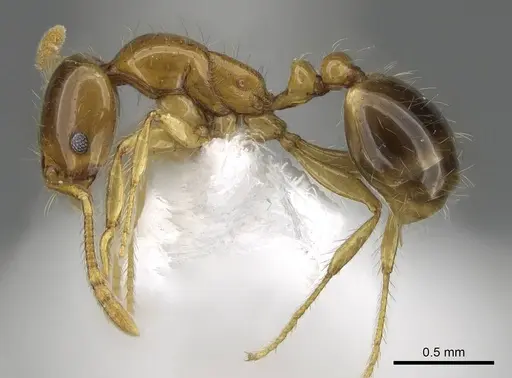
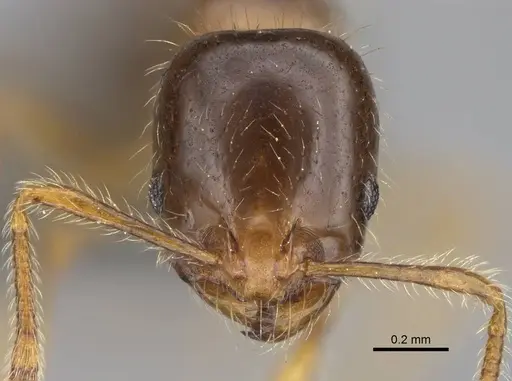
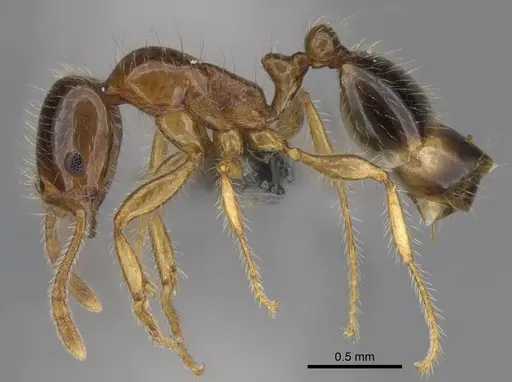
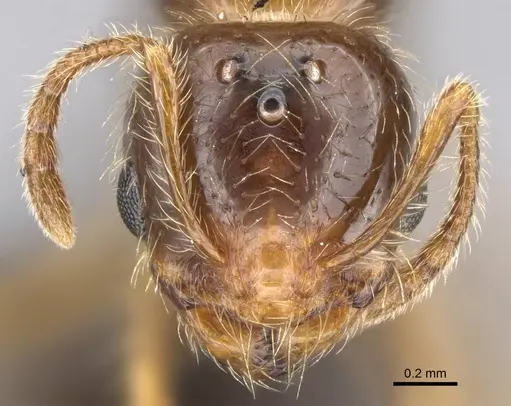
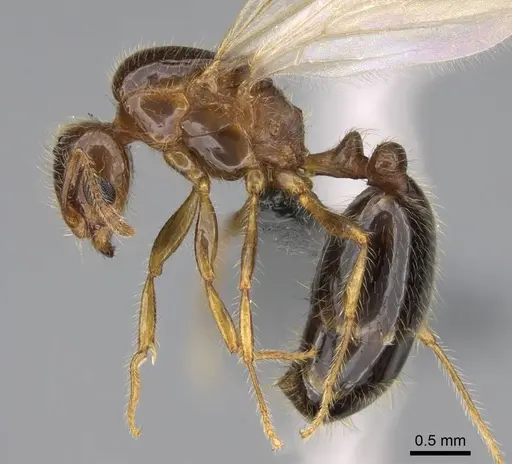
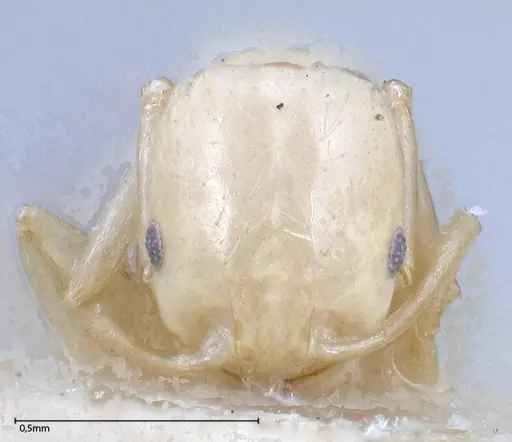
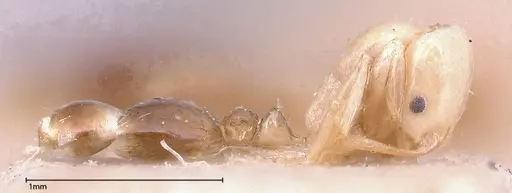
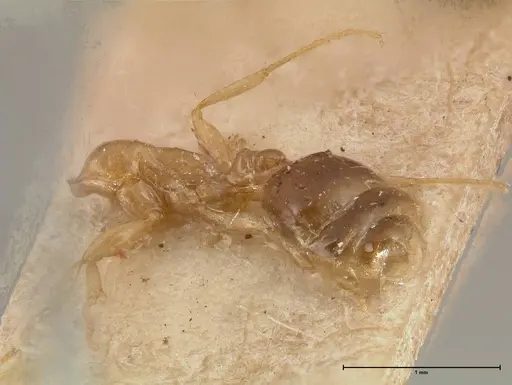
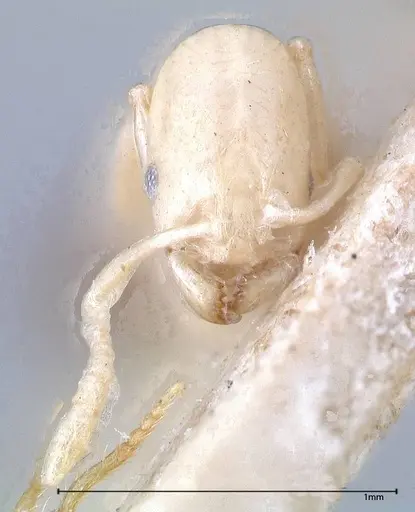
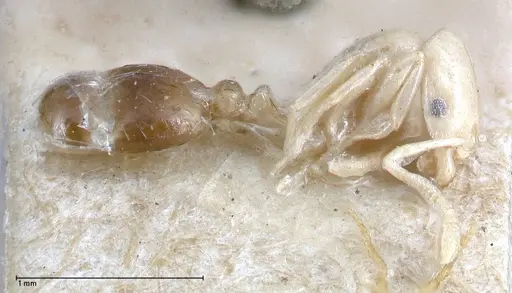
Erromyrma latinodis is a small, slender ant with workers measuring 2.5-3mm. Workers have a brownish-yellow head and mesosoma with a distinctly darker brown gaster (abdomen). They have 12 antennal segments with a 3-segmented club, and their most distinctive feature is five teeth on their mandibles. This species was originally described as Erromyrma latinodis in 1872 from Borneo but was moved to the new genus Erromyrma in 2016. It is a pantropical tramp species that has spread across the globe through human commerce, now found throughout Southeast Asia, the Indian subcontinent, Africa, Madagascar, the Pacific, and even parts of Europe as an introduced species [1][2].
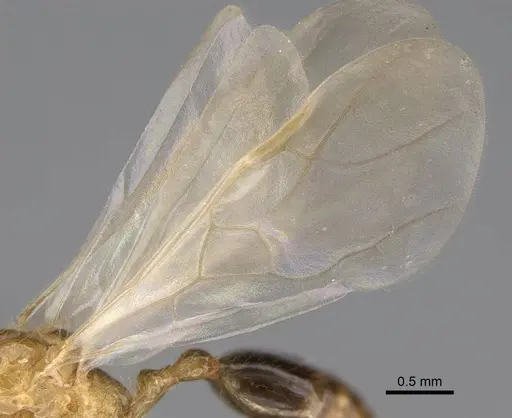
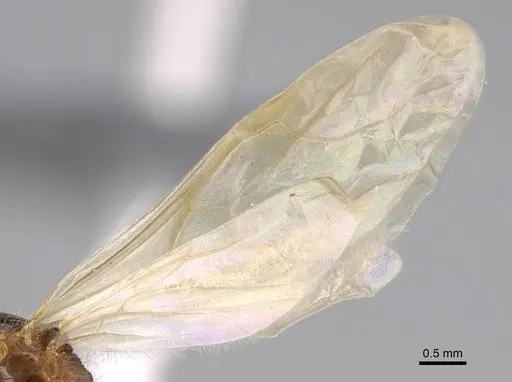
What makes E. latinodis particularly interesting is how recently its male was described in 2023, researchers had to conduct six expeditions to find males, which were finally discovered under bark on a mango tree in Madagascar. The species appears to have unusual reproductive biology, as colonies kept alive for over a year did not produce males. Genetic analysis shows 0% sequence divergence among specimens from Madagascar, Comoros, and Mayotte, confirming it was introduced to these islands through human activity [2].
Quick Summary
- Difficulty: Medium
- Origin & Habitat: Native to Southeast Asia (Borneo), now pantropical through human introduction. Found across Indomalaya, Africa, Madagascar, Pacific islands, and introduced in Europe. Inhabits diverse environments from tropical rainforest to dry forest and anthropogenic habitats like plantations and gardens. Elevational range 2-1726m [2][1].
- Colony Type: Colony structure is not well documented in scientific literature. As a tramp species, it likely forms multi-queen colonies in introduced ranges. Further research needed on native colony structure.
- Size & Growth:
- Queen: Unconfirmed, queen size not specifically documented in available sources
- Worker: 2.5-3mm (some sources report up to 3.5-4mm) [1][3][4]
- Colony: Unknown, likely moderate-sized colonies based on typical tramp ant patterns
- Growth: Moderate, estimated based on related Monomorium species
- Development: Estimated 6-8 weeks based on genus-level inference from related Monomorium species (Development time not directly studied for this species. Estimates based on typical Monomorium development patterns.)
- Antkeeping:
- Temperature: Keep at 22-28°C, these are warm-climate ants native to tropical and subtropical regions. Room temperature within this range works well. A slight temperature gradient allows workers to regulate their conditions [2][1].
- Humidity: Moderate humidity around 50-70%. They nest in various conditions from relatively dry soil under stones to moist leaf litter. Keep nest substrate lightly moist but not waterlogged. Allow some drying between waterings.
- Diapause: Unknown, as a tropical/subtropical species, they likely do not require true hibernation. However, they may reduce activity in cooler months. More research needed on seasonal requirements.
- Nesting: Ground-nesting species found under stones, in soil, and in rotting wood. In captivity, they do well in test tubes with a moist cotton reservoir, or in Y-tong/plaster nests. They accept various nest materials. Provide a moist area for brood but also dry areas for foraging.
- Behavior: E. latinodis is a moderately aggressive ant that shows both avoidance and active aggression toward competitors. In laboratory tests, they displayed lunging and upward bending of their gaster when encountering other ant species like S. geminata. They had a dominance index of 71% in one study, showing they can compete well with other ants [5]. Workers forage on the ground and on low vegetation, and they tend aphids for honeydew. They are active foragers and can be escape artists due to their small size, use fine mesh barriers. They have a developed sting, though being tiny, the sting is rarely noticeable to humans.
- Common Issues: small size means escape prevention must be excellent, they can squeeze through tiny gaps, colonies may fail to produce males in captivity, limiting breeding opportunities, aggressive toward other ant species, keep separate from other colonies, tropical origins mean they may struggle in cool, dry environments, limited specific care information makes husbandry more challenging
Housing and Nest Setup
Erromyrma latinodis is a small ground-nesting ant that adapts well to various captive setups. Test tubes work well for founding colonies, use a standard test tube setup with a water reservoir separated by a cotton ball. The tube should be kept at a slight angle so workers can choose between moist and drier areas. For established colonies, Y-tong (acrylic) nests or plaster nests work well. These ants are not particularly demanding about nest materials but appreciate some moisture in the nest chamber. Because of their small size, ensure all connections between the nest and outworld are tight, even small gaps can allow escapes. The outworld should be simple and easy to clean, as these ants can be messy foragers. [2][1]
Feeding and Diet
In the wild, E. latinodis forages for honeydew from aphids and other small insects. They are mutualistic with aphids including Aphis craccivora [6]. In captivity, offer a varied diet: sugar water or honey as a constant energy source, and protein sources like small insects (fruit flies, small mealworms, crickets) 2-3 times per week. They will also accept other small invertebrates. Being small ants, prey items should be appropriately sized, very small insects or pre-killed prey works well. Remove uneaten prey after 24-48 hours to prevent mold. Sugar water can be offered on a regular basis, changed every few days.
Temperature and Seasonal Care
As a species native to tropical and subtropical regions, E. latinodis needs warm conditions. Keep the nest area between 22-28°C. Room temperature in most homes should fall within this range during summer, but you may need a small heating cable or mat in winter or in cooler climates. Place heating on one side of the nest to create a temperature gradient so ants can regulate their own conditions. Avoid temperatures below 20°C for extended periods. Unlike temperate species, they do not require a true hibernation period. However, you may notice reduced activity in cooler months, this is normal and they should recover when warmed. Monitor colony behavior: if workers cluster near the heated area, increase temperature slightly, if they avoid it, reduce heat. [2][1]
Behavior and Colony Dynamics
E. latinodis is an active forager with a notably aggressive side. In studies of ant interactions, they showed both avoidance behavior (initially avoiding competitors like Paratrechina longicornis and Solenopsis geminata) and active aggression (displaying lunging and gaster-bending toward competitors). They achieved a high dominance index of 71% in laboratory settings [5]. Workers forage both on the ground and on low vegetation, and they tend aphids for honeydew, this is useful to know if you're keeping them near plants. The colony structure is not well documented, but as a tramp species, they likely form multi-queen colonies in most of their introduced range. Males were only described in 2023 and were extremely difficult to find in the wild, suggesting unusual reproductive biology [2].
Handling and Safety
E. latinodis workers are very small (2.5-3mm) and while they have a developed sting, it is rarely noticeable to humans due to their tiny size. They are not considered dangerous to keepers. However, they can be aggressive toward other ant species, so keep colonies separate from other ants. The main handling concern is their small size, they can escape easily and are hard to see. Always use fine mesh on any barriers and check for tiny gaps when transferring colonies. When moving colonies, use smooth-surfaced containers they cannot climb (like glass or plastic with smooth walls). Because they are small and fast, work in a contained area to prevent escapes. [2][5]
Common Problems and Solutions
The biggest challenge with E. latinodis is their small size, escape prevention must be excellent. Check all connections between nest and outworld, use fine mesh barriers, and work in a contained space. They may not produce males in captivity, which limits breeding opportunities, this is a known issue with this species [2]. As tropical ants, they may struggle in cool, dry environments, ensure adequate warmth and humidity. They are aggressive toward other ant species, so keep them isolated from other colonies. Limited specific care information exists for this species since it was recently moved to a new genus and is not a common captive species, be prepared to experiment and adjust care based on your colony's behavior. Wild-caught colonies may carry parasites, so quarantine new colonies if possible.
Frequently Asked Questions
How long does it take for Erromyrma latinodis to produce first workers?
Exact timing is not documented, but based on related Monomorium species, expect 6-8 weeks from egg to first worker at optimal temperature (24-28°C). Be patient, founding colonies can take time, and this species is known to have unusual reproductive biology.
Can I keep Erromyrma latinodis with other ant species?
No, they are aggressive toward other ant species and will fight. In laboratory tests, they showed both avoidance and active aggression toward competitors. Keep them in a separate setup away from other colonies.
What do Erromyrma latinodis eat?
They are omnivores that prefer honeydew from aphids and small insects. In captivity, offer sugar water or honey as a constant energy source, and small protein sources like fruit flies, small mealworms, or crickets 2-3 times per week.
Do Erromyrma latinodis need hibernation?
Unknown, as a tropical/subtropical species, they likely do not require true hibernation. They may reduce activity in cooler months, but this is different from temperate hibernation. Keep them warm year-round (22-28°C).
Are Erromyrma latinodis good for beginners?
Medium difficulty, they are small and require excellent escape prevention. Limited specific care information exists since the species was recently reclassified and males were only described in 2023. Some ant-keeping experience is helpful.
How big do Erromyrma latinodis colonies get?
Exact colony size is not well documented. As a tramp species, they likely form moderate-sized colonies of hundreds to low thousands of workers. More research is needed on maximum colony size.
When should I move my colony to a formicarium?
Move from test tube to a larger nest setup (Y-tong, plaster, or naturalistic) when the colony reaches 30-50 workers or when the test tube becomes crowded. Ensure the new setup has appropriate moisture levels and small connections to prevent escapes.
Why aren't my Erromyrma latinodis producing males?
This is normal, males were only described in 2023 and were extremely difficult to find in the wild. Colonies kept in captivity for over a year did not produce males in one study. This species appears to have unusual reproductive biology that is not fully understood.
References

This caresheet is licensed under CC BY-SA 4.0 .
CASENT0008632
View on AntWeb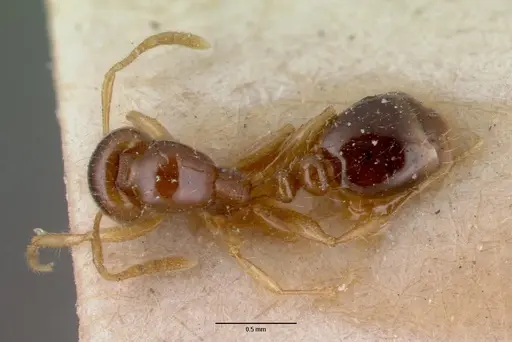
CASENT0010941
View on AntWeb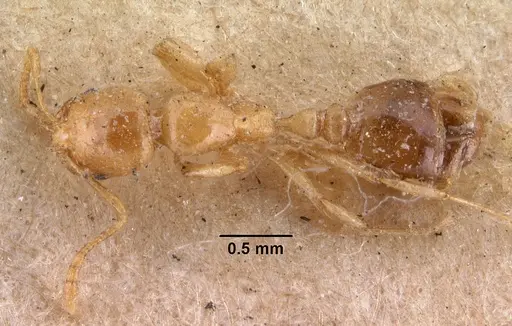
CASENT0101591
View on AntWeb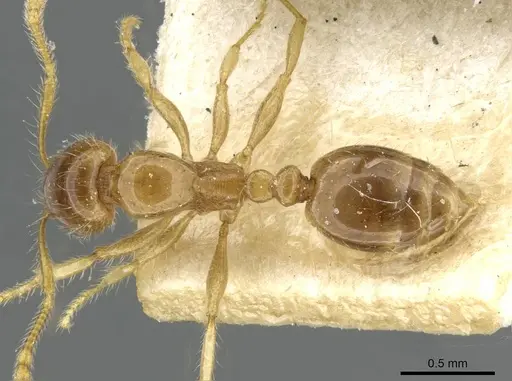
CASENT0101621
View on AntWeb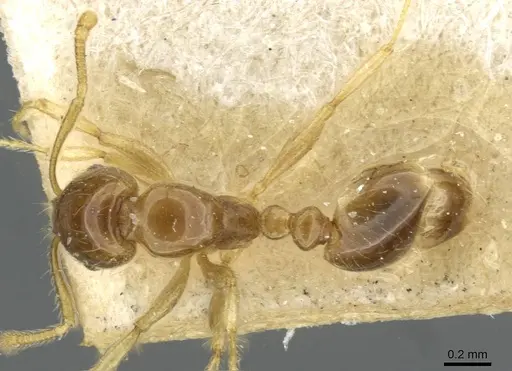
CASENT0101928
View on AntWeb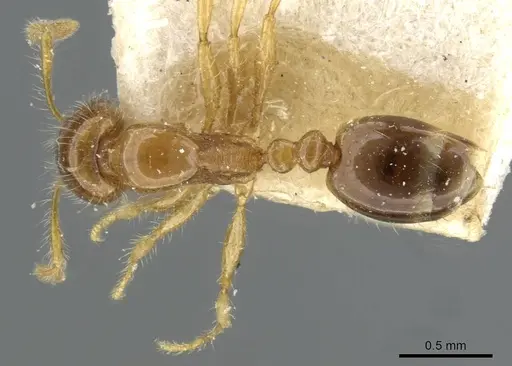
CASENT0107541
View on AntWeb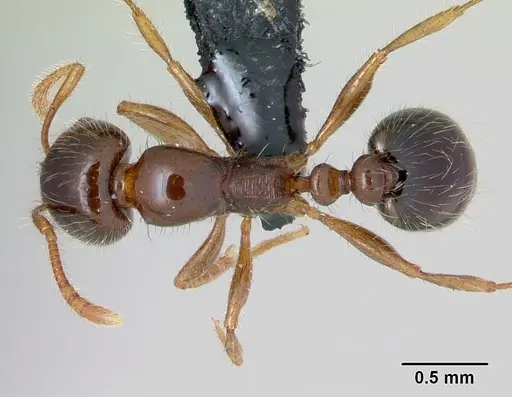
CASENT0132440
View on AntWeb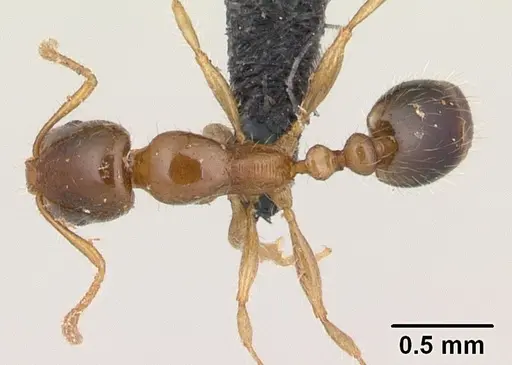
CASENT0146495
View on AntWeb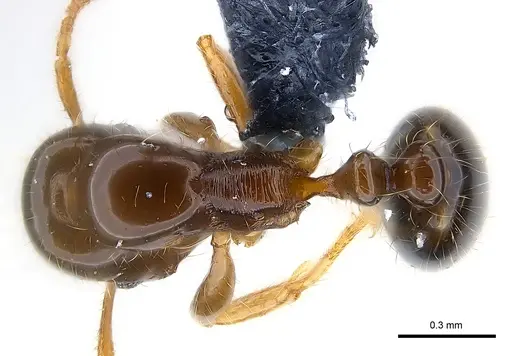
CASENT0217356
View on AntWeb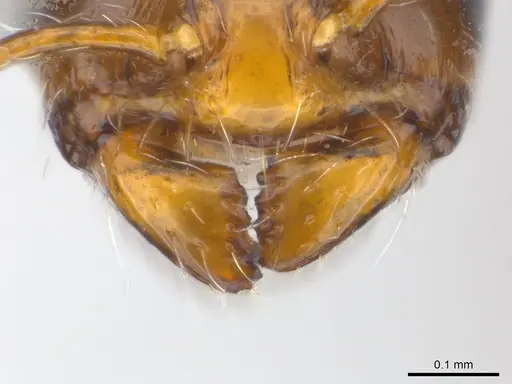
CASENT0746623
View on AntWeb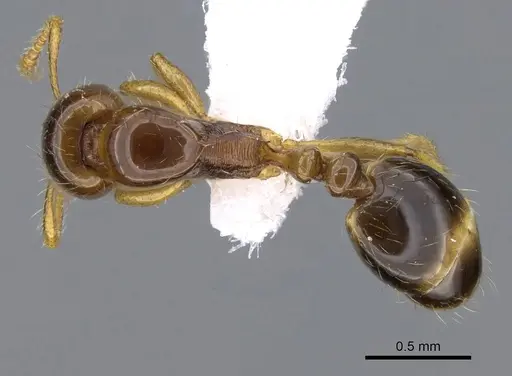
CASENT0767622
View on AntWeb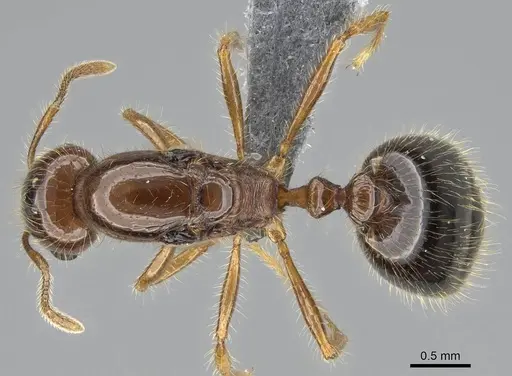
CASENT0788835
View on AntWeb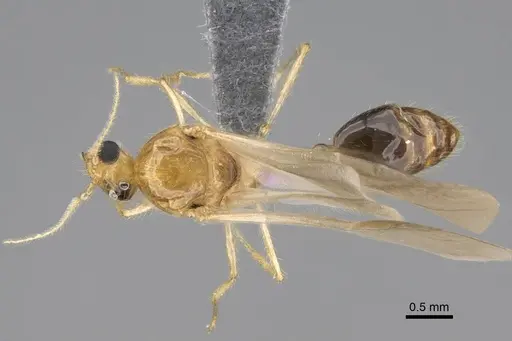
CASENT0801166
View on AntWeb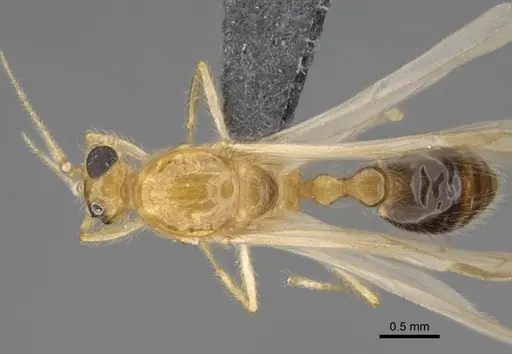
CASENT0905756
View on AntWeb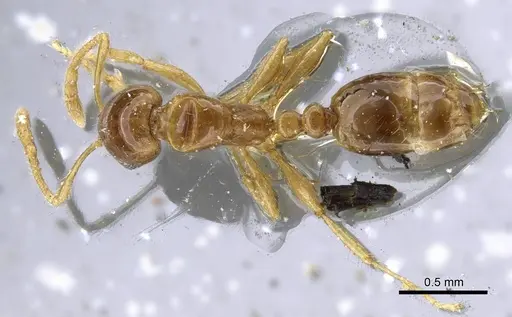
CASENT0922298
View on AntWeb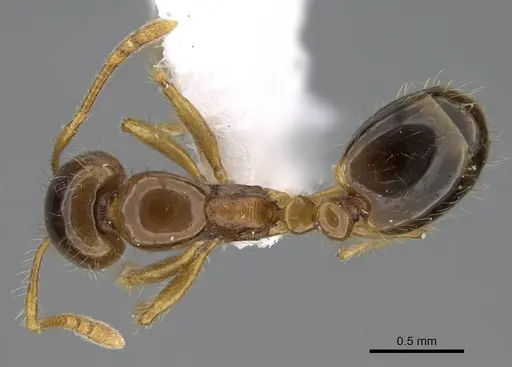
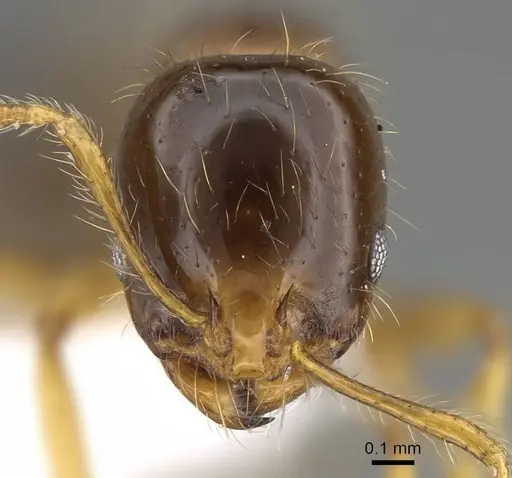
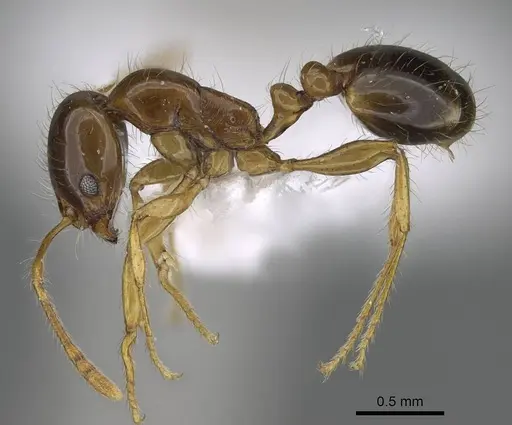
CASENT0922300
View on AntWeb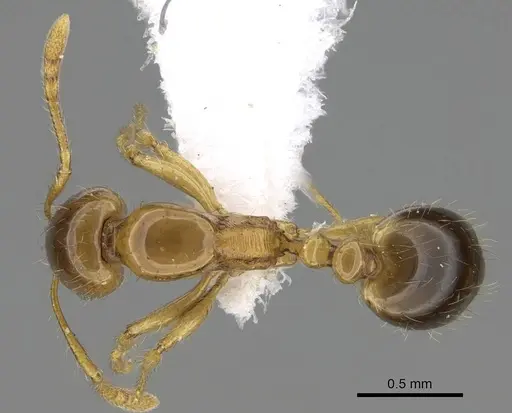
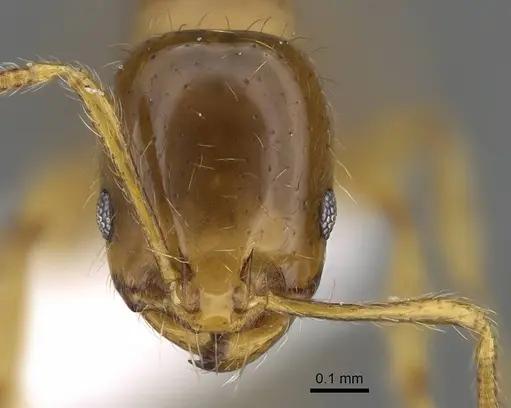
CASENT0922949
View on AntWeb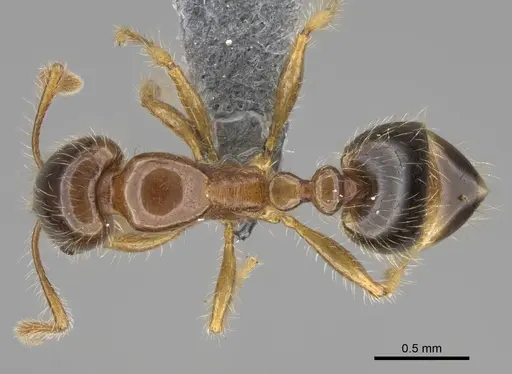
CASENT0922950
View on AntWeb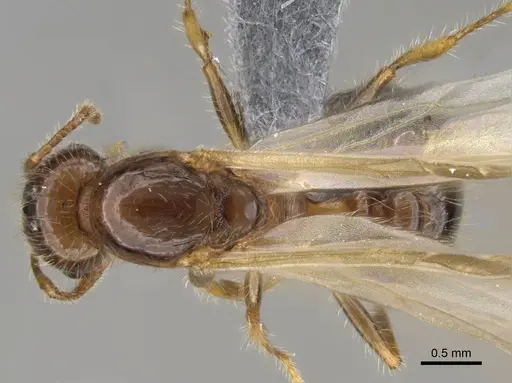
FOCOL0634-1
View on AntWeb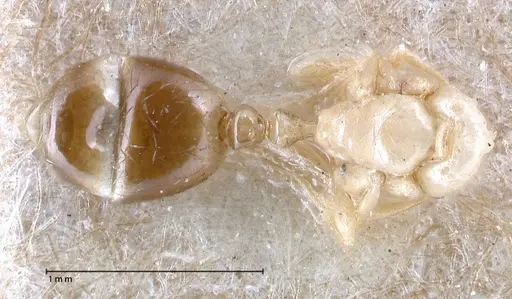
FOCOL0634-2
View on AntWeb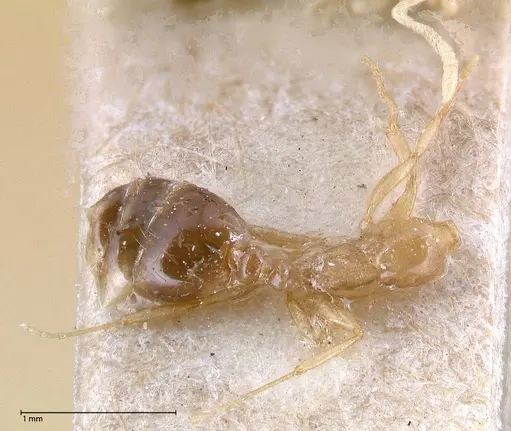
FOCOL0634-3
View on AntWeb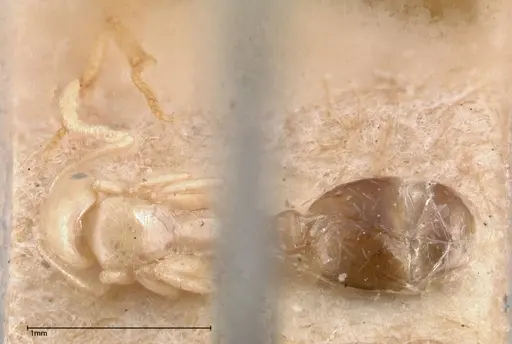
Literature
Loading...Loading products...