

Tetramorium philippwagneri
- Scientific Name
- Tetramorium philippwagneri
- Tribe
- Crematogastrini
- Subfamily
- Myrmicinae
- Author
- Hita Garcia <i>et al.</i>, 2010
- Distribution
- Found in 4 countries
Tetramorium philippwagneri Overview
Tetramorium philippwagneri is an ant species of the genus Tetramorium. It is primarily documented in 4 countries , including Gabon, Equatorial Guinea, Sudan. Detailed taxonomic data and occurrence records can be further explored via authoritative databases such as AntWeb or the Global Biodiversity Information Facility (GBIF).
Tetramorium philippwagneri
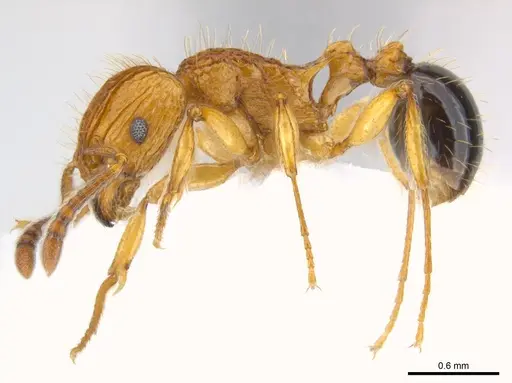
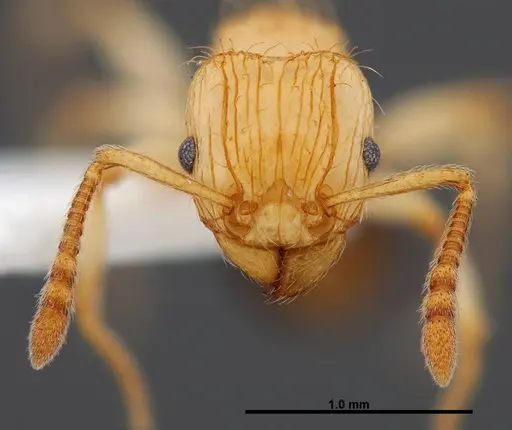
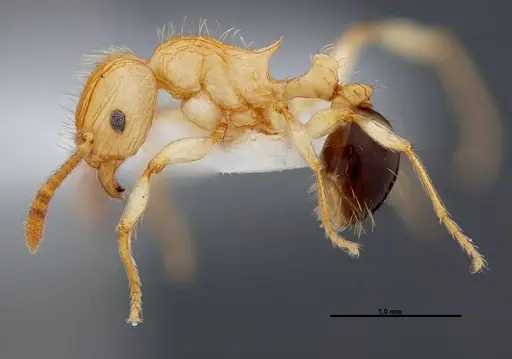
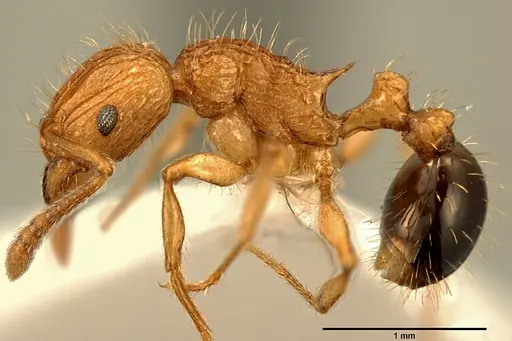
Tetramorium philippwagneri is a small, recently described ant species from the Afrotropical region, first identified in 2010 from specimens collected in Zambia, Cameroon, and Gabon [1]. Workers measure approximately 4-5mm in total length, with a distinctive bicolored appearance: the head, mesosoma (middle body section), petiole, and postpetiole are orange-brown, while the gaster (abdomen) is strikingly dark brown to black [1]. This species belongs to the Tetramorium edouardi species complex within the larger Tetramorium weitzeckeri group, characterized by their small eyes, longitudinally rugose mandibles, and long erect hairs covering their dorsal surfaces [1][2].
This species is still very poorly understood in captivity, in fact, nothing has been published about its biology in the scientific literature [3]. This makes it an unusual choice for antkeeping, as even basic information like founding behavior, colony size, or preferred nesting conditions remains undocumented. What we know comes entirely from the original species description and a few ecological surveys in Cameroon [4].
Quick Summary
- Difficulty: Expert
- Origin & Habitat: Native to the Afrotropical region, specifically documented from Cameroon, Gabon, and northern Zambia. The type specimens were collected at approximately 1392m elevation in Zambia, and in Cameroon they have been found at elevations around 800-900m [1][4]. The natural habitat is not described in available literature.
- Colony Type: Unconfirmed, colony structure has not been documented for this species. Most Tetramorium species are monogyne (single-queen colonies), but this has not been verified for T. philippwagneri.
- Size & Growth:
- Queen: Undocumented, no queen measurements have been published [1]
- Worker: Workers are 4-5mm total length based on body measurements: HL 0.739-0.883mm, HW 0.722-0.867mm, WL 0.889-1.111mm [1]
- Colony: Unknown, no colony size data exists for this species
- Growth: Unknown, development timeline has not been studied
- Development: Unknown, no direct observations of brood development exist. Based on typical Tetramorium patterns, estimate 6-10 weeks at warm temperatures, but this is a rough guess for an unstudied species. (This is a recently described species (2010) with no published biology. Any timeline would be an educated guess based on related species.)
- Antkeeping:
- Temperature: No specific data exists for this species. As an Afrotropical ant from central Africa, they likely prefer warm conditions, start around 24-28°C and observe colony activity. Related Tetramorium species typically thrive in the low-to-mid 20s°C range.
- Humidity: No humidity data exists. Based on collection locations in Cameroon and Zambia (800-1392m elevation in relatively humid tropical regions), they likely prefer moderate to high humidity. Keep the nest substrate moist but not waterlogged.
- Diapause: Unlikely, being an Afrotropical species from central Africa, they probably do not require a true diapause. However, a slight reduction in temperature during winter months may be beneficial.
- Nesting: No natural nesting observations exist. Most Tetramorium species are ground-nesting, often under stones or in soil. A naturalistic setup with soil substrate or a Y-tong/plaster nest would be appropriate starting points.
- Behavior: Not documented. Based on genus-level patterns, expect typical Tetramorium behavior: ground-dwelling, likely foraging for small insects and tending aphids for honeydew. They are small ants, so escape prevention should be taken seriously, they can slip through surprisingly small gaps. Aggression levels are unknown but likely moderate like most small Myrmicinae.
- Common Issues: This species has no documented captive history, you are essentially pioneering its husbandry, No information exists on what foods they accept or how to feed founding colonies, Colony growth rate is completely unknown, making it hard to assess progress, No data on founding behavior (claustral vs semi-claustral), queen may need different setup than expected, Temperature and humidity requirements are inferred, not confirmed, trial and error may be necessary
Species Discovery and Identification
Tetramorium philippwagneri was only formally described in 2010 by Hita Garcia, Fischer, and Peters, making it a relatively newly recognized ant species [1]. The species was named in honor of Philipp Wagner from Bonn, who assisted with sampling ant specimens from various Afrotropical localities. It belongs to the Tetramorium edouardi species complex within the Tetramorium weitzeckeri species group, a clade of small ants distributed across sub-Saharan Africa [2].
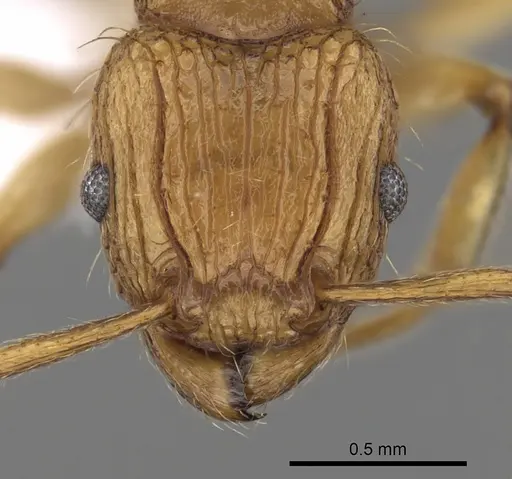
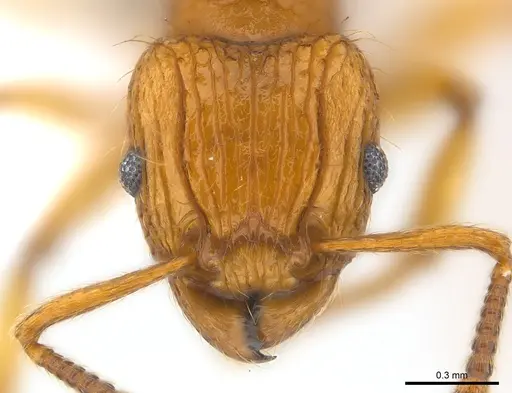
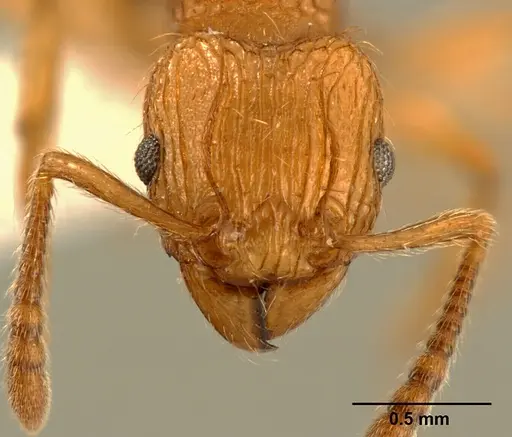
The species is distinguished from similar ants by its small eyes (OI 21-22), longitudinally rugose mandibles, and striking bicolored pattern, orange-brown head and mesosoma contrasting with a very dark brown to black gaster [1]. It may be closely related to Tetramorium schoutedeni, known from the Democratic Republic of Congo, with the main difference being the mandibular sculpturation. More material from the intervening regions between known populations would help clarify this relationship.
Distribution and Habitat
This species is known from three main countries: Cameroon, Gabon, and northern Zambia [1]. In Cameroon, specimens have been collected at elevations around 800-900m along an elevational gradient in central Cameroon [4]. The type specimens came from northern Zambia at approximately 1392m elevation, specifically from Hillwood Farm near Ikelenge in the North Western Province [1].
The known altitudinal range in Cameroon shows occurrences at 800m and 900m, with no specimens found at higher elevations (1000m,1150m) in that particular survey [4]. This suggests some preference for mid-elevation habitats, though the data is limited. The natural microhabitat preferences (forest edge, savanna, forest interior) remain undescribed in available literature.
Morphology and Identification for Keepers
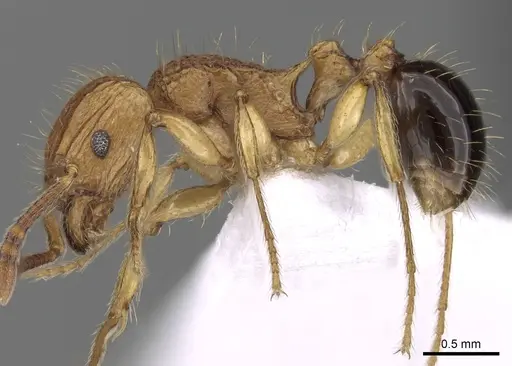
If you encounter this species, the most distinctive visual features are the contrasting colors, the front half of the ant (head, mesosoma, waist segments) appears orange-brown while the abdomen is very dark, almost black [1]. Workers have small eyes relative to their head size, with only 8-9 ommatidia in the longest row. The mandibles have distinct longitudinal ridges (rugae), and the body is covered in long, erect hairs that stand up from the surface [1].
The propodeal spines (the spiky projections at the back of the mesosoma) are long and sharp. The petiolar node (the first waist segment) is high and nodiform in shape, meaning it looks like a small node or bump when viewed from the side. This is characteristic of the edouardi species complex [2]. Workers measure approximately 4-5mm in total body length.
Keeping an Unstudied Species
This is perhaps the most important section: T. philippwagneri has never been kept in captivity documented in any source, and absolutely no biological information exists beyond the original species description. This means you are essentially pioneering its husbandry. Before acquiring this species, consider whether you have experience with other Tetramorium species, as you'll need to make educated guesses about care requirements.
Based on genus-level patterns, assume the following as starting points: monogyne colony structure (one queen), claustral founding (queen seals herself in), ground-nesting preferences, and a diet of small insects and honeydew/sugar sources. Keep temperatures warm (24-28°C) and humidity moderate to high. Document your observations meticulously, any successful captive husbandry of this species would be genuinely novel contribution to antkeeping knowledge.
Related Species for Comparison
Tetramorium philippwagneri belongs to the T. edouardi species complex, which includes several similar-looking species across Africa [2]. Related species include Tetramorium edouardi and Tetramorium robertsoni, which have larger eyes than T. philippwagneri and are uniformly colored (not bicolored). Another close relative is Tetramorium schoutedeni from D.R. Congo, which has smoother mandibles as the main distinguishing feature [1].
If you're having trouble identifying specimens or finding care information, looking at general Tetramorium husbandry guides may help, most species in this genus have similar basic requirements despite variations in size and specific habitat preferences. The weitzeckeri species group as a whole contains numerous small, ground-dwelling ants across sub-Saharan Africa.
Frequently Asked Questions
How long do Tetramorium philippwagneri workers live?
This has not been documented. Most small ant workers live several months to a few years, but specific lifespan data does not exist for this species.
What do Tetramorium philippwagneri eat?
No feeding observations have been documented. Based on typical Tetramorium diet, they likely eat small insects and arthropods, and may tend aphids for honeydew. Offer small live prey like fruit flies and occasional sugar water or honey. Start with small prey items and observe acceptance.
Can I keep Tetramorium philippwagneri in a test tube?
Test tubes work for founding colonies. However, since this species has never been documented in captivity, monitor the queen closely. If she appears stressed or if you notice mold issues, consider moving to a naturalistic setup with soil substrate.
Do Tetramorium philippwagneri ants sting?
Tetramorium belongs to Myrmicinae, which includes many species with functional stingers. However, stinging behavior has not been documented for this specific species. Expect some defensive capability if threatened, but they are small ants (4-5mm) and any sting would be mild.
How big do Tetramorium philippwagneri colonies get?
Unknown, no colony size data exists. Most Tetramorium species form colonies ranging from dozens to a few hundred workers. Expect slow growth given the lack of documented captive history.
Do Tetramorium philippwagneri need hibernation?
Unlikely. Being an Afrotropical species from central Africa, they probably do not require a true diapause. A slight seasonal temperature reduction may occur naturally if kept at room temperature, but do not force cold hibernation conditions.
Is Tetramorium philippwagneri good for beginners?
No. This species is not recommended for beginners precisely because absolutely no captive husbandry information exists. You would be pioneering every aspect of its care. Gain experience with better-documented Tetramorium species first.
When will Tetramorium philippwagneri have first workers?
Unknown, no development timeline exists. For related Tetramorium species, expect 6-10 weeks from egg to worker at warm temperatures (around 25°C). However, this is a rough estimate for an unstudied species.
Can I keep multiple Tetramorium philippwagneri queens together?
Not documented. Most Tetramorium species are monogyne (single queen), but colony structure has not been studied for this species. Do not attempt combining unrelated queens without documented evidence they can coexist.
Where can I get Tetramorium philippwagneri?
This species is rarely available in the antkeeping hobby. It was only described in 2010 and has a limited known distribution in central Africa. If available, it would likely come from specialized breeders or wild-caught imports, though wild collection from protected areas is not recommended.
References

This caresheet is licensed under CC BY-SA 4.0 .
CASENT0217069
View on AntWeb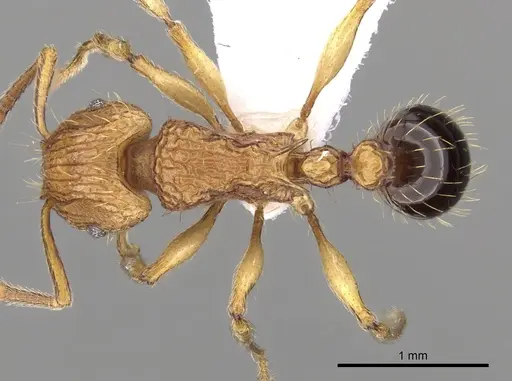
CASENT0217320
View on AntWeb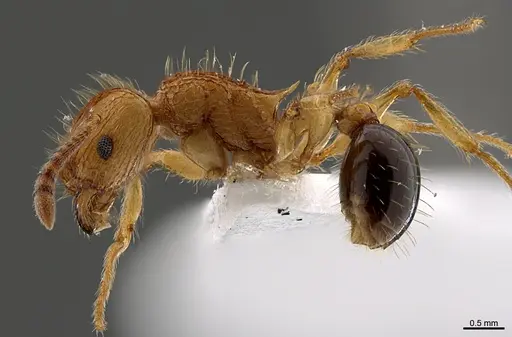
FMNHINS0000047401
View on AntWeb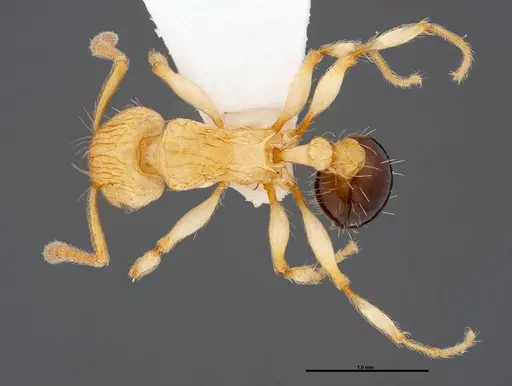
ZFMKHYM20096178
View on AntWeb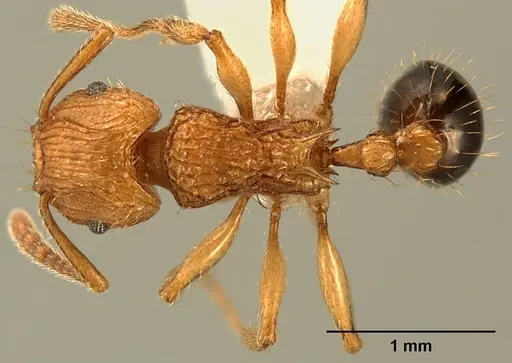
Literature
Loading...Loading products...