

Tetramorium robertsoni
- Scientific Name
- Tetramorium robertsoni
- Tribe
- Crematogastrini
- Subfamily
- Myrmicinae
- Author
- Hita Garcia <i>et al.</i>, 2010
- Distribution
- Found in 0 countries
Tetramorium robertsoni Overview
Tetramorium robertsoni is an ant species of the genus Tetramorium. It is primarily documented in 0 countries . Detailed taxonomic data and occurrence records can be further explored via authoritative databases such as AntWeb or the Global Biodiversity Information Facility (GBIF).
Tetramorium robertsoni
Tetramorium robertsoni is a small to medium-sized ant species native to Tanzania, Africa. Workers measure 3-4mm in total length with a uniformly brown body and lighter-colored appendages. This species belongs to the Tetramorium edouardi species complex within the weitzeckeri species group, characterized by its relatively large eyes, long propodeal spines, and distinctive long hairs covering the head, mesosoma, and gaster [1]. The species was described in 2010 and is known only from a few scattered localities in Tanzania, primarily in savanna habitats [1][2]. Beyond their preference for open areas, very little is known about the biology of this species in the wild.
Quick Summary
- Difficulty: Medium
- Origin & Habitat: Tanzania, East Africa, found in savanna habitats, specifically collected from unburnt slopes in the Mkomazi Game Reserve and Amani areas [1][2]
- Colony Type: Likely monogyne (single queen) based on typical Tetramorium colony structure, though this is unconfirmed for this specific species
- Size & Growth:
- Queen:{.size-link} Undescribed in scientific literature, estimated 6-8mm based on genus patterns
- Worker:{.size-link} 3-4mm total length (HL 0.800-0.906mm) [1]
- Colony: Unknown, typical Tetramorium colonies reach several hundred workers
- Growth: Moderate, estimated based on genus patterns
- Development: Estimated 6-8 weeks at optimal temperature based on related Tetramorium species (Development timeline is unconfirmed for this species, estimates based on genus-level data for similar savanna-dwelling Tetramorium)
- Antkeeping:
- Temperature: Keep at 22-26°C, these are African savanna ants that prefer warm conditions. A heating cable on one side of the nest creates a suitable gradient.
- Humidity: Moderate humidity around 50-60%. Allow the nest substrate to dry partially between waterings, savanna species tolerate drier conditions than forest-dwelling ants.
- Diapause: Unlikely required, Tanzania lies near the equator with minimal seasonal temperature variation. However, a slight reduction in temperature during winter months may be beneficial.
- Nesting: In nature they likely nest in soil under stones or in shallow ground cavities. In captivity, a Y-tong (AAC) nest or plaster nest works well. Provide a moisture gradient so ants can choose their preferred humidity zone.
- Behavior: Temperament is typical of Tetramorium, generally non-aggressive but will defend the nest if threatened. Workers are active foragers that search for small insects and honeydew. Escape prevention should be moderate, these are small ants but not as prone to escaping as tiny species like Pheidole. As Myrmicinae, they possess a functional stinger and can deliver a mild sting if handled roughly.
- Common Issues: limited biological data makes specific care recommendations uncertain, wild-caught colonies may carry parasites that are difficult to treat, colonies may be slow to establish due to limited founding documentation, temperature management is critical, avoid cold drafts, small colony size initially requires careful feeding to prevent mold from excess food
Appearance and Identification
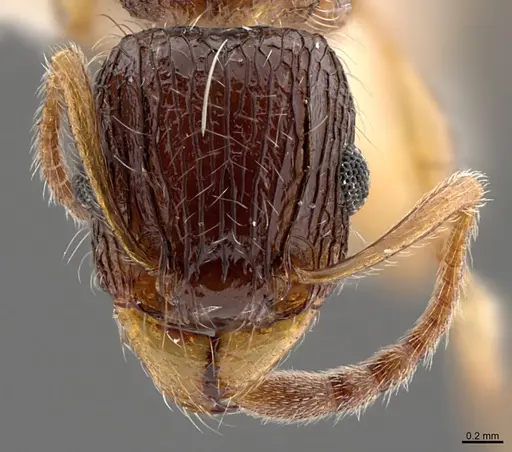
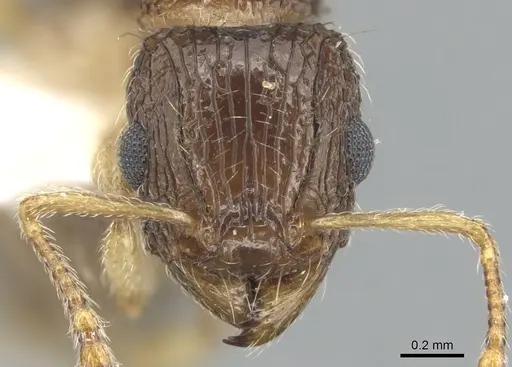
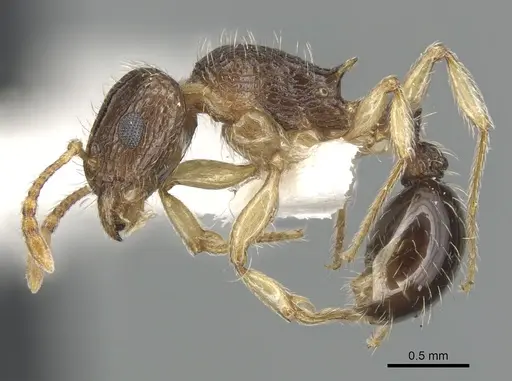
Tetramorium robertsoni workers are small ants measuring approximately 3-4mm in total body length. They have a distinctive uniformly brown coloration with lighter-colored legs and antennae. The head is slightly longer than wide, and they possess relatively large eyes compared to other Tetramorium species, a feature that helps them navigate in their open savanna habitat. One of their most distinctive features is the coverage of long, simple hairs on the dorsal surfaces of the head, mesosoma (middle body section), petiole, postpetiole, and gaster. They have long propodeal spines and a high, nodiform petiolar node. These ants can be distinguished from related species like T. edouardi by their unsculptured clypeus and barely-impressed metanotal groove [1].
Natural History and Distribution
This species is known only from Tanzania in East Africa, making it a relatively rare species in the antkeeping hobby. The type specimens were collected from the Mkomazi Game Reserve in savanna habitat on an unburnt slope. Additional specimens were found at Amani in the Eastern Arc Mountains. Unlike some Tetramorium species that prefer forest understories, T. robertsoni shows a preference for open areas, which aligns with their large eyes, an adaptation for navigating exposed habitats. The savanna environment means they experience warm temperatures year-round with distinct wet and dry seasons rather than cold winters [1][2].
Housing and Nest Setup
For keeping Tetramorium robertsoni, a Y-tong (AAC) nest or plaster formicarium works well. These ants do best with a moisture gradient, keep one side of the nest moderately humid while allowing the other side to dry slightly. This lets the colony self-regulate. A test tube setup can work for founding colonies, but you'll need to transition them to a proper nest once the colony reaches 20-30 workers. Because they come from open savanna habitats, ensure the outworld (foraging area) has good ventilation while the nest area maintains stable humidity. Use a shallow water reservoir in the nest to provide moisture without flooding.
Feeding and Diet
Like most Tetramorium species, these ants are omnivorous with a preference for protein. In captivity, offer small live insects such as fruit flies, pinhead crickets, or small mealworms. They will also accept sugar sources like honey water or sugar water, though protein should make up the majority of their diet. Feed small amounts 2-3 times per week, removing any uneaten prey after 24 hours to prevent mold. A constant sugar source is recommended, a small cotton ball soaked in honey water or sugar water works well. Given their small size, ensure prey items are appropriately sized, insects should be no larger than the ants themselves.
Temperature and Seasonal Care
As savanna ants from Tanzania, Tetramorium robertsoni prefers warm conditions. Maintain temperatures between 22-26°C in the nest area. A heating cable placed on one side of the nest can create a temperature gradient, which many ants naturally prefer. Avoid temperatures below 20°C or above 30°C for extended periods. Since Tanzania lies near the equator, these ants likely do not require a true hibernation diapause. However, you may observe reduced activity during winter months if your room temperature drops, which is normal. There is no documented need for a cold winter rest period.
Colony Development and Growth
The queen size is not described in the scientific literature, but based on related Tetramorium species, she likely measures 6-8mm. Founding colonies should be treated as claustral, the queen seals herself in a chamber and raises the first brood without foraging. First workers (nanitics) will be smaller than normal workers and typically appear within 6-8 weeks under optimal conditions. Colony growth is moderate, expect the colony to reach 50-100 workers within the first year with good care. Maximum colony size for this species is unknown but likely reaches several hundred workers based on typical Tetramorium patterns. Be patient with founding colonies as they are vulnerable to stress. [1]
Frequently Asked Questions
How long does it take for Tetramorium robertsoni to have first workers?
Based on typical Tetramorium development, expect first workers (nanitics) to emerge 6-8 weeks after the queen lays eggs, provided temperatures are maintained at 24-26°C. This timeline is estimated as specific development data for this species does not exist.
What do Tetramorium robertsoni ants eat?
These ants are omnivorous but prefer protein. Offer small live insects like fruit flies, small crickets, or mealworms. They will also accept sugar water or honey water. Feed protein 2-3 times per week and provide a constant sugar source.
Do Tetramorium robertsoni ants sting?
Yes, as members of the subfamily Myrmicinae, they possess a functional stinger. However, they are not aggressive and will only sting if directly threatened or handled roughly. The sting is mild and comparable to other small Tetramorium species.
What temperature do Tetramorium robertsoni ants need?
Keep them at 22-26°C. These are warm-adapted savanna ants from Tanzania that prefer consistent warmth. A heating cable on one side of the nest can help maintain optimal temperatures.
Are Tetramorium robertsoni good for beginners?
This species is rated as medium difficulty. While not the most challenging ant species, there is very limited biological data available, which can make specific care decisions more difficult. They are more suitable for keepers with some experience who can adapt care based on colony behavior.
How big do Tetramorium robertsoni colonies get?
Maximum colony size is unknown for this specific species, but based on typical Tetramorium patterns, colonies likely reach several hundred workers. Growth is moderate, expect a well-established colony after 1-2 years.
Do Tetramorium robertsoni need hibernation?
Hibernation is likely not required. These ants come from Tanzania near the equator where temperatures remain warm year-round. A slight reduction in activity during winter months may occur if room temperatures drop, but no formal diapause period is needed.
What type of nest is best for Tetramorium robertsoni?
A Y-tong (AAC) nest or plaster formicarium works well. Provide a moisture gradient so the colony can self-regulate humidity. Test tubes can work for founding colonies but should be upgraded once the colony grows.
Where is Tetramorium robertsoni found in the wild?
This species is known only from Tanzania, East Africa. Specimens have been collected from savanna habitats in the Mkomazi Game Reserve and Amani areas. They prefer open areas rather than forested understories.
Can I keep multiple Tetramorium robertsoni queens together?
This is not recommended. While colony structure is unconfirmed for this species, most Tetramorium are monogyne (single queen). Combining unrelated queens typically leads to fighting and colony failure. It is best to establish one queen per colony.
Report an Issue
The current care sheet is based fully on literature. See inconsistencies, or something that's incorrect? Please , it will be resolved after review from an admin. Contributing to the blogs tab also helps providing information, to make us be able to further improve the caresheets. Thank you for your support!
References

This caresheet is licensed under CC BY-SA 4.0 .
CASENT0218277
View on AntWeb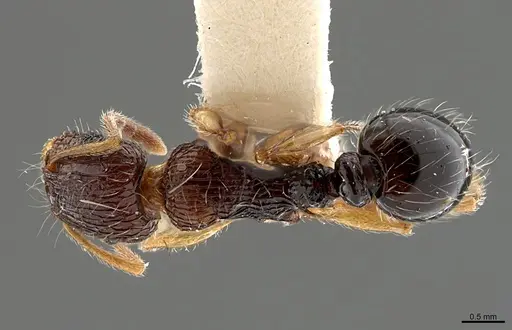
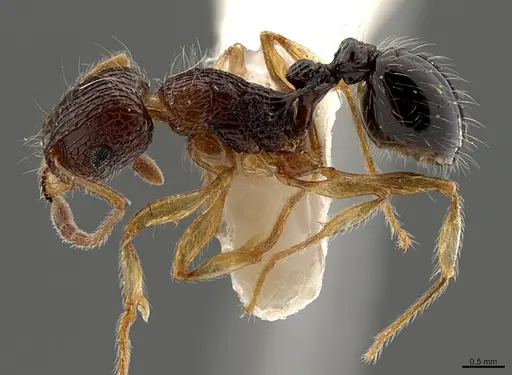
ZFMKHYM20096090
View on AntWeb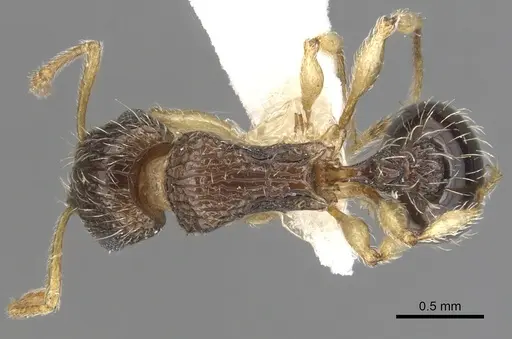
Literature
Loading...Loading products...