

Tetramorium edouardi
- Scientific Name
- Tetramorium edouardi
- Tribe
- Crematogastrini
- Subfamily
- Myrmicinae
- Author
- Forel, 1894
- Distribution
- Found in 5 countries
Tetramorium edouardi Overview
Tetramorium edouardi is an ant species of the genus Tetramorium. It is primarily documented in 5 countries , including Ethiopia, Kenya, Nigeria. Detailed taxonomic data and occurrence records can be further explored via authoritative databases such as AntWeb or the Global Biodiversity Information Facility (GBIF).
Tetramorium edouardi
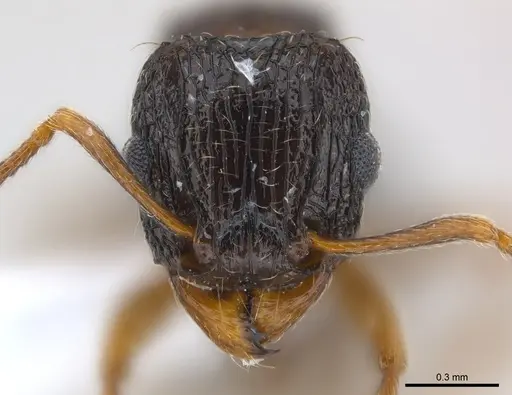
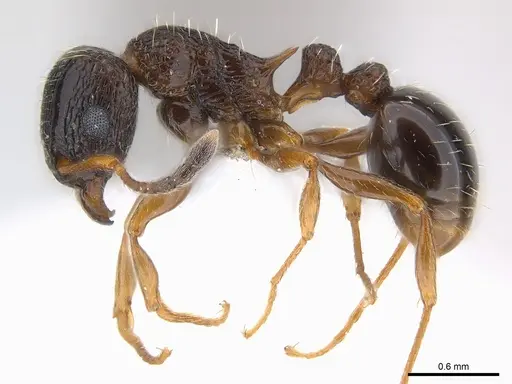
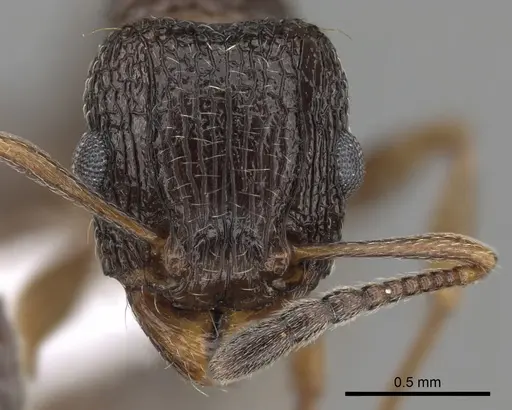
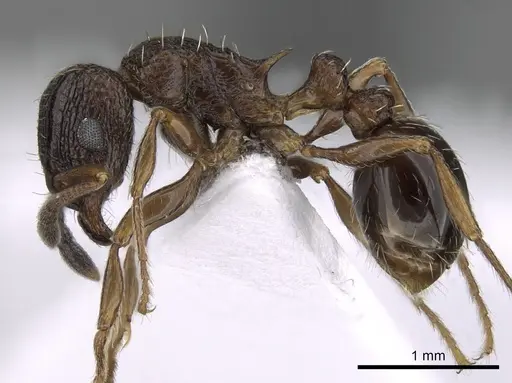
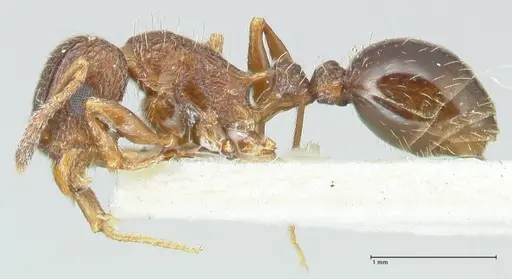
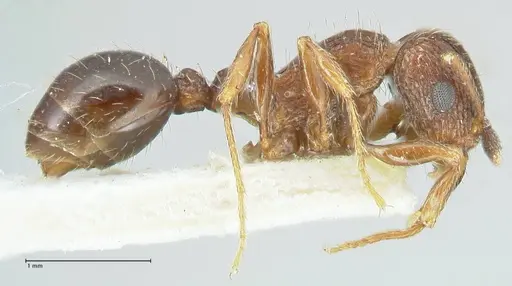
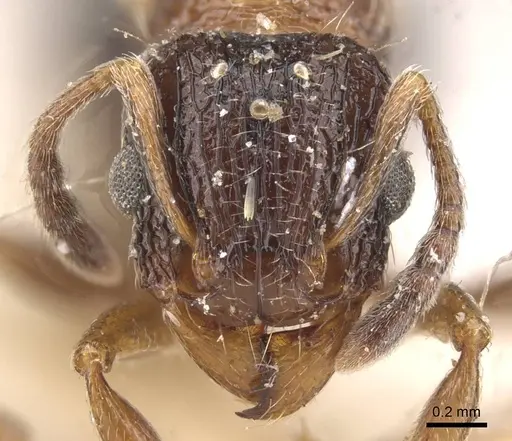
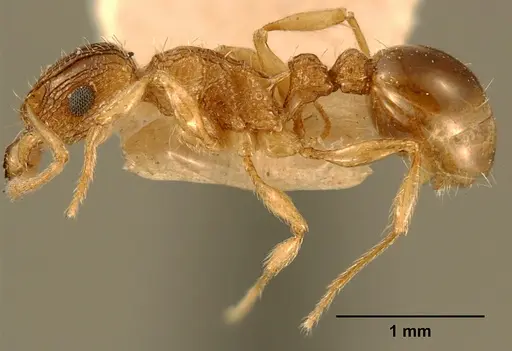
Tetramorium edouardi is a small to medium-sized ant species native to the Afrotropical region, found across countries including Ethiopia, Kenya, Democratic Republic of Congo, Rwanda, Nigeria, and Ivory Coast [1]. Workers measure 3.5-4.2mm in total length, with head measurements of 0.80-1.05mm [2][3]. They have a distinctive dark brown to nearly black coloration, with a head that is longer than wide and large eyes taking up a significant portion of the head width [3]. The species is characterized by long spinose propodeal spines, a distinctly impressed metanotal groove, and abundant erect hairs covering all dorsal surfaces [3]. This species belongs to the Tetramorium weitzeckeri species group, specifically the edouardi complex, and shows a preference for open areas [1]. Little detailed biological information exists for this species in scientific literature, making it a relatively unstudied member of the genus.
Quick Summary
- Difficulty: Medium
- Origin & Habitat: Afrotropical region, found in Ethiopia, Kenya, Democratic Republic of Congo, Rwanda, Nigeria, and Ivory Coast. Prefers open areas [1]. Has been collected in Rwanda's Nyungwe tropical rain forest and Akagera National Park [4][5].
- Colony Type: Colony structure is unconfirmed, the species has not been studied in detail for queen number or colony organization. Most Tetramorium species are monogyne (single queen) but this has not been specifically documented for T. edouardi.
- Size & Growth:
- Queen: Undescribed in scientific literature, queen measurements are not available [1]
- Worker: 3.5-4.2mm total length, with head length 0.80-1.05mm and head width 0.74-0.99mm [2][3]
- Colony: Unknown, no colony size data exists in scientific literature for this species
- Growth: Unknown, growth rate has not been documented
- Development: Unknown, development timeline has not been studied for this species. Based on typical Tetramorium patterns, estimate 6-10 weeks at optimal temperature but this is an inference. (No direct development data exists. Related Tetramorium species typically complete development in 6-10 weeks at room temperature.)
- Antkeeping:
- Temperature: Keep at room temperature, aim for 22-26°C as a starting point. No specific thermal studies exist for this species, but related Afrotropical Tetramorium species do well in this range.
- Humidity: Provide moderate humidity, they have been found in rainforest environments (Nyungwe, Rwanda) so aim for 50-70% relative humidity. Keep the nest substrate slightly moist but not waterlogged.
- Diapause: Unknown, no studies exist on overwintering requirements. As an Afrotropical species from equatorial regions, they likely do not require a diapause period, but this is unconfirmed.
- Nesting: In nature they likely nest in soil or under stones in open areas. For captivity, a Y-tong (AAC) nest or plaster nest works well. Provide a moisture reservoir to maintain humidity.
- Behavior: Temperament is not well documented, but most Tetramorium species are moderately aggressive and will defend their nest. Workers are active foragers that likely hunt small invertebrates and collect honeydew. Their large eyes suggest they may rely more on visual cues than some other ant species. Escape risk is moderate, their 3.5-4.2mm size requires standard escape prevention with tight-fitting lids and barrier gel or fluon.
- Common Issues: lack of documented care information means trial and error may be required, humidity control is important, too dry can stress colonies, too wet can cause mold, escape prevention needed due to moderate worker size, no documented diet preferences, start with standard ant foods and observe acceptance, wild-caught colonies may have parasites that can be difficult to treat
Appearance and Identification
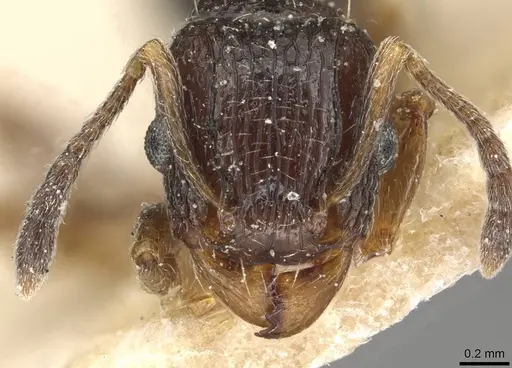
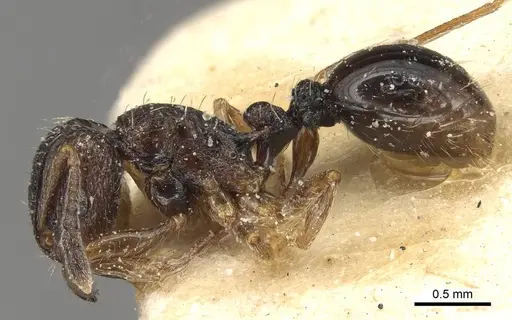
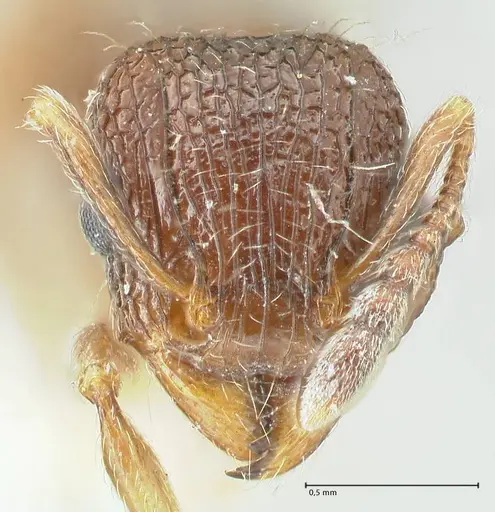
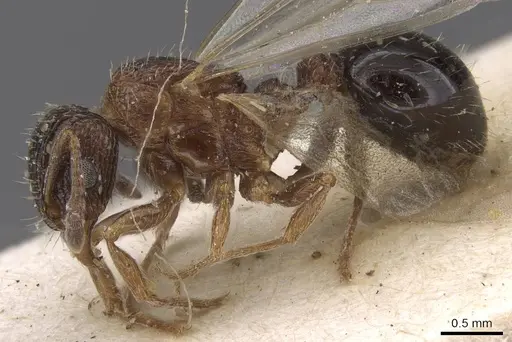
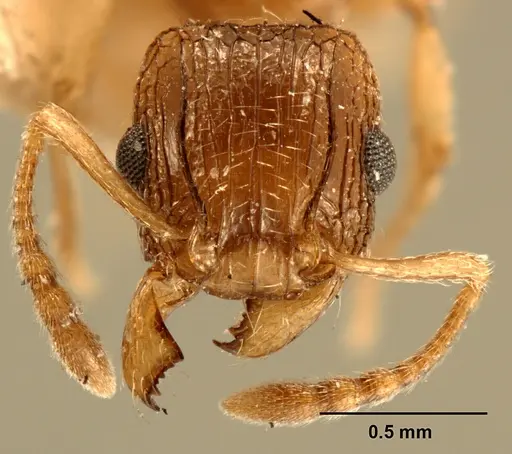
Tetramorium edouardi workers are small ants measuring 3.5-4.2mm in total length [2]. Their most distinctive features include a dark brown to nearly black body coloration and a head that is longer than wide (cephalic index 90-96) [3]. They have relatively large eyes (ocular index 26-30) with 11-15 ommatidia in the longest row, which is more developed than many related species [3]. The propodeal spines are long and spinose, and the metanotal groove is distinctly impressed when viewed from the side [3]. All dorsal surfaces including the head, mesosoma, and both waist segments bear abundant long simple hairs that stand erect to suberect [3]. The mandibles are typically smooth and shiny, though some specimens show partial longitudinal ridging [3]. These ants are part of the weitzeckeri species group and can be distinguished from similar species by the combination of their median clypeal notch, strongly developed median clypeal ridge, and the distinctly impressed metanotal groove [3].
Distribution and Habitat
Tetramorium edouardi has a broad distribution across the Afrotropical region. The species has been confirmed in Ethiopia (the type locality), Kenya, the Democratic Republic of Congo, Rwanda, Nigeria, and Ivory Coast [1][6][4]. In Rwanda, they have been recorded in both the Nyungwe tropical rain forest (at the Karamba site) and Akagera National Park in the eastern part of the country [4][5]. In Kenya, they have been found at Mpala and in the Rift Valley near Naivasha [7][8]. The species shows a preference for open areas, though it has also been collected in forested regions [1]. This wide distribution across equatorial Africa suggests the species can adapt to various local conditions within tropical and subtropical climates.
Nest Preferences and Housing
In their natural habitat, Tetramorium edouardi likely nests in soil or under stones in open areas, which is typical behavior for many Tetramorium species. For captive care, a Y-tong (AAC) nest or plaster formicarium works well for this species. The chambers should be appropriately sized for workers that are 3.5-4.2mm in length. Because they have been found in both open areas and rainforest environments in Rwanda, providing a moisture reservoir is important to maintain appropriate humidity levels. The nest should have some damp substrate area while also providing drier zones where ants can regulate their moisture exposure. A test tube setup can work for founding colonies, but be prepared to move them to a more spacious formicarium as the colony grows. Ensure adequate ventilation while maintaining humidity, avoid both stagnant air (which promotes mold) and excessive airflow (which dries out the nest).
Feeding and Diet
The specific dietary requirements of Tetramorium edouardi have not been studied, but like most Myrmicinae ants, they are likely omnivorous. They probably forage for small insects and other invertebrates, and likely collect honeydew from aphids and scale insects. For captive feeding, offer a varied diet including protein sources (small crickets, mealworms, fruit flies) and sugar sources (honey water, sugar water). Start with standard ant foods and observe what the colony accepts. Protein should be offered regularly, especially for colonies with brood. Remove uneaten food after 24-48 hours to prevent mold. Since this species has large eyes and is apparently active during foraging, they may benefit from more visual hunting opportunities, consider providing some live prey items that can be chased.
Temperature and Seasonal Care
No specific temperature requirements have been documented for Tetramorium edouardi. As a species from the Afrotropical region spanning countries from Ethiopia to Nigeria and Rwanda, they are accustomed to warm temperatures year-round. Keep the nest at room temperature, ideally between 22-26°C. This range should support normal colony activity and brood development. Since they come from equatorial regions where temperatures remain relatively stable throughout the year, avoid major temperature fluctuations. A heating cable on one side of the nest can create a temperature gradient, allowing ants to self-regulate. Whether they require any form of winter dormancy is unknown, given their equatorial distribution, they likely do not need a diapause period, but more research is needed to confirm this.
Behavior and Temperament
The specific behavioral traits of Tetramorium edouardi have not been extensively documented in scientific literature. Like most members of the genus Tetramorium, they are likely moderately aggressive in nest defense and will bite or use their stingers if threatened. Their relatively large eyes suggest they may rely more on visual cues during foraging and navigation compared to some other ant species. Workers are probably active foragers that search for food both individually and possibly through recruitment of nestmates. The abundant erect hairs on their bodies may serve a sensory function. For antkeeping purposes, expect typical Myrmicinae behavior, they will establish territories, defend their nest vigorously, and maintain clear foraging patterns. Their moderate size means they are not extremely difficult to contain but do require standard escape prevention measures. [3]
Frequently Asked Questions
How long does it take for Tetramorium edouardi to produce first workers?
The development timeline for this species is unknown, no scientific studies have documented their egg-to-worker time. Based on typical Tetramorium patterns, expect approximately 6-10 weeks from egg to first worker at optimal temperature (22-26°C), but this is an estimate rather than confirmed data.
What do Tetramorium edouardi ants eat?
Their specific diet has not been studied, but they are likely omnivorous like most Tetramorium species. Offer protein sources (small crickets, mealworms, fruit flies) and sugar sources (honey water, sugar water). Start with varied foods and observe what your colony accepts best.
Do Tetramorium edouardi ants sting?
Yes, as members of the subfamily Myrmicinae, they have functional stingers. Myrmicinae ants can sting, though the pain level is generally considered mild to moderate for most Tetramorium species. They will use their stinger in defense if the nest is disturbed.
Are Tetramorium edouardi good for beginners?
This species is rated as Medium difficulty. While not the most challenging ant species, there is limited documented care information available, which means you may need to experiment to find optimal conditions. They are not recommended as a first choice for complete beginners, but antkeepers with some experience should be able to keep them successfully.
What temperature should I keep Tetramorium edouardi at?
Keep them at room temperature, ideally between 22-26°C. No specific thermal studies exist for this species, but this range should support normal colony activity. Avoid major temperature fluctuations.
Do Tetramorium edouardi need hibernation?
Unknown, no studies exist on their overwintering requirements. As a species from equatorial Africa (Ethiopia, Kenya, Rwanda, Nigeria, DRC), they likely do not require a diapause period, but this is unconfirmed.
How big do Tetramorium edouardi colonies get?
The maximum colony size is unknown, no scientific data exists on colony size for this species. Most Tetramorium species form colonies of several hundred to a few thousand workers.
Can I keep multiple Tetramorium edouardi queens together?
The colony structure of this species is unconfirmed. Most Tetramorium species are monogyne (single queen), but polygyny has not been documented for T. edouardi. Combining unrelated queens is not recommended without evidence they can coexist peacefully.
Where is Tetramorium edouardi found?
They are found across the Afrotropical region including Ethiopia (type locality), Kenya, Democratic Republic of Congo, Rwanda, Nigeria, and Ivory Coast. They prefer open areas but have also been found in forested regions like Rwanda's Nyungwe rain forest [1][4].
References

This caresheet is licensed under CC BY-SA 4.0 .
CASENT0217067
View on AntWeb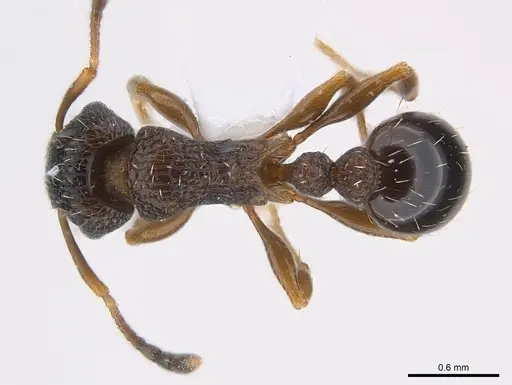
CASENT0217219
View on AntWeb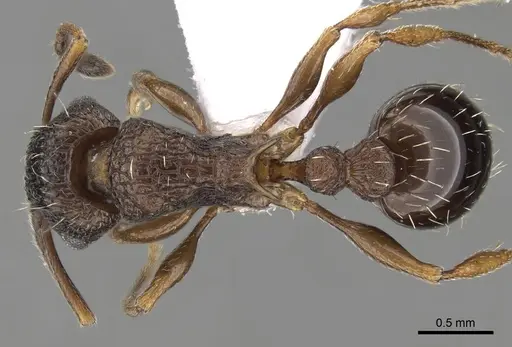
CASENT0915086
View on AntWeb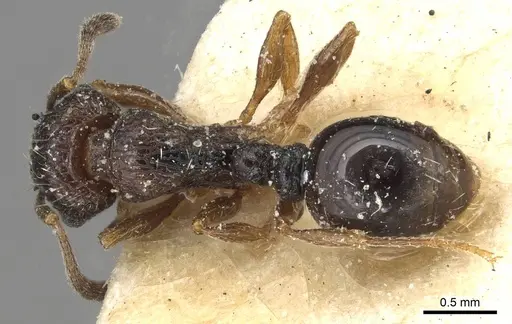
CASENT0923568
View on AntWeb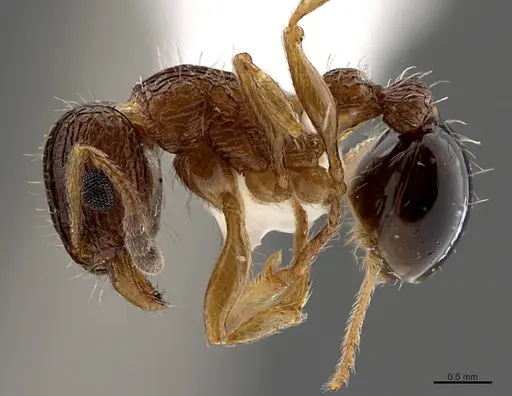
FOCOL2105
View on AntWeb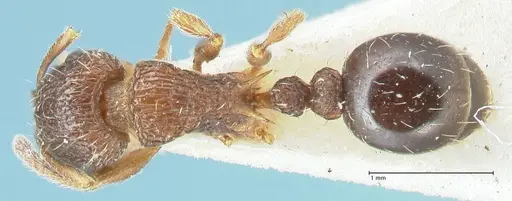
RMCAENT000017793
View on AntWeb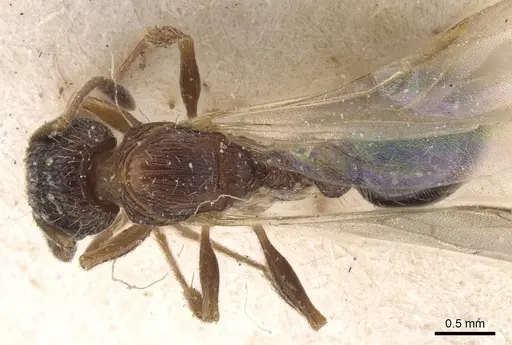
ZFMKHYM20096175
View on AntWeb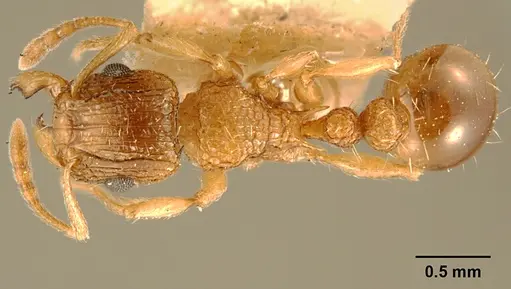
Literature
Loading...Loading products...