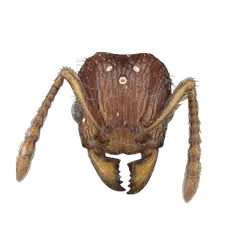
Tetraponera rufonigra - "Bicolored Tree Ant"
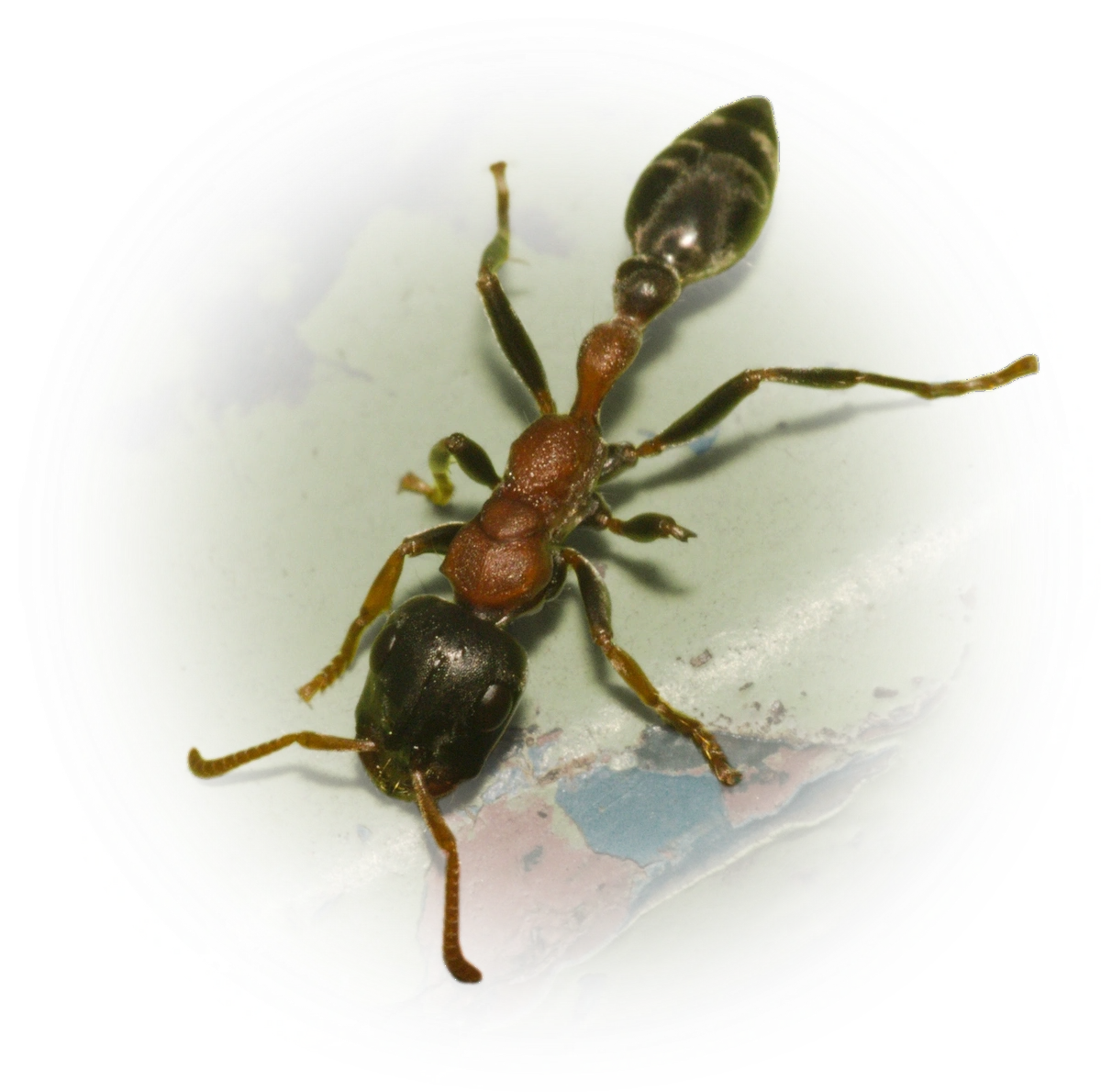
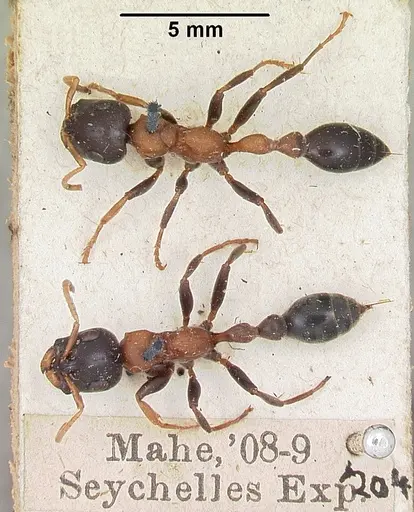
Tetraponera rufonigra, often called the Bicolored Tree Ant or Indian Twig Ant, is a captivating species known for its striking appearance: a black head and abdomen with a vibrant orange-red thorax. These ants are slender and elongated, perfectly adapted for their arboreal lifestyle of nesting in hollow twigs and branches. They are highly active, agile, and possess excellent eyesight, which they use to their advantage as aggressive hunters. A notable characteristic is their powerful and painful sting, comparable to a wasp's. They can also make small jumps. Colonies are typically modest in size, but their rapid development and constant activity make them a fascinating species to observe for experienced antkeepers.
- Difficulty: Medium
- Origin & Habitat: South and Southeast Asia, including India, Indonesia, Sri Lanka, Nicobar Islands, Myanmar, Vietnam, China, Bangladesh, Nepal, Pakistan, and Thailand. in Tropical to subtropical forests, primarily arboreal. They nest in hollow tree branches, dead wood, old tree stumps, and even bamboo, often favoring rotting wood and sunny forest edges. They can also be found in human-influenced environments like old wooden beams in houses..
- Colony Type: Mainly monogynous (single queen), but polygynous (multiple queens) colonies have been reported., semi-claustral (queen forages). founding.
- Size & Growth:
- Queen: 10-16mm
- Worker: 8-13mm
- Colony: Small (300-1000 workers), though multi-queen colonies can be larger.. Fast (due to high egg-laying productivity despite long development time). growth.
- Antkeeping:
- Temperature: Keep the nest between 26-30°C for optimal growth, with an outworld temperature of 24-32°C. Growth can slow if temperatures drop to 24-25°C..
- Humidity: The nest should be kept quite humid, around 70-80% humidity, ideally with some drier and more humid sections for the ants to choose from. The outworld humidity can be 50-70%. While they can tolerate dry conditions, consistent hydration is important..
- Diapause: Not required. Not specified at Not specified.
- Nesting: They do best in artificial nests like test tube setups, acrylic nests, 3D printed mesh nests, Ytong nests, or soil setups. They naturally nest in wood, but bare wood nests are not recommended as they can chew through them..
- Behavior: High (towards handler, food, and other ants). aggressiveness.
- Common Issues: Escape due to chewing through materials and barrier failure., Humidity fluctuations if not properly managed., Overfeeding leading to waste or mold., Aggression towards handler, leading to painful stings..
Tetraponera rufonigra are known for their formidable sting, which is often compared to a wasp sting in terms of pain and potential for allergic reactions. This makes careful handling and robust escape prevention absolutely crucial for keepers. It's advisable for antkeepers to be aware of the risks and to always use appropriate tools like soft-touch tweezers when interacting with their colony, especially if there's any concern about allergies.
These ants are escape artists due to their agility, speed, and ability to chew through many materials, including soft wood, soft plastic, and even ytong or cracked acrylic. A generous and effective anti-escape barrier, such as talcum powder (applied dry) or even axle grease, is essential. Designing a secure formicarium with smooth, robust materials like glass or thick acrylic is highly recommended to prevent escapes.
Tetraponera rufonigra are aggressive predators with excellent eyesight, making their hunting behavior fascinating to observe. They readily accept a variety of feeder insects, both freshly killed and live, as long as the prey is small enough for them to manage. In addition to protein, they enjoy sugary foods like fruits, honey, and sugar water. Providing a diverse diet will keep your colony thriving and showcasing their natural foraging instincts.
While they are considered a moderate difficulty species due to their sting and escape tendencies, their overall care requirements for temperature and humidity are straightforward once understood. They do not require diapause and will remain active year-round, offering continuous observation. Their consistent activity and unique appearance make them a rewarding species for experienced antkeepers looking for something beyond common beginner ants.
In the wild, Tetraponera rufonigra often form symbiotic relationships with host plants like acacia trees, protecting them from herbivores in exchange for shelter and food. They are also known to associate with Rhizobiales bacteria to help absorb essential nutrients. While this symbiotic behavior isn't replicated in captivity in the same way, understanding their natural tendencies helps appreciate their complex ecology.
Frequently Asked Questions
How do I prevent my Tetraponera rufonigra from escaping?
These ants are notorious escape artists! Your best bet is to use formicaria made of sturdy materials like glass or thick acrylic. Avoid wood or soft plastics, as they can chew right through them. For an escape barrier, a generous application of dry talcum powder or even a thin layer of axle grease on the outworld walls works wonders. Remember, consistency is key – regularly check and refresh your barrier to keep those agile workers contained.
What should I feed my Bicolored Tree Ants?
Tetraponera rufonigra aren't picky eaters, which is great for antkeepers! They thrive on a mix of proteins and sugars. For protein, offer freshly killed or small live feeder insects like crickets, mealworms, or fruit flies. For their sugar fix, honey, sugar water, or even small pieces of fruit are excellent choices. Ensure any sugar water doesn't ferment, as this can be harmful to your colony.
Do Tetraponera rufonigra have a painful sting?
Yes, absolutely! The sting of a Tetraponera rufonigra is quite potent and has been compared to a wasp sting in terms of pain. For sensitive individuals, it can even cause allergic reactions. Always exercise extreme caution when working with these ants, using soft-touch tweezers and avoiding direct contact to minimize any risk.
What kind of nest is best for Tetraponera rufonigra?
Given their arboreal nature and ability to chew, artificial nests are generally preferred. Acrylic nests, 3D printed setups with mesh, and Ytong nests are all suitable options. Some keepers even have success with well-designed test tube setups, particularly for founding colonies. The key is to provide a secure environment with both humid and drier areas for them to choose from, mimicking their natural rotting wood habitats.
Do I need to hibernate my Tetraponera rufonigra colony?
No, you're in luck! Tetraponera rufonigra are a tropical species and do not require a diapause period or hibernation. They remain active and grow year-round, which makes them a fantastic species for continuous observation in your ant setup.
How fast do Tetraponera rufonigra colonies grow?
Despite a somewhat lengthy egg-to-worker development time, these ants are highly productive egg-layers, leading to a surprisingly fast colony growth rate. Many keepers report seeing their colonies expand rapidly, often reaching hundreds, or even up to 1000 workers, within the first year, especially with multiple queens.
Are Tetraponera rufonigra suitable for beginner antkeepers?
Due to their aggressive nature, powerful sting, and impressive escape artist abilities, Tetraponera rufonigra are generally not recommended for beginners. They are best suited for experienced antkeepers who are comfortable managing challenging species and can ensure their complete containment and proper care.
What temperatures and humidity levels do these ants prefer?
Tetraponera rufonigra thrive in warm and moderately humid conditions. Aim for a nest temperature of 26-30°C for optimal development, with the outworld a bit warmer, up to 32°C. For humidity, keep the nest around 70-80%, offering a gradient if possible, and the outworld between 50-70%. Providing these conditions will help your colony flourish.
Can I keep multiple queens of Tetraponera rufonigra together?
While they are typically found as monogynous colonies in the wild, there have been occasional reports of polygynous colonies with multiple queens. Some vigorous colonies in ideal captive conditions have been known to accept a second or even a third queen. If you acquire a multi-queen setup, it's generally best to keep them together as they were acquired.
How aggressive are Tetraponera rufonigra?
These ants are quite aggressive, especially towards other ant species and potential intruders. They are fierce hunters and will readily defend their territory. When isolated, their aggression levels can even increase. This behavior makes them captivating to watch but also reinforces the need for secure enclosures and careful handling.
What is the typical lifespan of a Tetraponera rufonigra queen?
Tetraponera rufonigra queens can be quite long-lived in captivity. While some sources suggest a lifespan of around 2 years, others indicate they can live much longer, with estimates ranging from 10 to even 15 years. This means a well-cared-for colony can be a long-term addition to your ant collection.
Do Tetraponera rufonigra forage cooperatively?
While they are active hunters, some observations suggest that while individual workers are excellent at hunting, foraging in the outworld might not always be a highly cooperative group effort. They are known to use strong recruitment by tapping their abdomen on the ground. You might observe scouts actively seeking out food, and then recruiting others to help bring it back.