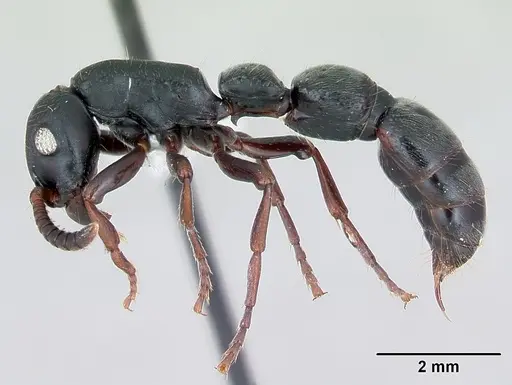
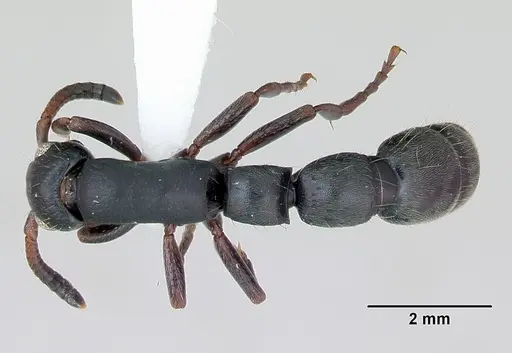
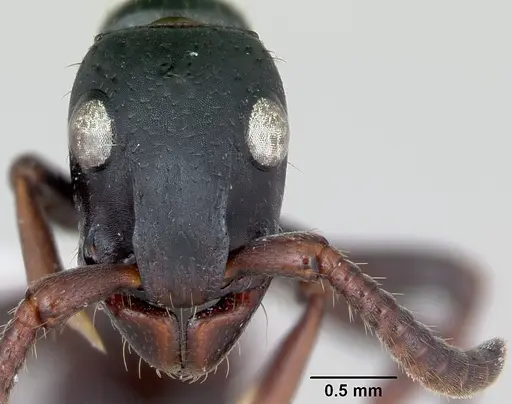
Simopone persculpta - "Sculpted Simopone Ant"
Simopone persculpta is a medium-sized ant species belonging to the Dorylinae subfamily. These ants are primarily arboreal, meaning they live in trees, though workers can sometimes be found foraging on the ground or within rotten wood. They are known for their predatory nature, with observations indicating they prey on the brood of other ant species. Simopone persculpta is part of the 'emeryi group' within the genus, characterized by being relatively large and thickset, with feebly sculptured mandibles and a distinct apical fork on the pygidium. The species is visually distinct, with the head, mesosoma, and first two abdominal segments (AII and AIII) typically being dark brown to black.
- Difficulty: Hard
- Origin & Habitat: Afrotropical region (Africa) in Moist rainforest habitats, nesting in hollow living and dead stems or rotten wood..
- Colony Type: Monogyne, claustral founding.
- Size & Growth:
- Queen: Not specified
- Worker: Not specified
- Colony: Unknown (likely small to medium, typical for predatory dorylines). Slow (brood production not synchronized) growth.
- Antkeeping:
- Temperature: Maintain a stable tropical temperature, ideally between 24-28°C. Fluctuations should be minimized..
- Humidity: High humidity is crucial, ideally 70-90%, reflecting their rainforest habitat. Consider systems that maintain consistent moisture within the nest and outworld..
- Diapause: Not required. Not specified at Not specified.
- Nesting: Arboreal nests, such as hollowed-out wood, bamboo, or specialized acrylic setups that mimic hollow branches. They may also utilize rotten wood or soil..
- Behavior: Medium (towards prey, defensive if disturbed) aggressiveness.
- Common Issues: Lack of specific prey, Humidity fluctuations, Mold in nest, Stress from inadequate nest setup.
Keeping Simopone persculpta presents a significant challenge for even experienced antkeepers due to their highly specialized predatory diet and arboreal nesting habits. Unlike many commonly kept species that thrive on sugars and insects, these ants are known to feed almost exclusively on the brood of other ant species. Replicating this specific diet consistently can be very difficult and requires a continuous supply of suitable prey brood, which makes their long-term care demanding.
Their natural preference for nesting within hollowed-out wood or branches means that standard formicarium designs may not be suitable without modification. Providing a nest that closely mimics their arboreal habitat is essential for their well-being and to encourage natural behaviors. This might involve specially designed vertical setups or natural wood pieces with pre-drilled tunnels, ensuring adequate ventilation while maintaining the high humidity they require.
Maintaining stable high humidity and warm temperatures, typical of tropical rainforests, is paramount for Simopone persculpta. Any significant drop in humidity can quickly lead to desiccation and colony stress. Consistent monitoring with reliable thermometers and hygrometers is necessary, and active humidification systems like misting or hydration wicks may be required to prevent the nest from drying out. They are also sensitive to temperature changes, so a stable environment is key.
Observations suggest that brood production in Simopone species is not synchronized, which can make predicting colony growth and resource needs challenging. This non-synchronized development means there isn't a single large pulse of new workers, potentially leading to a slower and more sporadic growth rate. Patience is vital with these colonies, as they won't explode in numbers like some more prolific species.
Frequently Asked Questions
What do Simopone persculpta typically eat in captivity?
In captivity, Simopone persculpta primarily require the brood (eggs, larvae, pupae) of other ant species. They are highly specialized predators, so providing a consistent supply of suitable ant brood is crucial for their survival and health.
Are Simopone persculpta good for beginner antkeepers?
No, Simopone persculpta are considered a difficult species to keep due to their specialized diet and specific environmental needs, making them unsuitable for beginner antkeepers. They are much more suited for experienced hobbyists who can meet their unique care requirements.
What kind of formicarium is best for Simopone persculpta?
A formicarium that mimics their natural arboreal habitat is best. This could be a setup with hollowed-out wood, bamboo, or specialized acrylic nests designed to simulate tree branches. The key is to provide vertical nesting spaces with good humidity retention.
Do Simopone persculpta need a diapause?
No, as a tropical species, Simopone persculpta typically do not require a diapause (a period of dormancy) in captivity. Consistent warmth and humidity year-round are preferred.
How large do Simopone persculpta colonies get?
Information on the exact colony size for Simopone persculpta is not readily available, but generally, Simopone species are not known to form supercolonies. They are likely to have small to medium-sized colonies, typical for highly predatory ant species.
Are Simopone persculpta queens ergatoid?
In African populations of Simopone, queens are known to be alate (winged) and have fully developed flight sclerites, although their overall body size can be similar to workers. However, in Madagascan species, there's a suspicion that queens might be ergatoid (worker-like and wingless) or even replaced by reproductively active workers (gamergates), though this isn't confirmed for S. persculpta specifically.
Do Simopone persculpta workers vary in size?
Yes, workers of most, if not all, Simopone species exhibit considerable size variation. This means you'll likely see a range of worker sizes within your colony.
Are Simopone persculpta aggressive?
Simopone persculpta are predatory ants and will show aggression towards their prey. While they are not typically aggressive towards antkeepers, they can sting if threatened or disturbed, so handling with care is advised.
What is the lifespan of a Simopone persculpta queen?
Specific data on the lifespan of a Simopone persculpta queen is not widely documented. However, queen lifespans for ant species can vary greatly, from a few years to over a decade, depending on the species and care provided.
How often should I feed Simopone persculpta?
Due to their predatory nature and potentially non-synchronized brood production, feeding frequency will depend on the colony's size and activity. It's best to offer small amounts of ant brood frequently and observe consumption to avoid waste and mold.
Can I mix Simopone persculpta with other ant species?
No, absolutely not. Simopone persculpta are highly predatory and will attempt to prey on other ant species. Keeping them in a mixed setup would be detrimental and likely result in the destruction of the other colony.
What are the signs of a healthy Simopone persculpta colony?
A healthy colony will show active foraging behavior (when fed), consistent brood development (even if not synchronized), and a good number of healthy-looking workers. The queen should also appear active and continue to lay eggs.
How do Simopone persculpta forage?
Simopone persculpta forage in various strata, including subterranean/leaf litter and arboreal environments. They are known to be nocturnal, which might influence their foraging patterns in captivity.