

Polyrhachis gerstaeckeri
- Scientific Name
- Polyrhachis gerstaeckeri
- Subgenus
- Myrma
- Tribe
- Camponotini
- Subfamily
- Formicinae
- Author
- Forel, 1886
- Distribution
- Found in 3 countries
Polyrhachis gerstaeckeri Overview
Polyrhachis gerstaeckeri is an ant species of the genus Polyrhachis. It is primarily documented in 3 countries , including Mozambique, Tanzania, United Republic of. Detailed taxonomic data and occurrence records can be further explored via authoritative databases such as AntWeb or the Global Biodiversity Information Facility (GBIF).
Polyrhachis gerstaeckeri
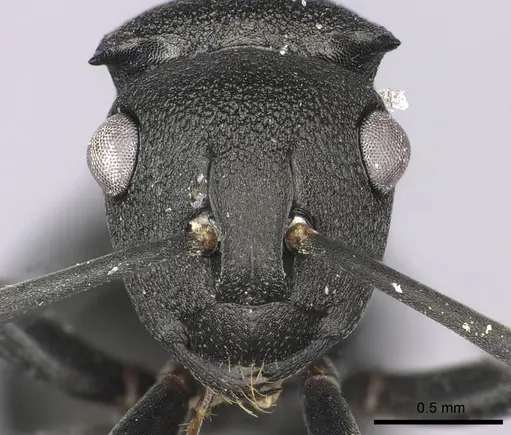
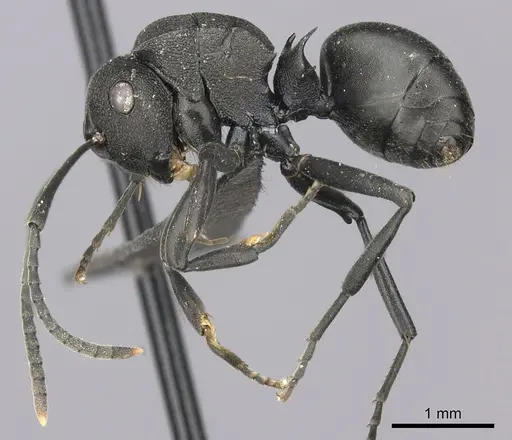
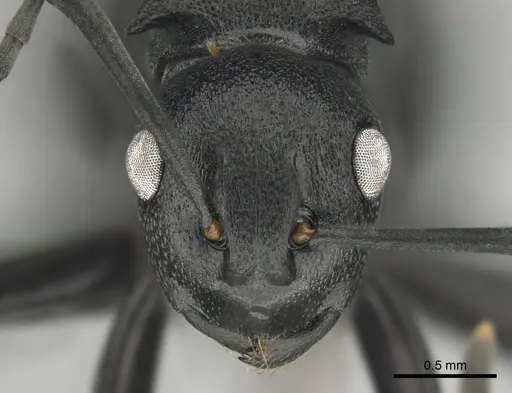
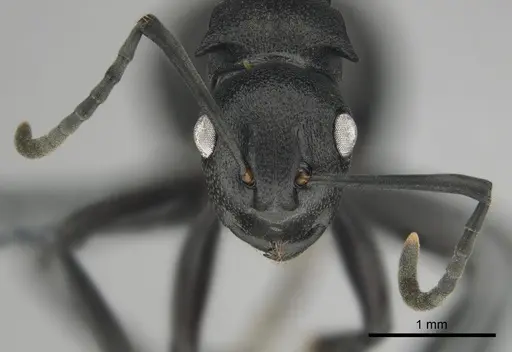
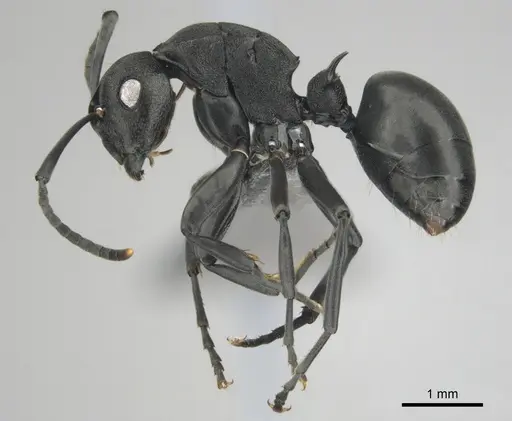
Polyrhachis gerstaeckeri is a small, entirely black ant species native to East Africa, found in Kenya, Tanzania, and Rwanda [1][2]. Workers measure 1.45-1.60mm in head length, making them one of the smaller Polyrhachis species [1]. The species belongs to the viscosa-group, characterized by a propodeal dorsum separated from the declivity by a thin arched ridge, and a distinctive quadrispinose petiole with four spines, the middle pair being longer [1]. The body has fine reticulate-punctate sculpture with subtle longitudinal rugulation on the head and mesosomal dorsum [1]. This species was recently revived from synonymy with Polyrhachis cubaensis and remains poorly studied in captivity [1].
Quick Summary
- Difficulty: Unknown, likely Medium based on genus
- Origin & Habitat: East Africa (Kenya, Tanzania, Rwanda), found in savannah habitats including Acacia trees in Tanzania [3][2]
- Colony Type: Unconfirmed, likely monogyne like most Polyrhachis species
- Size & Growth:
- Queen: Undescribed, no queen measurements available
- Worker: 1.45-1.60mm head length [1]
- Colony: Unknown, no colony size data available
- Growth: Unknown, estimated moderate based on genus patterns
- Development: Unknown, estimated 6-8 weeks based on related Polyrhachis species (No direct development data exists for this species. Estimates based on genus-level patterns for small tropical Formicinae.)
- Antkeeping:
- Temperature: Keep at 24-28°C, aim for warm, stable conditions typical of East African savannah [4]
- Humidity: Moderate humidity around 50-70%, they inhabit savannah trees so avoid excessive moisture [4]
- Diapause: Unlikely, East African species with minimal seasonal variation
- Nesting: Likely arboreal or semi-arboreal, provide vertical space, bark pieces, or twig-style nests. A Y-tong or acrylic nest with narrow chambers works well [4]
- Behavior: Temperament is unconfirmed but Polyrhachis species are generally not aggressive and are moderate foragers. Workers are small but not tiny, standard escape prevention should suffice. They are arboreal by nature so provide climbing opportunities. Biting is possible but rare [4].
- Common Issues: no biological data exists, care is largely inferred from genus patterns, colony size and growth rate are unknown making progress tracking difficult, nuptial flight timing is unconfirmed for this species, founding behavior has not been documented, escape risk is moderate, use standard mesh barriers
Identification and Appearance
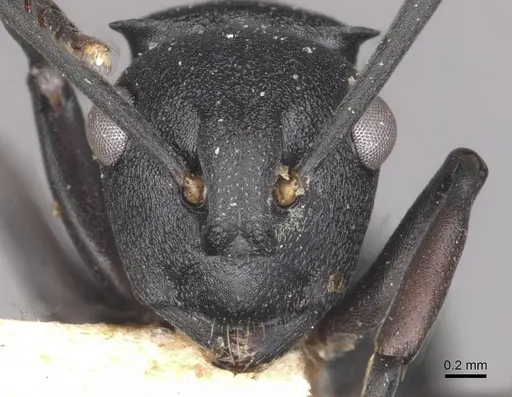
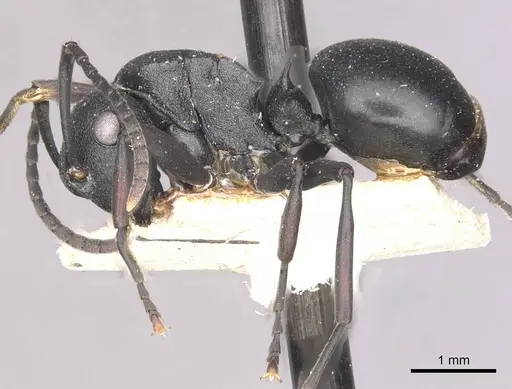
Polyrhachis gerstaeckeri workers are small black ants measuring 1.45-1.60mm in head length [1]. The species is a member of the viscosa-group, characterized by several distinctive features: the propodeal dorsum and declivity are separated by a thin, medially arched ridge, and the petiole has four spines with the middle pair being longer [1]. All mesosomal segments appear distinctly transverse when viewed from above. The body sculpture is finely reticulate-punctate with subtle longitudinal rugulation most visible on the head and mesosomal dorsum [1]. The ant is entirely black throughout, including the legs and antennae. These identification features help distinguish it from the similar P. wilmsi, which has a wider frons, standing hairs on the head, and stronger propodeal spines [4].
Distribution and Habitat
This species is found in East Africa, specifically in Kenya, Tanzania, and recently recorded in Rwanda [1][2]. The type locality is Zanzibar, Tanzania [1]. Specimens have been collected from coastal continental Tanzania and coastal Kenya, as well as from Acacia trees in the Mkomazi Game Reserve of Tanzania [3][2]. The habitat appears to be savannah woodland, consistent with other Polyrhachis species that often inhabit trees and shrubs. The East African distribution suggests they are adapted to warm, relatively dry conditions with seasonal variation. In captivity, aim to replicate these savannah conditions with good ventilation and access to climbing structures.
Nest Preferences
Polyrhachis species are typically arboreal or semi-arboreal, often nesting in vegetation, under bark, or in hollow twigs [4]. For P. gerstaeckeri, provide a setup that allows for vertical climbing, this is important for their natural behavior. A Y-tong (acrylic) nest with narrow chambers works well, or you could use a naturalistic setup with bark pieces and twigs. Since they come from savannah habitats, ensure good ventilation to prevent mold. Avoid overly humid conditions, the nest should have some drier areas. Provide multiple chambers so the colony can self-regulate their humidity preferences.
Feeding and Diet
Polyrhachis gerstaeckeri's specific diet is unstudied, but Polyrhachis species are typically omnivorous, feeding on honeydew, nectar, and small insects [4]. Offer sugar water or honey as a constant energy source, and protein sources like small crickets, mealworms, or fruit flies twice weekly. Since they are small ants, ensure prey items are appropriately sized. Observe your colony's preferences, some Polyrhachis favor liquid sugars while others accept more varied fare. Remove uneaten prey after 24 hours to prevent mold.
Temperature and Care
As an East African species, P. gerstaeckeri prefers warm conditions in the range of 24-28°C [4]. A heating cable on one side of the nest can create a temperature gradient, allowing the colony to self-regulate. Place the heating element on top of the nest to avoid evaporating moisture too quickly. Room temperature within this range is acceptable. Since they come from a region with relatively stable temperatures, avoid significant temperature fluctuations. Humidity should be moderate, around 50-70%, avoiding the overly damp conditions that can cause mold in nests.
Behavior and Temperament
Polyrhachis species are generally not aggressive and are considered moderate foragers [4]. Workers are small but not tiny, so standard escape prevention measures should suffice, fine mesh on the outworld and tight-fitting lids. They are arboreal by nature, so provide plenty of climbing structures in the outworld. While they can bite, this is rare and they are not considered dangerous to keepers. The species is newly revived from synonymy, so behavioral observations in captivity are still being documented. Start with standard care and adjust based on your colony's activity patterns.
Frequently Asked Questions
How long does it take for Polyrhachis gerstaeckeri to develop from egg to worker?
The exact development time is unknown for this species, no research has been conducted on their development. Based on related Polyrhachis species and genus patterns, estimate 6-8 weeks from egg to first worker at optimal warm temperatures around 26°C.
What do Polyrhachis gerstaeckeri ants eat?
Specific diet studies don't exist for this species, but Polyrhachis ants are typically omnivorous. Offer sugar water or honey as a constant energy source, and protein like small crickets, mealworms, or fruit flies twice weekly. Remove uneaten food after 24 hours.
What temperature do Polyrhachis gerstaeckeri ants need?
Keep them warm at 24-28°C, which mimics their East African savannah habitat. A heating cable on one side of the nest creates a gradient they can regulate themselves.
Are Polyrhachis gerstaeckeri ants good for beginners?
This species is not well-documented in the antkeeping hobby due to limited biological data. If you have experience with other Polyrhachis species, you can try this one. Beginners may want to start with more established species like Polyrhachis bicolor or Polyrhachis dives.
How big do Polyrhachis gerstaeckeri colonies get?
Colony size is unknown, no wild colony data exists for this species. Based on their small worker size (1.45-1.60mm), colonies are likely moderate, possibly reaching a few hundred workers.
Can I keep multiple Polyrhachis gerstaeckeri queens together?
Colony structure is unconfirmed for this species. Most Polyrhachis are single-queen colonies. Do not combine unrelated queens unless you observe them founding cooperatively, even then, monitor for aggression.
What type of nest is best for Polyrhachis gerstaeckeri?
As likely arboreal or semi-arboreal ants, they benefit from vertical space and climbing opportunities. A Y-tong or acrylic nest with narrow chambers works well. Provide bark pieces or twigs in the outworld for climbing.
Do Polyrhachis gerstaeckeri ants need hibernation?
Hibernation is unlikely, they come from East Africa where seasonal temperature variation is minimal. Keep temperatures stable year-round rather than attempting a winter cool-down.
Why is so little known about Polyrhachis gerstaeckeri care?
This species was only recently revived from synonymy with Polyrhachis cubaensis in 2016 [1]. Prior to that, it was considered the same species. Very little biological research exists, and the species is rarely kept in captivity. Care recommendations are inferred from genus-level patterns.
References

This caresheet is licensed under CC BY-SA 4.0 .
CASENT0098028
View on AntWeb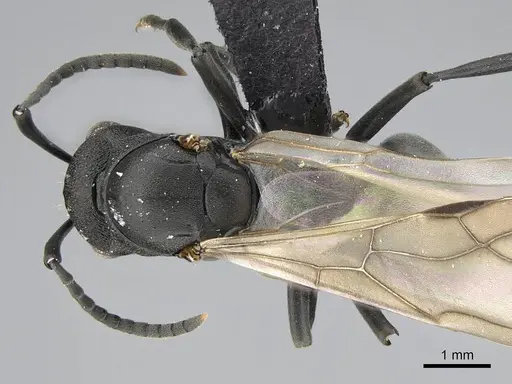
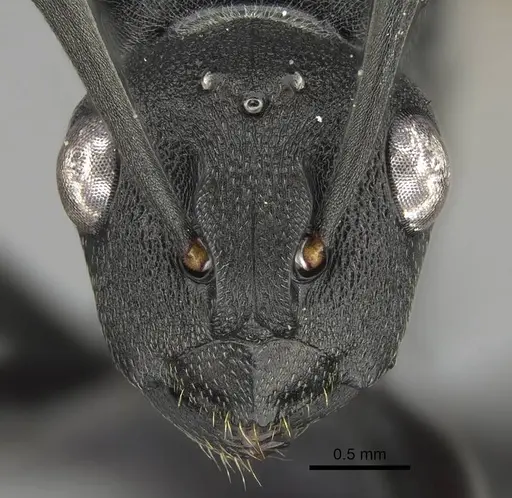
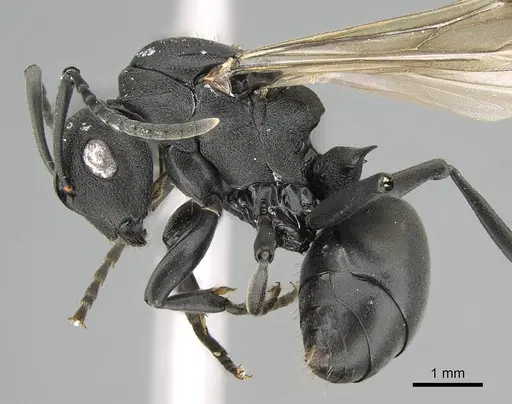
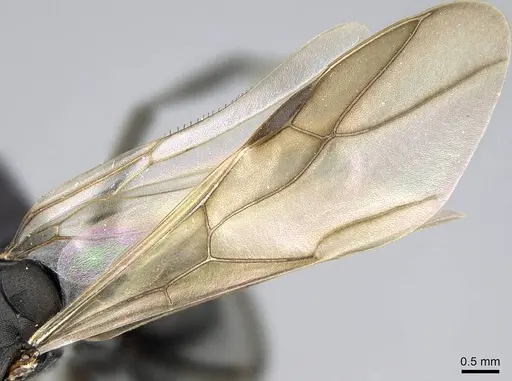
CASENT0235679
View on AntWeb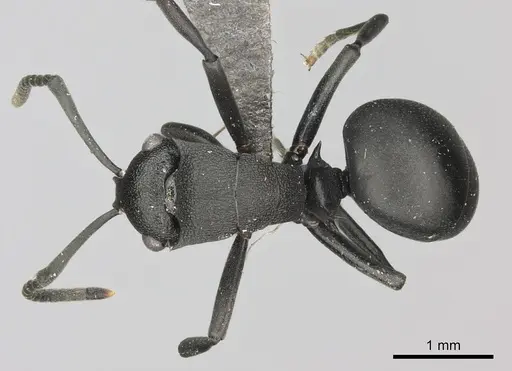
CASENT0815791
View on AntWeb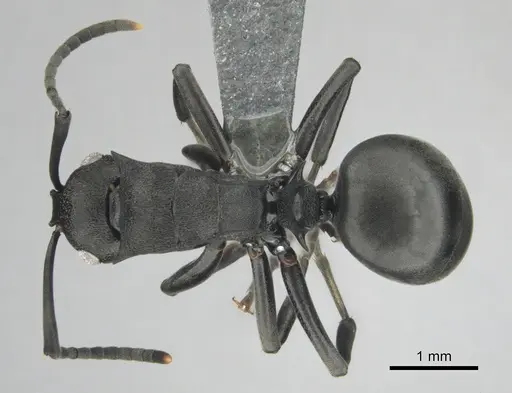
CASENT0910945
View on AntWeb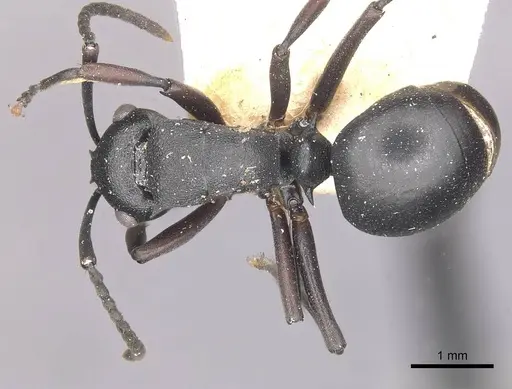
Literature
Loading...Loading products...