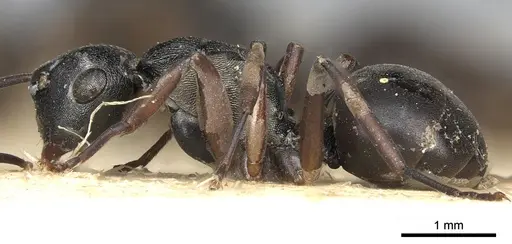
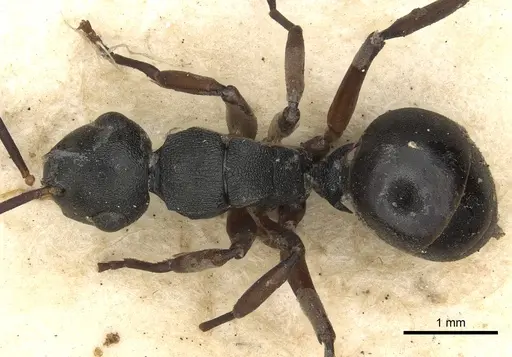
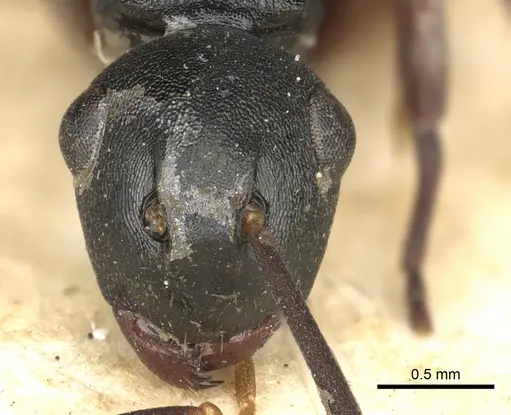
Polyrhachis flavicornis - "Yellow-horned Spiny Ant"
Polyrhachis flavicornis is a fascinating arboreal ant species known for its distinctive appearance. Workers typically have a black head and mesosoma, contrasting with yellowish-brown to dark reddish-brown mandibles, antennae, legs (excluding the forecoxa), and gaster. They are relatively small ants, with workers measuring around 3.20–3.35 mm in total length. The queen is slightly larger, with a more prominent eye and a generally similar body color to the worker. These ants are known to construct elaborate carton nests, often found on the underside of plant leaves or nestled between them in their natural lowland evergreen and dry evergreen forest habitats.
- Difficulty: Medium
- Origin & Habitat: Southeast Asia (Laos, Cambodia, Thailand, Singapore, Malaysia, and Indonesia) in Lowland evergreen forests and dry evergreen forests, nesting on the underside of plant leaves or between leaves on lower vegetation (shrubs, trees, climbers, and herbs)..
- Colony Type: Polydomous, likely polygynous, claustral founding.
- Size & Growth:
- Queen: 4.3-4.35mm
- Worker: 3.2-3.35mm
- Colony: Small to Medium (hundreds to low thousands). Medium growth.
- Antkeeping:
- Temperature: Maintain temperatures between 24-28°C for optimal activity and brood development. Consistent temperatures within this range will promote healthy growth..
- Humidity: High humidity is crucial for this species, ideally around 70-80%. Their natural carton nests in tropical forests are inherently humid, so replicating this is vital to prevent desiccation. Providing a consistent moisture gradient in the nest is highly recommended..
- Diapause: Not required. Not specified at Not specified.
- Nesting: As arboreal ants, Polyrhachis flavicornis thrive in setups that mimic their natural carton nests. Nests made from cork bark, bamboo, or acrylic nests with ample vertical space and opportunities for them to weave silk and incorporate substrate are ideal. They are known to nest on the underside of plant leaves or between leaves..
- Behavior: Low (towards handler, but can be defensive of nest) aggressiveness.
- Common Issues: Humidity fluctuations leading to desiccation, Lack of suitable nesting material for carton nests, Mold growth in overly humid conditions, Escape due to fast movement and climbing ability.
One of the standout features of Polyrhachis flavicornis is their unique nest-building behavior. In their natural habitat, these ants construct impressive carton nests by weaving silk, likely produced by their larvae, and incorporating various materials like plant tissue fragments and coarse particulate matter. To successfully keep these beautiful ants, it's essential to provide them with materials they can use for this weaving. Consider offering fine wood shavings, dried leaves, or even cotton bits within their foraging area or directly in the nest setup to encourage their natural building instincts. Observing their construction work is truly a highlight for any antkeeper!
Humidity management is paramount for Polyrhachis flavicornis. Coming from lowland tropical rainforests, they require consistently high humidity levels to thrive. Dry conditions can quickly lead to stress and even colony collapse. Utilizing a nest design with good moisture retention, such as a natural setup with cork bark or a deep, well-hydrated substrate, is highly recommended. Regularly misting the outworld and ensuring a constant water source will help maintain the necessary humid microclimate within their formicarium. Keep an eye on condensation levels to avoid excess moisture leading to mold.
While Polyrhachis flavicornis are generally not aggressive towards keepers, they can be quite fast and agile. When performing maintenance or feeding, always exercise caution to prevent escapes. Their quick movements can make them challenging to manage if they get out of their enclosure. A good practice is to work in a contained area and have a fine-bristled brush or a catch cup ready to gently guide any escapees back into their outworld. Their arboreal nature means they'll quickly climb any available surface.
Diet-wise, these ants are omnivorous. They'll readily accept a variety of insect prey, such as small crickets, fruit flies, and mealworms, providing essential protein for their growing brood. For their carbohydrate needs, a consistent supply of sugar water or honey-water mixture is crucial. Remember to offer a diverse range of food items to ensure they receive all necessary nutrients. Observing their foraging behavior and how they transport food back to the nest is an enriching experience that highlights their colony's efficiency.
Understanding the Polyrhachis genus, in general, is key. Many species within this genus are known for their spiny bodies, which serve as a defense mechanism, though Polyrhachis flavicornis may not be as heavily armored as some of their cousins. They belong to the subgenus Myrmatopa, which is primarily composed of lower-vegetation inhabitants. This preference for lower vegetation should be considered when designing their formicarium, emphasizing horizontal and vertical elements that mimic branches and leaves rather than deep, subterranean structures. Providing climbing opportunities will allow them to express their natural behaviors.
Frequently Asked Questions
What kind of nest is best for Polyrhachis flavicornis?
For Polyrhachis flavicornis, an arboreal setup is ideal, mimicking their natural carton nests found on leaves. Consider a cork bark setup, a multi-chambered acrylic nest with vertical space, or even a deep test tube setup with some substrate to allow for their weaving behavior. They thrive when they can actively construct and reinforce their nest with provided materials.
Do Polyrhachis flavicornis need special humidity?
Absolutely! These ants are native to humid tropical forests, so high humidity, around 70-80%, is vital for their well-being. Keeping a consistent moisture gradient in their nest and regularly misting the outworld will help create the perfect environment.
What do Polyrhachis flavicornis eat?
Polyrhachis flavicornis are omnivores. They love a varied diet of sugary liquids like honey-water or sugar water for energy, and protein from small insects like fruit flies, crickets, or mealworms for growth. Offering a mix ensures they get all the nutrients they need to thrive.
Are Polyrhachis flavicornis easy to keep for beginners?
While not considered 'easy' for absolute beginners due to their specific humidity and nesting material requirements, they can be a rewarding species for those with some prior antkeeping experience. Their unique behaviors make the extra effort worthwhile! Consistent monitoring of their environment is key.
How big do Polyrhachis flavicornis colonies get?
Polyrhachis flavicornis colonies are typically small to medium-sized, reaching into the hundreds or low thousands of workers. This makes them a manageable size for many antkeepers, allowing for observation of their complex social structures without requiring massive setups.
Do Polyrhachis flavicornis sting?
No, Polyrhachis flavicornis ants are not known to sting. However, like many ant species, they can bite as a defense mechanism if they feel threatened. Always handle them with care to avoid stress to the colony.
What's unique about Polyrhachis flavicornis's nesting habits?
Their most striking habit is their 'carton' nest construction. They use silk produced by their larvae to weave together plant fragments and other detritus, creating elaborate nests often suspended from leaves or between them. Providing these materials in your setup will allow them to engage in this fascinating behavior.
Do Polyrhachis flavicornis need a diapause (hibernation)?
No, Polyrhachis flavicornis, being a tropical species, does not require a diapause or hibernation period. They thrive year-round with consistent warm temperatures and high humidity. Maintaining stable conditions will encourage continuous brood production.
How fast do Polyrhachis flavicornis colonies grow?
Their colony growth rate is generally considered medium. With proper care, consistent feeding, and stable environmental conditions, you can expect a steady increase in worker numbers and brood development. Patience is a virtue in antkeeping, and observing their gradual expansion is part of the joy.
What kind of substrate should I use in their outworld?
For their outworld, a substrate that mimics their natural forest floor, such as coco fiber or fine sand, can work well. However, for their actual nesting area, providing materials like dried leaves, small bark pieces, and even cotton can facilitate their unique carton nest building.
Are there any specific behaviors to watch out for with Polyrhachis flavicornis?
Keep an eye on their foraging activity; active foragers indicate a healthy colony. Also, their nest-building can be very engaging. If they aren't actively foraging or if their nest looks neglected, it might be a sign that something in their environment needs adjusting, like humidity or food supply.
How do I ensure enough ventilation without losing humidity?
This is a common challenge with humid-loving species. Use a nest design that allows for some airflow while still retaining moisture. For example, a nest with a hydration system at the bottom and a mesh lid on the outworld can offer a good balance. Misting the outworld can provide temporary humidity spikes. Proper ventilation prevents mold, which is critical.
Can Polyrhachis flavicornis be kept with other ant species?
No, it's generally not recommended to keep different ant species together in the same enclosure. This can lead to stress, aggression, and eventually, the demise of one or both colonies. Always keep ant species in separate, dedicated setups to ensure their individual well-being.
What are the common signs of stress in a Polyrhachis flavicornis colony?
Signs of stress can include reduced activity, a decline in foraging, refusal of food, workers gathering outside the nest without apparent reason, or a significant decrease in brood production. These often point to issues with temperature, humidity, or nest comfort.