

Pheidole vieti
- Scientific Name
- Pheidole vieti
- Tribe
- Attini
- Subfamily
- Myrmicinae
- Author
- Eguchi, 2008
- Distribution
- Found in 3 countries
Pheidole vieti Overview
Pheidole vieti is an ant species of the genus Pheidole. It is primarily documented in 3 countries , including China, Lao People's Democratic Republic, Viet Nam. Detailed taxonomic data and occurrence records can be further explored via authoritative databases such as AntWeb or the Global Biodiversity Information Facility (GBIF).
Pheidole vieti
Pheidole vieti is a small ant species native to northern Vietnam and southern China (Yunnan province). Like all Pheidole species, they have two worker castes: larger major workers with distinctive big heads, and smaller minor workers that handle most of the foraging. Both castes are yellowish brown in color. The major workers have a relatively short, high head that distinguishes them from similar species like Pheidole vulgaris. This is a leaf-litter dwelling species found in tropical and subtropical forests at elevations between 625-820 meters. The species was first described in 2008 and is closely related to other Southeast Asian Pheidole. Nothing is known about their biology in the wild, but being a forest-dwelling Pheidole, they likely have typical colony structure and behavior for this genus.
Quick Summary
- Difficulty: Unknown, too little biological data available to assess
- Origin & Habitat: Northern Vietnam and Yunnan, China. Found in leaf litter of rain forests, secondary forests, and limestone forests at 625-820m elevation [1][2]. Not found in human-modified habitats like rubber plantations [2].
- Colony Type: Colony structure is unconfirmed. Most Pheidole species are single-queen (monogyne) colonies, but this has not been documented for P. vieti specifically.
- Size & Growth:
- Queen: Not described in original publication, estimate based on genus patterns
- Worker: Major workers: 1.21-1.22mm head length,1.16-1.17mm head width [3]. Minor workers: 0.59-0.64mm head length [3].
- Colony: Unknown, no colony size data available
- Growth: Unknown, no development data available
- Development: Unknown, no direct development data. Based on typical Pheidole patterns, estimate 6-10 weeks at tropical temperatures. (Development timeline has not been studied. Estimates based on genus-level patterns for similar tropical Pheidole species.)
- Antkeeping:
- Temperature: Being from northern Vietnam and Yunnan (subtropical), they likely prefer warm conditions. Start around 24-28°C and observe colony activity. Avoid temperatures below 20°C.
- Humidity: Forest-dwelling species from humid tropical environments. Keep nest substrate moderately moist but not waterlogged. Provide a moisture gradient so ants can choose their preferred humidity.
- Diapause: Unknown, no data on overwintering requirements. Being from a subtropical region, they may not require true hibernation but may slow down during cooler months.
- Nesting: In the wild, they live in leaf litter and soil. In captivity, a naturalistic setup with moist substrate or a Y-tong/plaster nest works well. They prefer tight, enclosed spaces scaled to their tiny size.
- Behavior: Pheidole species are generally non-aggressive and focus on seed collection and small prey. Major workers defend the nest and help process food, while minor workers do most of the foraging. They are not known to sting and pose no danger to keepers. Their small size (under 2mm for majors) means escape prevention is important, use fine mesh and tight-fitting barriers.
- Common Issues: no biological data means care requirements are largely unknown, high risk of colony failure due to improper conditions, escape prevention is critical due to their tiny size, they can squeeze through standard gaps, slow growth and lack of documented care means beginners may struggle to establish colonies, wild-caught colonies may have parasites or diseases that are poorly understood for this species
Identification and Appearance
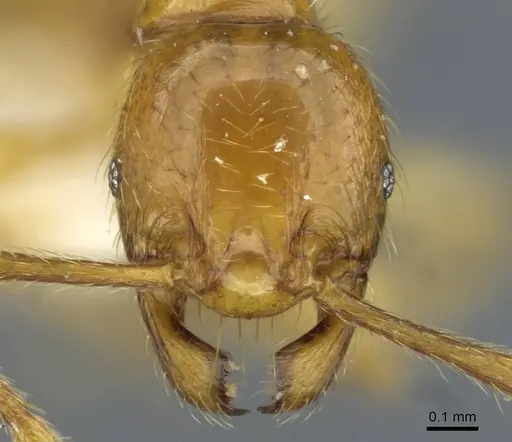
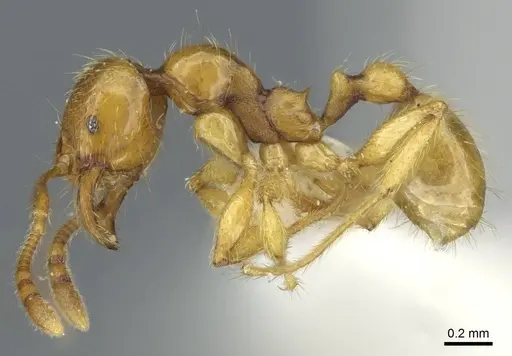
Pheidole vieti is a small ant species with two distinct worker castes. Major workers have a relatively short but high head that is not impressed on the vertex (the back of the head). Their body is yellowish brown, and the head has longitudinal rugae on the frons and anterior vertex. The frontal carina is inconspicuous, appearing only as small ridges, and the antennal scrobe is almost absent. Minor workers are much smaller at 0.59-0.64mm head length and have a smooth, shining frons and vertex. Both castes have a promesonotal dome (the middle body section) that lacks a mound on its posterior slope, and both have a relatively massive postpetiole (the segment between the waist and abdomen). The species is similar to Pheidole vulgaris but can be distinguished by the major's shorter but higher head and more massive postpetiole [3].
Distribution and Habitat
This species is known from northern Vietnam and Yunnan province in southern China. In Vietnam, it has been recorded from Ba Vi and Tam Dao areas [4]. In China, it represents a new record for Yunnan province and marks the northern-most extent of the species distribution [1]. Specimens have been collected from leaf litter in rain forest, secondary forest, and limestone forest at elevations between 625-820 meters. Notably, this species is found in primary and secondary forest habitats but was not found in rubber plantations, suggesting it requires natural forest environments and does not adapt to human-modified agricultural landscapes [2]. The elevation range of 625-820m indicates a preference for montane or highland tropical forest conditions.
Nest Preferences and Housing
In the wild, Pheidole vieti lives in leaf litter and soil of tropical forests. They are a litter-dwelling species, not a ground-nesting species that digs deep tunnels. For captive care, a naturalistic setup with moist substrate works well, think of a setup that mimics the forest floor with decomposing leaves and soil. Alternatively, a Y-tong (acrylic) nest or plaster nest with narrow chambers scaled to their tiny size provides good housing. The key is maintaining moderate humidity while ensuring adequate ventilation to prevent mold. Because they are so small, any gaps in housing must be sealed with fine mesh or cotton, these ants can escape through gaps that would hold back larger species. [1]
Feeding and Diet
Pheidole species are generalist omnivores that collect seeds and small insects. While specific diet preferences for P. vieti are unknown, you can offer typical Pheidole foods: small live prey like fruit flies, pinhead crickets, or mealworm pieces for protein, and sugar sources like honey water or sugar water for energy. Seeds are often collected by Pheidole, so offering small seeds may be accepted. Feed minor workers most of the food, they do the foraging. Major workers will help process larger prey items. Remove uneaten food after 24-48 hours to prevent mold. Since this species is from a humid forest environment, ensure fresh water is always available.
Temperature and Seasonal Care
Being from northern Vietnam and Yunnan province, this species experiences subtropical to tropical conditions with warm temperatures year-round. Based on the elevation range (625-820m) and the forest habitat, they likely prefer temperatures in the low-to-mid 20s Celsius. Start around 24-28°C and monitor colony behavior, if workers are clustered near the warmest part of the nest, increase temperature slightly, if they avoid heated areas, reduce it. During winter months, a slight reduction in temperature may be appropriate if your room temperature drops significantly, but true hibernation is likely not required given their subtropical origin. Avoid temperatures below 18°C. [1]
Challenges and Considerations
The biggest challenge with Pheidole vieti is the complete lack of biological data. We do not know their colony structure, founding behavior, development timeline, or specific environmental requirements. This makes them a poor choice for beginners or anyone wanting predictable care guidelines. If you obtain a colony, document your observations carefully, your experience could contribute valuable knowledge to antkeeping. Use standard Pheidole care as a starting point but be prepared to adjust based on how your colony responds. Escape prevention is absolutely critical due to their tiny size, even minor gaps in standard formicaria will allow escape. Always use fine mesh barriers and check all connection points.
Frequently Asked Questions
How long does it take for Pheidole vieti to develop from egg to worker?
This has not been documented. Based on typical Pheidole patterns for tropical species, estimate 6-10 weeks at optimal temperatures (around 26°C). The lack of specific data means your colony may develop faster or slower depending on conditions.
What do Pheidole vieti ants eat?
Their specific diet is unknown, but like other Pheidole species, they likely accept small insects (protein) and sugar sources. Offer live fruit flies, small mealworm pieces, or similar small prey, along with honey water or sugar water. They may also collect small seeds.
Can I keep Pheidole vieti in a test tube?
Test tubes can work for founding colonies, but due to their tiny size (minor workers are only 0.6mm), you must ensure excellent escape prevention. Use cotton with fine mesh barriers and check regularly. A naturalistic setup or Y-tong nest may be better long-term housing.
Do Pheidole vieti ants need hibernation?
Unknown. Being from a subtropical region (northern Vietnam, Yunnan), they likely do not require true hibernation. You may reduce temperatures slightly during winter months, but a full diapause is probably not necessary.
How big do Pheidole vieti colonies get?
Colony size is unknown, no data exists on maximum colony size for this species. Most Pheidole colonies reach several hundred to a few thousand workers. Expect moderate colony growth over time.
What temperature should I keep Pheidole vieti at?
Based on their origin (northern Vietnam, Yunnan at 625-820m elevation), start around 24-28°C. Monitor your colony, if they avoid heated areas, try slightly cooler temperatures. Avoid temperatures below 18°C.
Is Pheidole vieti good for beginners?
No. This species has no documented care information, making it extremely challenging to keep successfully. Without knowledge of their colony structure, founding behavior, or specific requirements, you are essentially experimenting. Choose a better-documented species like Pheidole pallidula or Pheidole megacephala for your first ant.
Where does Pheidole vieti live in the wild?
They are found in northern Vietnam and Yunnan, China, living in leaf litter of rain forests, secondary forests, and limestone forests at 625-820m elevation. They are not found in human-modified habitats like rubber plantations.
How do I identify Pheidole vieti from similar species?
Major workers have a relatively short but high head that is not impressed on the vertex, and a more massive postpetiole compared to similar species like Pheidole vulgaris. Both castes are yellowish brown with a promesonotal dome lacking a mound on its posterior slope. Identification requires microscopic examination of morphological features.
References

This caresheet is licensed under CC BY-SA 4.0 .
CASENT0911222
View on AntWeb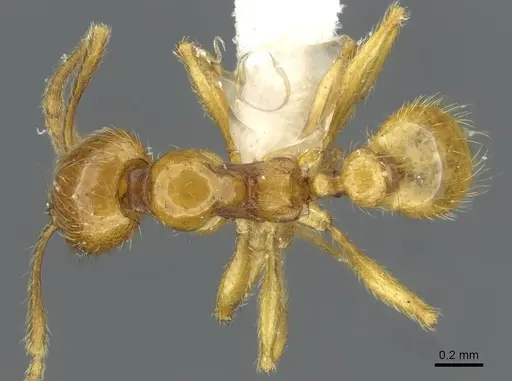
Literature
Loading...Loading products...