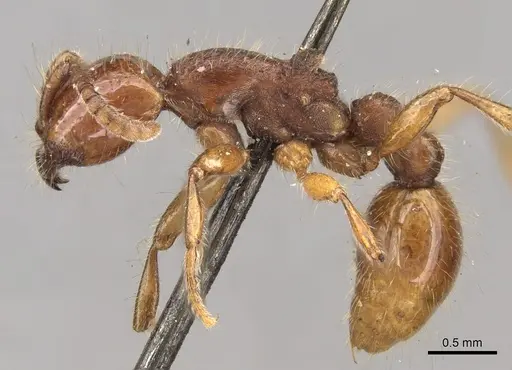
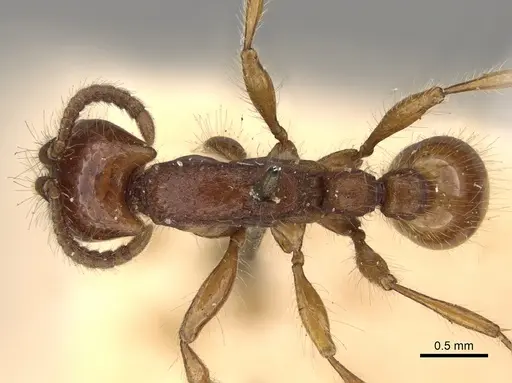
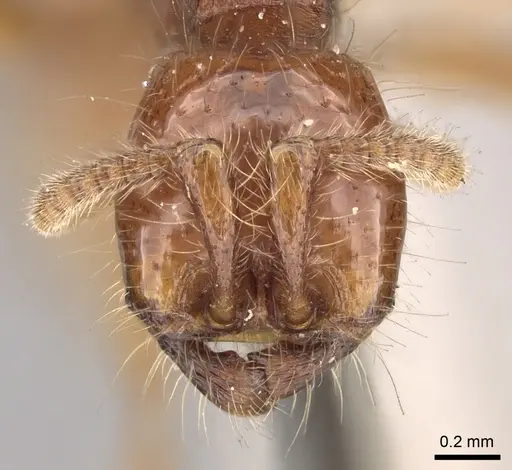
Neivamyrmex hetschkoi - "Hetschko's Army Ant"
Neivamyrmex hetschkoi is a fascinating species of army ant known for its highly nomadic lifestyle and specialized predatory habits. Unlike many other ant species, these ants do not build permanent nests. Instead, they form living structures called 'bivouacs' composed entirely of their own bodies, which they dismantle and rebuild frequently as they move. While specific sizes for N. hetschkoi are not widely detailed, members of the Neivamyrmex genus generally have workers with 12-segmented antennae and simple claws. These are primarily subterranean ants, though they may forage above ground, particularly at night or on cloudy days, making their activities quite elusive to observe. Their entire existence revolves around hunting and consuming the brood of other ant species, a behavior that defines their nomadic cycle.
- Difficulty: Expert
- Origin & Habitat: Neotropical Region (Argentina, Brazil, Paraguay, Uruguay), extending north to the central United States. in Predominantly subterranean environments in diverse habitats ranging from temperate to tropical regions. They establish temporary bivouacs under the soil or within existing natural cavities..
- Colony Type: Monogyne (single queen), though some related Neivamyrmex species can be polygynous, N. hetschkoi is generally assumed to have a single queen., colony fission (new colonies are founded by a queen leaving the parent colony with a large contingent of workers). founding.
- Size & Growth:
- Queen: Not specified
- Worker: Not specified
- Colony: Large (tens of thousands to hundreds of thousands, estimates for related species range from 10,000 to 140,000 workers).. Fast, driven by constant predation and the need to maintain a large foraging force. growth.
- Antkeeping:
- Temperature: Requires a consistently warm and stable temperature, typically between 24-28°C (75-82°F), mimicking their tropical and subtropical origins. Fluctuations should be minimized to avoid stress..
- Humidity: High humidity, around 70-90%, is crucial for their subterranean bivouacs and overall well-being. Maintaining this consistently is a significant challenge..
- Diapause: Not required. Not specified at Not specified.
- Nesting: No permanent nest. These ants require a dynamic environment that allows for their nomadic cycles, where they form temporary bivouacs from their own bodies. Any captive setup would need to facilitate constant movement and relocation, not a stationary nest..
- Behavior: High (towards other ants and potential prey; defensive towards handlers if provoked). aggressiveness.
- Common Issues: Inability to provide adequate and continuous food supply (live ant brood), Lack of sufficient space for nomadic cycles, Difficulty maintaining consistent temperature and humidity across dynamic bivouac sites, High stress levels leading to colony decline, Escape risk due to their nomadic drive, Cannibalism of own brood if starved.
Keeping Neivamyrmex hetschkoi, or any army ant species for that matter, presents an extraordinary challenge, far beyond the scope of typical antkeeping. These colonies are inherently nomadic, meaning they are constantly on the move, forming and breaking down their living bivouacs. Replicating this fundamental behavior in a captive environment requires immense space and a highly specialized setup that can accommodate their continuous migrations, something that's nearly impossible for the average hobbyist. Even major scientific institutions and zoos find it incredibly difficult to maintain a full army ant colony long-term, highlighting the immense complexity of their needs.
A critical aspect of Neivamyrmex hetschkoi care is their highly specialized diet. These ants are obligate predators, feeding almost exclusively on the brood (eggs, larvae, pupae) of other ant species. Providing the hundreds of thousands of live ant brood required to sustain a large colony is a monumental task that quickly becomes impractical. Without a constant and ample supply of their specific prey, army ant colonies will suffer from malnutrition and may even resort to cannibalizing their own brood, leading to rapid decline and eventual colony collapse.
The sheer size and dynamic nature of Neivamyrmex colonies necessitate an enclosure that can facilitate their nomadic cycle and foraging behavior. This goes far beyond a standard formicarium or even a large outworld. They require vast, interconnected spaces that mimic their natural foraging grounds and allow them to establish new bivouac sites regularly. Preventing escapes is another significant concern, as these ants are highly driven to move and will relentlessly search for new foraging grounds and nesting locations, posing a risk to home environments and local ecosystems if they manage to get out.
Due to their aggressive predatory nature and the specific environmental requirements, Neivamyrmex hetschkoi are not recommended for beginners or even most experienced antkeepers. Their welfare in captivity is extremely difficult to ensure, and attempting to keep them without specialized knowledge and resources can lead to significant stress for the ants and likely a rapid demise of the colony. Enthusiasts are strongly encouraged to observe these incredible ants in their natural habitats or through high-quality documentaries and scientific studies rather than attempting to keep them as pets.
Frequently Asked Questions
Are Neivamyrmex hetschkoi good ants for a beginner antkeeper?
Absolutely not! Hetschko's Army Ants are incredibly demanding and require an expert level of care, making them entirely unsuitable for beginners. Their nomadic lifestyle and specialized diet present challenges that even seasoned antkeepers rarely attempt.
How do army ants like Neivamyrmex hetschkoi build their nests?
These army ants don't build traditional nests. Instead, they form living 'bivouacs' by interlocking their own bodies. This temporary structure houses the queen and brood, and the entire colony moves frequently, dismantling and rebuilding their bivouac in new locations.
What do Neivamyrmex hetschkoi eat?
Hetschko's Army Ants are specialized predators. Their primary diet consists almost exclusively of the brood (eggs, larvae, and pupae) of other ant species. Providing this specific and consistent food source is one of the biggest hurdles in keeping them.
Can I keep a Neivamyrmex hetschkoi colony in a standard formicarium?
Unfortunately, no. A standard formicarium is completely inadequate for these ants. They need vast, dynamic spaces that allow them to perform their natural nomadic movements and establish new bivouac sites continuously, which a typical ant setup cannot provide.
Do Neivamyrmex hetschkoi queens have wings?
No, Neivamyrmex queens are flightless. They are often ergatoid, meaning they are queen-like but lack wings. New colonies are formed through a process called colony fission, where the queen leaves with a large group of workers to establish a new colony.
What are the biggest challenges in keeping army ants like Neivamyrmex hetschkoi?
The main challenges include providing their massive, specialized diet of live ant brood, accommodating their constant nomadic movement with vast and dynamic enclosures, maintaining precise and stable environmental conditions, and preventing escapes from their highly motivated foraging columns. The sheer scale and complexity make them incredibly difficult to sustain long-term.
How big can a Neivamyrmex hetschkoi colony get?
Colonies of Neivamyrmex species can grow quite large, ranging from tens of thousands to potentially over a hundred thousand workers. This immense colony size contributes to their high resource demands and the difficulty of keeping them.
Are Neivamyrmex hetschkoi workers polymorphic?
Yes, like many army ant species, Neivamyrmex hetschkoi workers exhibit polymorphism, meaning there are different sizes of workers with varying roles, including smaller workers and larger soldiers, though the specific size ranges for this species are not commonly documented.
Do Neivamyrmex hetschkoi sting or bite?
Yes, army ants are known to have a defensive sting or a powerful bite. While specific details for N. hetschkoi are limited, it's generally safe to assume they can defend themselves effectively if provoked, typical of army ant behavior.
How do Neivamyrmex hetschkoi find their food?
These ants are highly efficient predators. They employ 'swarm raiding' techniques where large numbers of workers spread out to locate and overpower colonies of other ants, primarily targeting their brood. They rely on tactile and chemical cues for orientation during these raids.
Is it ethical to keep Neivamyrmex hetschkoi as pets?
Given their highly complex and specific needs, including nomadic behavior, specialized diet, and vast space requirements, it is widely considered unethical and impractical to keep Neivamyrmex hetschkoi as pets. Their welfare is extremely difficult to ensure in a captive setting.