

Neivamyrmex leonardi
- Scientific Name
- Neivamyrmex leonardi
- Subfamily
- Dorylinae
- Author
- Wheeler, 1915
- Distribution
- Found in 2 countries
Neivamyrmex leonardi Overview
Neivamyrmex leonardi is an ant species of the genus Neivamyrmex. It is primarily documented in 2 countries , including Mexico, United States of America. Detailed taxonomic data and occurrence records can be further explored via authoritative databases such as AntWeb or the Global Biodiversity Information Facility (GBIF).
Neivamyrmex leonardi
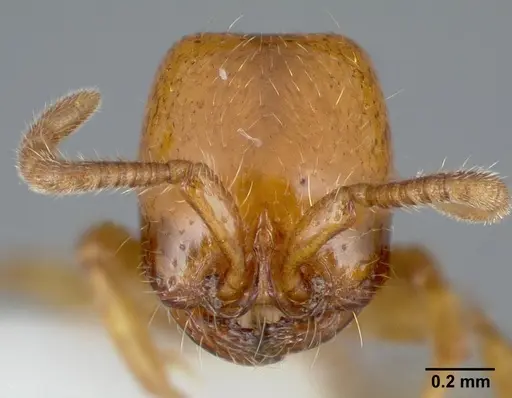
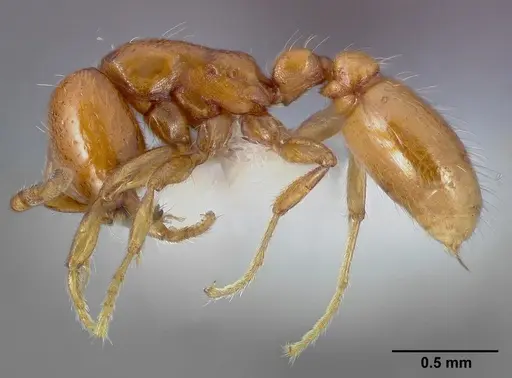
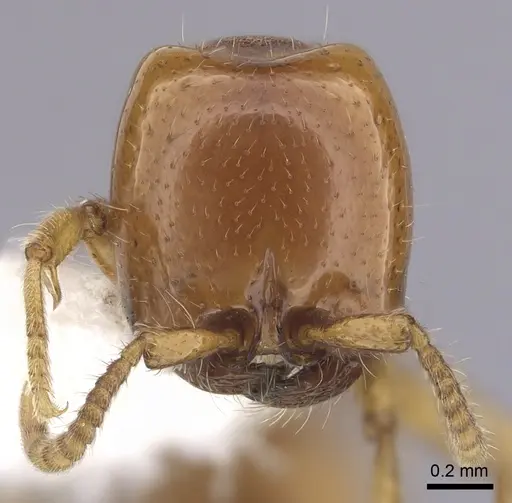
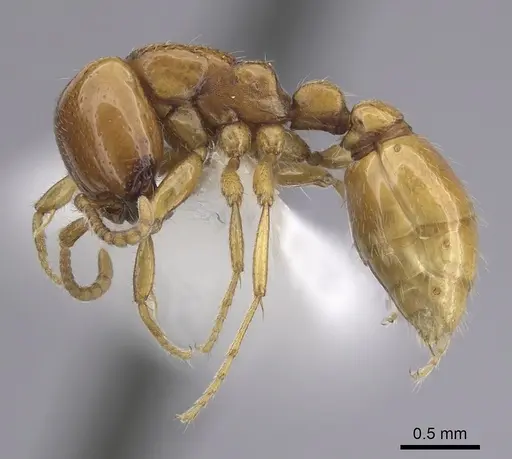
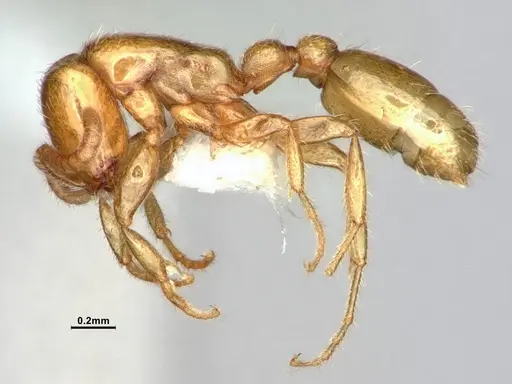
Neivamyrmex leonardi is a tiny army ant found across the southwestern United States and Mexico, from California east to Oklahoma and Texas, and south through Baja California to Guerrero [1]. Workers measure just 2-3mm and are light yellowish-brown with a smooth, shining body [1]. This species is almost completely blind, they appear to lack eyes entirely, and navigate underground using chemical trails and vibrations [1]. Unlike many army ants that form massive visible raiding columns, N. leonardi is primarily subterranean, conducting secret raids on Pheidole ant nests deep in the soil [2]. The queen and male forms remain unknown, though researchers suspect Neivamyrmex minor may be the male based on their overlapping ranges [1][3].
Quick Summary
- Difficulty: Expert
- Origin & Habitat: Desert regions of southwestern North America, including Sagebrush Desert with Larrea, Creosote Bush Scrub-Joshua Tree Woodland, and chaparral biomes [1]. Found from sea level to around 5500 feet elevation in areas like the Mojave National Preserve [2].
- Colony Type: Unknown, queen form has never been documented. Based on related army ant behavior, likely forms colonies with multiple queens, but this is unconfirmed for this species [1].
- Size & Growth:
- Queen: Unknown, queen has never been described [1].
- Worker: 2-3mm [1].
- Colony: Unknown, no colony size data exists for this species.
- Growth: Unknown, no development data available.
- Development: Unknown, no development studies exist for this species. Related Neivamyrmex species suggest several months, but this is an estimate. (Development timeline is unconfirmed. Army ant development is typically faster than many ants due to their predatory lifestyle, but specific data for N. leonardi does not exist.)
- Antkeeping:
- Temperature: Keep around 22-26°C based on desert habitat preferences. Provide a temperature gradient so ants can self-regulate. Room temperature in most homes should work well.
- Humidity: Low to moderate humidity, this is a desert species. Keep nest substrate slightly moist but allow drying periods between waterings. Avoid overly damp conditions that could cause mold.
- Diapause: Likely, desert ants typically require a winter rest period. Provide 2-3 months at 10-15°C during winter months [2].
- Nesting: This species nests deep in soil (found at 45cm depth) and prefers soft sand or soil [4]. In captivity, use a deep soil-based formicarium or naturalistic setup with at least 10-15cm of substrate depth. They do poorly in shallow acrylic nests.
- Behavior: Extremely cryptic and reclusive. Workers are blind and navigate using chemical pheromone trails [1]. They conduct subterranean raids on Pheidole colonies, attacking the brood and killing workers [2]. Unlike many army ants, they rarely form visible above-ground raiding columns, most activity happens underground [1]. Workers are small but aggressive when defending the colony. Escape risk is moderate since workers are tiny but not particularly fast. They will bite if threatened, though their small size makes this a minor concern.
- Common Issues: queen is unknown, you cannot start a colony from a found queen because the reproductive form has never been documented, no captive breeding success exists, this species has never been established in captivity by hobbyists, subterranean lifestyle makes them nearly impossible to observe, they spend most of their time underground, prey specificity, they specialize on raiding Pheidole nests, making feeding difficult in captivity, wild colonies are extremely difficult to locate, they nest deep in soil and rarely show above-ground activity
Why This Species Is Extremely Difficult to Keep
Neivamyrmex leonardi is one of the most challenging ants to keep in captivity, possibly the most challenging ant species in North America. The primary reason is simple: the queen has never been documented [1]. Without a queen, you cannot start a colony. Researchers have been studying this species since 1915 and still have never found or described a queen or male [3]. This means there is no documented way to establish a captive colony. Even if you find a wild colony, extracting a functional queen is nearly impossible since they nest 45cm deep in soft sand [4]. Even if you somehow obtained a queen, there is zero information about their founding behavior, development timeline, or captive care requirements. This is not a species for hobbyists, it remains a scientific mystery.
Natural History and Behavior
This is a predatory army ant that specializes in raiding the nests of Pheidole ants [2]. Unlike many army ants that form massive visible columns, N. leonardi is almost entirely subterranean, they conduct their raids underground in darkness [1]. Workers are nearly blind (appearing to lack eyes entirely) and navigate using pheromone trails and possibly vibrations [1]. They have been observed raiding alongside other Neivamyrmex species like N. opacithorax, suggesting they may form temporary mixed colonies or coordinate raids [1]. The staphylinid beetle Pulicomorpha coecum has been found living with N. leonardi colonies, indicating they host specialized myrmecophilous guests [1]. Their desert habitat experiences extreme temperatures, and they avoid the hottest periods by remaining deep underground during the day.
Distribution and Habitat
Neivamyrmex leonardi ranges across the desert southwest, from California and Nevada east through Oklahoma and Texas, then south through Mexico from Baja California Sur and Tamaulipas to Guerrero [1][5]. They inhabit multiple desert biomes including Sagebrush Desert with Larrea (creosote bush), Creosote Bush Scrub-Joshua Tree Woodland, and chaparral [1]. In the Mojave National Preserve, they are found between 4900-5535 feet elevation in Blackbrush Scrub and Pinyon/Juniper Woodland [2]. They prefer soft, sandy soil where they can dig deep nests, researchers have found them at depths of about 45cm [4]. This is a cryptic species that is rarely encountered despite having a relatively wide distribution.
Identification and Distinguishing Features
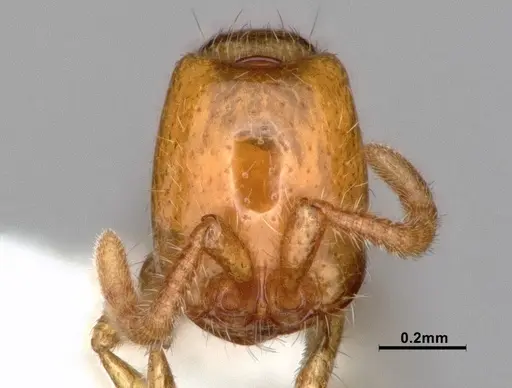
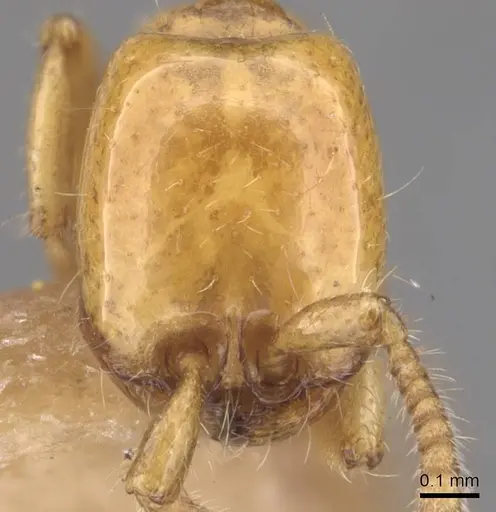
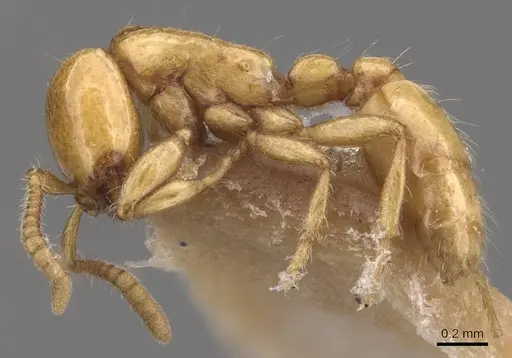
Workers measure just 2-3mm, making them one of the smallest army ants in North America [1]. They are light yellowish-brown with a smooth, shining body surface [1]. The most distinctive features are the apparent lack of eyes and the broad, pellucid flange in front of the antennal socket [1]. The scape (first antenna segment) is notably short, reaching only about half the length of the head [1]. The petiole (second abdominal segment) is roughly square to slightly rectangular [1]. They can be distinguished from the similar N. pauxillus by their larger size, shorter and more robust head, and the presence of the distinct frontal flange [1]. N. pauxillus is found only in central and southwestern Texas, while N. leonardi is found in southern California and Mexico.
Frequently Asked Questions
Can I keep Neivamyrmex leonardi as a pet?
No. This species cannot be kept in captivity because the queen has never been documented. Without a queen, there is no way to start a colony. Even if you find a wild colony, they nest 45cm deep in soft sand, making extraction impossible. This remains a scientific mystery ant that has never been successfully kept by hobbyists.
Where can I find Neivamyrmex leonardi?
They are found across the southwestern US and Mexico, from California to Texas and south to Guerrero, Mexico. However, they are extremely cryptic and rarely seen above ground. Look in desert areas with soft sandy soil, particularly in Sagebrush Desert or Creosote Bush habitats. They nest deep underground and are most active May-August in the Mojave region [2]. Finding them requires digging to significant depths (around 45cm).
What do Neivamyrmex leonardi eat?
They are predatory army ants that raid nests of Pheidole ants, specifically Pheidole obtusospinosa [2]. In captivity, they would likely accept small insects and ant brood, but since no queen exists in captivity, feeding is a moot point. Related army ants accept various small arthropods.
Do Neivamyrmex leonardi ants sting?
Army ants can bite, but this species is only 2-3mm, too small to penetrate human skin or cause meaningful pain. Their primary defense is overwhelming numbers during raids. If threatened, they may bite, but the effect is negligible for humans.
Are there any captive colonies of Neivamyrmex leonardi?
No documented captive colonies exist. This is one of the least-studied ant species in North America. The queen has never been found or described, making captive breeding impossible. Even professional myrmecologists have not succeeded in maintaining wild colonies.
What makes Neivamyrmex leonardi different from other army ants?
Unlike most army ants that form large visible raiding columns, N. leonardi is almost entirely subterranean, they raid underground. They are also among the smallest army ants at just 2-3mm, and they appear to be nearly blind (lacking eyes). They specialize in raiding Pheidole ant nests rather than general predation.
Why is the queen unknown for this species?
This species is extremely cryptic and nests deep underground (around 45cm). Researchers have simply never encountered a queen despite collecting workers since 1915. The deep subterranean lifestyle makes them very difficult to study. The queen and male forms remain one of the many mysteries in army ant biology.
Can I help study this species?
If you find what appears to be a Neivamyrmex colony in the southwestern US or Mexico, document it carefully and contact professional myrmecologists. Any queen discovery would be a significant scientific contribution. Contact university entomology departments or organizations like the Ant Course for guidance on proper specimen collection.
References

This caresheet is licensed under CC BY-SA 4.0 .
CASENT0005327
View on AntWeb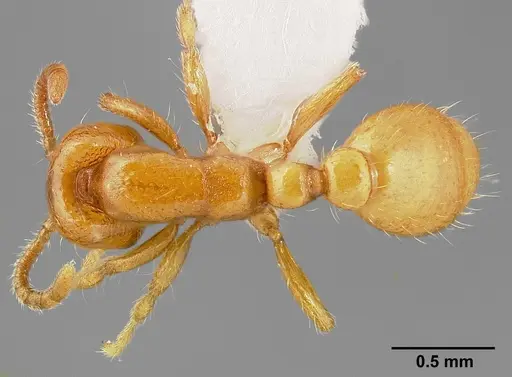
CASENT0249489
View on AntWeb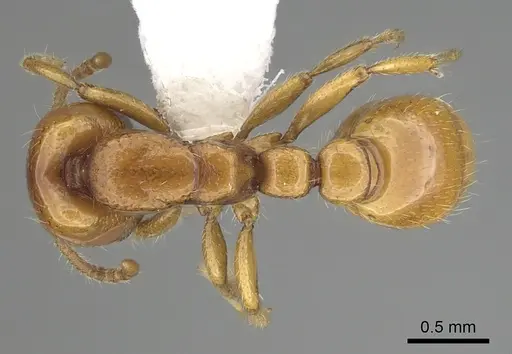
CASENT0883399
View on AntWeb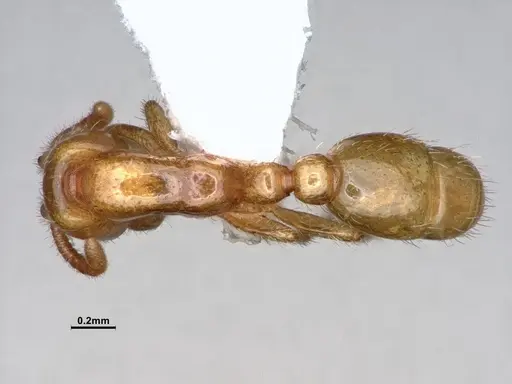
CASENT0905734
View on AntWeb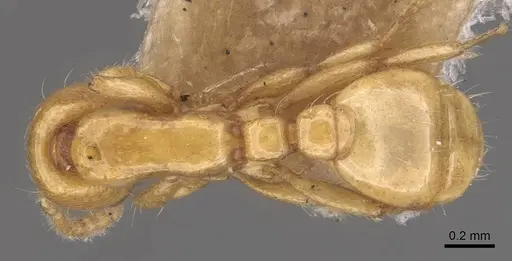
Literature
Loading...Loading products...