

Neivamyrmex baylori
- Scientific Name
- Neivamyrmex baylori
- Subfamily
- Dorylinae
- Author
- Watkins, 1973
- Distribution
- Found in 1 countries
Neivamyrmex baylori Overview
Neivamyrmex baylori is an ant species of the genus Neivamyrmex. It is primarily documented in 1 countries , including United States of America. Detailed taxonomic data and occurrence records can be further explored via authoritative databases such as AntWeb or the Global Biodiversity Information Facility (GBIF).
Neivamyrmex baylori
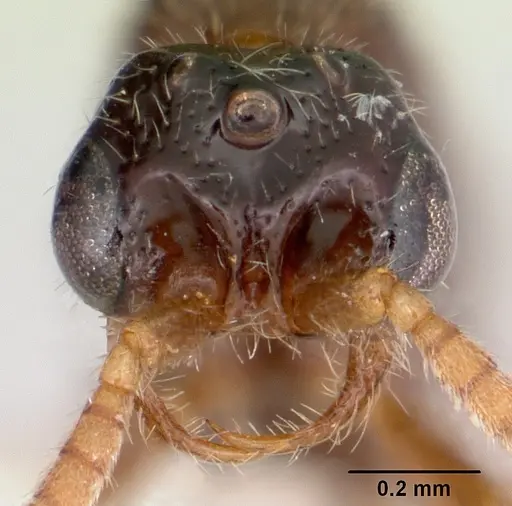
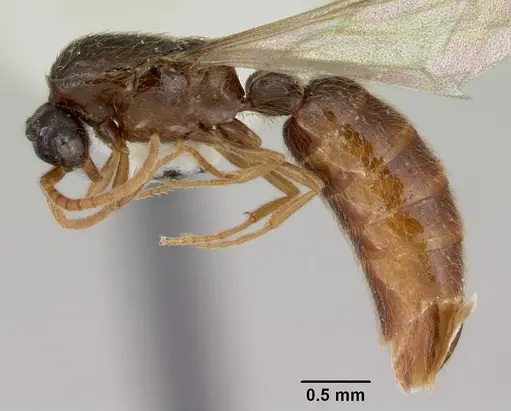
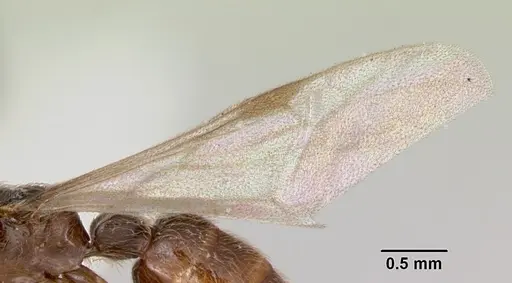
Neivamyrmex baylori is one of the rarest ants in the United States, known only from three male specimens collected in Texas [1]. The species was described in 1973 by Watkins from a single male collected near Waco [1]. The worker and queen castes remain completely unknown to science, researchers believe the workers and queen are likely Neivamyrmex pauxillus or possibly Neivamyrmex moseri, but this has never been confirmed [1]. Males are small at 5.8mm, with a black head, alitrunk and petiole, while the antennae, legs and gaster are reddish-brown with blackish mottling [2]. This species represents a significant knowledge gap in ant biology, it cannot be maintained in captivity because the founding colony stages have never been observed or collected.
Quick Summary
- Difficulty: Not kept
- Origin & Habitat: Only known from two locations in Texas: Waco (McLennan County) and the Rio Frio River (Uvalde County) [1]. The specific habitat preferences are unknown.
- Colony Type: Colony structure is completely unconfirmed, workers and queens have never been collected or described [1].
- Size & Growth:
- Queen: Unknown, queen has never been described [1]
- Worker: Unknown, workers have never been described [1]
- Colony: Unknown, no colonies have ever been documented [1]
- Growth: Unknown
- Development: Unknown, no colony data exists (This species has never been observed in captivity or documented through colony collection)
- Antkeeping:
- Temperature: Unknown, no temperature data available for this species
- Humidity: Unknown, no humidity data available for this species
- Diapause: Unknown, no seasonal data available for this species
- Nesting: Unknown, no natural nesting observations exist
- Common Issues: This species cannot be kept, workers and queens have never been described or collected, Only three specimens of this species have ever been found in over 50 years of research, The species identity of workers and queens is uncertain, likely matching N. pauxillus or N. moseri, No information exists on founding behavior, diet, or colony structure
Why This Species Cannot Be Kept
Neivamyrmex baylori represents one of the most poorly known ant species in North America. Only three specimens have ever been collected, all males, and these were found in 1972 and through subsequent surveys [1]. The worker and queen castes have never been described, meaning we do not know what they look like, how they form colonies, or what they eat. Researchers speculate the workers and queen may belong to Neivamyrmex pauxillus or possibly Neivamyrmex moseri, but this remains unconfirmed [1]. Without knowing the worker or queen morphology, it is impossible to identify a colony in the field, collect a founding queen, or provide meaningful care instructions. This species exists in a scientific gray zone, known to exist but not in any form that can be maintained in captivity.
Related Species That Can Be Kept
If you are interested in keeping Neivamyrmex army ants, several related species are documented and available through specialized suppliers. Neivamyrmex pauxillus is one of the smallest army ants in the United States and is more commonly encountered. Neivamyrmex nigrescens is another species with documented colonies. These species have known worker and queen castes, established care requirements, and can be found in the wild or obtained from fellow antkeepers. Army ants in general are fascinating for their nomadic lifestyle and raiding behavior, but they require specialized knowledge and setup to maintain successfully.
The Rarity of Texas Army Ants
Texas hosts several Neivamyrmex species, but many remain poorly studied due to their cryptic lifestyles and the difficulty of locating colonies. The genus Neivamyrmex contains army ants that raid other ant colonies for brood, which they raise as slaves. Unlike some tropical army ants that form massive colonies, Neivamyrmex species in North America tend to be smaller and more secretive. The limited distribution of N. baylori to just two Texas locations highlights how much we still have to learn about even common-sounding ant groups in North America. [1]
Frequently Asked Questions
Can I keep Neivamyrmex baylori ants?
No. This species cannot be kept in captivity because workers and queens have never been described or collected. Only three male specimens exist in scientific collections.
What do Neivamyrmex baylori workers look like?
Unknown. The worker caste has never been described. Researchers believe they likely resemble Neivamyrmex pauxillus or Neivamyrmex moseri workers, but this is unconfirmed.
Where can I find Neivamyrmex baylori colonies?
No colonies have ever been documented. The species is known from only three male specimens collected in McLennan County (Waco) and Uvalde County (Rio Frio River) in Texas.
What is the diet of Neivamyrmex baylori?
Unknown. As an army ant, it likely raids other ant colonies for brood like related Neivamyrmex species, but this has never been directly observed for this species.
Are there similar army ants I can keep instead?
Yes. Related Neivamyrmex species like N. pauxillus and N. nigrescens have known biology and can be maintained in captivity with proper setup and experience.
Why is Neivamyrmex baylori so rare?
This is unknown. It may represent a genuinely rare species, a species that is difficult to collect, or one that is easily confused with related species. Only three specimens have been found despite extensive ant surveys in Texas.
Do Neivamyrmex baylori males have nuptial flights?
Unknown. The single known male was collected on October 3,1972,suggesting fall flight timing, but this single data point is insufficient to establish patterns.
What makes Neivamyrmex baylori special?
It represents one of the rarest and least-known ant species in the United States. The fact that workers and queens remain unknown after over 50 years of description highlights how much ant biodiversity remains undocumented.
References

This caresheet is licensed under CC BY-SA 4.0 .
CASENT0103459
View on AntWeb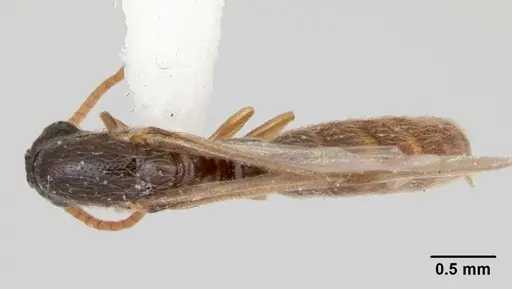
Literature
Loading...Loading products...