

Neivamyrmex moseri
- Scientific Name
- Neivamyrmex moseri
- Subfamily
- Dorylinae
- Author
- Watkins, 1969
- Distribution
- Found in 2 countries
Neivamyrmex moseri Overview
Neivamyrmex moseri is an ant species of the genus Neivamyrmex. It is primarily documented in 2 countries , including Honduras, United States of America. Detailed taxonomic data and occurrence records can be further explored via authoritative databases such as AntWeb or the Global Biodiversity Information Facility (GBIF).
Neivamyrmex moseri
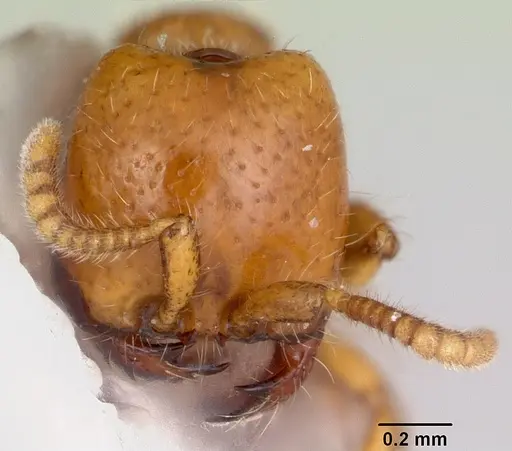
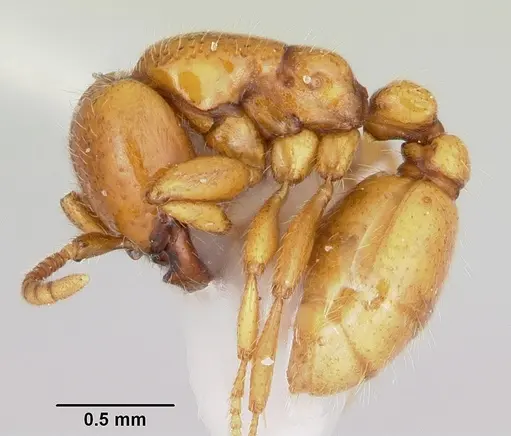
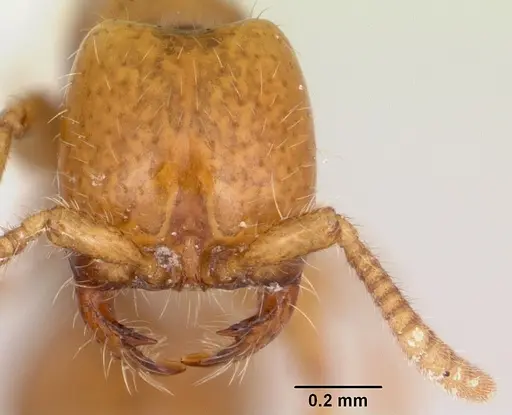
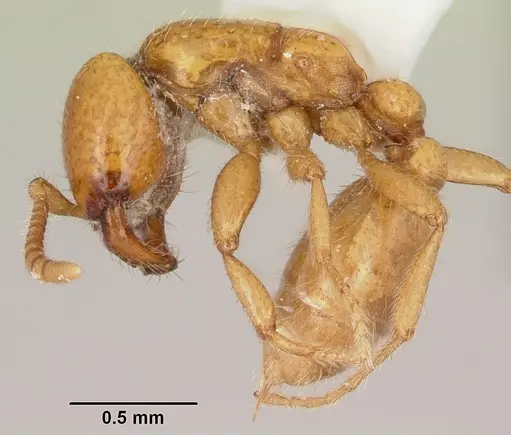
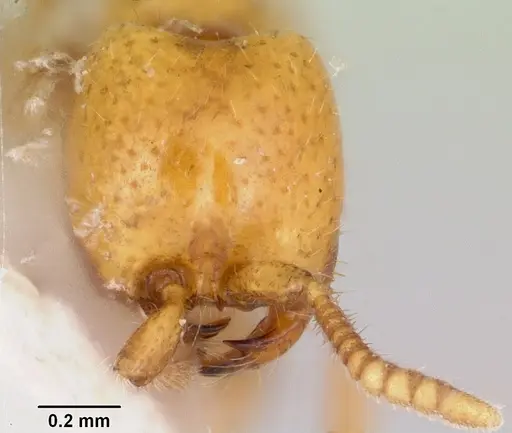
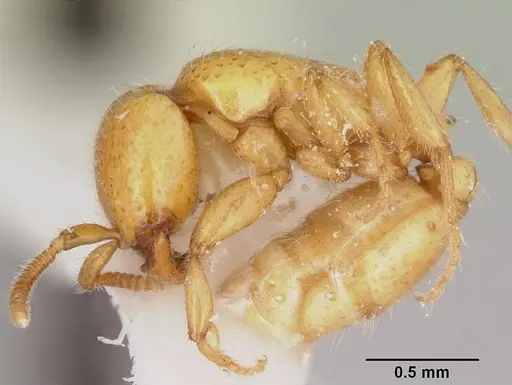
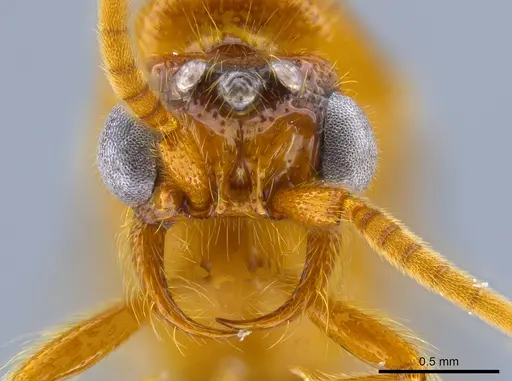
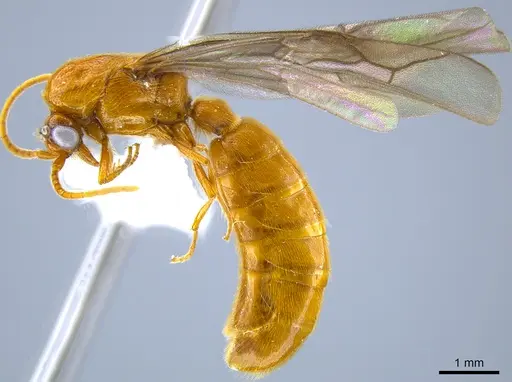
Neivamyrmex moseri is a small army ant species native to the southern United States and Honduras. Workers are yellowish-brown and range from 1.9mm in minor workers to 3.1mm in major workers. This species is completely blind, lacking eyes entirely, and lives almost entirely underground, making it one of the more cryptic army ant species. The most distinctive feature is its unique mandibular structure with three large teeth that are roughly equal in size [1]. Colonies have been found nesting one foot deep in the soil, often associated with the nests of leaf-cutter ants (Atta texana) [2]. This subterranean lifestyle means they are rarely encountered on the surface, even by experienced ant collectors.
Quick Summary
- Difficulty: Expert
- Origin & Habitat: Southern United States (Louisiana and Texas) into Honduras. Found in highly disturbed grassland areas with loam soils, often in flat terrain with scattered Acacia and Prosopis trees [2].
- Colony Type: Army ant colony structure, likely multi-queen (polygyne) based on typical genus patterns, though colony structure has not been directly studied for this specific species.
- Size & Growth:
- Queen: Undescribed in detail, only briefly mentioned. Estimated 4-6mm based on genus patterns.
- Worker: Major workers: 3.10mm. Minor workers: 1.90mm [1].
- Colony: Unknown, army ant colonies can range from hundreds to thousands of workers, but no specific data exists for this species.
- Growth: Unknown, likely moderate to fast typical of army ants, but no development timing data available.
- Development: Unconfirmed, no direct development timing studies exist for this species. Army ants typically develop from egg to worker in 3-6 weeks at warm temperatures, but this is an estimate based on related species. (Development timeline unconfirmed for this specific species. Army ants generally have rapid development compared to many ant species.)
- Antkeeping:
- Temperature: Keep at 24-28°C, army ants are warmth-loving and this range supports their typically active lifestyle. A heating cable on part of the nest creates a gradient.
- Humidity: Maintain moderate to high humidity (60-80%). Their natural habitat in Louisiana and Texas has periods of high moisture, and they were found in loam soils at depth. Keep the substrate consistently moist but not waterlogged.
- Diapause: Likely, Neivamyrmex species are temperate army ants that likely require a winter rest period. However, specific diapause requirements for N. moseri have not been studied. Expect 2-3 months of reduced activity around 10-15°C during winter.
- Nesting: This species is entirely subterranean. In captivity, they need a deeply filled nest setup (at least 10-15cm depth) with multiple connected chambers. A naturalistic setup with soil or a custom deep acrylic formicarium works best. They should be kept in darkness as they are completely blind and light-sensitive.
- Behavior: Neivamyrmex moseri is a true army ant, they are aggressive predators that raid columns through the soil. As a completely blind species, they rely entirely on chemical (pheromone) and tactile cues. They are unlikely to be aggressive toward keepers since they avoid light and human contact. Escape risk is moderate, while workers are small (1.9-3.1mm), they are not particularly fast or adept climbers. Standard barrier methods should work, but their subterranean nature means escape prevention focuses on preventing them from tunneling out of enclosures. They are nocturnal and almost never seen on the surface [2].
- Common Issues: completely blind and light-sensitive, sudden exposure to bright light stresses them, subterranean lifestyle makes them difficult to observe and care for, they rarely come to the surface, no established captive breeding protocols exist for this species, winter diapause requirements are poorly understood but likely necessary, deep nesting requirement means standard shallow nests are inadequate, may be difficult to feed, army ants typically need live prey raids
Why This Species Is Challenging
Neivamyrmex moseri is one of the most difficult ant species to keep because it is completely subterranean and virtually never comes to the surface. Unlike many army ants that raid above ground, N. moseri lives its entire life underground in darkness. This means standard ant-keeping approaches don't work well, you cannot easily observe them, feed them in the open, or monitor colony health. They were only discovered through subterranean baiting experiments, not through normal ant collecting methods [2]. The lack of eyes confirms their completely fossorial (burrowing) lifestyle. For these reasons, N. moseri is recommended only for expert antkeepers who can provide deep, dark, humid enclosures and who understand the specialized needs of army ants.
Housing and Nest Setup
This species requires a deeply filled enclosure, at least 10-15cm of substrate to allow them to create their underground tunnel systems. A naturalistic setup with moist loam-style soil works best, or a custom deep acrylic formicarium with multiple connected chambers. Keep the entire setup in darkness or very low light conditions. They should not be exposed to bright light as this causes severe stress. The enclosure must have excellent escape prevention from below, they will tunnel downward and can escape through any gaps at the bottom. Cover the enclosure with a dark cloth when not observing. Provide a outworld only if needed for feeding, but expect them to rarely use it. [2]
Feeding Army Ants
Army ants are predators that rely on raiding columns to capture prey. In captivity, they need regular protein in the form of live insects. Feed small live prey items like fruit flies, pinhead crickets, mealworms, or other small insects. The prey should be small enough for the minor workers (1.9mm) to tackle. Unlike many ants that will accept dead protein, army ants are often more aggressive about live prey. Feed every 2-3 days, removing any uneaten prey. Sugar sources like honey or sugar water may be accepted but are not their primary food, they are strict predators like other army ants. Do not overfeed as decaying prey creates mold problems in their enclosed system.
Temperature and Seasonal Care
Keep the nest area at 24-28°C. Army ants are warmth-loving and this temperature range supports their typical active lifestyle. Use a heating cable on one side of the nest to create a gentle gradient, but ensure they can move to cooler areas if needed. During winter (roughly November through February in the northern hemisphere), reduce temperature to around 10-15°C to allow a diapause period. This mimics their natural seasonal cycle in Louisiana and Texas where winters are cool but not freezing. Reduce feeding frequency during this period. Do not maintain them at room temperature year-round as this may stress the colony long-term.
Understanding Their Biology
Neivamyrmex moseri was only described in 1969 and remains one of the least studied army ant species in North America. It was discovered in Kisatchie National Forest, Louisiana, nesting one foot deep in the soil alongside a colony of the leaf-cutter ant Atta texana [2]. The species has a unique mandibular structure with three large teeth that distinguish it from all other US Neivamyrmex species [1]. It was later found to also inhabit Texas and Honduras, but it remains rare in ant collections precisely because of its subterranean lifestyle. The queen was only briefly described in 1971,and virtually nothing is known about their nuptial flights, colony founding, or detailed social structure.
Frequently Asked Questions
Can I keep Neivamyrmex moseri in a test tube?
No, test tubes are completely inadequate for this species. They require deep substrate (10-15cm minimum) to create their underground tunnel systems. A naturalistic soil setup or custom deep acrylic formicarium is necessary.
How long does it take for first workers to develop?
The egg-to-worker timeline is unconfirmed for this species. Based on typical army ant development patterns, expect 3-6 weeks at warm temperatures (25-27°C), but this is an estimate rather than confirmed data.
Are Neivamyrmex moseri good for beginners?
No, this species is not suitable for beginners. They are completely subterranean, blind, require deep nesting setups, need live prey, and have poorly understood captive care requirements. They are recommended only for expert antkeepers.
What do Neivamyrmex moseri eat?
They are predators that need live insect prey. Feed small live insects like fruit flies, pinhead crickets, or small mealworms. They are unlikely to accept sugar water as their primary food source.
Can I keep multiple queens together?
This has not been documented. Army ants are typically polygynous (multiple queens), but combining unrelated queens of this species has not been studied. Do not attempt without understanding the risks.
Do Neivamyrmex moseri need hibernation?
Likely yes, based on their distribution in Louisiana and Texas, they probably need a winter rest period of 2-3 months at reduced temperatures (10-15°C). However, specific diapause requirements have not been studied.
Why are my ants dying?
Common causes include: exposure to light (they are completely blind and light-sensitive), inadequate depth in the nest, incorrect humidity (too dry), temperatures outside their preferred range, or stress from improper feeding. This species is poorly understood in captivity and mortality is common.
When will I see my ants?
Almost never, this is a completely subterranean species that virtually never comes to the surface. You will only see them if you dig them up or if they escape into a feeding outworld. They are among the most difficult army ants to observe.
How big do colonies get?
The maximum colony size is unknown. Based on related Neivamyrmex species, colonies likely reach several hundred to a few thousand workers, but no specific data exists for this species.
References

This caresheet is licensed under CC BY-SA 4.0 .
CASENT0103135
View on AntWeb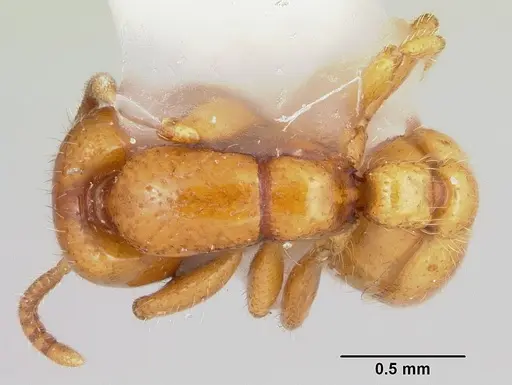
CASENT0104890
View on AntWeb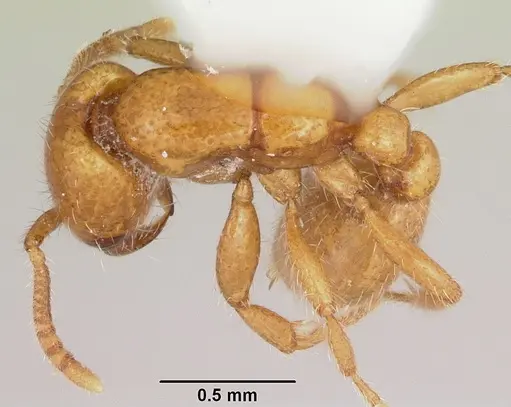
CASENT0104929
View on AntWeb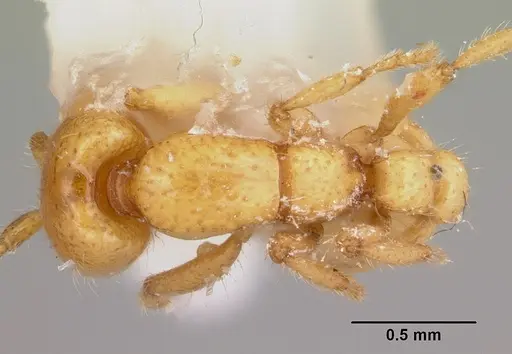
CASENT0614117
View on AntWeb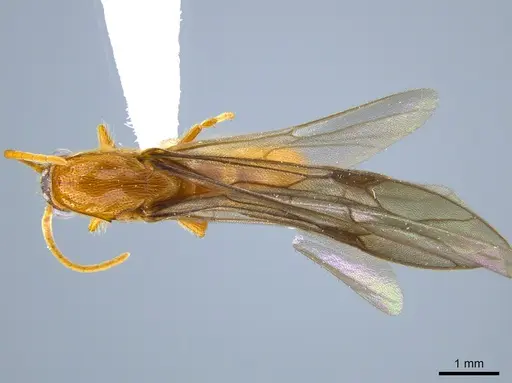
Literature
Loading...Loading products...