

Myrmica karavajevi
- Scientific Name
- Myrmica karavajevi
- Tribe
- Myrmicini
- Subfamily
- Myrmicinae
- Author
- Arnol'di, 1930
- Distribution
- Found in 5 countries
Myrmica karavajevi Overview
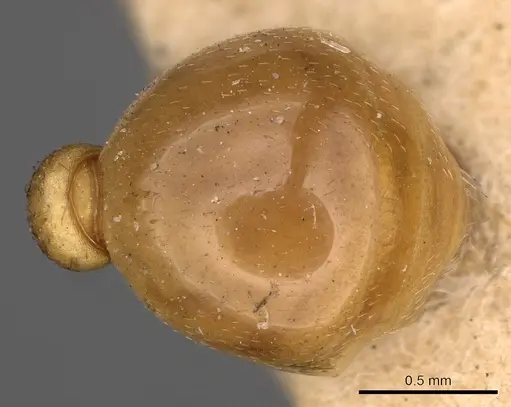
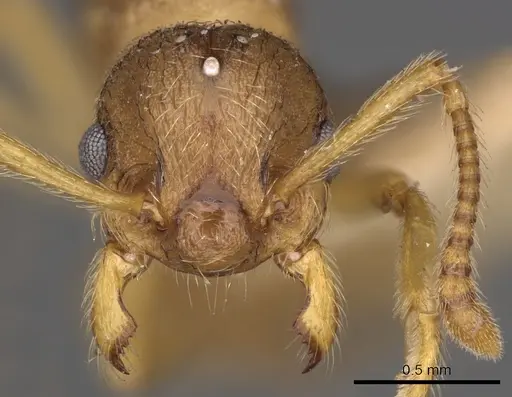
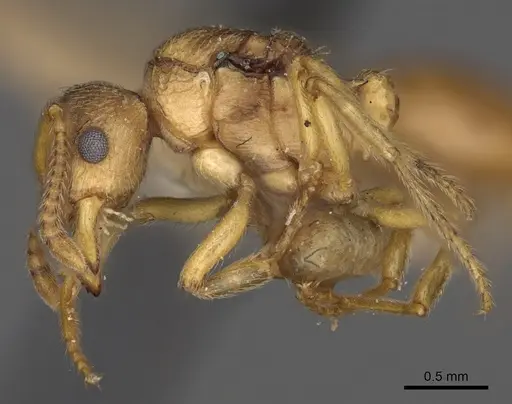
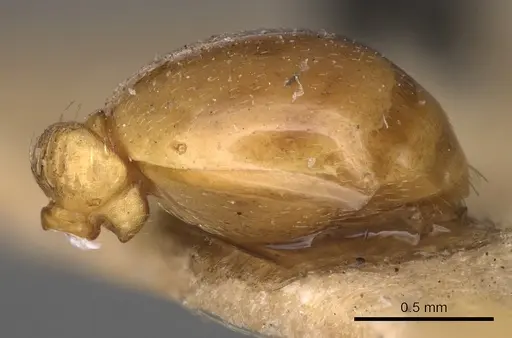
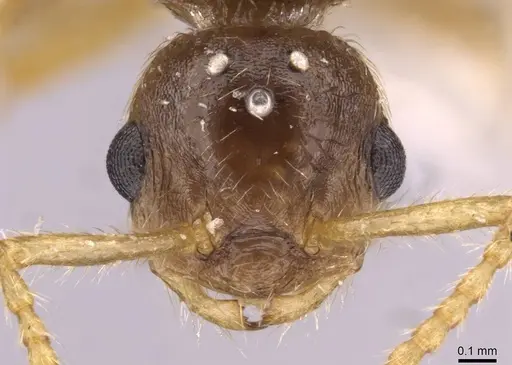
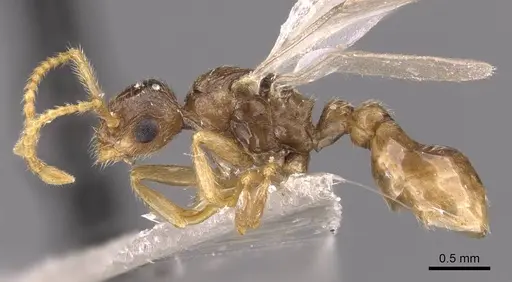
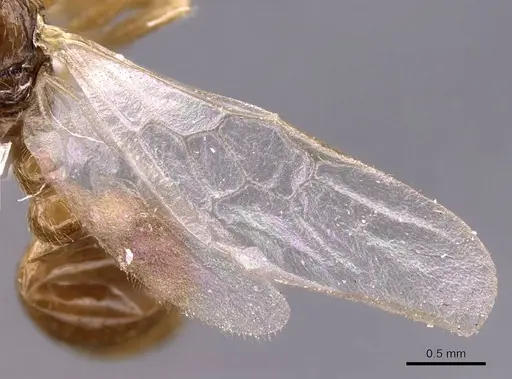
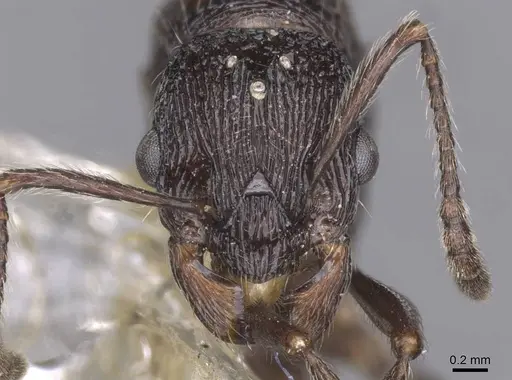
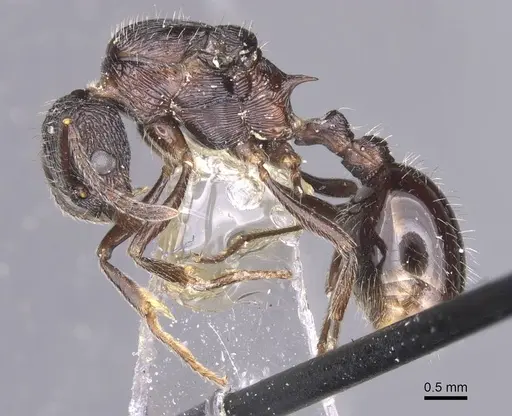
Myrmica karavajevi is an ant species of the genus Myrmica. It is primarily documented in 5 countries , including Belgium, Germany, United Kingdom of Great Britain and Northern Ireland. Detailed taxonomic data and occurrence records can be further explored via authoritative databases such as AntWeb or the Global Biodiversity Information Facility (GBIF).
Myrmica karavajevi
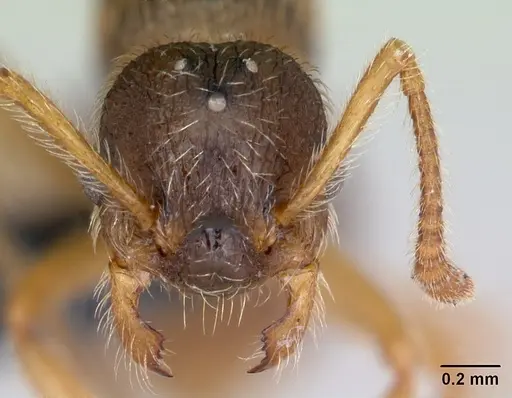
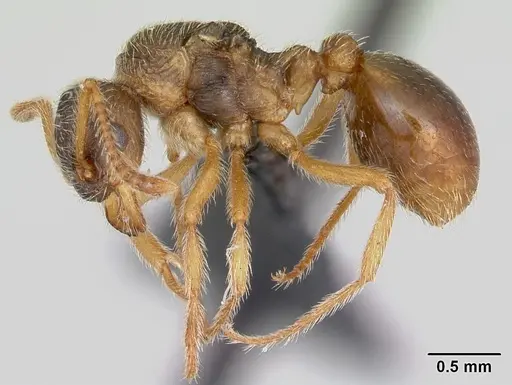
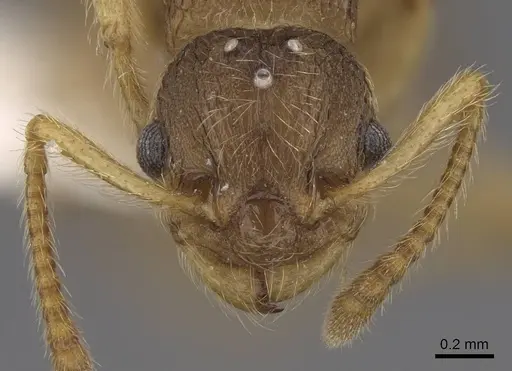
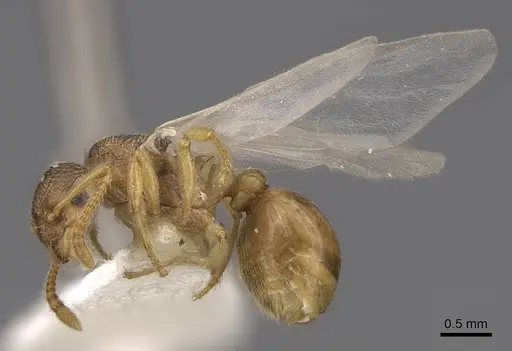
Myrmica karavajevi is one of the most unusual ants you could ever keep, it's a workerless social parasite, meaning it has no workers of its own and cannot survive without a host colony. These tiny ants (queens are only slightly larger than host workers) live entirely inside nests of other Myrmica species, particularly those in the scabrinodis group like Myrmica scabrinodis, M. rugulosa, M. sabuleti, M. lonae, and M. gallienii [1][2]. The queens are obligate inquilines, they cannot found their own colonies and must invade an existing host nest, where they coexist alongside the host queen and trick the host workers into caring for their brood [3]. This is the most widespread of all workerless Myrmica parasites in the Palaearctic region, found from England to Ukraine and from Finland to Spain, but it's nowhere common, researchers typically find only one or two infested colonies despite extensive searching [1][2].
Quick Summary
- Difficulty: Expert
- Origin & Habitat: Widespread across Europe from Britain to Ukraine, north to Finland and south to Greece and Spain. Found in warm but relatively wet habitats including marshes, meadows, forest glades, and peat bogs where its host species live [3][1].
- Colony Type: Workerless social parasite, no workers exist. Queens live as obligatory inquilines within host Myrmica colonies, coexisting with host queens. Both parasite and host broods are produced in the same nest [3][4].
- Queen: Socially parasitic
- Size & Growth:
- Queen: 0.78-0.89 mm head length, similar in size to host workers (body surface area about 40.8 mm² vs 43.0 mm² for host workers) [2][5]
- Worker: Worker caste does not exist, this is a workerless species [2]
- Colony: Colony size is limited to the number of parasite queens and males the host colony can support. Multiple parasite queens can coexist in one host nest [4]
- Growth: Slow, parasitic growth mode with slow larval development [6][7]
- Development: Unknown, no workers are produced. Only sexuals (new queens and males) develop [2] (Only sexual castes develop. Larvae go through a diapause in the last instar before overwintering [7][8])
- Antkeeping:
- Temperature: Keep host colony at normal Myrmica temperatures (around 20-22°C). No specific requirements for the parasite itself since it relies on host workers to regulate its environment [5]
- Humidity: Maintain the humidity preferences of the host species, typically damp, humid conditions suitable for Myrmica scabrinodis and related species [3]
- Diapause: Yes, last larval stage is capable of overwintering. Nuptial flights occur in July-August, after which mated queens search for new host colonies [7][3]
- Nesting: Cannot be kept independently. Must be maintained with a healthy host colony of Myrmica scabrinodis, M. rugulosa, or related species. This makes captive maintenance extremely challenging [2]
- Behavior: Queens use sophisticated deception to integrate into host colonies. They chemically mimic host queen cuticular hydrocarbons so perfectly that host workers cannot distinguish them from their own queen, in tests, parasite queens were mistaken for host queens 27% of the time [2]. They also produce vibroacoustic signals that resemble host queen sounds more than worker sounds, eliciting similar behavioral responses from host workers [2]. Despite this sophisticated mimicry, introduction experiments have shown that host colonies will reject unfamiliar parasite queens, introduction of both freshly mated and established queens into experimental host cultures failed in every case [9]. Males are produced alongside new queens within the host nest.
- Common Issues: This species cannot be kept without a host colony, it is an obligatory social parasite with no workers, Introduction of parasite queens into host colonies consistently fails in experiments, Very rare in the wild, finding a host colony already infested is extremely unlikely, Even if you find an infested host colony, the parasite population may be small and difficult to maintain, The species is protected or considered vulnerable in several European countries, ethical concerns about collection
Understanding Workerless Social Parasites
Myrmica karavajevi belongs to a rare category of ants called workerless social parasites or inquilines. Unlike typical ants where a queen founds a new colony alone, raises her first workers, and builds a colony from scratch, M. karavajevi queens cannot do any of this. They have no workers to help them, and their larvae can only develop into new queens and males, never workers [2]. This means the parasite queens must find an already-established colony of a suitable host Myrmica species and trick the host workers into accepting them. Once inside, the parasite queen lives alongside the host queen(s), and both species' broods are raised together by the host workers [3]. This arrangement is permanent, the parasite never leaves and cannot survive independently.
Host Species and Habitat Requirements
M. karavajevi parasitizes several species in the Myrmica scabrinodis group: Myrmica scabrinodis (the most common host), M. rugulosa, M. sabuleti, M. lonae, and M. gallienii [1][4]. All these hosts share similar habitat preferences, they live in warm but relatively wet places like marshes, meadows, forest glades, and peat bogs [3]. This explains why M. karavajevi is found in such habitats across Europe. The parasite shows some flexibility in host choice (making it a generalist parasite), but all its hosts belong to the scabrinodis group, which are themselves closely related [1]. This fits 'Emery's rule' in a loose sense, the parasite is related to its hosts, though not their closest relative [1].
How Parasite Queens Invade Host Colonies
The invasion mechanism is fascinating but poorly understood. Research shows M. karavajevi uses both chemical and vibroacoustic deception. The queens produce cuticular hydrocarbons (CHCs) that perfectly match those of host colony queens, chemical analysis shows 45 hydrocarbons present on their cuticle, identical to host queens [2]. They also produce sounds (stridulatory signals) that are statistically different from both host workers and queens, but are closer to host queens than workers, and these sounds elicit similar behavioral responses [2]. Despite this sophisticated mimicry, experimental introductions have failed, host colonies either kill unfamiliar parasite queens or push them to the periphery where they die [9]. This suggests there may be colony-specific recognition or the parasite requires gradual introduction through an existing infested colony.
Reproduction and Nuptial Flights
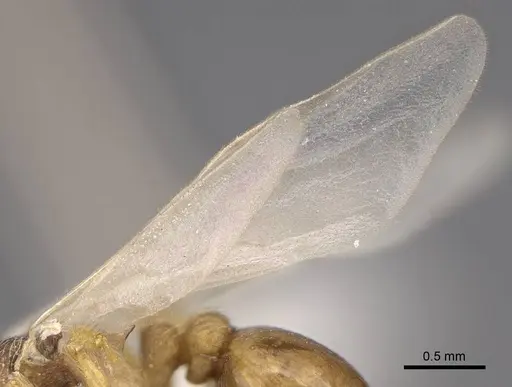
Both parasite queens and males develop within the host nest alongside host brood. Nuptial flights occur in July and August, when newly emerged parasite queens and males leave the nest to mate [3][9]. After mating, dealate (wingless) queens wander over the ground searching for a suitable host colony to invade, in Norway, two dealate queens were caught in pitfall traps in July, confirming this wandering behavior [3]. Unlike typical Myrmica, only sexuals (new queens and males) are produced, no workers ever develop. The last larval instar is capable of overwintering, allowing the species to time its development with seasonal host colony cycles [7][8].
Why This Species Is Not Recommended for Hobbyists
Let me be direct: Myrmica karavajevi should not be kept by hobbyists. Here's why. First, they cannot survive without a host colony, you would need to maintain a healthy colony of Myrmica scabrinodis or a related host species, then somehow introduce the parasite. Second, experimental introductions have consistently failed, even professional researchers couldn't get host colonies to accept introduced parasite queens [9]. Third, the species is extremely rare in the wild (found in less than 30 localities across nearly 20 European countries) and is protected or considered vulnerable in several countries [2][10]. Fourth, even if you found an infested colony, maintaining both species together successfully is exceptionally difficult. If you're interested in parasitic ants, consider studying them in the wild instead, or focus on more commonly available ant species for captive keeping.
Frequently Asked Questions
Can I keep Myrmica karavajevi in a formicarium?
No. This is an obligatory social parasite that cannot survive without a host colony of Myrmica scabrinodis, M. rugulosa, or related species. You would need to maintain both the host colony and the parasite together, which has never been successfully accomplished in captivity, experimental introductions have consistently failed.
How do I start a colony of Myrmica karavajevi?
You cannot. Unlike typical ants where you can catch a mated queen and start a colony, M. karavajevi queens must invade an existing host colony. There are no workers to help establish the colony, and even professional researchers have failed to introduce parasite queens into host colonies in laboratory settings.
What do Myrmica karavajevi eat?
They do not forage or feed themselves, the host workers feed them. The parasite queens are fed by host workers through trophallaxis (mouth-to-mouth food sharing), just like the host queen. This is another reason they cannot survive independently.
Do Myrmica karavajevi have workers?
No. This is a completely workerless species, only queens and males are produced. All colony maintenance tasks (foraging, nursing brood, defending the nest, etc.) are performed by the host species' workers.
Are Myrmica karavajevi dangerous to the host colony?
Unlike some parasitic ants that kill the host queen, M. karavajevi coexists peacefully with the host queen(s). Both species' broods are produced in the same nest. However, the parasite does redirect host colony resources toward producing parasite sexuals (queens and males) rather than host workers, which could weaken the host colony over time.
What is the nuptial flight season for Myrmica karavajevi?
July through August. Males and new queens leave the host nest to mate during this period. After mating, mated queens wander over the ground searching for new host colonies to invade.
Where can I find Myrmica karavajevi in the wild?
They are extremely rare, found in less than 30 localities across nearly 20 European countries. Look in warm, humid habitats like marshes, meadows, forest glades, and peat bogs where host species like Myrmica scabrinodis live. Even then, finding an infested colony is very unlikely. The species is protected in several countries.
Is Myrmica karavajevi a good species for beginners?
Absolutely not. This is an expert-level species in terms of difficulty, in fact, it's not even a viable captive species. If you're interested in Myrmica ants, start with easier species like Myrmica rubra or Myrmica ruginodis that can be kept and bred in captivity.
Do Myrmica karavajevi need hibernation?
Yes, they likely follow the seasonal pattern of their host species. The last larval instar is capable of overwintering, and nuptial flights occur in July-August, suggesting an annual cycle similar to other European Myrmica.
Why are Myrmica karavajevi so rare?
Several factors: they are obligate parasites requiring specific host colonies, they have poor dispersal ability (Strategy D species), and they can only inhabit sites with sufficiently large and stable host populations [6][7]. Additionally, they face threats from habitat loss, large-scale draining of bogs threatens their populations.
References

This caresheet is licensed under CC BY-SA 4.0 .
CASENT0172766
View on AntWeb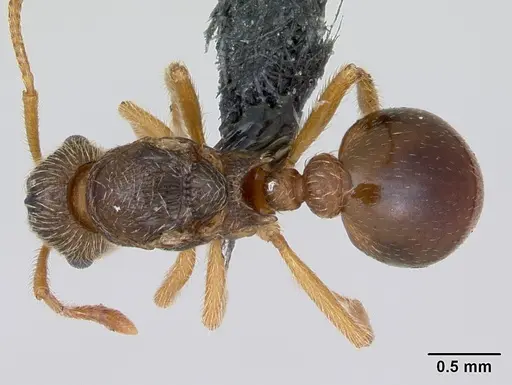
CASENT0900286
View on AntWeb
CASENT0907568
View on AntWeb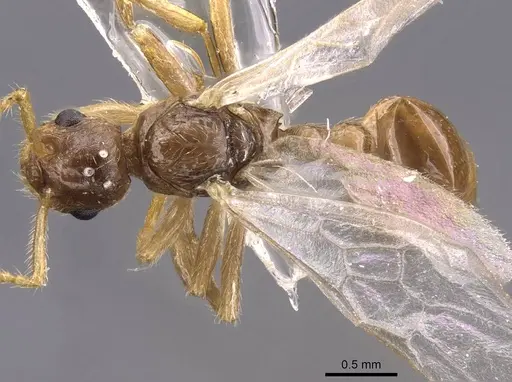
CASENT0913087
View on AntWeb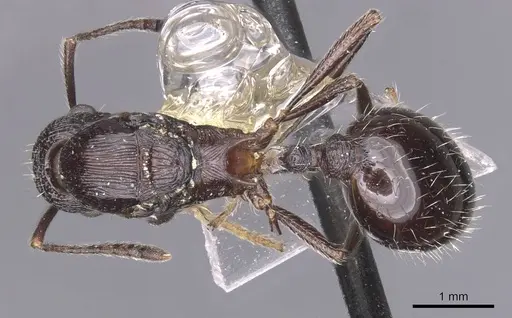
CASENT0922790
View on AntWeb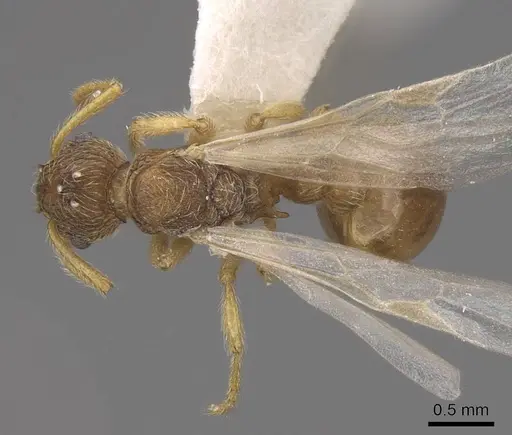
Literature
Loading...Loading products...