

Myrmica bibikoffi
- Scientific Name
- Myrmica bibikoffi
- Tribe
- Myrmicini
- Subfamily
- Myrmicinae
- Author
- Kutter, 1963
- Distribution
- Found in 1 countries
Myrmica bibikoffi Overview
Myrmica bibikoffi is an ant species of the genus Myrmica. It is primarily documented in 1 countries , including Netherlands. Detailed taxonomic data and occurrence records can be further explored via authoritative databases such as AntWeb or the Global Biodiversity Information Facility (GBIF).
Myrmica bibikoffi
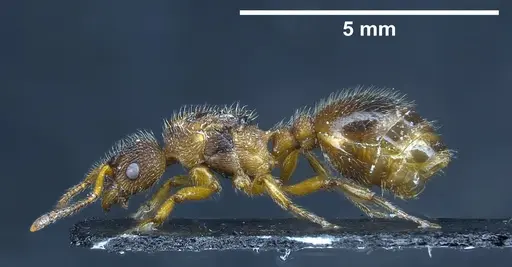
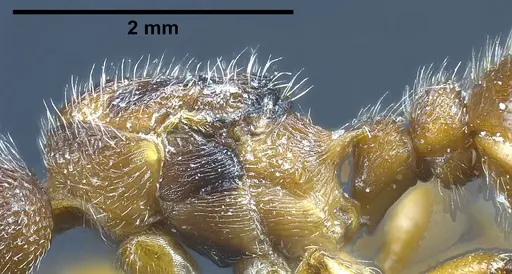
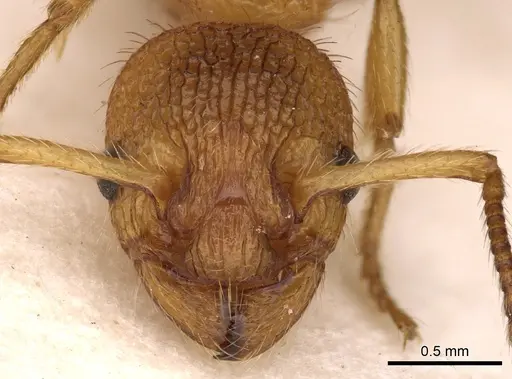
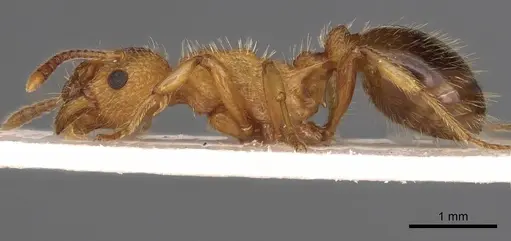
Myrmica bibikoffi is a small to medium-sized Myrmica ant native to the Palaearctic region, found in Germany, Switzerland, France, Spain, the Netherlands, and Luxembourg [1][2]. Workers measure 1.10-1.28mm in head length with a coarse reticulated sculpture on the head and alitrunk, a wide postpetiole, and a notably hairy body [3]. Queens are larger at 1.24-1.40mm head length and possess a distinctly bent and thickened scape base with a developed lobe spreading backward [2]. This species is a member of the sabuleti-complex and is closely related to Myrmica hirsuta, sharing the same host species Myrmica sabuleti [3]. What makes M. bibikoffi remarkable is its social parasitic lifestyle, it invades the nests of host species and uses the host workers to raise its own brood, making it one of the more challenging Myrmica species to keep successfully.
Quick Summary
- Difficulty: Expert
- Origin & Habitat: Palaearctic region, found in Switzerland (first discovered in 1949), Germany, France (Brittany 2006,Eastern Pyrenees 2013), Spain (Galicia, Catalonia), Netherlands (2011), and Luxembourg [2]. Inhabits thermophilic meadows and grassy areas favorable to its host Myrmica sabuleti [4].
- Colony Type: Social parasite, temporarily parasitic on Myrmica sabuleti and M. spinosior colonies, though it can become permanently parasitic (inquiline) in some situations [5][6][2]. Queens invade host nests and use host workers to raise their brood. The queen inhibits host sexual production through pheromone emission rather than killing the host queen [2].
- Queen: Socially parasitic, Temporary parasitic
- Size & Growth:
- Queen: 1.24-1.40mm head length (HL) [3][2]
- Worker: 1.10-1.28mm head length (HL) [3][2]
- Colony: Small colonies, typically found with just a few workers (2-3 workers in some records) alongside host workers [2]
- Growth: Unknown, dependent on host colony for growth
- Development: Unknown, development occurs within host colony using host resources (This species does not found colonies independently. Instead, a newly mated queen invades an established host colony and relies on host workers to raise her brood.)
- Antkeeping:
- Temperature: Keep at room temperature similar to Myrmica sabuleti requirements, around 20-24°C. No specific studies on temperature requirements exist, so follow host species guidelines [4].
- Humidity: Moderate humidity, maintain nest substrate moist but not waterlogged. Follow standard Myrmica care guidelines.
- Diapause: Yes, likely requires winter hibernation like other European Myrmica species. Nuptial flights occur in July, suggesting a seasonal cycle [4].
- Nesting: Cannot found colonies independently. Must be introduced to an established Myrmica sabuleti or M. spinosior colony. This makes captive keeping extremely difficult as it requires maintaining both host and parasite colonies together.
- Behavior: This is a social parasite, queens invade host colonies and integrate by producing pheromones that suppress the host queen's sexual reproduction, causing the host colony to produce only workers [2]. Workers are rarely found alone, they almost always coexist with host workers in the same nest [2]. The species is rarely encountered and difficult to detect in the wild because parasitic Myrmica species typically live in the depths of host nests [4]. Escape risk is moderate, similar in size to other Myrmica workers.
- Common Issues: establishing a colony is extremely difficult, requires obtaining both parasite queens and compatible host colonies, host colony rejection of the parasite queen is likely, many invasions fail in nature, maintaining two species simultaneously is complex and rarely successful in captivity, the species is rare in the wild and protected in some regions, without a healthy host colony, the parasite colony will not survive
Understanding Myrmica bibikoffi as a Parasitic Species
Myrmica bibikoffi is one of the more specialized ants in the Myrmica genus because it cannot establish colonies on its own. Unlike most ant species where a newly mated queen digs a chamber and raises her first workers alone, M. bibikoffi queens must find and invade an established colony of either Myrmica sabuleti or Myrmica spinosior [5][6][2]. This is called temporary social parasitism, the parasite queen uses the host workers to raise her offspring. In some ecological situations, the parasite can become permanent (inquiline), living indefinitely within the host colony [3]. The parasite queen integrates by emitting pheromones that suppress the host queen's sexual reproduction, the host queen continues laying eggs but produces only workers, not new queens or males [2]. This is a much more sophisticated strategy than simple aggression. In all nests found in the wild, M. bibikoffi individuals were always accompanied by workers of the host species [2].
Why This Species is Not Recommended for Most Antkeepers
Honest advice: Myrmica bibikoffi is not a species you can keep like typical ants. Because it is an obligate social parasite, keeping it successfully requires maintaining two species simultaneously, the host colony (M. sabuleti or M. spinosior) and the parasite colony. The parasite queen must be introduced to a compatible host colony, and even then, the introduction often fails because host workers may reject the invader. There are no established protocols for keeping this species in captivity, and the few records of M. bibikoffi in captivity have been unsuccessful. Additionally, this is a rare species protected in some countries, and collecting it from the wild is neither ethical nor practical. If you are interested in keeping parasitic ants, consider starting with more documented species or focus on the host species Myrmica sabuleti first. For these reasons, M. bibikoffi is an expert-only species that should be left to researchers with specific permits. [2][4]
Identification and Distinguishing Features
M. bibikoffi can be distinguished from its host M. sabuleti and similar species by several key features. The most distinctive are the strongly reduced spurs on the hind and mid tibiae, unlike most Myrmica species, these spurs are not comb-like [2]. Workers and queens have a coarse reticulated (net-like) sculpture covering most of the head, particularly the occiput, frontal area, and cheeks [2]. The postpetiole (the segment behind the waist) is notably wider than in M. sabuleti [2]. The entire body has denser, longer pilosity (standing hairs) compared to the host species [2]. Queens are larger than those of the similar species M. hirsuta and have a narrower frons [3]. The scape (the first segment of the antenna) has a distinctly bent and thickened base with a lobe spreading backward, visible in both queens and workers [2]. Males have a relatively long scape similar to M. sabuleti males [2].
Natural History and Distribution
M. bibikoffi has one of the most restricted distributions among European Myrmica species. It was first discovered in Switzerland in 1949 in the Canton of Vaud, where an independent colony containing workers and sexuals was found [2]. Since then, it has been recorded in only six European countries: Switzerland, Germany, Spain, France, the Netherlands, and Luxembourg [2]. The species prefers thermophilic (warm-loving) meadows and grassy areas, particularly locations where its host M. sabuleti is abundant [4]. In the Pyrenees, it was found at elevations around 1500-2000m in favorable microhabitats. Nuptial flights occur in July, when winged queens and males leave the nest to mate [4]. Males have been captured in swarms in Galicia, Spain, suggesting this is when mating occurs [5]. The species is considered rare throughout its range and difficult to detect because parasitic Myrmica typically live deep within host nests where they are shielded from direct observation [4].
Frequently Asked Questions
Can I keep Myrmica bibikoffi in a formicarium?
No, this species is not suitable for typical antkeeping. M. bibikoffi is an obligate social parasite that cannot establish colonies independently, it requires an established host colony of Myrmica sabuleti or M. spinosior to survive. Even if you obtain both species, successful integration is unlikely and has not been documented in captivity.
How do I start a Myrmica bibikoffi colony?
You cannot start a colony independently. Unlike typical ants, M. bibikoffi queens do not found colonies alone. A newly mated queen must invade and integrate into an existing host colony. This process is complex and rarely successful even in the wild, making captive establishment impractical.
What do Myrmica bibikoffi eat?
In the wild, they would be fed by host workers that forage for food. The diet would be similar to M. sabuleti, primarily honeydew from aphids and small insects. However, since they cannot be kept independently, feeding requirements have not been studied in captivity.
Do Myrmica bibikoffi ants sting?
Like other Myrmica species, they likely have a stinger but are too small to penetrate human skin effectively. They are not considered dangerous to humans.
Are Myrmica bibikoffi good for beginners?
No. This is an expert-only species that is not recommended for antkeepers at any level. The fundamental challenge is that they cannot form colonies independently, they require a host colony to survive. Even experienced antkeepers should not attempt to keep this species.
Do Myrmica bibikoffi need hibernation?
Likely yes, based on the seasonal timing of nuptial flights in July and the temperate distribution of the species [4]. Like other European Myrmica, they probably require a winter rest period, but specific diapause requirements have not been studied.
How long do Myrmica bibikoffi live?
This has not been studied. In the wild, parasite queens likely have similar lifespans to other Myrmica queens (several years), but captive keeping has not been successful enough to observe colony longevity.
Where can I find Myrmica bibikoffi?
This species is rare and found only in specific locations in Central and Southern Europe. It has been recorded in Switzerland, Germany, France, Spain, the Netherlands, and Luxembourg, typically in warm meadows where its host M. sabuleti lives. However, it is protected in some regions and should not be collected. Additionally, due to its parasitic nature, finding a queen does not help you establish a colony.
References

This caresheet is licensed under CC BY-SA 4.0 .
ANTWEB1041363
View on AntWeb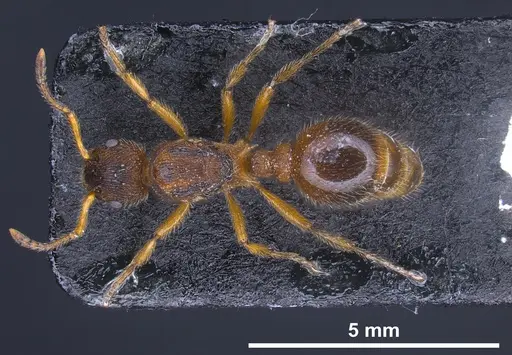
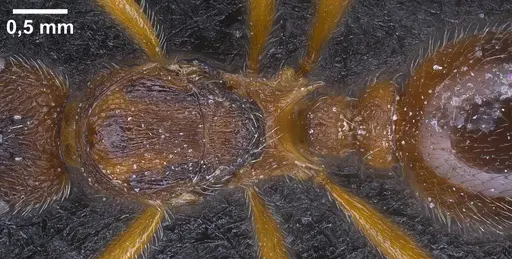
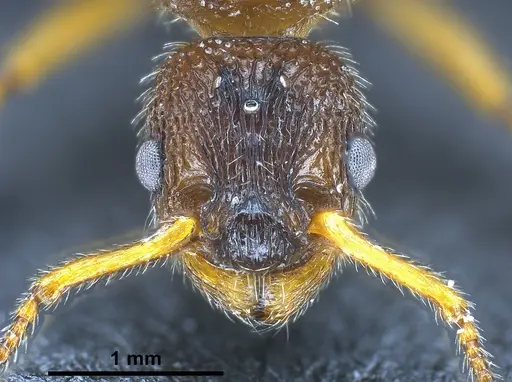
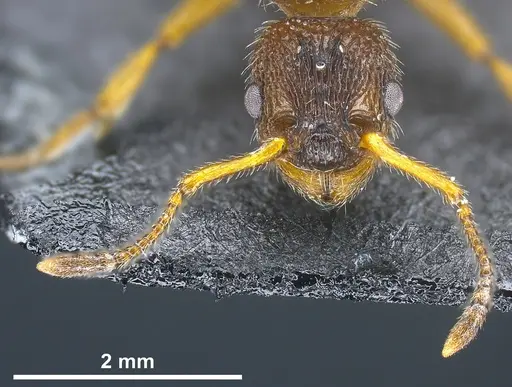
CASENT0900283
View on AntWeb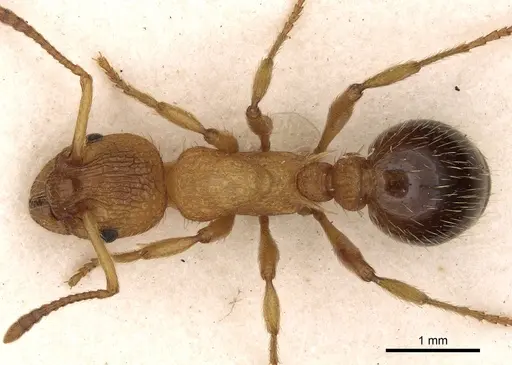
Literature
Loading...Loading products...