

Myrmica hirsuta
- Scientific Name
- Myrmica hirsuta
- Tribe
- Myrmicini
- Subfamily
- Myrmicinae
- Author
- Elmes, 1978
- Distribution
- Found in 8 countries
Myrmica hirsuta Overview
Myrmica hirsuta is an ant species of the genus Myrmica. It is primarily documented in 8 countries , including Finland, United Kingdom of Great Britain and Northern Ireland, Greece. Detailed taxonomic data and occurrence records can be further explored via authoritative databases such as AntWeb or the Global Biodiversity Information Facility (GBIF).
Myrmica hirsuta
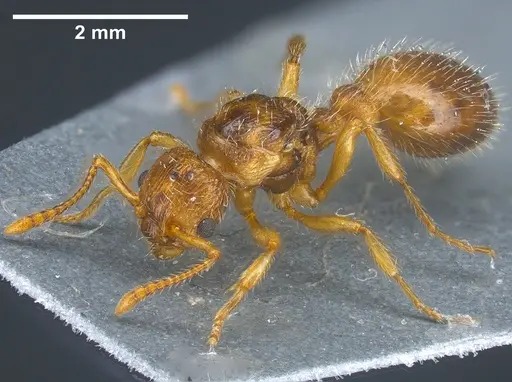
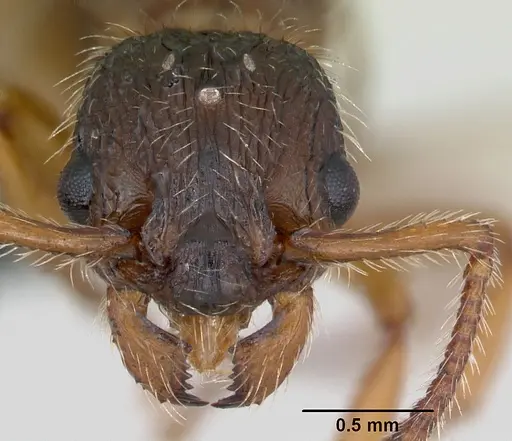
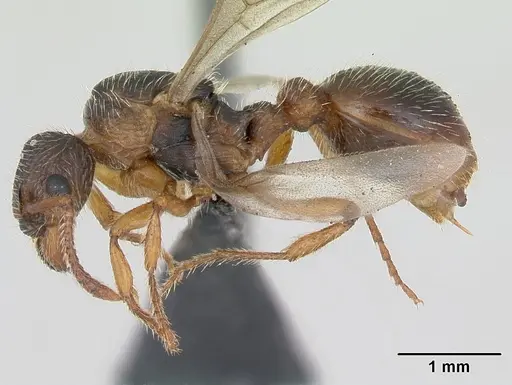
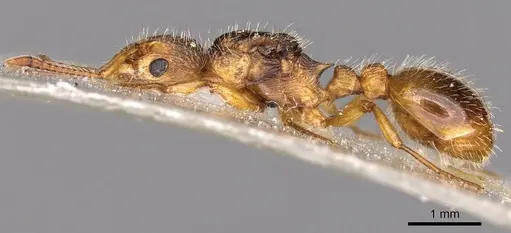
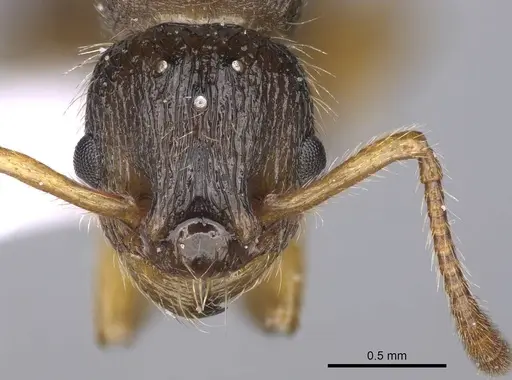
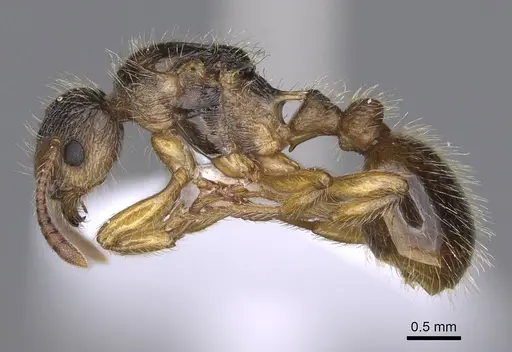
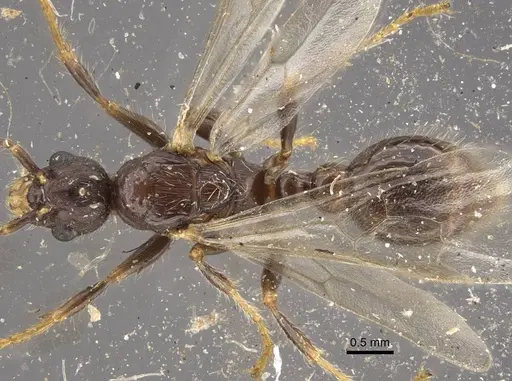
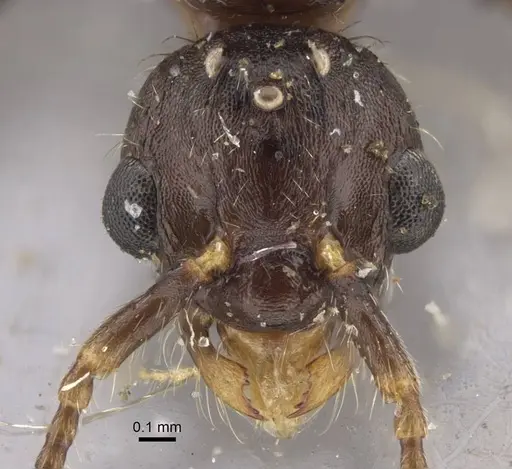
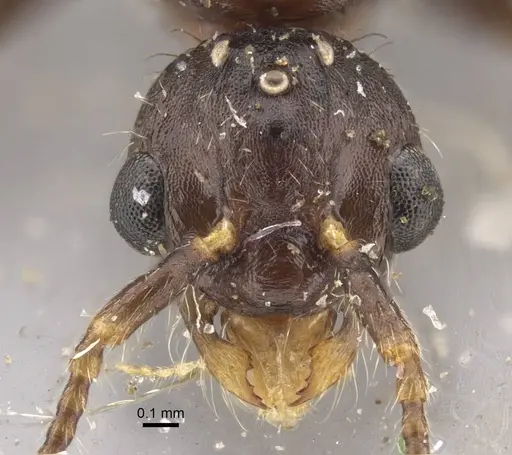
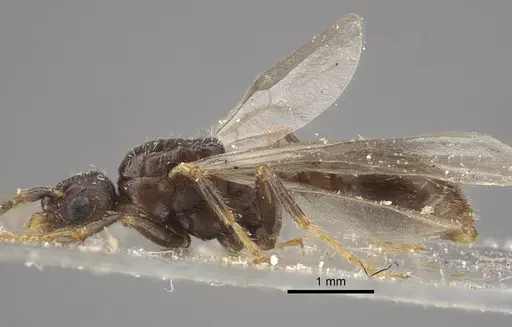
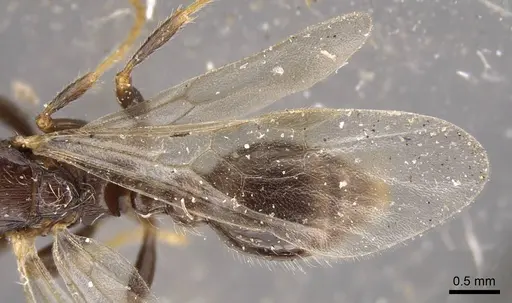
Myrmica hirsuta is a small, distinctive ant species known for its extremely long, erect hairs covering its entire body. Queens measure around 5mm and are notably smaller than their host species (Myrmica sabuleti), with a conspicuously broad postpetiole and abundant pilosity that makes them easily recognizable under magnification [1]. This species is an obligatory social parasite, it cannot form its own colonies and instead lives permanently within nests of Myrmica sabuleti (and occasionally Myrmica lonae in northern Europe) [2]. The worker caste has been nearly eliminated through its parasitic lifestyle, only a handful of workers have ever been documented despite extensive searching of host colonies [3]. Found across Western and Central Europe, from southern England through Denmark, Germany, Austria, and recently confirmed in Greece, this species represents an extreme example of social parasitism where the parasite has become dependent entirely on its host [4][5].
Quick Summary
- Difficulty: Expert
- Origin & Habitat: Woodland edges and grasslands across Western and Central Europe, particularly in areas with dense Myrmica sabuleti populations. Prefers warm, dry grassy habitats on south-facing slopes with loose stones, typically at elevations below 700m [6][7].
- Colony Type: Obligatory social parasite, permanently lives within host Myrmica sabuleti colonies. Does not have its own functional worker caste. Multiple parasite queens (up to 20) can coexist in a single host nest [1].
- Colony: Polygyne
- Queen: Socially parasitic
- Size & Growth:
- Queen: 4.5-5.2 mm [1][8]
- Worker: Extremely rare, only documented a few times in scientific literature [3]
- Colony: Not applicable, lives as parasite within host colonies. Up to 20 parasite queens may inhabit a single host nest [1]
- Growth: Unknown, cannot be kept without host colony
- Development: Not applicable, worker caste is virtually absent [3] (This species produces only queens and males. Workers are produced extremely rarely, if ever, in most colonies [2])
- Antkeeping:
- Temperature: Similar to host species requirements, around 20-24°C in captivity [9]
- Humidity: Moderate, typical for Myrmica species,50-70% humidity [9]
- Diapause: Yes, likely requires winter dormancy like other European Myrmica species [9]
- Nesting: Must be kept WITH host Myrmica sabuleti colony. Cannot be maintained independently. Requires naturalistic setup with established host colony under stones or in formicarium [1]
- Behavior: Extremely docile and non-aggressive. Queens move freely within host nest, interacting with host workers without hostility. Queens can suppress host queen reproduction but do not kill the host queen, they use chemical manipulation instead [10]. Queens leave host nests on foot to find new host colonies (no nuptial flight). Males and new queens mate within the host nest [1].
- Common Issues: Cannot be kept without establishing host Myrmica sabuleti colony first, this is the fundamental challenge, Finding Myrmica sabuleti may be difficult depending on your region, they have specific habitat requirements, Parasite queens may be rejected by host colonies, success rate is naturally low, Extremely rare in the hobby, virtually unavailable from suppliers, Legal concerns in some regions where collection of protected species is restricted
Understanding Social Parasitism in M. hirsuta
Myrmica hirsuta represents one of the most extreme examples of social parasitism in ants. Unlike temporary social parasites that invade a host colony, kill the host queen, and then establish their own reproductive colony, M. hirsuta is a permanent inquiline, it lives alongside the host queen indefinitely without killing her [10]. The parasite queen uses chemical signals to suppress the host queen's sexual reproduction, effectively redirecting the host colony's resources toward producing more workers (which benefit the parasite) rather than host sexuals [11]. Remarkably, the parasite queen produces two types of offspring: larger larvae develop slowly, overwinter, and emerge as new reproductive queens the following spring, while smaller larvae develop quickly and become either infertile intercastes (winged workers) or small, often infertile queens in the same season [1]. This complex lifecycle allows the parasite to maintain a presence in the host nest year-round while producing new queens that disperse to find new host colonies.
The Challenge of Keeping This Species
You cannot keep Myrmica hirsuta without first establishing a thriving Myrmica sabuleti host colony. This makes M. hirsuta one of the most difficult ants to keep in captivity, not because of any special care requirements, but because you must successfully maintain two species simultaneously [1]. The parasite queen relies entirely on host workers for food, nest maintenance, and protection. In laboratory settings, researchers have observed M. hirsuta queens actively participating in prey capture alongside host workers, demonstrating that they can integrate into host colony behavior [7]. However, natural infestation rates are low, typically only 1 in 50-100 host colonies are parasitized, and in some areas with very high host densities, up to 50% may be infested [1]. This suggests that host acceptance is not guaranteed and may depend on specific colony conditions or chemical signatures.
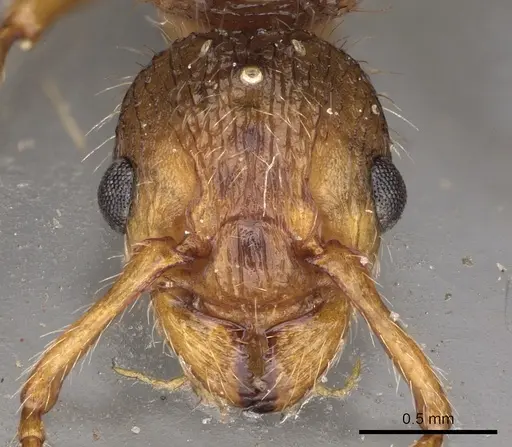
Identifying M. hirsuta
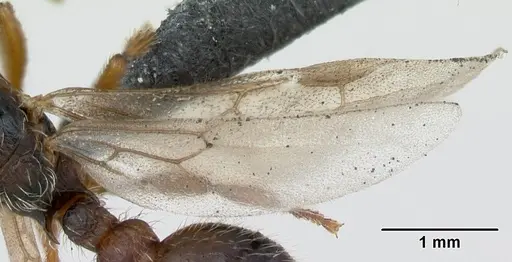
0.56 in M. hirsuta vs [8][13][7]
Host Species Requirements
Myrmica sabuleti, the primary host, has specific habitat requirements that you must understand to maintain a successful colony. They prefer warm, dry grassy areas with loose stones or compacted soil, typical of chalky grasslands, woodland edges, and south-facing slopes [12]. In Central Europe, they are found at lower elevations (below 700m) on xerothermal grasslands [6]. They are not forest ants and will not thrive in overly damp or shaded conditions. M. lonae serves as the host in northern Europe (particularly Finland) where M. sabuleti is absent [12]. If you are attempting to keep this species, you will need to first locate, identify, and establish a healthy M. sabuleti colony from your region, which itself requires understanding local ant ecology and seasonal timing for colony collection.
Reproduction and Dispersal
Unlike most ants that conduct nuptial flights, M. hirsuta queens disperse on foot to find new host colonies. This explains why the species is found locally in areas with very high host densities, new queens cannot travel far without flying [1][13]. Nuptial flights do not occur, instead, mating happens within the host nest, and newly mated queens leave to search for new host colonies on the ground [1]. Research shows queens are present in pitfall traps from August through October, peaking in early September [1]. Some newly mated queens may overwinter first before searching for a host the following spring [1]. This dispersal strategy explains why the species is so localized and why finding it requires examining many host colonies, typically only about 1 in 50-100 host colonies are infested [1].
Frequently Asked Questions
Can I keep Myrmica hirsuta as a pet ant?
No, Myrmica hirsuta is an obligatory social parasite that cannot survive without a host Myrmica sabuleti colony. You would need to keep both species together, which is extremely difficult and rarely attempted even by expert antkeepers. The species is also virtually unavailable in the antkeeping hobby.
What does Myrmica hirsuta eat?
As a social parasite, M. hirsuta relies on food collected by host workers. In laboratory observations, parasite queens do participate in prey capture alongside host workers, but they cannot forage independently. In a mixed colony, they would be fed by host workers through trophallaxis (food sharing).
Where can I find Myrmica hirsuta in the wild?
M. hirsuta is extremely rare and local. It is found only where dense populations of Myrmica sabuleti exist, typically warm, dry grassy areas with loose stones. Even in suitable habitat, only about 1-2% of host colonies are infested. You would need to locate and carefully examine many M. sabuleti nests to find any. In Europe, known localities include southern England, Denmark, Germany, Austria, and recently Greece.
Do Myrmica hirsuta ants sting?
Given their tiny size and parasitic lifestyle, M. hirsuta would not be able to penetrate human skin even if they had a functional stinger. However, they are not aggressive and are rarely encountered outside host nests.
How many queens does a Myrmica hirsuta colony have?
Multiple parasite queens can coexist in a single host nest, up to 20 active queens have been documented in one infested colony. These queens produce approximately 150 new queens annually. The host queen remains alive but her sexual reproduction is suppressed by the parasite.
Does Myrmica hirsuta have workers?
The worker caste is virtually absent. Only three workers have ever been documented in scientific literature, despite examining entire host colonies. The species produces primarily queens and males. Occasionally, small worker-like intercastes may be produced, but these are typically infertile.
When do Myrmica hirsuta nuptial flights occur?
There are no nuptial flights. Queens and males mate within the host nest, and newly mated queens leave on foot to find new host colonies. Queens can be found searching for hosts from August through October, with peaks in early September.
Is Myrmica hirsuta endangered?
Yes, M. hirsuta is listed as Vulnerable on the IUCN Red List and is considered heavily endangered in several European countries including Germany and Poland. It is protected in some regions like Carinthia, Austria. The species is highly localized and depends entirely on healthy host populations.
Can I collect Myrmica hirsuta from the wild?
We strongly advise against this. The species is protected in many areas, extremely rare, and requires expert knowledge to locate and identify. Additionally, successful establishment in captivity requires maintaining both the parasite and its host, an extremely challenging undertaking. Instead, appreciate this fascinating species through research and observation of wild colonies where legal.
References

This caresheet is licensed under CC BY-SA 4.0 .
ANTWEB1041365
View on AntWeb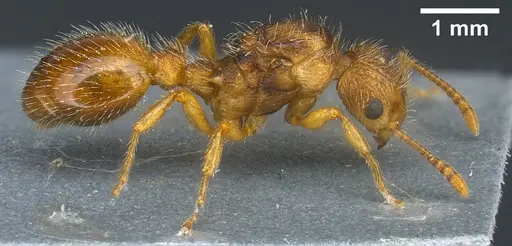
CASENT0172757
View on AntWeb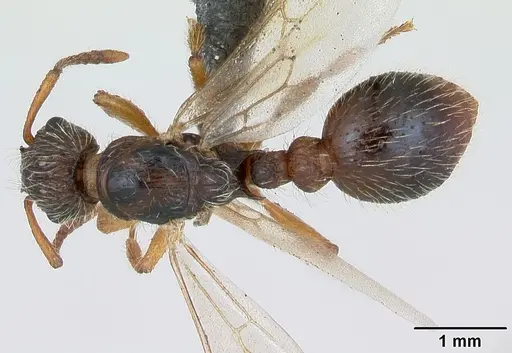
CASENT0900279
View on AntWeb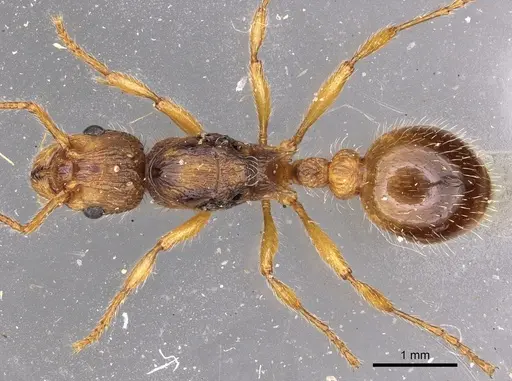
CASENT0914241
View on AntWeb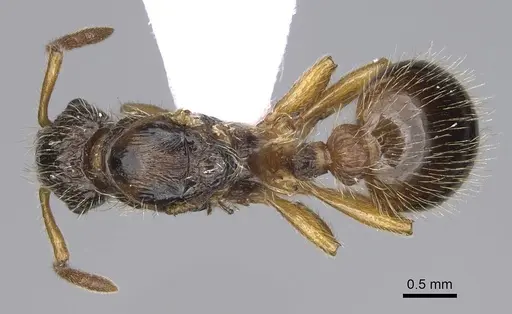
CASENT0917685
View on AntWeb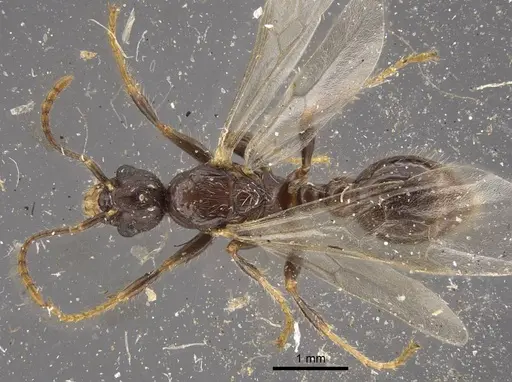
Literature
Loading...Loading products...