

Melophorus clypeatus
- Scientific Name
- Melophorus clypeatus
- Tribe
- Melophorini
- Subfamily
- Formicinae
- Author
- Heterick <i>et al.</i>, 2017
- Distribution
- Found in 1 countries
Melophorus clypeatus Overview
Melophorus clypeatus is an ant species of the genus Melophorus. It is primarily documented in 1 countries , including Australia. Detailed taxonomic data and occurrence records can be further explored via authoritative databases such as AntWeb or the Global Biodiversity Information Facility (GBIF).
Melophorus clypeatus
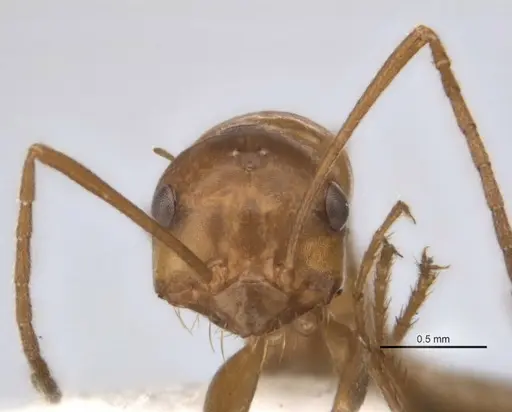
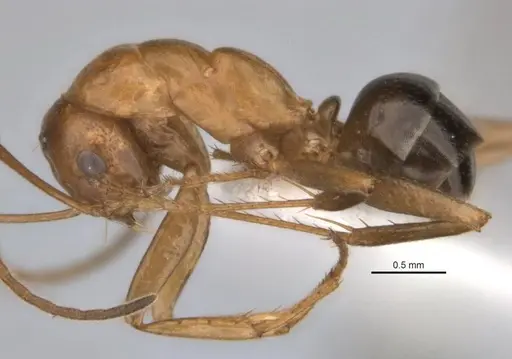
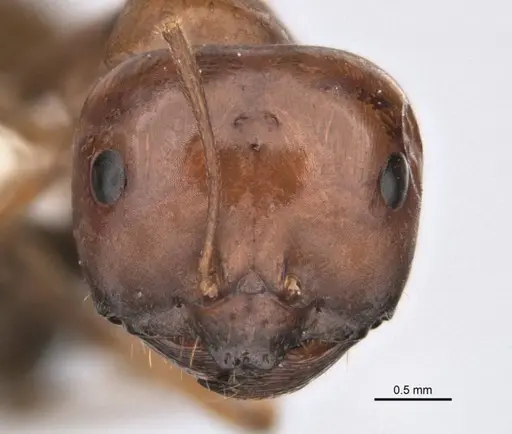
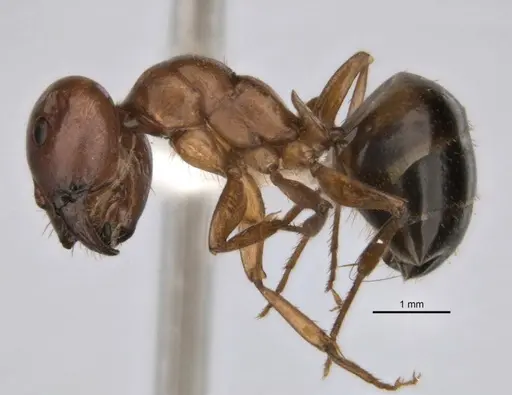
Melophorus clypeatus is a small to medium-sized ant species belonging to the Formicinae subfamily, native to Australia. Workers measure 0.89-2.26mm in head width, with majors being substantially larger than minors. The species is a member of the Melophorus aeneovirens species group and can be identified by its distinctive narrow, rectangular, flanged clypeus (the shield-like plate covering the front of the head). The tibiae have stout, socketed, appressed setae and lack fine pubescence. These ants are known only from the Pilbara region of Western Australia and Mt Isa in Queensland, with most specimens collected from arid to semi-arid areas.
Quick Summary
- Difficulty: Unknown
- Origin & Habitat: Pilbara region of Western Australia and Mt Isa, Queensland. The species inhabits arid to semi-arid regions of northern Australia, similar to related species in the Melophorus genus that are adapted to hot, dry conditions.
- Colony Type: Unknown colony structure. No data on queen number or colony organization exists for this species.
- Size & Growth:
- Queen: Undescribed, estimated 6-8mm based on genus patterns
- Worker: 0.89-2.26mm head width (major workers 2.26mm, minor workers ~0.89mm) [1]
- Colony: Unknown, no colony size data available
- Growth: Unknown
- Development: Unknown, no development data exists for this species. Related Melophorus species in arid Australia typically develop from egg to worker in 4-8 weeks at warm temperatures. (No direct observations of founding or development exist. Estimates based on genus-level patterns for arid-adapted Melophorini.)
- Antkeeping:
- Temperature: Based on arid Australian habitat, likely tolerates warm to hot conditions. Related species from similar habitats thrive at 26-32°C. Provide a thermal gradient allowing workers to self-regulate.
- Humidity: Likely prefers dry to moderate humidity, arid-adapted species. Avoid excessive moisture. Provide a hydration station (test tube water reservoir) but keep the nest area relatively dry.
- Diapause: Possibly reduced activity during dry or cool seasons, but true hibernation is unlikely given the tropical to subtropical range. Some Melophorus species in arid Australia may become less active during winter months.
- Nesting: No specific nesting data exists. Based on related species, likely nests in soil or under stones in arid habitats. Test tube setups work well for founding colonies, provide sand or soil substrate if naturalistic setup desired.
- Behavior: Behavior is unstudied. Based on genus patterns, likely generalist foragers that scavenge and tend honeydew-producing insects. Escape risk is moderate, workers are small but not extremely tiny. Standard escape prevention (fluon barriers) recommended.
- Common Issues: no biological data exists, all care recommendations are educated guesses based on related species, colony size and growth rate are completely unknown, making it difficult to plan feeding and housing, no information on founding behavior, unknown if queen seals herself in (claustral) or forages during founding, nuptial flight timing is unknown, making wild collection difficult to plan, related species may be aggressive or defensive, use caution when handling
Species Identification and Relationships
Melophorus clypeatus was formally described in 2017 by Heterick, Castalanelli, and Shattuck. It belongs to the Melophorus aeneovirens species group, characterized by having a convex, apron-like clypeal margin that covers all or part of the retracted mandibles, and an elongate, oblique propodeum. Within this group, it belongs to the aeneovirens complex. The species can be distinguished from its likely closest relative, M. praesens, by the narrow, rectangular, flanged appearance of the anteromedial clypeal margin in both major and minor workers. The flange has a straight or weakly indented edge. Only ten worker specimens have ever been collected, making this one of the rarest and least-studied Australian ant species. [1]
Distribution and Habitat
Melophorus clypeatus is known from two disjunct populations: the Pilbara region of Western Australia and Mount Isa in Queensland. The Pilbara region is a vast, arid to semi-arid area characterized by rocky ranges, sandplains, and temporary watercourses. Mount Isa lies in the savanna belt of northern Australia, experiencing hot, wet summers and warm, dry winters. Both locations experience extreme temperatures and seasonal rainfall patterns. The species has not been collected frequently enough to determine its true range or habitat preferences within these regions. [1]
Known Biology and Care Challenges
Nothing is known about the biology of Melophorus clypeatus. The only information available comes from morphological descriptions of preserved workers. Researchers speculate that its habits are likely similar to M. praesens, a closely related species, but this remains unconfirmed. This represents a significant challenge for antkeepers, there is no data on founding behavior, colony size, diet preferences, temperature tolerance, or any other aspect of captive care. Any successful keeping recommendations will require significant extrapolation from related species in the Melophorus genus. [1]
Related Species as Care Models
Since direct biological data is unavailable, care must be inferred from related Melophorus species. The genus Melophorus contains many arid-adapted Australian ants, often called 'honey ants' due to their tendency to tend honeydew-producing insects and store sugary liquids. Related species in the aeneovirens group are typically generalist foragers that accept both sugar sources and protein. They are adapted to hot, dry conditions and can tolerate temperature ranges from room temperature to well above 30°C. Starting with conditions suitable for typical Melophorus species, warm (26-30°C), relatively dry, with access to sugar water and protein, is the most reasonable approach until species-specific observations can be made.
Frequently Asked Questions
How do I care for Melophorus clypeatus ants?
Unfortunately, no specific care guide exists because this species has never been studied in captivity. Based on related Melophorus species from arid Australia, provide warm temperatures (26-30°C), relatively low humidity, and a standard diet of sugar water and protein. Start with a test tube setup for founding colonies. This is very much an experimental species, expect to learn through observation and trial and error.
What do Melophorus clypeatus eat?
Diet is unconfirmed for this species. Based on related Melophorus ants, they likely accept sugar water, honey, or nectar, and also hunt small insects or scavenge protein. Offer both sugar sources and small prey items and observe what gets accepted.
How big do Melophorus clypeatus colonies get?
Colony size is completely unknown. No one has ever documented a full colony of this species. Related Melophorus species vary widely in colony size, from dozens to thousands of workers. Expect to be surprised.
Where can I get Melophorus clypeatus?
This is an extremely rare species with very few documented collections. It is unlikely to be available through commercial ant sellers. Most records come from scientific collections in Western Australia and Queensland. Unless you are conducting fieldwork in the Pilbara region or Mt Isa area, obtaining this species is highly unlikely.
What temperature do Melophorus clypeatus need?
Temperature requirements are unconfirmed. Based on their arid Australian habitat (Pilbara region and Mt Isa), they likely tolerate and prefer warm conditions. Start around 26-30°C and observe colony behavior. Provide a thermal gradient so ants can move between warmer and cooler areas.
Do Melophorus clypeatus need hibernation?
Hibernation requirements are unknown. The Pilbara region and Mt Isa experience mild winters, so true hibernation is unlikely. Some related species may reduce activity during cooler months but do not require a cold diapause period.
Is Melophorus clypeatus good for beginners?
This species is not recommended for beginners. Almost nothing is known about its care requirements, making successful keeping very challenging. Beginners should start with well-documented species like Lasius niger, Camponotus species, or Myrmica rubra that have established care protocols.
How long does it take for Melophorus clypeatus to develop from egg to worker?
Development time is completely unknown, no one has ever documented the brood development of this species. Based on related Melophorus species in arid Australia, development likely takes 4-8 weeks at warm temperatures, but this is purely speculative.
Can I keep multiple Melophorus clypeatus queens together?
Colony structure is unconfirmed. No data exists on whether this species is single-queen (monogyne) or multi-queen (polygyne). Do not attempt to combine unrelated queens until more is known about their social structure.
References

This caresheet is licensed under CC BY-SA 4.0 .
JDM32-001497-1
View on AntWeb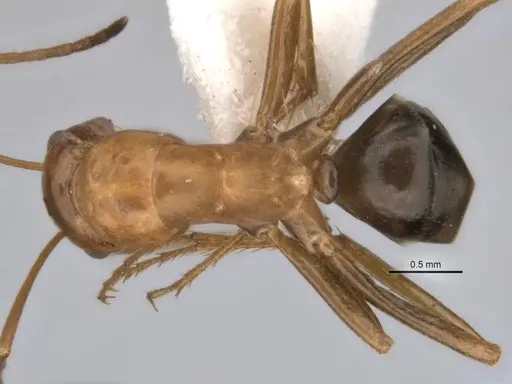
JDM32-001497-2
View on AntWeb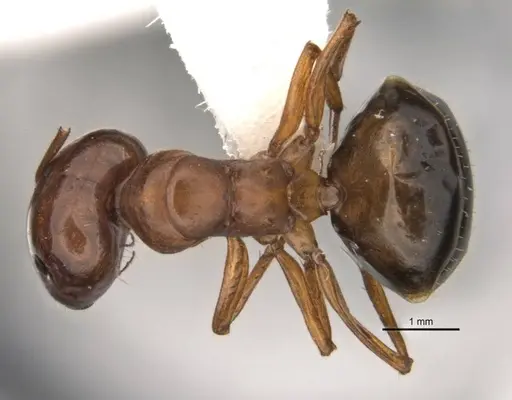
Literature
Loading...Loading products...