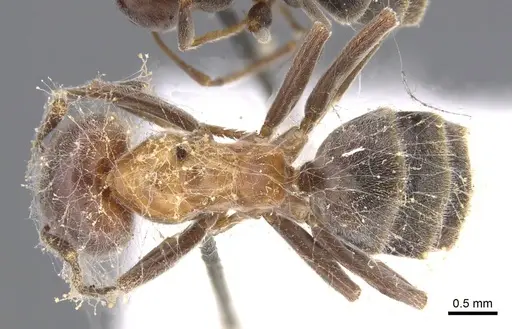
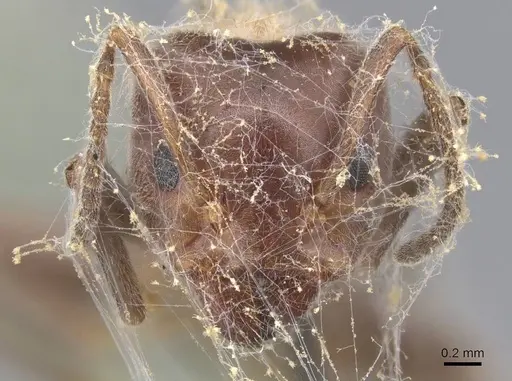
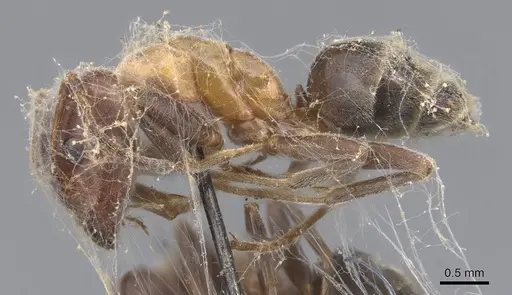
Liometopum microcephalum shows a May to July flight window. Peak activity occurs in June, with nuptial flights distributed across 3 months.
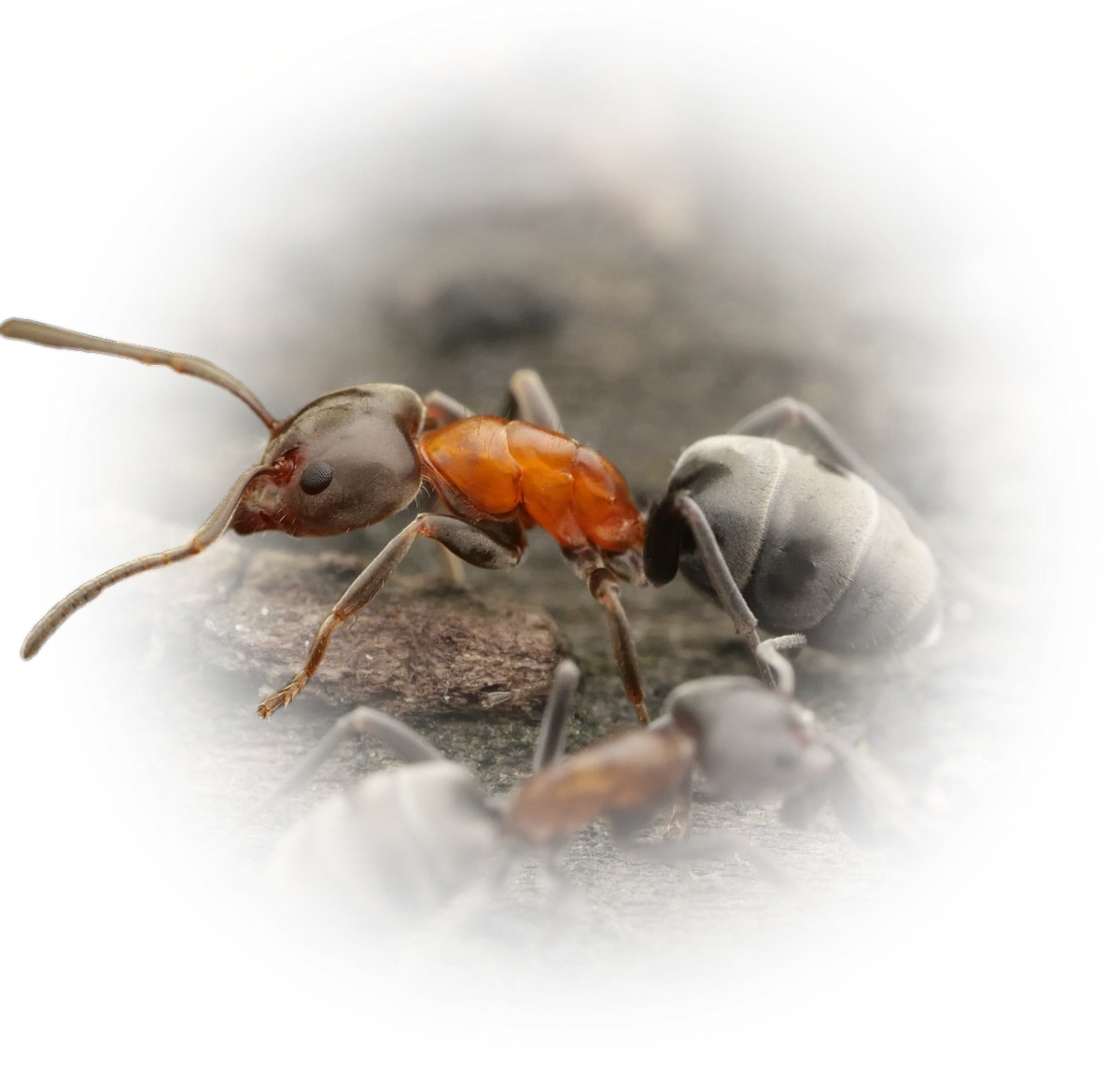
Liometopum microcephalum
- Scientific Name
- Liometopum microcephalum
- Tribe
- Tapinomini
- Subfamily
- Dolichoderinae
- Author
- Panzer, 1798
- Common Name
- Small-headed tree ant
- Distribution
- Found in 12 countries
- Nuptial Flight
- from May to July, peaking in June
Liometopum microcephalum Overview
Liometopum microcephalum (commonly known as the Small-headed tree ant) is an ant species of the genus Liometopum. It is primarily documented in 12 countries , including Austria, Bulgaria, Czechia. Detailed taxonomic data and occurrence records can be further explored via authoritative databases such as AntWeb or the Global Biodiversity Information Facility (GBIF).
The nuptial flight of Liometopum microcephalum is a significant biological event, typically occurring from May to July, peaking in June. During this time, winged queens and males leave the nest to mate and establish new colonies.
Liometopum microcephalum - "Small-headed tree ant"
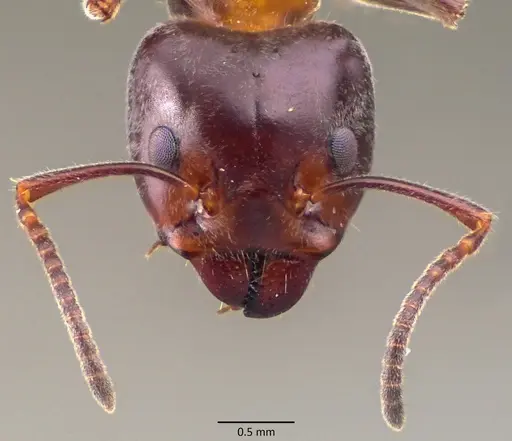
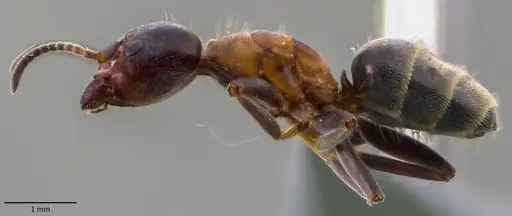
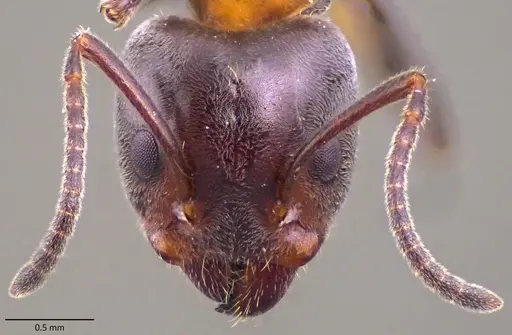
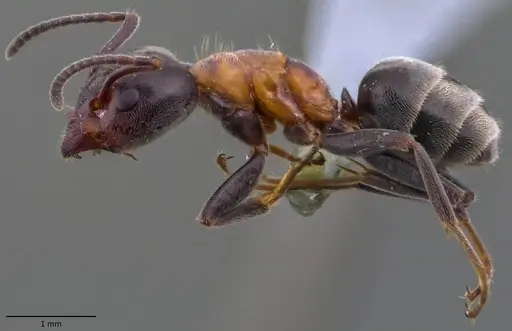
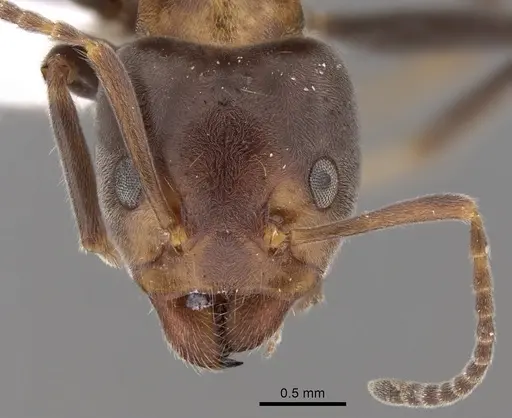
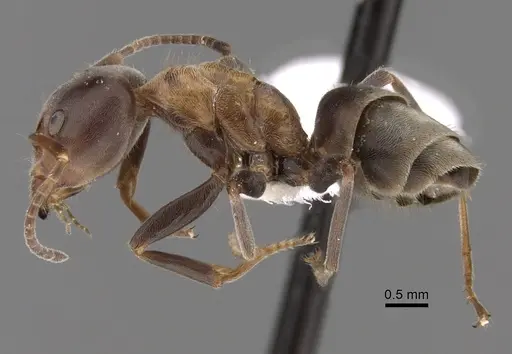
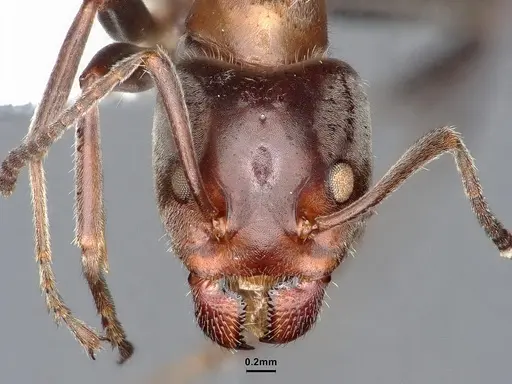
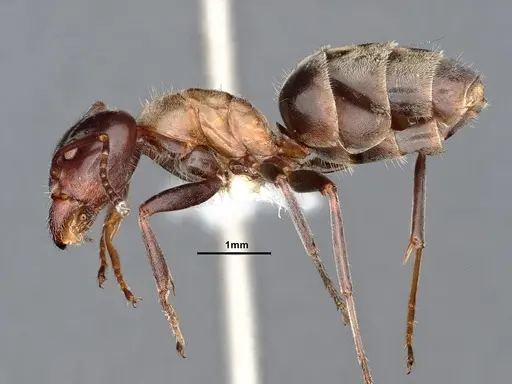
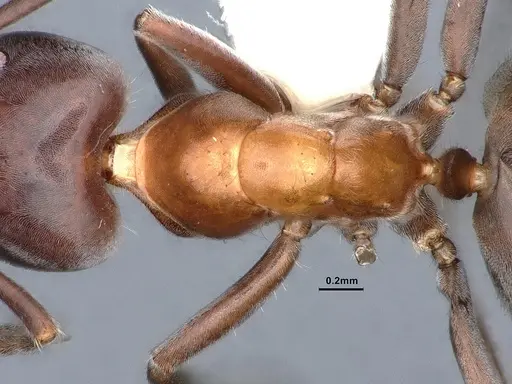
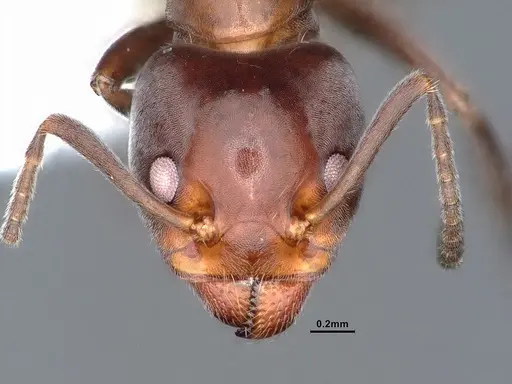
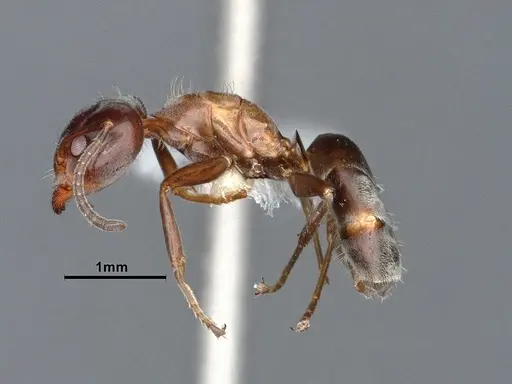
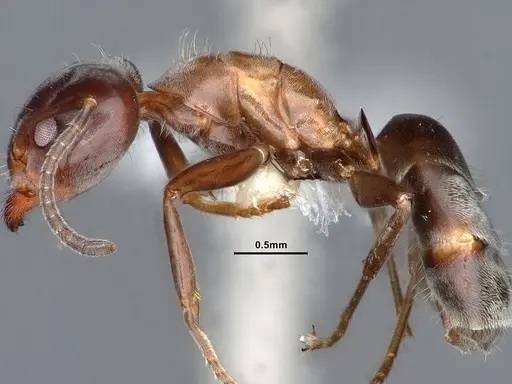
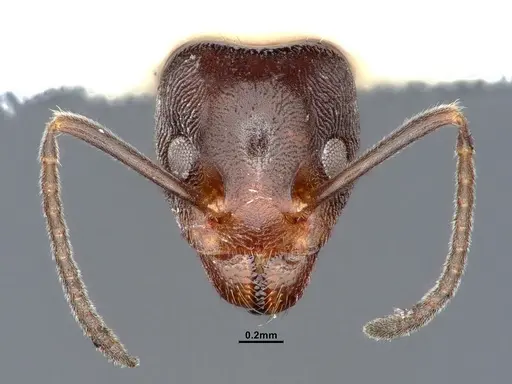
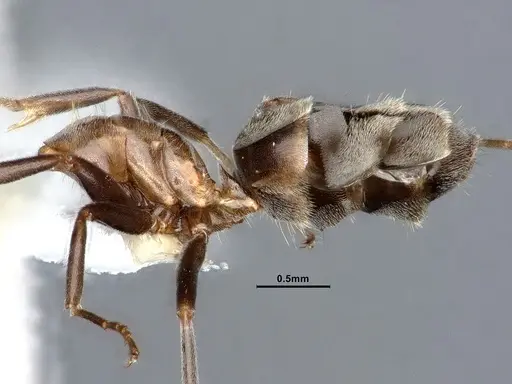
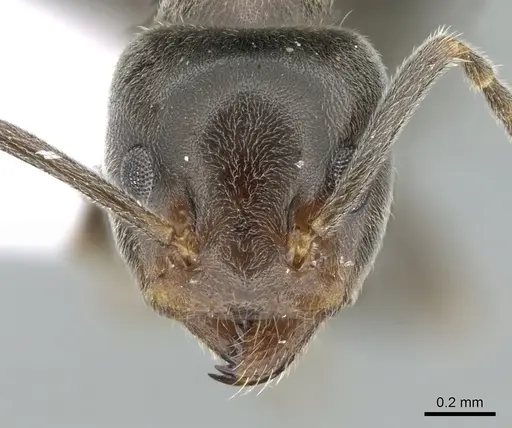
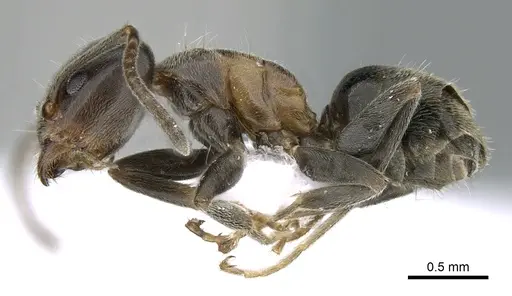
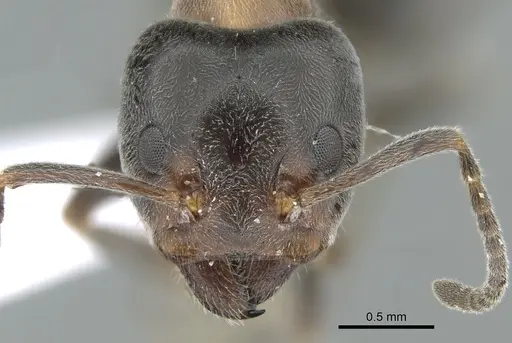
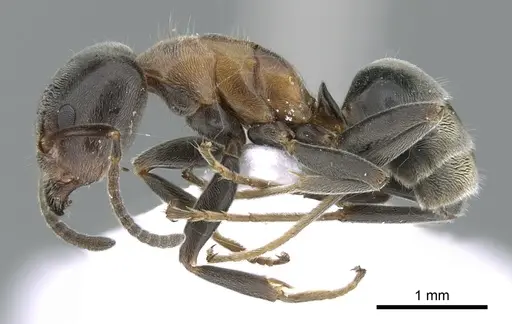
Liometopum microcephalum is the only Liometopum species found in Europe. Workers measure 3-7 mm and show striking bicolored coloration: the mesosoma is yellowish to rusty red, while the head and gaster are dark brown to black. The gaster has a distinctive blue-grey silky sheen from dense fine hairs. This is a polymorphic species, workers vary considerably in size within a single colony, from tiny minors to much larger majors with well-developed ocelli. Queens are large at 10-11 mm and dark brown. Colonies are enormous, reaching hundreds of thousands of workers spread across multiple nest trees. This is a tree-dwelling species that builds carton nests inside hollows of old living trees, primarily oaks, several meters above ground [1][2][3].
This ant maintains extensive trail networks connecting nest trees to foraging trees where they tend aphids. They are fiercely aggressive and defend their territories with powerful bites and anal gland secretions. In European ecosystems, they rank at the top position in ant assemblages. The species is thermophilous and reaches its northern distribution limit in southern Moravia, Czech Republic, where it is critically endangered due to habitat loss [4][5].
Quick Summary
- Difficulty: Expert
- Origin & Habitat: 1.5m) for nesting. Found at altitudes up to 1078m in Greece, most records from low altitude [2][6][4].
- Colony Type: Polydomous, single colony occupies several permanent and temporary nests in different trees. Colony size reaches hundreds of thousands of workers. Queen number uncertain, may have multiple queens or multiple satellite nests [4][3][7].
- Size & Growth:
- Antkeeping:
- Temperature: Thermophilous species, keep warm, around low-to-mid 20s°C. Provide temperature gradient allowing workers to choose preferred warmth [5].
- Humidity: Moderate to high, naturally inhabit humid floodplain forests and tree cavities. Keep nest substrate moderately moist but not waterlogged.
- Diapause: Yes, in northern parts of range (Czech Republic), activity drops sharply in September and they are active until mid-October. Workers last seen in late November in Ukraine. Requires winter rest period at cool temperatures (10-15°C) for 2-3 months [8][3].
- Nesting: Extremely difficult to keep in captivity. Requires access to tree cavities or equivalent structures. Build carton nests inside tree hollows by chewing rotted wood and mixing with saliva. Need multiple connected nesting sites (polydomous). No established captive husbandry methods exist.
- Behavior: Extremely aggressive and territorial. Workers actively defend nest trees, foraging trails, and aphids against intruders including other ant species and humans. When threatened, they stand on hind legs, raise gaster, spread mandibles wide, and sway side to side. They use both biting and anal gland secretions for defense. Workers maintain permanent trails between trees and can travel up to 80m from nest. They navigate primarily by vision and respond to movement. Peak activity occurs in morning (8-10 AM) and afternoon (2-4 PM), with less activity around midday. They tend aphids for honeydew but also hunt prey including insects, earthworms, and millipedes [4][8].
- Common Issues: requires tree cavities and polydomous colony structure that cannot be replicated in captivity, extremely aggressive and will defend territory vigorously, handling requires extreme caution, colony size reaches hundreds of thousands, requires enormous space and resources, critically endangered in much of range, protected by law in several countries, temperature requirements are specific, needs warm conditions year-round, no established captive husbandry exists, not recommended for captivity
Nuptial Flight Activity Analysis 86 observations
Flight Activity by Hour 86 observations
Liometopum microcephalum nuptial flight activity peaks around 13:00 during the late morning to early afternoon. Activity is spread across a 23-hour window (00:00–22:00). A secondary activity peak occurs around 17:00. Times may be influenced by human observation patterns.
Why This Species Is Not Recommended for Captivity
Liometopum microcephalum is one of the most difficult ant species to keep in captivity and is generally not recommended for ant keepers, even experienced ones. This species is polydomous, meaning a single colony occupies multiple nests across different trees. They build carton nests inside tree cavities by chewing rotted wood and mixing it with saliva, creating a papier-mâché-like material. In the wild, colonies maintain permanent trails connecting nest trees to foraging trees, with territories covering 300-600 m². Replicating this in captivity is essentially impossible. Additionally, this species is critically endangered in many parts of its range (Czech Republic, Austria, Slovakia) and is protected by law. Capturing wild colonies would be harmful to already fragmented populations [4][3][7].
Natural History and Biology
L. microcephalum is a thermophilous species with a sub-Mediterranean to Pontocaspic distribution. It ranges from northern Italy through the Balkans to Asia Minor and the Caucasus, with the northern limit in southern Moravia (Czech Republic) and Slovakia. In the northern parts of its range, it is strongly associated with floodplain forests of major rivers (Dyje/Morava, Danube, Dnieper), while in southern areas it occurs in various wooded habitats including oak forests and olive plantations [4][2].
The species shows strong preference for oak trees for nesting, 94% of nests in a Czech study were in oaks. Nest trees are typically old (100+ years), with trunk diameter over 1.5m and height 5-35m. The ants use existing cavities created by wood-boring insects and enlarge them. Nest entrance height is typically 2-6m above ground, with entrance holes 2-25cm in diameter [3][9].
Colony structure is polydomous, a single colony occupies several permanent and temporary nests in different trees. The largest documented colony had 7 permanent and 6 temporary nests, visiting 23 foraging trees. Workers maintain a network of permanent trails connecting these trees, with some trail segments in use for years. Territory size ranges from 300-600 m² depending on colony size [3][4].
Foraging and Diet
L. microcephalum has a broad trophic spectrum combining two major food sources. The first is trophobiosis, they tend aphids of the genus Stomaphis (particularly S. quercus and S. longirostris) and Lachnus roboris. These aphids overwinter in ant nests and are carried to tree crowns in spring. Workers collect honeydew as the main liquid food transported in their crop. Studies show workers descending from foraging trees have significantly higher sugar content than those ascending [5][8].
The second major food source is animal prey. Despite earlier assumptions that they were exclusively predatory, research shows they are opportunistic hunters taking a wide variety of prey including: spiders, millipedes, earthworms, various insect larvae and adults, and even other ant species. They use anal gland secretion to mark larger prey, which attracts additional workers to help transport it. Bait experiments show strong preference for protein baits (tuna) over sugar baits (honey), especially in summer months [8][4].
Workers are most active in morning (8-10 AM) and afternoon (2-4 PM), with noticeably less activity around midday. Peak activity occurs in June-July. Foraging distance can reach 80m from the nest tree. They navigate primarily by vision and can detect moving objects from about 2 meters away [8][10].
Competition and Defense
L. microcephalum is classified as a behaviorally dominant species, it significantly influences the structure of ant communities wherever it occurs. It competes aggressively for foraging trees and territory with other dominant ants, particularly Lasius fuliginosus and Formica rufa. However, direct one-on-one encounters often result in L. microcephalum losing to L. fuliginosus due to the latter's paralyzing chemical secretions. Their strength lies in coordinated group action rather than individual combat [4][11].
When defending, workers assume a dramatic threat posture: standing on hind legs with gaster raised, mandibles spread wide, and rocking side to side. They defend not just nest trees but entire territories including foraging trees and trails. The anal gland secretion serves multiple functions, it repels enemies, marks prey to attract nestmates, and triggers alarm behavior among conspecifics. The secretion has a distinctive smell described as similar to Tapinoma [4][12].
Despite their aggression, they tolerate certain other species. Dolichoderus quadripunctatus can coexist on the same nest trees, nesting in small dead branches at great heights with colonies of only dozens of individuals [4].
Conservation Status
L. microcephalum is red-listed as critically endangered or threatened across much of its northern range. In the Czech Republic, it is classified as critically endangered. In Austria (Lower Austria), it is Category 1 (threatened with extinction). In Slovakia, it is the only protected ant species. The main threats are loss of suitable nesting trees (old-growth floodplain forests) due to river regulation, forestry practices, and urban development [13][9][14].
The Czech population represents the northern global limit. Construction of the Nové Mlýny reservoirs on the Dyje river in the 1970s-1980s flooded about 1100 hectares of floodplain forests, causing significant population decline. No colonies are found north of the reservoirs today. The current distribution in Czech Republic is fragmented along the lower reaches of Dyje and Morava rivers [9][7].
In Greece, it is considered uncommon but is recorded from multiple regions including the Aegean Islands, Ionian Islands, and mainland areas. It inhabits oak forests, olive plantations, and stream valleys, mostly at low altitudes [2][15].
Frequently Asked Questions
Can I keep Liometopum microcephalum as a pet ant?
No, this species is not suitable for captive keeping. They require tree cavities for nesting, maintain polydomous colonies across multiple trees, and need territories of 300-600 m². These requirements cannot be replicated in any standard ant setup. Additionally, they are critically endangered in many parts of their range and are protected by law in several countries.
What do Liometopum microcephalum ants eat?
They have a varied diet combining honeydew from tended aphids (Stomaphis and Lachnus species) and animal prey including insects, spiders, millipedes, and earthworms. Bait experiments show they strongly prefer protein sources like tuna over sugar baits, especially in summer. Workers also collect seeds.
How big do Liometopum microcephalum colonies get?
Colonies can reach hundreds of thousands of workers. A single colony occupies multiple nest trees (documented up to 7 permanent and 6 temporary nests) with territories covering 300-600 m². They maintain permanent trails connecting these trees.
Where do Liometopum microcephalum ants live?
They are tree-dwelling ants that nest inside hollows of old living trees, primarily oaks but also willows, poplars, maples, and other species. Nests are built several meters above ground using a carton material made from chewed wood and saliva. They occur from southern Europe (Italy) to Iran, with the northern limit in southern Moravia (Czech Republic).
Are Liometopum microcephalum endangered?
Yes, they are critically endangered in the northern parts of their range (Czech Republic, Austria, Slovakia) and protected by law. The main threats are loss of old-growth trees and floodplain forest habitats due to river regulation, forestry, and development. They are considered indicator species for ecosystem health.
How long do Liometopum microcephalum queens live?
Exact lifespan is unknown. Given the colony longevity and size, queens likely live for many years like other long-lived ant species. Colonies persist for decades in established nest trees.
When do Liometopum microcephalum have nuptial flights?
Nuptial flights occur from May to July, during afternoon hours. Males leave the nest first, followed by females. They climb into the tree crown where mating occurs. Swarming lasts 2-3 days per colony depending on conditions.
Report an Issue
The current care sheet is based fully on literature. See inconsistencies, or something that's incorrect? Please , it will be resolved after review from an admin. Contributing to the blogs tab also helps providing information, to make us be able to further improve the caresheets. Thank you for your support!
References

This caresheet is licensed under CC BY-SA 4.0 .
ANTWEB1060146
View on AntWeb
ANTWEB1060147
View on AntWeb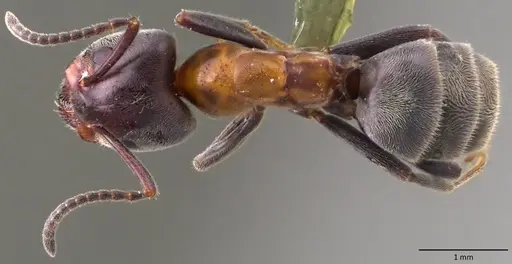
CASENT0249747
View on AntWeb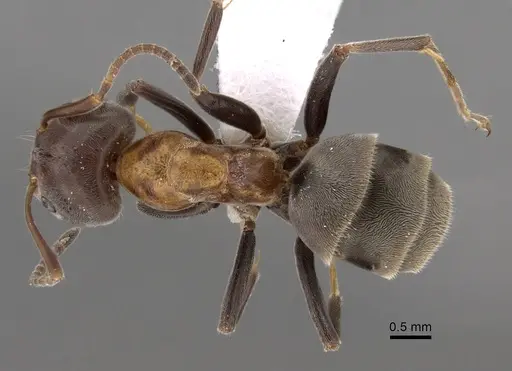
CASENT0884419
View on AntWeb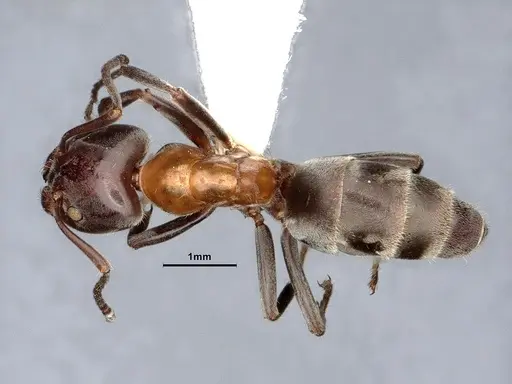
CASENT0885473
View on AntWeb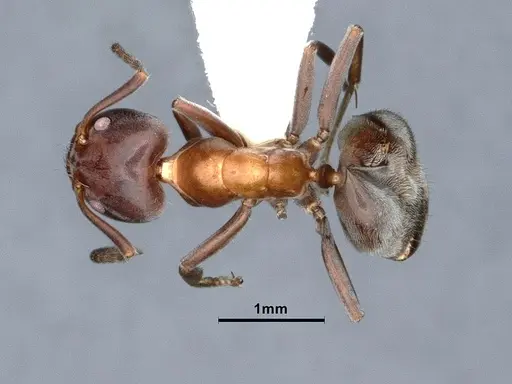
CASENT0885474
View on AntWeb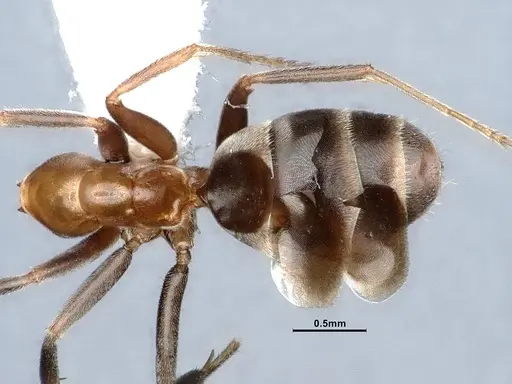
CASENT0906112
View on AntWeb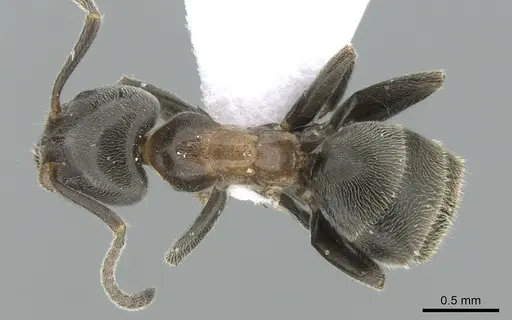
CASENT0906113
View on AntWeb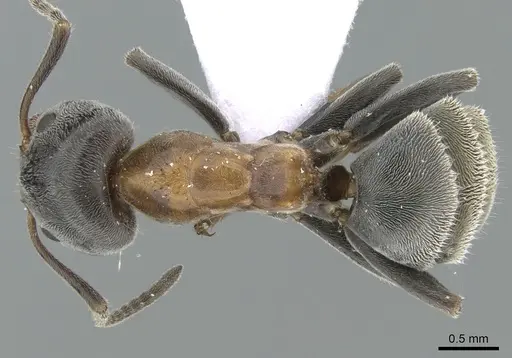
CASENT0915551
View on AntWeb