

Leptothorax athabasca
- Scientific Name
- Leptothorax athabasca
- Tribe
- Crematogastrini
- Subfamily
- Myrmicinae
- Author
- Buschinger & Schulz, 2008
- Common Name
- Athabasca Thin Ant
- Distribution
- Found in 2 countries
Leptothorax athabasca Overview
Leptothorax athabasca (commonly known as the Athabasca Thin Ant) is an ant species of the genus Leptothorax. It is primarily documented in 2 countries , including Canada, United States of America. Detailed taxonomic data and occurrence records can be further explored via authoritative databases such as AntWeb or the Global Biodiversity Information Facility (GBIF).
Leptothorax athabasca - "Athabasca Thin Ant"
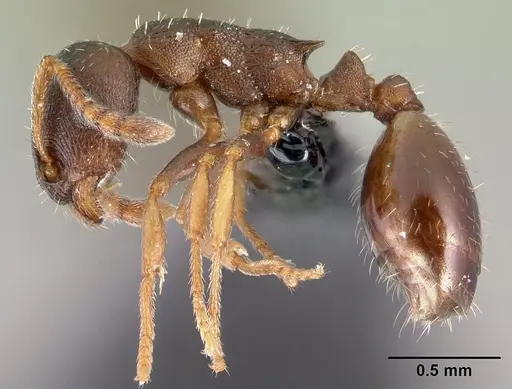
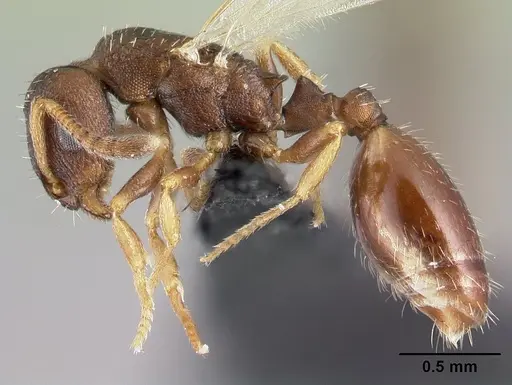
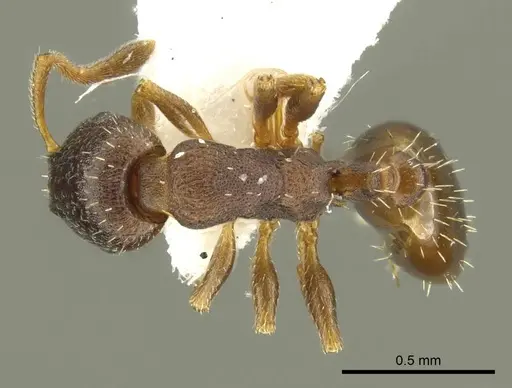
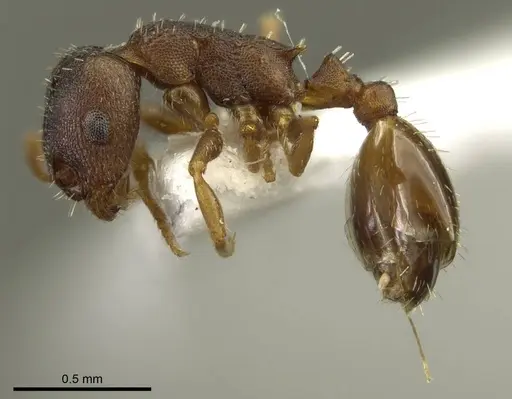
Leptothorax athabasca is a tiny, recently described ant species discovered in 2008 from a single location in Jasper National Park, Alberta, Canada. Workers measure just 3.2-3.3mm and are uniformly dark brown in color, while queens are slightly larger at 3.0-3.8mm. This species has a distinctive sharp crest on top of its petiole and an unusually flat mesosoma, physical adaptations that allow it to squeeze into narrow rock crevices where it exclusively nests [1]. The species appears to be extremely rare with an apparently restricted range, known only from rock crevices along the Athabasca River near the falls [1]. Unlike most Leptothorax species that nest in dead wood, this species has adapted to life in tight rock cracks, making it a unique challenge for antkeepers [1].
Quick Summary
- Difficulty: Expert
- Origin & Habitat: Jasper National Park, Alberta, Canada at approximately 1200m elevation. Found exclusively in rock crevices on a south-exposed river bank near Athabasca Falls. The habitat experiences occasional flooding and features horizontally split schist-like sandstone cliffs within an open coniferous forest [1].
- Colony Type: Facultatively polygynous, colonies can have either a single queen or multiple reproductive queens (2-4 queens documented). Most related Leptothorax species show this flexibility [1].
- Colony: Optionally polygyne
- Founding: Claustral
- Size & Growth:
- Queen: 3.0-3.8 mm [1]
- Worker: 3.2-3.3 mm [1]
- Colony: Approximately 50-100 workers [1]
- Growth: Unknown, likely slow to moderate based on small colony size
- Development: Unknown, no direct data available. Based on typical Leptothorax patterns, expect 6-10 weeks at optimal temperature. (Development timeline has not been directly studied for this species. Related Leptothorax species typically take 6-10 weeks from egg to worker.)
- Antkeeping:
- Temperature: Unknown for this species. Based on its Canadian origin and high-elevation habitat (1200m), it likely prefers cool conditions, probably around 15-21°C. Do not overheat. Start with room temperature and observe colony behavior.
- Humidity: Likely requires moderate to high humidity given its rock crevice nesting preference. Keep the nest substrate consistently moist but not waterlogged. The natural habitat along a river bank would provide consistent moisture.
- Diapause: Yes, given its Canadian origin, this species almost certainly requires a winter hibernation period. Expect 3-4 months at cold temperatures (5-10°C) during winter.
- Nesting: This species nests exclusively in narrow rock crevices, a unique trait among North American Leptothorax. The flat mesosoma is an adaptation to tight spaces. In captivity, provide narrow chambers and passages. A Y-tong nest with tight, shallow chambers or a small acrylic formicarium with narrow tunnels would work well. Avoid large open spaces.
- Behavior: This is a shy, non-aggressive species typical of the genus. Workers are small and likely timid. Escape prevention should be moderate, while not the tiniest ants, they can still squeeze through small gaps. They probably forage individually for small prey and honeydew. The species shows facultatively polygynous colony structure, meaning you may encounter multiple queens in established colonies [1].
- Common Issues: this species has never been documented in the antkeeping hobby, no captive care protocols exist, extreme rarity makes obtaining a colony nearly impossible, the restricted range (single known location) means wild collection is not feasible for hobbyists, specific temperature and humidity requirements are completely unknown, rock crevice nesting is difficult to replicate in standard formicaria
Discovery and Rarity
Leptothorax athabasca was only described in 2008 by Buschinger and Schulz, making it one of the most recently discovered North American ant species. It is known from a single location, rock crevices along the Athabasca River in Jasper National Park, Alberta, Canada. The species appears to have an extremely limited range, which is not unusual among the Formicoxenini tribe but makes it particularly special. Intensive searching in Alberta has not revealed any other populations [1]. This rarity means the species is essentially unavailable to antkeepers and has never been kept in captivity.
Unique Nesting Adaptations
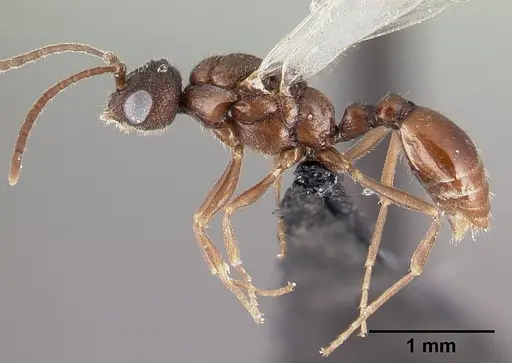
Unlike most Leptothorax species that nest in dead wood or under stones, L. athabasca exclusively inhabits rock crevices. This is reflected in its physical anatomy, the species has an unusually flat mesosoma (the middle body section) in queens and workers, allowing it to squeeze into narrow cracks. The sharp crest on top of the petiolar node is another distinguishing feature that may help it navigate tight spaces [1]. In captivity, you would need to provide extremely narrow chambers and passages to mimic its natural nesting conditions, much tighter than what most formicaria offer.
Colony Structure
This species is facultatively polygynous, meaning colonies can function with either a single queen or multiple queens. Of the seven colonies collected during the original study, two were polygynous with 2 and 4 reproductive queens respectively. The queens had full spermathecae (sperm storage organs) and well-developed ovaries with yolky oocytes, confirming they were actively reproducing [1]. Colony size is small, with wild colonies containing approximately 50-100 adult workers. This is typical for the genus and suggests relatively slow colony growth.
Habitat and Environmental Conditions
The type locality sits at approximately 1200 meters elevation along the Athabasca River. The habitat features a south-exposed river bank with horizontally split, schist-like sandstone cliffs. The area occasionally floods, which the ants likely survive by retreating deep into rock crevices. The surrounding vegetation is open coniferous forest. Above the flood line, related species like Leptothorax retractus were found nesting in dead wood or under flat rocks [1]. This environment suggests the species is adapted to cool temperatures, seasonal flooding, and relatively high humidity.
Identification Tips
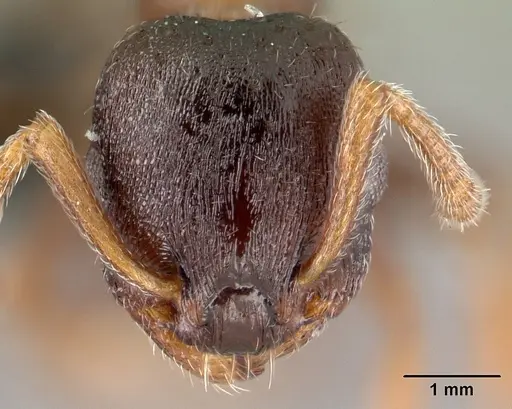
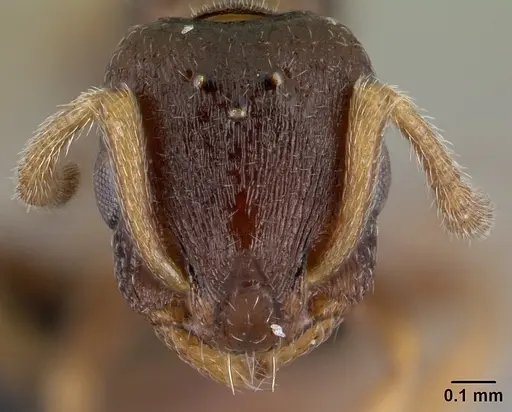
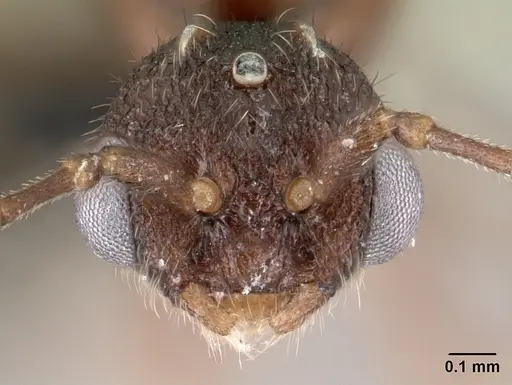
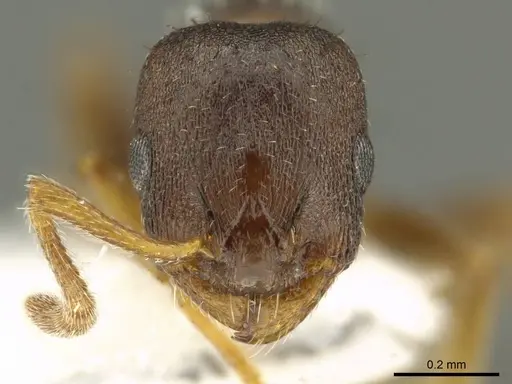
Leptothorax athabasca can be distinguished from related species by several features: it is darker than the sympatric L. retractus but lighter than Leptothorax sp. B from the same area. It is larger than L. muscorum and L. retractus but smaller than L. acervorum. The sharp crest on top of the petiole is very distinctive, most Leptothorax have a more rounded petiolar node. The flat mesosoma in the female castes is another key feature. Unlike L. pocahontas, it lacks long tapering hairs, and unlike L. retractus, it lacks a notch in the anterior margin of the clypeus [1].
Keeping Requirements - What We Don't Know
Honest assessment: this species cannot be legitimately kept by antkeepers. It was only described in 2008,has an extremely limited known range, and has never been documented in the antkeeping hobby. There is no captive care information, no established protocols, and no known colonies outside scientific collections. If you are interested in Leptothorax ants, consider more commonly kept species like Leptothorax acervorum or Leptothorax muscorum which have established care protocols and are available from reputable sellers.
Frequently Asked Questions
Can I keep Leptothorax athabasca ants?
No. This species has never been documented in the antkeeping hobby and is only known from a single location in Jasper National Park, Alberta. It is essentially unavailable to hobbyists and no captive care protocols exist. Consider more commonly available Leptothorax species instead.
How big do Leptothorax athabasca colonies get?
Wild colonies reach approximately 50-100 workers. This is small compared to many ant species and suggests relatively slow colony growth.
What do Leptothorax athabasca ants eat?
Unconfirmed. Like other Leptothorax species, they likely forage for small insects and tend aphids for honeydew. However, no specific dietary studies exist for this species.
Do Leptothorax athabasca ants need hibernation?
Almost certainly yes. This species originates from Alberta, Canada at 1200m elevation, a cold climate with harsh winters. Like other Canadian Leptothorax, they likely require 3-4 months of cold dormancy.
What temperature do Leptothorax athabasca ants need?
Unknown, no captive observations exist. However, based on its Canadian origin and high-elevation habitat, it likely prefers cool conditions (roughly 15-21°C). Do not overheat. Start with room temperature and adjust based on colony behavior if you ever obtain a colony.
How many queens do Leptothorax athabasca colonies have?
They are facultatively polygynous, colonies can have either a single queen or multiple queens (2-4 documented in wild colonies). This flexibility is common among Leptothorax species.
Are Leptothorax athabasca ants aggressive?
Unlikely. Leptothorax species are generally shy and non-aggressive. However, no behavioral observations exist for this specific species in captivity.
Where is Leptothorax athabasca found?
Only known from a single location: rock crevices on the south-exposed river bank just upriver from Athabasca Falls, Jasper National Park, Alberta, Canada (52°39'55"N,117°52'58"W) at approximately 1200m elevation.
How long do Leptothorax athabasca queens live?
Unknown, no longevity data exists for this species. Most Leptothorax queens live several years, but specific data for L. athabasca is unavailable.
What makes Leptothorax athabasca different from other Leptothorax?
This species exclusively nests in rock crevices (most Leptothorax use dead wood), has an unusually flat mesosoma adapted for tight spaces, and has a distinctive sharp crest on the petiolar node. It is also extremely range-restricted, known from only one location.
References

This caresheet is licensed under CC BY-SA 4.0 .
CASENT0178886
View on AntWeb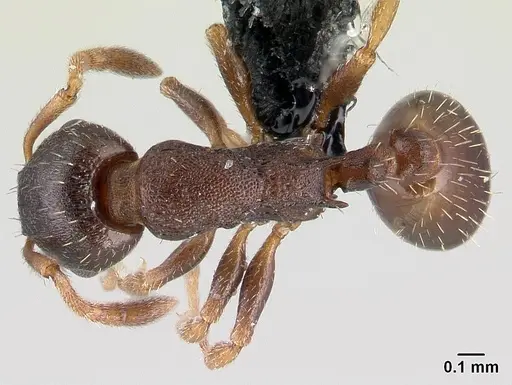
CASENT0178887
View on AntWeb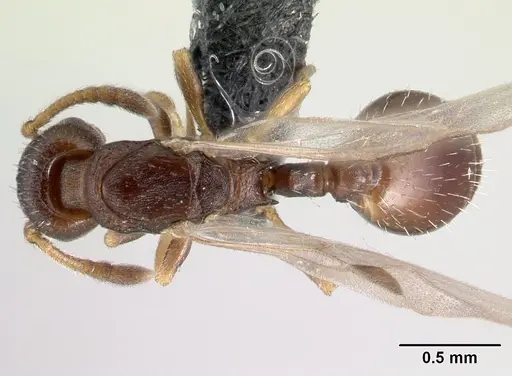
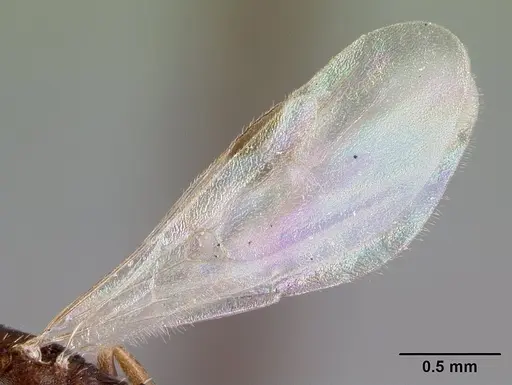
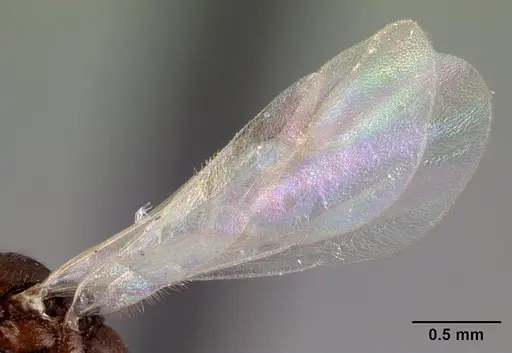
CASENT0178888
View on AntWeb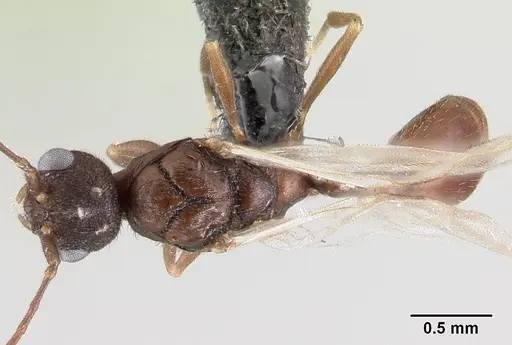
CASENT0919746
View on AntWeb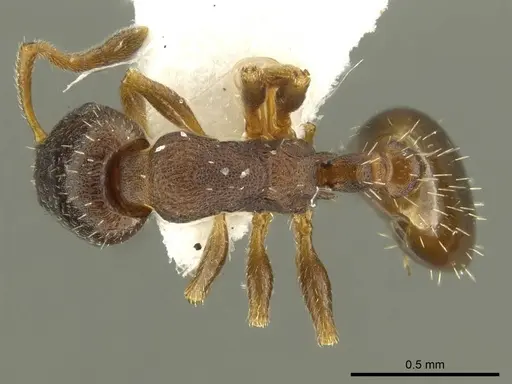
Literature
Loading...Loading products...