

Lasius plumopilosus
- Scientific Name
- Lasius plumopilosus
- Tribe
- Lasiini
- Subfamily
- Formicinae
- Author
- Buren, 1941
- Common Name
- Feathery Citronella Ant
- Distribution
- Found in 1 countries
Lasius plumopilosus Overview
Lasius plumopilosus (commonly known as the Feathery Citronella Ant) is an ant species of the genus Lasius. It is primarily documented in 1 countries , including United States of America. Detailed taxonomic data and occurrence records can be further explored via authoritative databases such as AntWeb or the Global Biodiversity Information Facility (GBIF).
Lasius plumopilosus - "Feathery Citronella Ant"
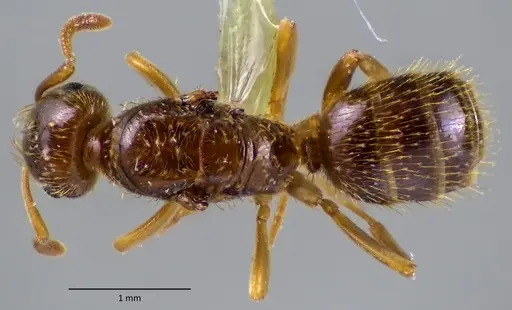
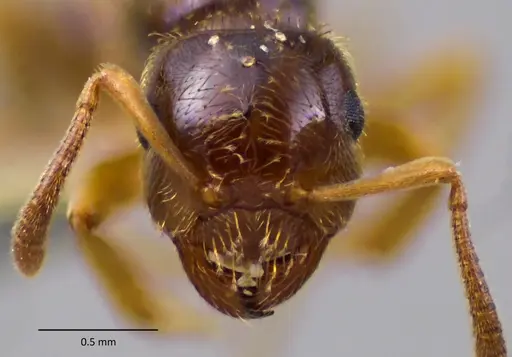
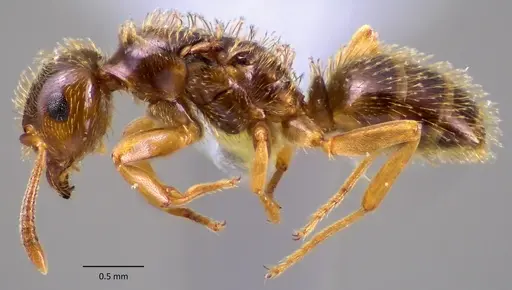
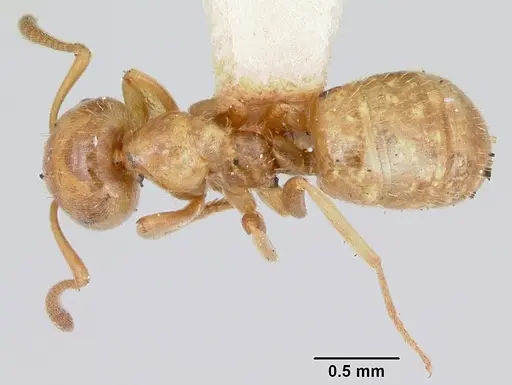
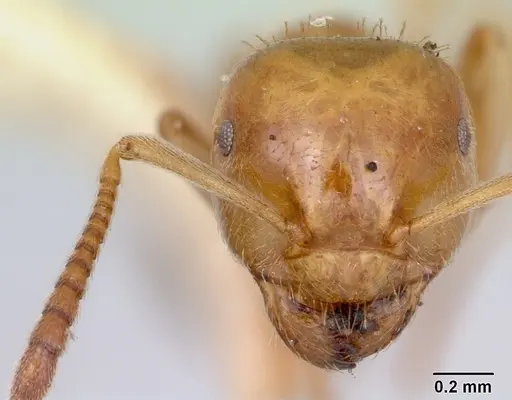
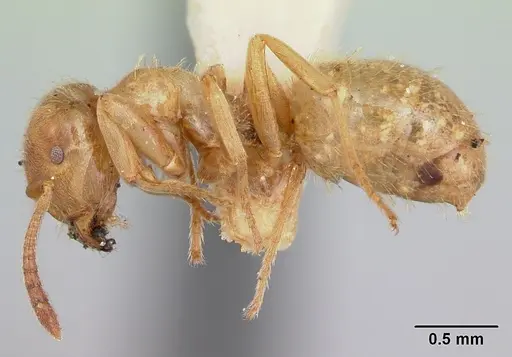
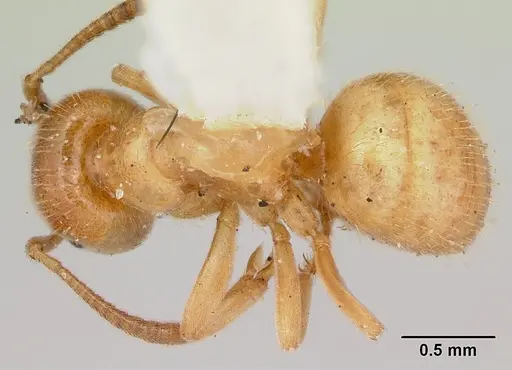
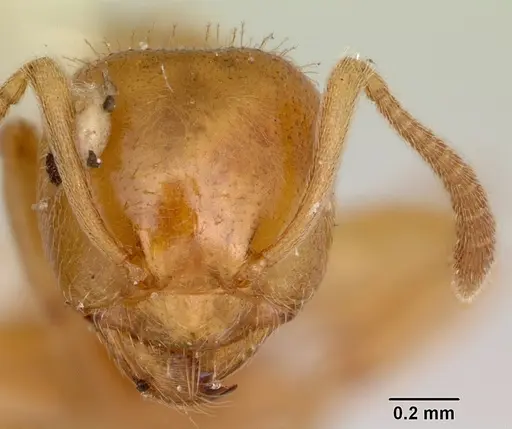
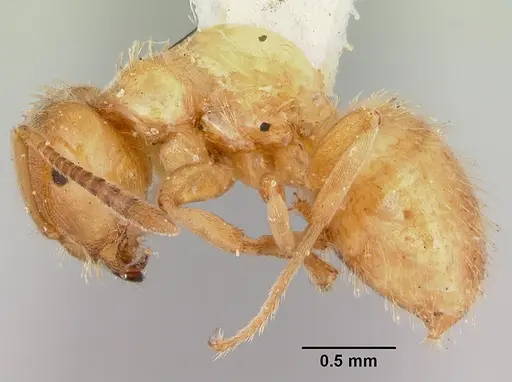
Lasius plumopilosus is a small, rarely collected ant species native to the northeastern United States. Workers are yellow to brownish yellow with distinctive feather-tipped (plumose) hairs covering their bodies, making them unmistakable within the claviger species group. Queens are brown with lighter legs and possess numerous strongly plumose hairs, while males are nearly black. All castes emit a citronella-like odor when disturbed, a characteristic shared with other species in the claviger group. This subterranean ant nests under stones and in rotting wood, with confirmed collections from Iowa, Michigan, Minnesota, North Carolina, and Long Island [1]. The species is notable for being a suspected social hyperparasite, meaning it likely parasitizes other social parasite ants, an extremely rare phenomenon among ants [1].
Quick Summary
- Difficulty: Expert
- Origin & Habitat: Northeastern United States (Iowa, Michigan, Minnesota, North Carolina, Long Island). Nests under stones on hillsides and in rotting wood (logs, stumps) in hardwood forests [1].
- Colony Type: Social parasite, likely temporarily parasitic during founding. Colony structure is unconfirmed but likely single-queen based on genus patterns.
- Queen: Socially parasitic, Temporary parasitic
- Size & Growth:
- Queen: Small, exact measurements not documented in available literature [1]
- Worker: Small, approximately 3-4mm based on genus patterns [1]
- Colony: Unknown, no colony size data available
- Growth: Unknown, no development data available
- Development: Unconfirmed, no direct measurements exist. Based on typical Lasius patterns, expect 6-10 weeks at optimal temperature. (Development timeline has not been directly studied. Lasius species typically complete development in 6-10 weeks at warm temperatures.)
- Antkeeping:
- Temperature: Keep at room temperature (20-24°C). No specific thermal requirements documented, use standard Lasius care as a starting point and observe colony activity.
- Humidity: Moderate to high, they naturally nest under stones and in rotting wood, suggesting preference for damp but not waterlogged conditions. Keep nest substrate consistently moist.
- Diapause: Likely yes, Lasius species in temperate North America typically require winter dormancy. Provide 3-4 months at 5-10°C during winter.
- Nesting: Natural nesting occurs under stones and in rotting wood. In captivity, a Y-tong (AAC) nest or plaster nest with some moisture works well. Provide a connection to an outworld for foraging.
- Behavior: This species is poorly documented in captivity due to its social parasitic nature. Workers are small and likely docile. Escape prevention should be excellent given their tiny size. The citronella odor they release when disturbed is a notable defensive trait. As a suspected social hyperparasite, founding behavior is likely unusual, queens likely invade colonies of other Lasius species rather than founding independently.
- Common Issues: Social parasitism makes this species extremely difficult to keep, finding a host colony would be required, Very rarely collected in the wild, making wild-caught colonies almost impossible to obtain, No captive breeding data exists, growth rates and colony development are unknown, Tiny size means excellent escape prevention is essential, The species' hyperparasitic nature means standard founding protocols likely will not work
Identification and Recognition
Lasius plumopilosus is unmistakable within its range due to the distinctive plumose (feather-tipped) hairs covering all body castes. When disturbed or crushed, these ants emit a strong citronella odor, a characteristic shared with all species in the claviger species group. Workers are small (approximately 3-4mm), yellow to brownish yellow in color, with numerous standing body hairs that have moderately plumose tips. Queens are brown with lighter legs and possess numerous strongly plumose hairs. Males are very dark brown, almost black. The feather-tipped hairs on the gaster are particularly distinctive and separate this species from all other North American Lasius [1].
Distribution and Habitat
This species has a patchy distribution across the northeastern United States. Confirmed collections come from Iowa, Michigan, Minnesota, North Carolina, and Long Island. It has not been collected from New England yet, but based on habitat preferences, it could potentially occur in Connecticut, Rhode Island, Cape Cod, or the Massachusetts Islands. In the Southeast, it has been found in the Piedmont Plateau region of North Carolina. Natural nesting sites include under stones on hillsides and in rotting wood (stage 3 logs in basswood-maple forests, rotten stumps) [1][2].
Social Parasitism and Biology
Lasius plumopilosus is one of the rarest biological phenomena in ants, a social hyperparasite. This means it parasitizes other social parasite ants rather than founding colonies independently. The small size and peculiar plumose hairs of the queens strongly suggest parasitic founding. Queens and males have been collected in late August and early September, suggesting nuptial flights occur during these months. This social hyperparasitism is rare among ants but does occur in other European and Asian Lasius species. The species has also been documented to hybridize with Lasius subglaber, creating intermediate forms with mixed characteristics [1].
Keeping Lasius plumopilosus
This species is NOT recommended for antkeepers. It is one of the most difficult ants to keep because it is a social hyperparasite, queens must invade colonies of other Lasius species (which are themselves social parasites) to establish their colonies. There are no documented successful captive colonies of this species, and no care protocols exist. If you are interested in Lasius ants, consider more commonly kept species like Lasius niger or Lasius neoniger, which have well-established care requirements. The extreme rarity of this species in the wild also makes collection nearly impossible. Any specimens would require permits and significant expertise in ant taxonomy for proper identification [1].
Temperature and Seasonal Care
Since specific thermal requirements have not been documented, care should follow standard Lasius genus patterns. Keep the nest at room temperature (20-24°C) with a slight gradient if possible. Like other temperate Lasius species, this ant likely requires a winter dormancy period of 3-4 months at 5-10°C. Provide this diapause period during winter months to maintain colony health. Humidity should be moderate, damp but not waterlogged substrate mimics their natural under-stone and rotting wood nesting sites [1].
Frequently Asked Questions
Can I keep Lasius plumopilosus as a pet ant?
No. This species is not recommended for antkeepers. It is a social hyperparasite, meaning it parasitizes other social parasite ants. There are no documented successful captive breeding protocols, and the species is extremely rare in the wild. Consider more commonly kept Lasius species like Lasius niger instead.
How do I identify Lasius plumopilosus?
Look for the distinctive feather-tipped (plumose) hairs on all body parts, especially the gaster. When disturbed, they smell like citronella, a key identification trait shared with other claviger group species. Workers are small (3-4mm), yellow to brownish yellow. Queens are brown with lighter legs. Males are nearly black.
How big do Lasius plumopilosus colonies get?
Colony size is unknown, no data exists on maximum colony size. As a social parasite, colony development is likely tied to host colony resources.
What do Lasius plumopilosus eat?
Diet has not been documented. As a social parasite, they likely rely on host colony resources during founding. Established colonies probably feed on honeydew and small insects like other Lasius species.
Do Lasius plumopilosus need hibernation?
Yes, likely, like other temperate Lasius species, they probably require a winter dormancy period of 3-4 months at 5-10°C.
How long does it take for Lasius plumopilosus to develop from egg to worker?
The egg-to-worker timeline is unconfirmed, no direct measurements exist. Based on typical Lasius patterns, expect 6-10 weeks at optimal temperature.
Can I catch a Lasius plumopilosus queen?
Queens and males have been collected during August and September, suggesting nuptial flights occur then. However, the species is rarely collected and difficult to identify. Additionally, as a social parasite, standard queen founding methods would not work, you would need to find and parasitize a host colony.
Is Lasius plumopilosus endangered?
The species is considered uncommon and patchily distributed, but no conservation status has been formally assigned. It has only been collected a handful of times across its range.
References

This caresheet is licensed under CC BY-SA 4.0 .
Literature
Loading...Loading products...