
Lasius meridionalis
- Scientific Name
- Lasius meridionalis
- Tribe
- Lasiini
- Subfamily
- Formicinae
- Author
- Bondroit, 1920
- Distribution
- Found in 11 countries
Lasius meridionalis Overview
Lasius meridionalis is an ant species of the genus Lasius. It is primarily documented in 11 countries , including Belgium, Switzerland, Denmark. Detailed taxonomic data and occurrence records can be further explored via authoritative databases such as AntWeb or the Global Biodiversity Information Facility (GBIF).
Lasius meridionalis
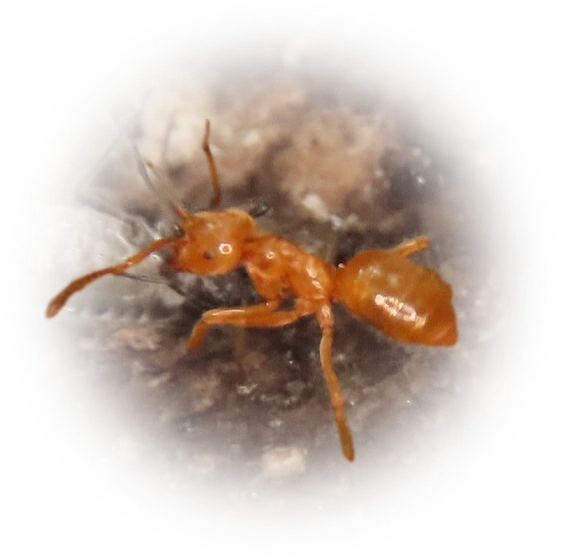
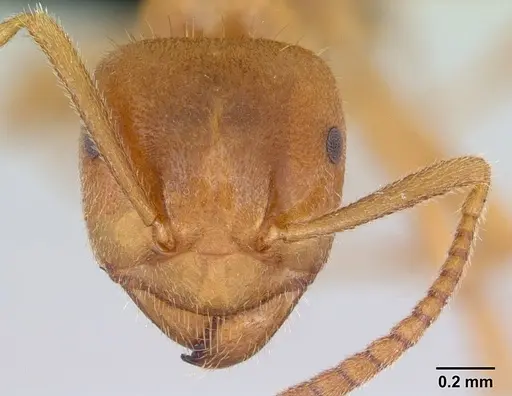
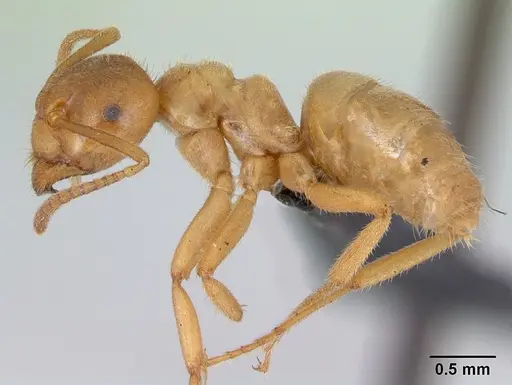
Lasius meridionalis is a small to medium-sized yellow ant belonging to the subgenus Chthonolasius. Workers measure 3.2-4.5mm and are pale yellow with distinctly flattened antennae scapes and tibiae, which helps distinguish them from the similar Lasius umbratus. Queens are larger at 6-8mm with a rectangular scale and darker, shinier coloration. This species has an extraordinary range spanning from Spain to Japan and from Italy to Scandinavia. The most remarkable aspect of this species is its parasitic lifestyle, it cannot found colonies independently but instead invades nests of other Lasius species, killing the host queen and using the host workers to raise its own brood.
Quick Summary
- Difficulty: Expert
- Origin & Habitat: Lowland sandy heath and dry grasslands across Europe and Asia, from Spain to Japan and Italy to Scandinavia. In Europe they nest in the ground with low earth mounds and carton-lined chambers, while in Japan they nest in tree trunks near the roots of standing trees [1][2][3].
- Colony Type: Temporary social parasite, queens cannot found colonies independently but must invade and take over host colonies of Lasius psammophilus (main host), L. niger, or L. alienus. Multiple queens may jointly invade a host nest (facultative pleometrosis). After the host queen is killed, the parasite queen uses host workers to raise her brood until the colony becomes pure L. meridionalis [3][4][5][6].
- Size & Growth:
- Queen:{.size-link} 6-8 mm [4]
- Worker:{.size-link} 3.2-4.5 mm [4][2]
- Colony: Colony size data unavailable for captive colonies
- Growth: Slow, parasitic lifestyle and slow larval development limit growth rate [7][8]
- Development: Estimated 8-12 weeks based on Strategy D classification and related Lasius species [7][8] (All larval stages are capable of overwintering, which can extend development time significantly. Slow larval development is characteristic of this species.)
- Antkeeping:
- Temperature: Keep at room temperature (18-22°C) with a slight gradient. This is a temperate species adapted to cooler conditions. Avoid overheating, they prefer warm but not hot conditions [4].
- Humidity: Moderate humidity. They naturally inhabit dry sandy heaths and grasslands, so avoid overly damp conditions. Provide a water tube but ensure the nest area stays relatively dry.
- Diapause: Yes, requires winter hibernation. In their natural range, nuptial flights occur from mid-July to early September, and all larval stages can overwinter. Keep colonies cool (5-10°C) from late autumn through early spring [7][8].
- Nesting: Y-tong (AAC) or plaster nests work well. They naturally nest in soil with carton-lined chambers in Europe, or in tree trunks in Japan. Provide a dry to moderately humid nest environment. Test tube setups are suitable for founding colonies.
- Behavior: Generally peaceful and non-aggressive, but this is a temporary social parasite that depends entirely on host colonies for establishment. Workers are rarely seen on the surface, they spend most of their time underground tending root aphids, which is their primary food source. Males have well-toothed mandibles and can be observed picking up objects and feeding themselves. Escape risk is moderate, standard Lasius escape prevention measures are sufficient.
- Common Issues: This species is a temporary social parasite, you cannot keep it without a host colony. Queens must invade L. psammophilus, L. niger, or L. alienus nests to establish., Obtaining a colony is extremely difficult since they cannot be founded like normal ants. Wild-caught colonies are rare and often already mixed with host species., Slow growth rate due to parasitic lifestyle and slow larval development, colonies develop much slower than free-living Lasius species., All larval stages can overwinter, which means development can take much longer than expected if the colony enters diapause., This species is threatened or vulnerable in many parts of its range, it is listed as vulnerable in Belgium and endangered in Germany. Ethical considerations apply to collecting from the wild.
The Parasitic Lifestyle
Lasius meridionalis is a temporary social parasite, meaning it cannot establish colonies independently like most ants. After mating, the fertilized queen cannot seal herself in and raise her first workers alone. Instead, she must find an established colony of a host species, primarily Lasius psammophilus, but also L. niger and L. alienus, and invade it. The queen enters the host nest, locates and kills the host queen, and then uses the host workers to raise her own brood. Over time, as the host workers die off, the colony becomes entirely composed of L. meridionalis workers. This parasitic relationship is why the species is considered difficult to keep, you cannot simply set up a founding queen and wait for workers. Multiple L. meridionalis queens may jointly invade a single host nest (facultative pleometrosis), which has been documented in some populations [5][4][3][6].
Feeding and Diet
In the wild, Lasius meridionalis primarily feeds through trophobiosis, a symbiotic relationship with root aphids. The ants tend these aphids underground and feed on the honeydew they produce. This explains why workers are rarely seen on the surface, they spend most of their time in underground chambers tending their aphid herds. In captivity, you would need to replicate this by providing sugar sources (honey water, sugar water) and protein. However, since this is a parasitic species that requires a host colony, the practical feeding requirements are complex. The host species (L. psammophilus, L. niger) would need to be fed, and the parasites would then benefit. Offer sugar water constantly and protein (insects, mealworms) regularly to any established colony. Root aphids or soil aphids could potentially be offered as a more natural food source [5][4].
Nuptial Flights and Reproduction
Nuptial flights occur from mid-July to early September in Europe, with some variation. In Japan, flights occur from July to September. Males and females typically take flight at the end of the afternoon and continue into the night, they are attracted to artificial lights, which is how they are often collected. Males have distinctive well-toothed mandibles and can be observed picking up objects and feeding themselves, which is unusual behavior. Males can fly for approximately 150 minutes. The flight period spans June through October according to some sources, with the Strategy D classification indicating a prolonged nuptial flight period. After mating, females lose their wings and seek out host nests to invade [4][9][10][2][7].
Habitat and Distribution
This species has a remarkable distribution spanning the entire Palaearctic region from Spain to Japan and from Italy to Scandinavia. In northern Europe, it is characteristic of lowland sandy heath and dry grasslands on sandy soils. The species prefers warmer and drier conditions than its close relative Lasius umbratus. In Europe, nests are built in the ground, often with characteristic low earth mounds and carton-lined chambers. In Japan, they nest in tree trunks near the roots of standing trees. The species is considered a thermophilic (warmth-loving) element and is threatened in many parts of its range due to habitat loss. It is listed as vulnerable in Belgium and endangered in Germany [1][3][2][4][11][12].
Why This Species Is Difficult to Keep
Lasius meridionalis is rated as Expert difficulty for several important reasons. First, obtaining a colony is extraordinarily difficult since queens cannot found colonies independently, they must find and invade a host colony. This makes captive breeding nearly impossible without already having an established host colony. Second, the species has a slow growth rate due to its parasitic lifestyle and slow larval development. Third, all larval stages can overwinter, which can significantly extend development times. Fourth, in the wild this species is threatened and vulnerable in many areas due to its specialized habitat requirements and dependence on specific host species. For these reasons, this species is not recommended for most antkeepers. Those interested in parasitic ants would be better served by studying the species in the wild or working with researchers documenting wild populations [7][8][11][12].
Frequently Asked Questions
Can I keep Lasius meridionalis like other Lasius ants?
No. Unlike common Lasius species like Lasius niger or Lasius flavus, Lasius meridionalis is a temporary social parasite that cannot found colonies independently. You would need to establish a host colony first (Lasius psammophilus, Lasius niger, or Lasius alienus), then introduce a parasite queen. This makes keeping this species extremely difficult and it is not recommended for hobbyists.
How do I start a Lasius meridionalis colony?
You cannot start a colony in the traditional sense. After nuptial flights, mated queens must find and invade established colonies of host species (Lasius psammophilus, Lasius niger, or Lasius alienus). The queen kills the host queen and uses the host workers to raise her brood. This parasitic founding is why the species is considered expert-only, obtaining a colony requires either finding a wild mixed colony or successfully introducing a queen to a host nest.
What do Lasius meridionalis eat?
Like other Lasius species, they primarily feed on honeydew from aphids, specifically root aphids they tend underground. In captivity, offer sugar water or honey water as a constant energy source, and protein (insects, mealworms) regularly. The key challenge is that they require a host colony to become established, so the feeding requirements are tied to the host species' needs.
Do Lasius meridionalis need hibernation?
Yes. As a temperate species with a distribution spanning Scandinavia to Japan, they require a winter diapause period. Keep colonies cool (5-10°C) from late autumn through early spring. Additionally, all larval stages are capable of overwintering, which can significantly extend development time if the colony enters diapause during the larval stage.
Are Lasius meridionalis good for beginners?
No. This species is rated Expert difficulty due to its parasitic lifestyle. Unlike free-living ants, they cannot establish colonies independently and require a host colony. The complex requirements, slow growth rate, and ethical considerations regarding wild populations make this species unsuitable for beginners. Most antkeepers should start with easier species like Lasius niger or Lasius flavus.
How long does it take for Lasius meridionalis to develop from egg to worker?
Exact development times are not well documented, but based on the species' Strategy D classification (slow larval development) and related Lasius species, expect 8-12 weeks at optimal temperature. However, all larval stages can overwinter, which can extend development significantly if the colony enters diapause. The parasitic lifestyle also means development is tied to the host colony's resources.
Can I keep multiple Lasius meridionalis queens together?
Yes, this species exhibits facultative pleometrosis, meaning multiple queens can jointly invade a single host nest. However, this is not something you can set up in captivity, it happens naturally when multiple parasite queens find the same host colony. After establishment, only one queen typically remains reproductive.
Where can I find Lasius meridionalis in the wild?
Look for them in sandy heathlands and dry grasslands across Europe and Asia, from Spain to Japan. They are most common in warm, sandy areas where their host species (Lasius psammophilus, Lasius niger, Lasius alienus) are found. However, the species is threatened in many areas and workers are rarely seen on the surface. Nuptial flights occur from July to September, primarily at dusk and night, when they are attracted to lights.
Report an Issue
The current care sheet is based fully on literature. See inconsistencies, or something that's incorrect? Please , it will be resolved after review from an admin. Contributing to the blogs tab also helps providing information, to make us be able to further improve the caresheets. Thank you for your support!
References

This caresheet is licensed under CC BY-SA 4.0 .
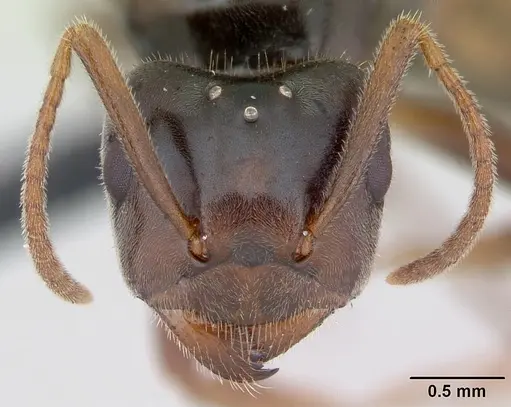
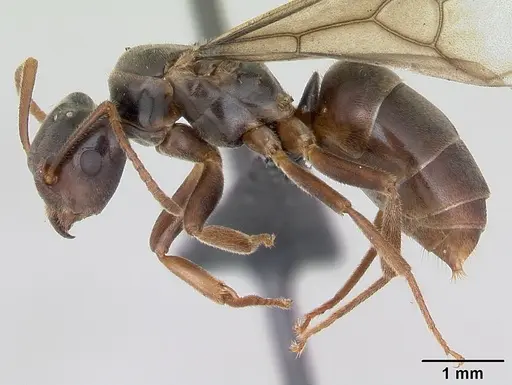
CASENT0172711
View on AntWeb
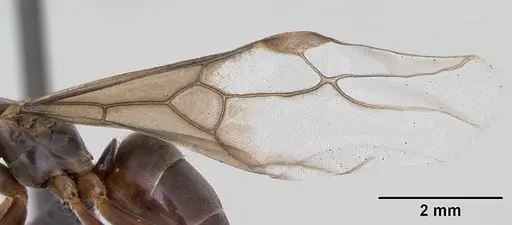
CASENT0172741
View on AntWeb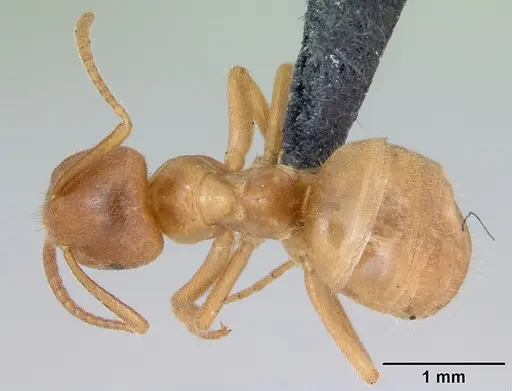
Literature
Loading...Loading products...