

Lasius humilis
- Scientific Name
- Lasius humilis
- Tribe
- Lasiini
- Subfamily
- Formicinae
- Author
- Wheeler, 1917
- Distribution
- Found in 2 countries
Lasius humilis Overview
Lasius humilis is an ant species of the genus Lasius. It is primarily documented in 2 countries , including Mexico, United States of America. Detailed taxonomic data and occurrence records can be further explored via authoritative databases such as AntWeb or the Global Biodiversity Information Facility (GBIF).
Lasius humilis
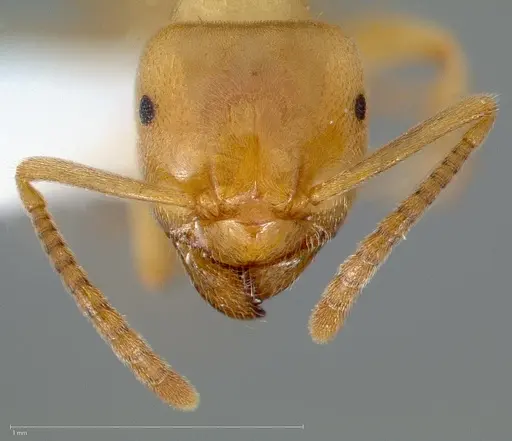
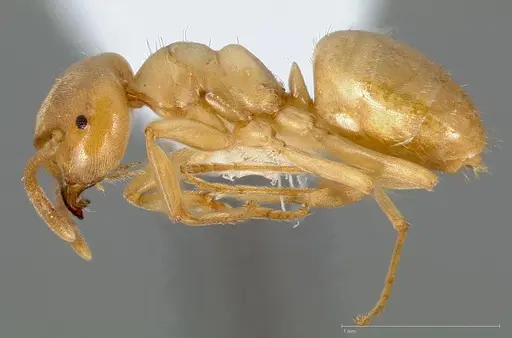
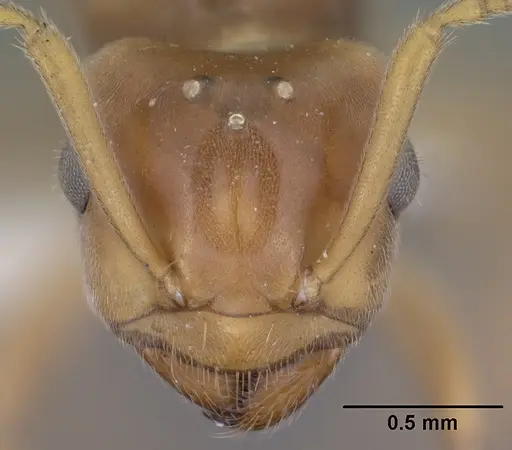
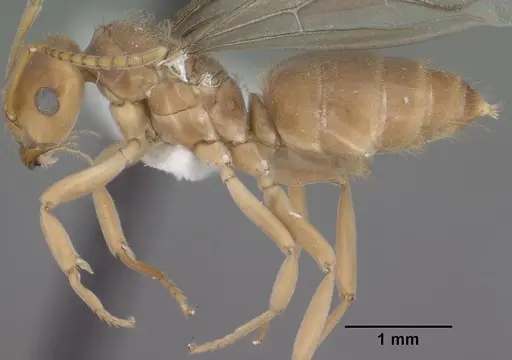
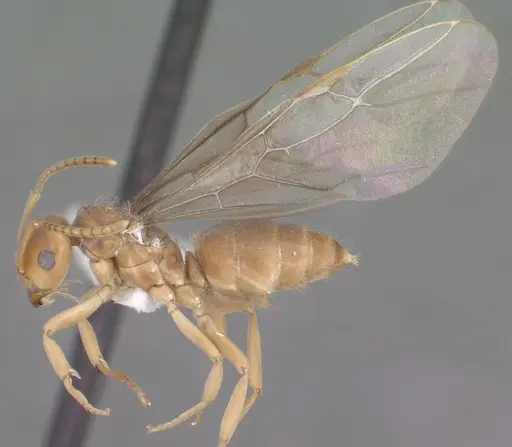
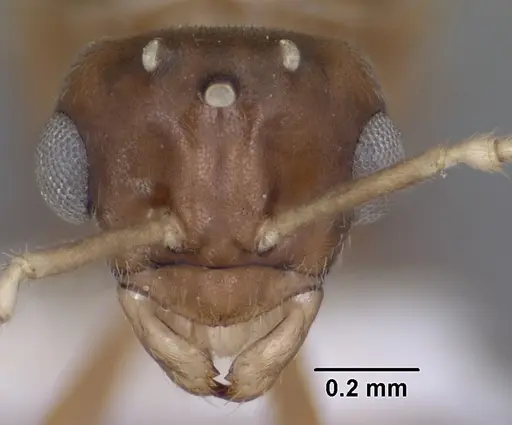
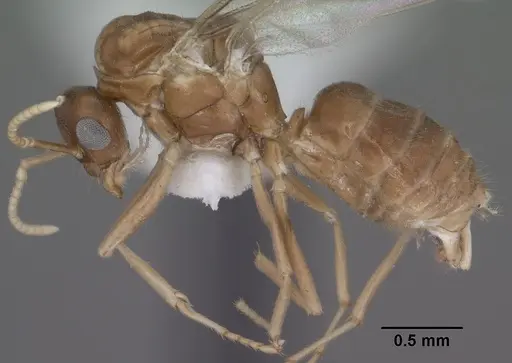
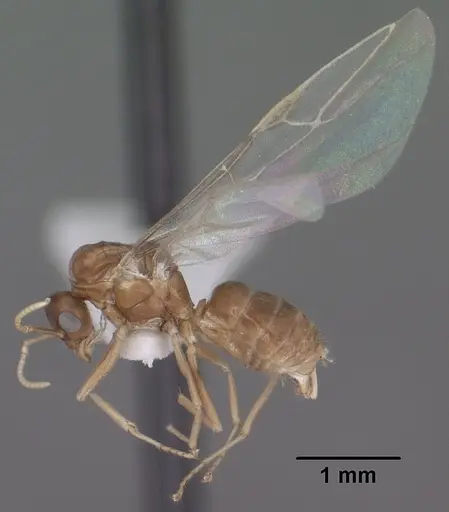
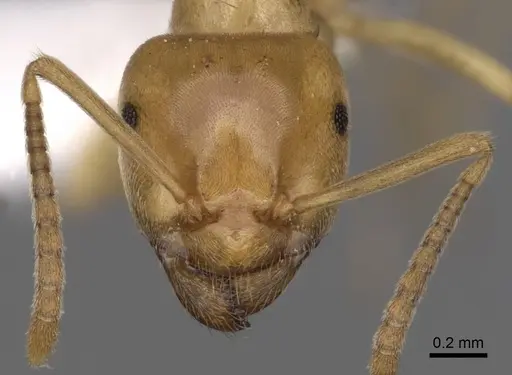
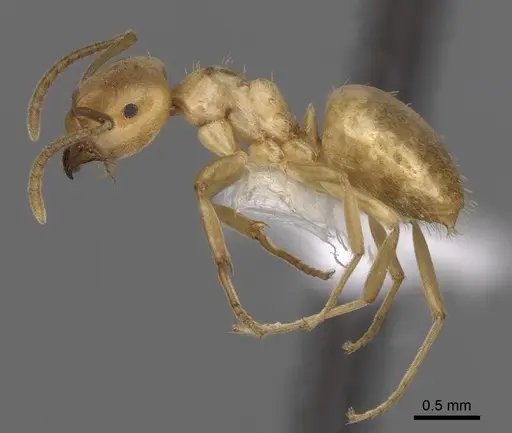
Lasius humilis is a tiny, pale yellow ant belonging to the subgenus Chthonolasius. Workers are among the smallest of any Lasius species, measuring just 0.53-0.63mm in propodeal width. Queens are similarly diminutive at about 1.04-1.06mm head width, making this the smallest North American Chthonolasius known. The species is distinguished by its very small eyes, the absence of a promesonotal suture, and a wedge-shaped petiole crest that forms an angular median prominence. These ants inhabit the western United States, primarily in the Rocky Mountains and Great Basin regions, where they nest under stones in moist, high-elevation habitats [1].
Quick Summary
- Difficulty: Expert
- Origin & Habitat: Western United States (Colorado, Nevada, New Mexico, Utah, Arizona) at high elevations (~2,000m+). Found in mountain meadows, pine-aspen woods, ponderosa pine forests, sagebrush, and pinyon-juniper habitats. Nests under stones in moist soil [1][2][3].
- Colony Type: Temporary social parasite. Queens of the subgenus Chthonolasius invade colonies of other Lasius species (subgenus Lasius) to establish their own colonies, killing the host queen and using host workers to raise their first brood [1].
- Colony: Monogyne
- Queen: Socially parasitic, Temporary parasitic
- Size & Growth:
- Queen: 1.04-1.06mm head width [1]
- Worker: 0.53-0.63mm propodeal width (very small) [1]
- Colony: Unknown, this species is extremely rare in the wild [1]
- Growth: Unknown
- Development: Unknown, no development data exists for this species. Based on related Lasius (Chthonolasius) species, expect 6-10 weeks at optimal temperature, but this is an estimate. (No direct studies on development timeline exist. Related species in the flavus clade typically take 6-8 weeks from egg to worker at room temperature.)
- Antkeeping:
- Temperature: Keep cool, this is a high-elevation species. Aim for 18-22°C, with a slight gradient. Avoid overheating. Room temperature is likely appropriate in most homes.
- Humidity: Requires moist substrate. In the wild, they nest under stones in moist mountain meadow soil. Keep the nest substrate consistently damp but not waterlogged.
- Diapause: Likely requires a winter dormancy period. As a temperate mountain species from high elevations, they probably need 3-4 months of cold storage (around 5-10°C) during winter. This is inferred from related Lasius species.
- Nesting: Natural nesting is under stones in moist soil. In captivity, a test tube setup with moist cotton works well for founding. Once established, a naturalistic setup with stones or a Y-tong/plaster nest with moisture provision is appropriate.
- Behavior: This species is poorly documented in captivity. Workers are tiny and likely timid. As temporary social parasites, founding queens must locate and invade a host Lasius colony, this is the critical challenge for keepers. Escape prevention is essential due to their very small size. They are not aggressive and likely avoid confrontation. Foraging style is typical of Lasius, they probably exploit honeydew and small insects.
- Common Issues: temporary social parasitism makes founding extremely difficult, queens need a host colony to survive, very small size creates significant escape risk, fine mesh barriers are essential, species is extremely rare in the wild and virtually unavailable in the antkeeping hobby, no captive breeding records exist, this is not a species for beginners, high-elevation origin means they may not tolerate warm conditions
Understanding Temporary Social Parasitism
Lasius humilis belongs to the subgenus Chthonolasius, which is characterized by temporary social parasitism. This is one of the most challenging aspects of keeping this species. Unlike most ants where a queen seals herself in a chamber and raises her first workers alone (claustral founding), Chthonolasius queens must find an established colony of another Lasius species (the host, typically from subgenus Lasius). The queen infiltrates the host nest, kills or displaces the host queen, and tricks the host workers into raising her offspring. Once her first workers emerge, they gradually replace the host workers until the colony becomes purely Lasius humilis. For antkeepers, this means you cannot establish a colony from a single queen alone, you must provide a host colony. This makes L. humilis one of the most difficult ants to keep and is not recommended unless you have extensive experience with Lasius host species [1].
Housing and Nest Setup
Due to their parasitic lifestyle, housing Lasius humilis requires two components: a host colony and space for the parasite queen to establish. The host colony can be any Lasius species from the subgenus Lasius, common choices include Lasius niger, Lasius neoniger, or Lasius americanus. The host colony should be established and healthy before introducing the parasite queen. For the nest itself, standard Lasius setups work well once the colony is established. Use test tubes for founding, with moist cotton providing humidity. The tiny worker size (under 1mm) means escape prevention must be excellent, use fine mesh and ensure all connections are sealed. A naturalistic setup with stones over moist soil can mimic their natural habitat under stones in mountain meadows [1].
Feeding and Diet
Like most Lasius species, Lasius humilis likely feeds on honeydew from aphids and small insects. In captivity, offer sugar water or honey regularly, along with small protein sources like fruit flies, pinhead crickets, or other tiny arthropods. Due to their minute size, prey items must be appropriately sized, standard mealworms may be too large. Sugar sources should always be available. Feed small amounts frequently rather than large prey items that go uneaten. The host colony will also need feeding, which is straightforward as Lasius workers readily accept sugar water and protein [1].
Temperature and Seasonal Care
As a high-elevation species from the Rocky Mountains, Lasius humilis prefers cooler temperatures than most common ant pets. Keep the colony at 18-22°C, avoiding temperatures above 25°C. A heating cable on one side of the nest can create a gradient, allowing ants to self-regulate. During winter, this species almost certainly requires a dormancy period, plan for 3-4 months at around 5-10°C (refrigerator temperature works well). This mimics the harsh mountain winters they experience in their natural habitat. Do not skip hibernation as it is likely essential for colony health and reproduction. Reduce feeding during the cold period and keep the nest slightly cooler but not frozen [1][3].
Finding and Acquiring This Species
Lasius humilis is one of the rarest ants in the United States and is virtually unavailable in the antkeeping hobby. The species has been documented in only a handful of locations across Colorado, Nevada, New Mexico, and Utah, typically at elevations above 2,000 meters. Most records come from specimens collected under stones in moist mountain meadows and pine-aspen forests. There are no commercial sources for this species, and collecting from the wild is difficult given its rarity and protected status in many areas. For these reasons, Lasius humilis should be considered a species to appreciate from a distance rather than one to attempt keeping. If you are interested in keeping parasitic Lasius, consider more commonly available Chthonolasius species or focus on the well-documented host species instead [1][3].
Frequently Asked Questions
Can I keep Lasius humilis as a pet ant?
This species is not recommended for antkeepers. It is extremely rare in the wild, virtually unavailable in the hobby, and requires temporary social parasitism to establish, meaning you need a host colony to keep it alive. This makes it one of the most difficult ants to keep. Most antkeepers should choose more accessible species.
How do I start a Lasius humilis colony?
You cannot start a colony from a single queen like most ants. Lasius humilis is a temporary social parasite, the queen must invade and kill the queen of a host Lasius species (from subgenus Lasius). You would need an established host colony and a way to safely introduce the parasite queen. This is advanced antkeeping that rarely succeeds.
What do Lasius humilis eat?
Like other Lasius species, they likely feed on honeydew and small insects. In captivity, offer sugar water or honey as a constant energy source, plus tiny protein prey like fruit flies or small crickets. Prey must be appropriately sized for their minute workers.
What temperature do Lasius humilis need?
Keep them cool, around 18-22°C. This is a high-elevation mountain species that does not tolerate heat well. Avoid temperatures above 25°C. Room temperature in most homes is suitable.
Do Lasius humilis need hibernation?
Yes, likely a 3-4 month winter dormancy at 5-10°C. As a species from high elevations in the Rocky Mountains, they almost certainly require cold storage during winter to remain healthy and trigger reproduction.
How big do Lasius humilis colonies get?
Unknown. This species is so rare that colony size has never been documented in the wild or captivity. Related species typically reach a few hundred to a few thousand workers.
Where does Lasius humilis live?
Western United States, primarily Colorado, Nevada, New Mexico, and Utah. They inhabit high-elevation mountain meadows, pine-aspen woods, and ponderosa pine forests, nesting under stones in moist soil.
Are Lasius humilis dangerous?
No. These are tiny, non-aggressive ants with no significant sting. They are not harmful to humans. Their main defense is avoidance due to their small size.
Why is Lasius humilis so hard to find?
This species is extremely rare. Despite being distributed across the Rocky Mountains and Great Basin, it has been collected only a handful of times. The combination of specific habitat requirements (high elevation, moist soil under stones), limited range, and cryptic behavior makes it one of North America's least documented ants.
References

This caresheet is licensed under CC BY-SA 4.0 .
CASENT0005407
View on AntWeb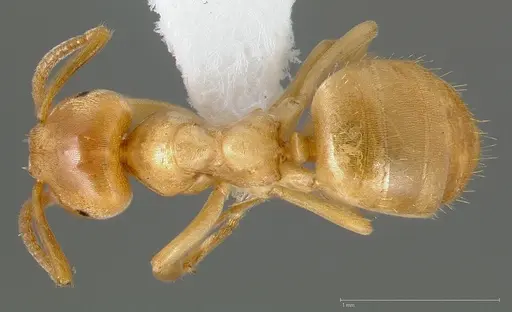
CASENT0102803
View on AntWeb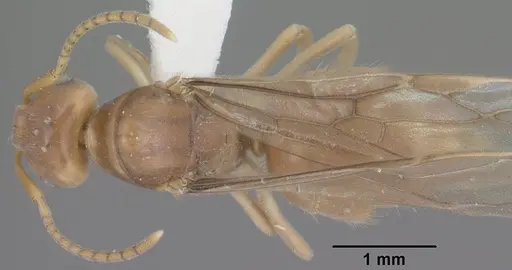
CASENT0102804
View on AntWeb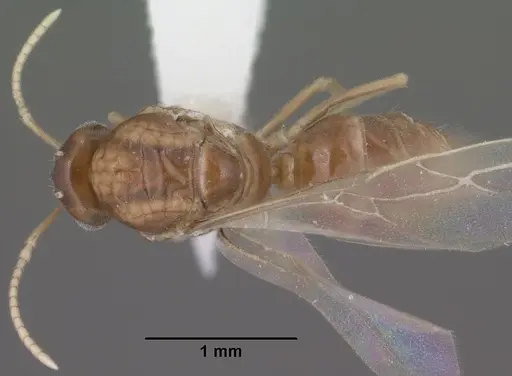
CASENT0280462
View on AntWeb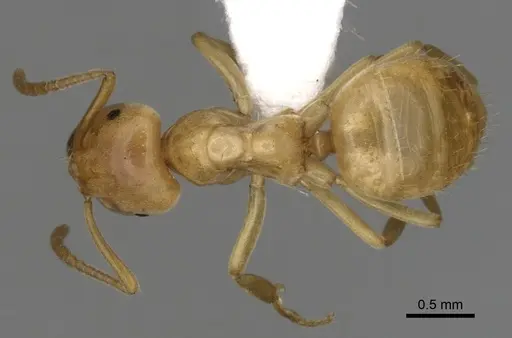
Literature
Loading...Loading products...