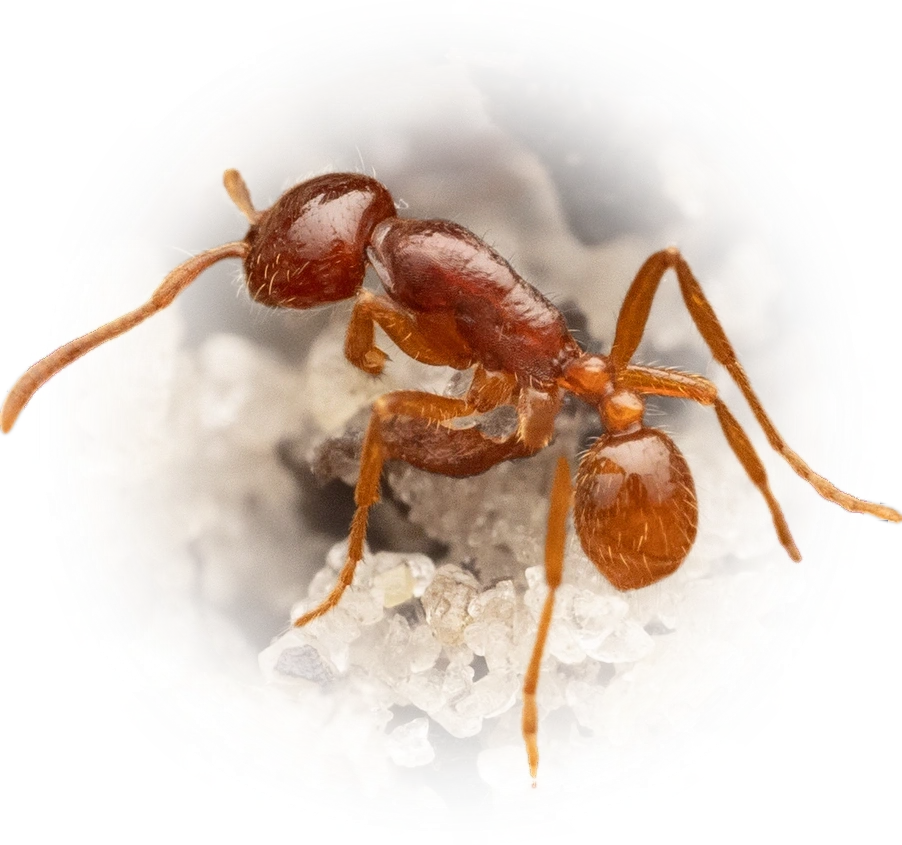
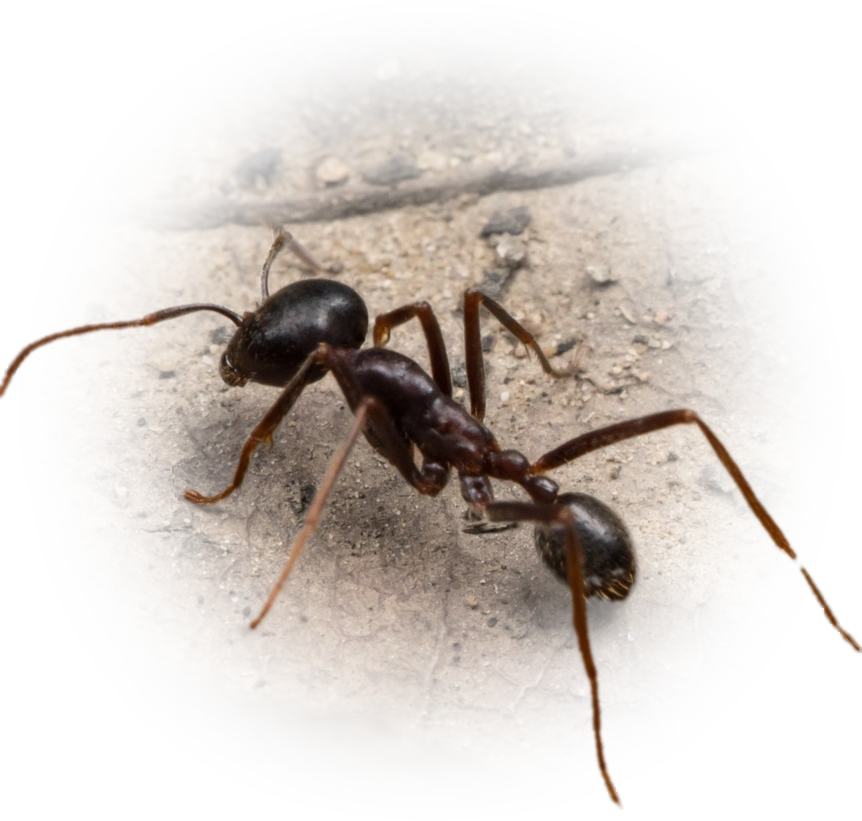
Labidus mars - "Mars Army Ant"
Labidus mars is a fascinating army ant species known for its subterranean lifestyle. Unlike many other army ants that forage on the surface, L. mars workers are eyeless and spend most of their lives underground. This species is part of the Dorylinae subfamily, commonly referred to as New World army ants. Recent genetic research indicates that despite previously being classified under Labidus, the worker caste of L. mars actually belongs within the Neivamyrmex genus. However, the male caste remains within Labidus, highlighting a complex taxonomic history. They are predatory ants, though specific dietary details for L. mars itself are less documented compared to other Labidus species.
- Difficulty: Expert
- Origin & Habitat: Neotropical Region (Argentina, Brazil, Paraguay, Peru) in Subterranean environments, often in tropical and subtropical habitats..
- Colony Type: Monogyne (though army ant queens are ergatoid and often remain with the colony, a true claustral founding queen isn't typical), semi-claustral (due to their nomadic army ant nature, queens do not seal themselves off; they are part of a mobile colony) founding.
- Size & Growth:
- Queen: Not specified
- Worker: Not specified
- Colony: Large (tens of thousands to potentially millions, typical of army ants). Fast, given ample food supply and appropriate conditions. growth.
- Antkeeping:
- Temperature: Due to their subterranean nature, stable temperatures are crucial. A consistent temperature range, likely between 24-28°C (75-82°F), would be ideal to mimic their natural tropical and subtropical underground habitats. Avoid sudden fluctuations..
- Humidity: High humidity is essential for subterranean army ants. The nest environment should maintain a humidity level of 70-90% to prevent desiccation of the brood and workers..
- Diapause: Not required. Not specified at Not specified.
- Nesting: As primarily subterranean and eyeless ants, Labidus mars requires a specialized deep nesting setup that allows for their nomadic behavior and extensive tunnel systems. Acrylic or glass formicaria with a large soil substrate area are necessary. The setup should allow for their frequent emigrations and not constrain their natural movements. Consider designs that mimic natural underground cavities..
- Behavior: High (towards prey and potential threats) aggressiveness.
- Common Issues: Providing adequate live prey, Maintaining proper humidity and temperature gradients in a large, dynamic setup, Accommodating nomadic behavior and frequent emigrations, Preventing escape of a large, fast-moving colony, Stress due to improper lighting or disturbance, Waste management in a large colony setup, Mold in nest due to high humidity and leftover food.
Keeping Labidus mars, or any army ant, is an endeavor for the most experienced ant keepers. These colonies are nomadic, meaning they do not build permanent nests like most ant species. Instead, they form temporary bivouacs, which can be challenging to accommodate in a typical formicarium setup. You'll need a large, dynamic environment that allows for their constant movement and subterranean foraging patterns. Simulating their natural underground bivouacs and extensive tunnel networks is paramount for their survival and well-being in captivity.
Their diet primarily consists of other arthropods, including the brood of other ant species, which makes providing a consistent and varied food source a significant challenge. While some Labidus species are known to take a variety of arthropods and even some plant parts or processed food like rice, ensuring a steady supply of appropriate prey for a large, predatory colony like L. mars is a continuous commitment. Overfeeding should be avoided, and uneaten prey must be removed promptly to prevent mold and mites.
The unique eyeless nature of Labidus mars workers means they rely heavily on chemical cues and tactile communication for navigation and foraging. This subterranean specialization implies that any artificial setup must provide a dark, undisturbed environment for their nest areas. Light exposure to the nest can cause significant stress to the colony. You might consider using a red light filter or covering nest areas with a darkening film to maintain optimal conditions.
Given their complex social structure and large colony sizes, Labidus mars colonies can grow to hundreds of thousands or even a million individuals. Housing such a massive, active colony requires an immense amount of space and careful management. Their nomadic behavior also means they will periodically move their entire colony, including the queen and brood, to new bivouac sites, which needs to be accounted for in the enclosure design. This constant movement is not easily replicated in standard ant-keeping setups.
Taxonomically, Labidus mars is quite unique, as recent phylogenetic studies suggest that its workers are more closely related to the Neivamyrmex genus, even though the species was historically placed in Labidus due to the presence of a tarsal tooth on the workers. This scientific nuance doesn't directly impact daily care but highlights the specialized and often misunderstood nature of this particular army ant. It also means that information regarding 'Labidus mars' might sometimes refer to studies based on male morphology, rather than worker characteristics, which can be confusing for hobbyists.
Frequently Asked Questions
Can I really keep Labidus mars as a pet?
Keeping Labidus mars is extremely challenging and generally not recommended for beginners or even intermediate ant keepers. Their nomadic nature, massive colony sizes, specialized dietary needs, and subterranean lifestyle require advanced knowledge and resources to maintain successfully. These aren't your typical test tube or small formicarium ants; they demand a dedicated, large-scale, and dynamic setup that can handle their constant movements and predatory raids.
What kind of enclosure does Labidus mars need?
These army ants require a very large, specialized formicarium, often referred to as a vivarium or 'bioactive' setup, with a deep substrate layer. Since they are eyeless and subterranean, the nest area needs to be kept completely dark. The enclosure must accommodate their nomadic cycles, allowing them to emigrate freely to new bivouac sites within the setup. Traditional small acrylic or plaster nests simply won't work for these amazing ants; think more along the lines of a custom-built, expansive habitat.
What do Labidus mars eat?
Labidus mars are formidable predators. Their natural diet consists largely of other arthropods, including the brood of other ant species. In captivity, this translates to needing a consistent supply of live insect prey, such as various feeder insects. Providing a diverse and sufficient protein source is critical for the health and growth of such a large, active colony. Unlike some ants that enjoy sugar water, their primary need is for protein-rich prey.
How large do Labidus mars colonies get?
Like many army ant species, Labidus mars colonies can grow to truly impressive sizes, potentially reaching hundreds of thousands or even over a million individuals. This enormous colony size is a key factor in why they are so challenging to keep. Imagine managing the waste, feeding requirements, and migratory patterns of a colony of that magnitude – it's a monumental task!
Are Labidus mars aggressive?
Yes, as army ants, Labidus mars are highly aggressive, particularly when it comes to foraging and defending their colony. While they are primarily focused on prey, their large numbers and predatory nature mean they are not a species to handle without extreme caution. Expect them to react strongly to disturbances, though their eyeless, subterranean nature means direct interaction with keepers would be minimal once established in an appropriate setup.
Do Labidus mars sting?
Yes, Labidus mars workers can sting. Like many Dorylinae ants, they possess a sting, and while specific details on the potency of L. mars's sting are limited, it's safe to assume it can be painful, especially given their aggressive nature and large numbers during a raid or defensive reaction. Always exercise caution and avoid direct contact.
What are the biggest challenges in keeping Labidus mars?
The primary challenges revolve around their nomadic lifestyle, which necessitates an unconstrained, expansive environment for constant relocation of their bivouac. Providing a continuous, varied, and substantial live prey diet is another major hurdle. Additionally, maintaining the precise high humidity and stable temperatures crucial for a subterranean, tropical species, alongside effective waste management for a massive colony, presents significant long-term difficulties for even the most dedicated ant keepers.
How do I ensure proper humidity for subterranean army ants?
Maintaining high humidity for Labidus mars is crucial. This often involves incorporating a significant hydration system within their large enclosure, such as a deep, consistently moistened substrate (like loam or sand with a good water retention layer below) and potentially a fogger or humidifier for the general enclosure air. The goal is to prevent the brood from drying out, which can be a common pitfall in keeping subterranean species.
Is it legal to keep Labidus mars?
The legality of keeping exotic ant species like Labidus mars varies significantly by region, country, and even state or province. Before even considering acquiring such a specialized species, it is absolutely essential to thoroughly research and understand all local, national, and international laws regarding the possession and transport of exotic invertebrates. Permits are often required, and some species may be entirely prohibited.
Do Labidus mars have a specialized queen?
Like many army ants, Labidus mars queens are 'ergatoid,' meaning they are wingless and resemble a large worker rather than a typical alate queen. This ergatoid queen lives her entire life within the nomadic colony, constantly being moved and cared for by her workers. You won't find a winged queen during a nuptial flight for this species.
Are Labidus mars workers eyeless?
Yes, a distinctive feature of Labidus mars workers is that they are completely eyeless. This adaptation is directly related to their predominantly subterranean existence. They navigate and forage using chemical cues and tactile senses, which makes their behavior in a captive environment particularly interesting to observe, if you can provide the right conditions.