

Goniomma collingwoodi
- Scientific Name
- Goniomma collingwoodi
- Tribe
- Stenammini
- Subfamily
- Myrmicinae
- Author
- Espadaler, 1997
- Distribution
- Found in 1 countries
Goniomma collingwoodi Overview
Goniomma collingwoodi is an ant species of the genus Goniomma. It is primarily documented in 1 countries , including Spain. Detailed taxonomic data and occurrence records can be further explored via authoritative databases such as AntWeb or the Global Biodiversity Information Facility (GBIF).
Goniomma collingwoodi
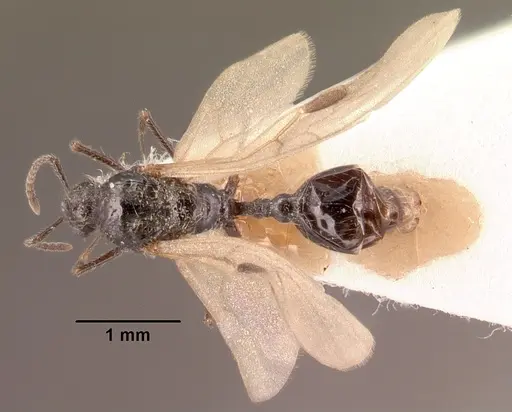
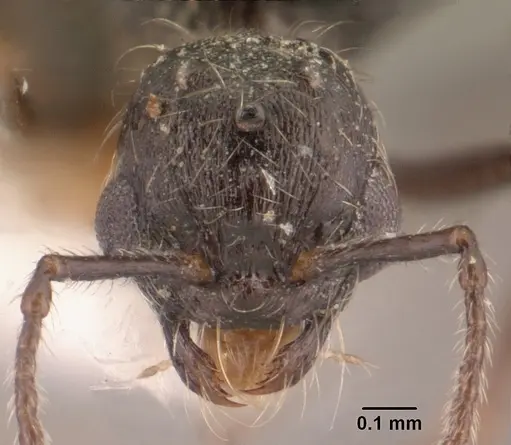
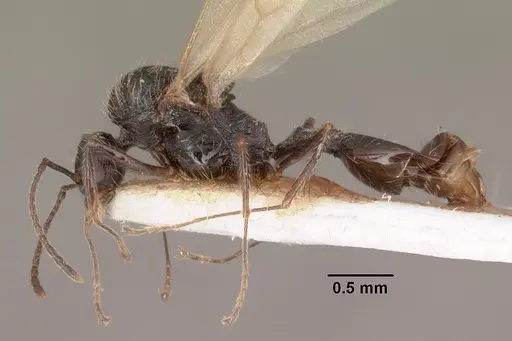
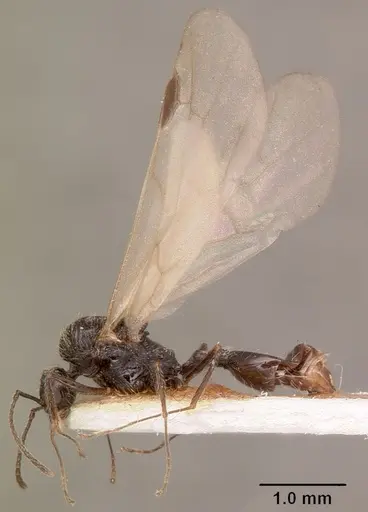
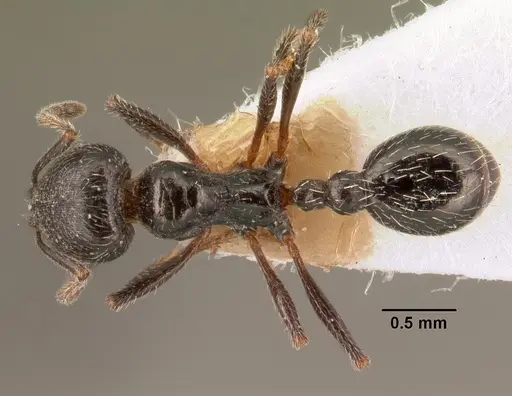
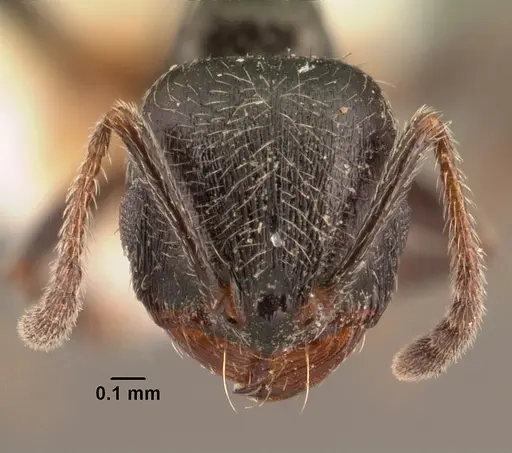
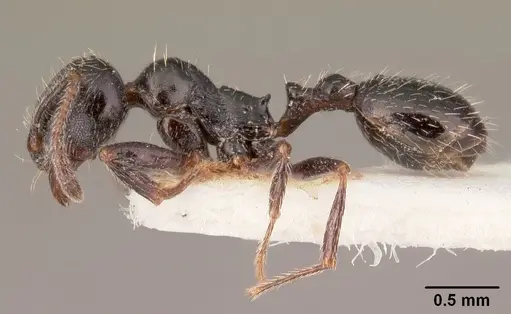
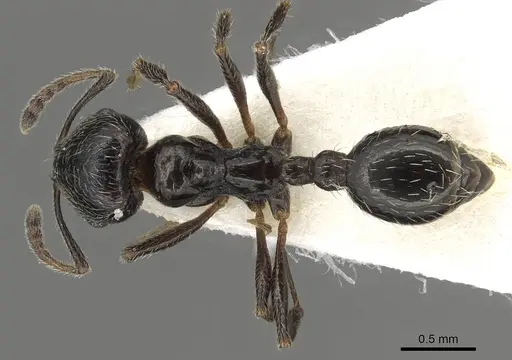
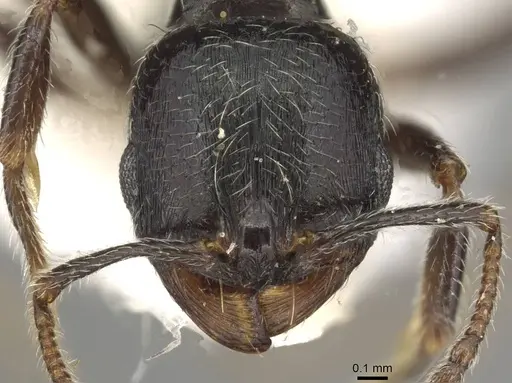
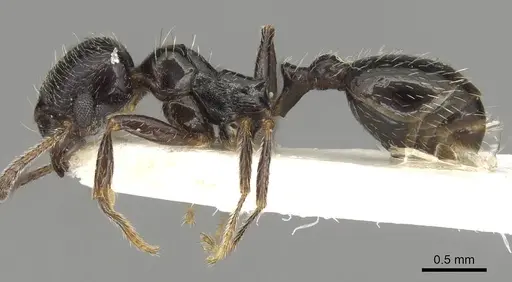
Goniomma collingwoodi is a small, dark ant species endemic to the southeastern Iberian Peninsula, specifically the province of Almería, Spain. Workers are very dark chestnut to nearly black in color, with a distinctive longitudinally striated head and a unique mesopropodeal depression that forms a right angle when viewed from the side [1][2]. The species was described in 1997 by Xavier Espadaler and remains poorly studied in both the wild and in captivity. This ant is part of the Stenammini tribe, which includes seed-harvesting ants, suggesting similar dietary preferences. As a Mediterranean species from one of the driest regions of Spain, it likely tolerates warmer, drier conditions than many European ants [3][4].
Quick Summary
- Difficulty: Unknown, this species has no documented captive breeding history
- Origin & Habitat: Endemic to southeastern Iberian Peninsula, Spain, specifically Almería province including Sartenilla, Cabo de Gata, and surrounding arid areas [3][5]. Found at elevations around 472 meters above sea level in Mediterranean semi-arid habitats [3].
- Colony Type: Unconfirmed, colony structure has not been documented in scientific literature
- Size & Growth:
- Queen: Unknown, queen has not been described in scientific literature
- Worker: Similar in size to Goniomma kugleri (estimated 3-5mm based on genus) [1]
- Colony: Unknown, no colony size data available
- Growth: Unknown
- Development: Unconfirmed, no development data exists for this species. Estimates based on related Stenammini suggest 6-10 weeks at optimal temperature. (No direct measurements available. Related species in the genus typically develop in 6-10 weeks.)
- Antkeeping:
- Temperature: Likely tolerates warm conditions, inferred from Mediterranean distribution in Almería, one of the hottest regions in Spain. Start around 22-26°C and observe colony activity. Avoid temperatures below 15°C.
- Humidity: Likely prefers dry to moderate conditions, inferred from arid native habitat in Cabo de Gata region. Keep nest substrate slightly moist but allow drying periods between waterings.
- Diapause: Likely requires winter cooling, inferred from Mediterranean distribution. Provide a cool period around 10-15°C for 2-3 months during winter.
- Nesting: No specific data exists. Based on habitat, likely nests in soil or under stones in arid areas. Use a standard test tube setup initially, transitioning to a Y-tong or plaster nest when colony grows.
- Behavior: Behavior is unstudied in captivity. Based on genus membership in Stenammini, likely a seed-harvesting ant that forages on the ground. Escape risk is moderate, similar in size to other small Myrmicinae, so standard escape prevention measures apply.
- Common Issues: no captive breeding history exists, this species may not be established in the antkeeping hobby, queen has never been described scientifically, obtaining a mated queen may be impossible, development timeline is completely unknown, estimates are speculative, humidity and temperature requirements are inferred, not confirmed, this species may have specific ecological needs not met in captivity
Species Discovery and Taxonomy
Goniomma collingwoodi was described in 1997 by Xavier Espadaler based on worker and male specimens collected from various locations in Almería, Spain [1][2]. The type locality is Sartenilla, Almería, collected on April 13,1991 [1]. The species name honors C.A. Collingwood, a prominent ant researcher who collected specimens including some from Turrillas, Almería in June 1974 [2]. The species is distinguished from related species by its unique mesopropodeal depression that forms a right angle in lateral view, and by the shape of its clypeus which has a convex anterior border [1][2]. It is morphologically similar to Goniomma kugleri in size but separated by clypeus shape [1]. This ant belongs to the Myrmicinae subfamily and Stenammini tribe, which includes other Mediterranean seed-harvesting ants.
Distribution and Habitat
This species is endemic to the southeastern Iberian Peninsula, specifically the province of Almería in Spain [3][5][6]. Its distribution is limited to the Mediterranean refugium area, and it has been recorded at locations including Sartenilla, Cabo de Gata, El Pocico, and Turrillas [2]. The region around Cabo de Gata is one of the most arid in Spain, characterized by low rainfall, high temperatures, and semi-desert vegetation [3]. Specimens have been collected at elevations around 472 meters above sea level [3]. The species appears to be restricted to this specific geographic area and has not been found elsewhere [5][6]. This limited distribution makes it a rare and geographically restricted species within the European ant fauna.
Identification Characteristics
Workers are described as very dark chestnut to nearly black in color [1][2]. The head is longitudinally striated, though in the smallest individuals the striation can be almost smooth and shiny [1][2]. The clypeus has a convex anterior border, and the anterior end of the eyes is distant from the base of the mandibles [1][2]. The mesoepisternum is reticulated, while the basal flank of the propodeum is longitudinally striated, with the rest of the thorax including the propodeum being smooth and shiny [1][2]. One of the most distinctive features is the mesopropodeal depression, which forms a right angle when viewed from the side [1][2]. Males were also described alongside workers from the type series [2]. The queen has not yet been scientifically described.
Known Biology and Inferences
Direct biological studies on Goniomma collingwoodi do not exist in the scientific literature. However, we can make reasonable inferences based on its taxonomic placement in the Stenammini tribe and its Mediterranean distribution [7][4]. Stenammini ants like related Aphaenogaster and Messor species are typically seed-harvesting ants that also supplement their diet with small insects. The species is extratropical, with a latitude midpoint around 37°N [7]. As a Mediterranean species from Almería, it likely experiences hot, dry summers and mild winters, suggesting it may tolerate higher temperatures and lower humidity than many northern European ants. The genus Goniomma is not well-represented in antkeeping, and this species has never been documented in captivity. Any husbandry information would be speculative at this point.
Current Status in Antkeeping
Goniomma collingwoodi is not established in the antkeeping hobby and may not be available from any commercial source. The species has never been scientifically documented in captivity, and no breeding protocols or care guides exist. The queen has never been described in scientific literature, meaning even if specimens exist, identification to species level would be extremely difficult without the original type series for comparison. For these reasons, this species cannot be recommended for captive keeping at this time. If you are interested in keeping Mediterranean ants, consider more commonly available species like Messor barbarus, Messor capitatus, or Aphaenogaster species that have established captive populations and documented care requirements.
Frequently Asked Questions
Is Goniomma collingwoodi available for purchase?
No, this species is not established in the antkeeping hobby and is not available from any known commercial source. It is endemic to a very limited area in Almería, Spain, and has never been documented in captivity.
What does Goniomma collingwoodi look like?
Workers are very dark chestnut to nearly black with a longitudinally striated head. They have a distinctive right-angle mesopropodeal depression when viewed from the side and a convex clypeus. They are similar in size to Goniomma kugleri, likely around 3-5mm.
Where does Goniomma collingwoodi live?
It is endemic to the southeastern Iberian Peninsula, specifically Almería province in Spain. It is found in the arid Mediterranean region around Cabo de Gata and nearby locations.
How do I keep Goniomma collingwoodi?
No captive care information exists for this species. It cannot be recommended for keeping until a captive population is established and documented care protocols are developed.
What do Goniomma collingwoodi ants eat?
Diet has not been studied, but based on genus placement in Stenammini, they likely are seed-harvesting ants similar to Messor species, also accepting small insects and likely honeydew. No captive feeding data exists.
What temperature should I keep Goniomma collingwoodi at?
Temperature requirements are unconfirmed. Based on Mediterranean distribution in Almería, they likely tolerate warm conditions around 22-26°C. Avoid temperatures below 15°C.
Do Goniomma collingwoodi ants need hibernation?
Likely yes, based on Mediterranean distribution, they probably benefit from a cool winter period around 10-15°C for 2-3 months. However, this is inferred, not confirmed.
How big do Goniomma collingwoodi colonies get?
Colony size is unknown, no colony size data exists in scientific literature. Related Stenammini species typically reach several hundred to a few thousand workers.
Is Goniomma collingwoodi a good beginner species?
No, this species is not available in the antkeeping hobby and has no documented captive care information. It cannot be recommended for any skill level until a captive population is established.
Does the queen of Goniomma collingwoodi have wings?
The queen has never been scientifically described. Without specimens or research, we cannot confirm any details about queen morphology or founding behavior.
Can I find Goniomma collingwoodi in the wild?
The species is only known from a very limited area in Almería province, Spain. Even in its native range, it appears to be rare and localized. Searching for and collecting this species would require expert identification and likely permits.
Why is there no care information for this ant?
Goniomma collingwoodi is one of many ant species that has never been studied in captivity. It was only described in 1997,has a very limited distribution, and has no established presence in the antkeeping hobby. Scientific research on this species is minimal.
References

This caresheet is licensed under CC BY-SA 4.0 .
Literature
Loading...Loading products...