

Formica criniventris
- Scientific Name
- Formica criniventris
- Tribe
- Formicini
- Subfamily
- Formicinae
- Author
- Wheeler, 1912
- Distribution
- Found in 1 countries
Formica criniventris Overview
Formica criniventris is an ant species of the genus Formica. It is primarily documented in 1 countries , including United States of America. Detailed taxonomic data and occurrence records can be further explored via authoritative databases such as AntWeb or the Global Biodiversity Information Facility (GBIF).
Formica criniventris
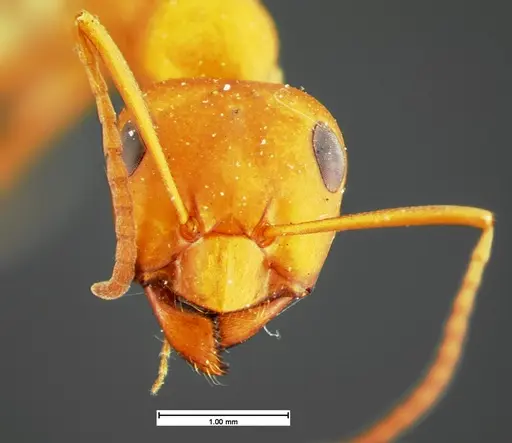
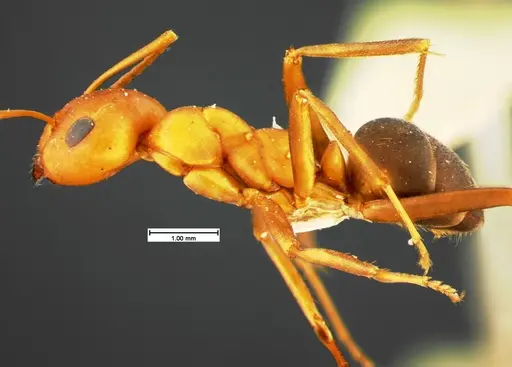
Formica criniventris is a striking bicolored ant native to the western United States. Workers have a red head and mesosoma (middle body section) contrasting with a black gaster (abdomen), making them visually distinctive among North American ants. They are medium-sized ants belonging to the Formica rufa group, which includes several known slave-making species. Workers measure around 4-7mm and have a distinctive sparse hair pattern, their mid and hind tibiae typically have only 1-2 erect hairs near the tips, and their scapes lack erect hairs except at the very apex [1].
This species is notable for its temporary parasitic behavior, it may enslave workers from other Formica species, particularly Formica argentea or Formica neoclara. The queen invades a host colony, kills or replaces the host queen, and uses the existing workers to raise her own brood until the first generation of enslaved workers emerges [2]. This slave-making behavior makes them a fascinating species for antkeepers interested in complex social interactions.
Quick Summary
- Difficulty: Medium
- Origin & Habitat: Western United States, found in Montana, North Dakota, south through Colorado to New Mexico. They inhabit forested areas and open meadows, typically nesting under stones where they build thatched mounds around the stone [1].
- Colony Type: Temporary social parasite, single queen colonies that establish by invading host colonies of Formica argentea or Formica neoclara. The queen kills the host queen and uses host workers to raise her first brood [2].
- Colony: Monogyne
- Queen: Socially parasitic, Temporary parasitic
- Special: Slave-making
- Size & Growth:
- Queen: Approximately 4 lines (around 8-9mm based on related species) [3]
- Worker: 4-7mm [1]
- Colony: Likely several thousand workers at maturity based on rufa group patterns
- Growth: Moderate, development timeline follows typical Formica patterns of 6-10 weeks from egg to worker at optimal temperature
- Development: 6-10 weeks (estimated based on related Formica rufa group species) (Development time estimated from genus-level data, actual timeline may vary with temperature)
- Antkeeping:
- Temperature: Keep at room temperature, roughly 20-24°C. They tolerate cooler conditions better than many ants due to their northern distribution. A gentle temperature gradient allows workers to choose their preferred zone.
- Humidity: Moderate humidity around 50-60%. They prefer drier conditions than many ants, their natural habitat includes open meadows. Keep nest substrate lightly moist but allow some drying between waterings.
- Diapause: Yes, as a temperate species from northern latitudes, they require a winter hibernation period. Reduce temperature to around 5-10°C for 3-4 months during winter.
- Nesting: Test tubes work well for founding colonies. Established colonies do well in formicariums with soil or sand substrates that allow them to build their characteristic thatched nests. Provide a stone or hard surface for them to build around.
- Behavior: Workers are active foragers that search for food both on the ground and in low vegetation. They are not particularly aggressive toward humans but will defend their nest vigorously. As a temporary social parasite, their colony founding behavior is unique, the queen must find and invade a host colony rather than founding independently. Escape risk is moderate, standard barrier methods work well for this medium-sized species. Workers are known to engage in slave raids on neighboring Formica colonies to acquire new workers.
- Common Issues: temporary parasitic founding makes colony establishment difficult, you need a host colony or must allow the queen to invade an existing Formica colony, colonies may fail if the host colony is too small or weak to support the invading queen, they can be aggressive and may escape if nest security is inadequate, winter hibernation is essential, colonies that are not cooled properly may fail to thrive, slave-making behavior means they may not establish if no suitable host species is available
Colony Founding and Establishment
Formica criniventris has a unique colony founding method that sets it apart from most ant species. Unlike typical ants where the queen seals herself in a chamber and raises her first workers alone, F. criniventris is a temporary social parasite. The newly mated queen must find and invade an established colony of a host species, typically Formica argentea or Formica neoclara. Once inside, she kills or displaces the host queen and uses the existing host workers to raise her own brood [2].
This parasitic founding method presents challenges for antkeepers. You cannot simply set up a queen in a test tube and expect her to found a colony independently. Instead, you either need to obtain an already-established colony (which would already have workers), or introduce a newly mated queen to a weak host colony. The first generation of workers produced will be from the host species, these 'enslaved' workers will care for the parasite queen's brood until the first F. criniventris workers emerge. After this point, the colony transitions to being primarily F. criniventris.
Housing and Nest Setup
For established colonies, provide a formicarium with a soil or sandy substrate that allows for their natural nesting behavior. In the wild, these ants nest under stones and build thatched mounds around them [1]. In captivity, you can simulate this by providing a flat stone or similar hard surface buried partially in the substrate, the ants will often build their characteristic thatched structures around it.
Test tubes work well for housing the colony initially, but you'll need to transition them to a larger setup as the colony grows. A naturalistic setup with a deep soil layer (at least 5-10cm) works best for established colonies. Ensure the formicarium has proper escape prevention, while not excellent climbers, standard barrier methods like fluon on smooth surfaces will contain them.
Feeding and Diet
Like other Formica species, F. criniventris is omnivorous with a preference for protein-rich foods. Workers will collect honeydew from aphids and other sweet secretions, and they actively hunt small insects and arthropods. In captivity, you can feed them sugar water or honey as a constant energy source, along with protein sources like small crickets, mealworms, or other insects.
Feed protein foods 2-3 times per week, removing any uneaten prey after 24 hours. Keep sugar water or honey available at all times, refreshed every few days. Workers are active foragers, so providing a foraging area outside the nest chamber encourages natural behavior. [1]
Temperature and Seasonal Care
Formica criniventris originates from the northern United States and Canada, so they prefer cooler temperatures than many tropical ant species. Keep the colony at room temperature, ideally around 20-24°C. They can tolerate temperatures as low as 15°C without issue and will do better in a cool room than an overheated one.
Winter hibernation is essential for this species. During the cold months (roughly November through March in the Northern Hemisphere), reduce the temperature to 5-10°C. This can be achieved by moving the colony to an unheated garage, basement, or refrigerator. Do not feed during hibernation and keep the substrate slightly moist but not wet. Failure to provide proper hibernation can weaken or kill the colony. [1]
Behavior and Defense
Workers of F. criniventris are active foragers that search for food both on the ground and can climb short distances into low vegetation. They are not particularly aggressive toward humans and rarely sting, their sting is mild compared to many ant species. However, they will defend their nest vigorously if threatened.
The species is known for its slave-making behavior. Once established, colonies may conduct raids on neighboring Formica colonies to capture pupae, which emerge as workers that integrate into the colony. This behavior is fascinating to observe but can be problematic if you keep multiple Formica colonies in close proximity. [1]
References

This caresheet is licensed under CC BY-SA 4.0 .
CASENT0104874
View on AntWeb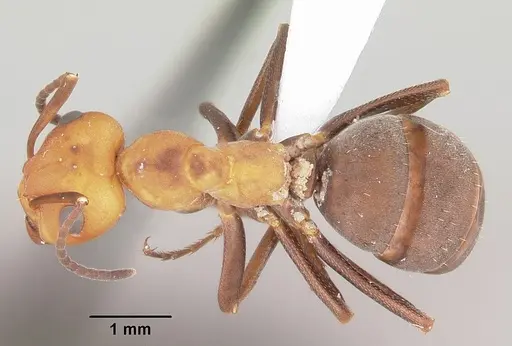
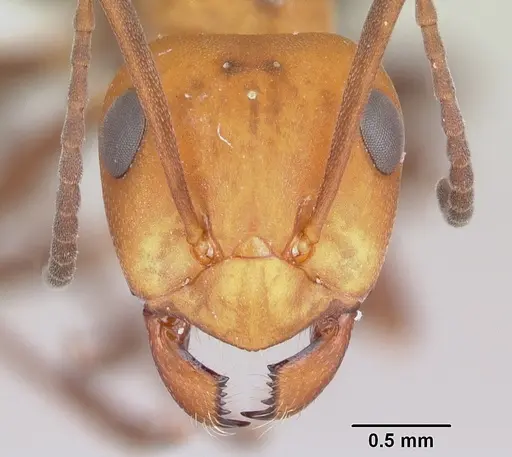
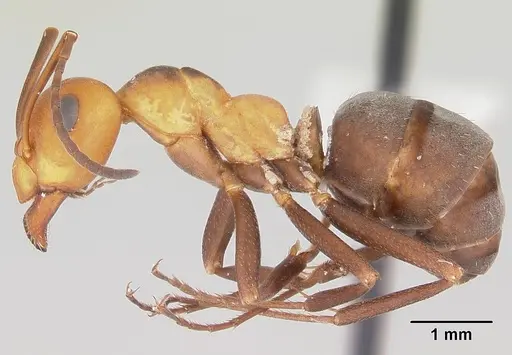
CASENT0105594
View on AntWeb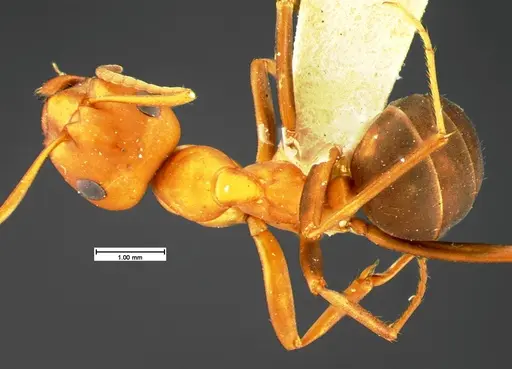
Literature
Loading...Loading products...