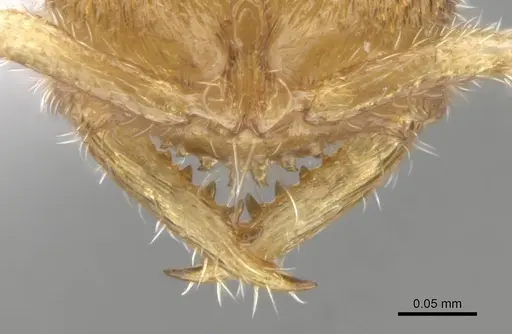
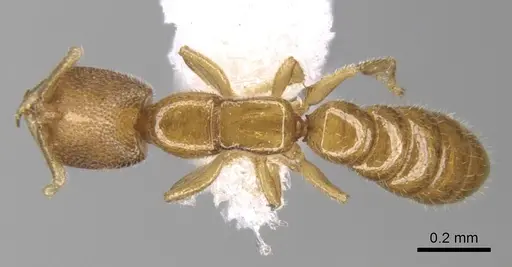
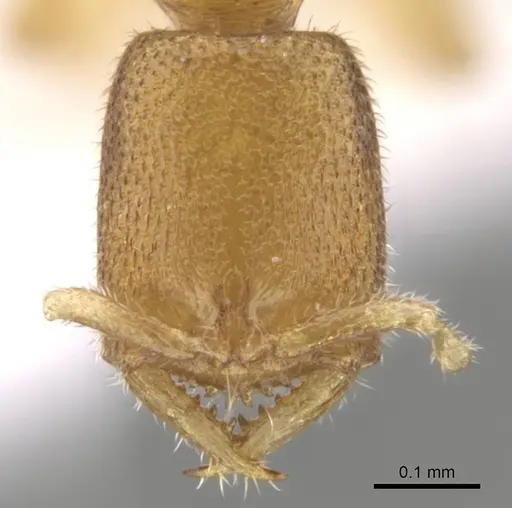
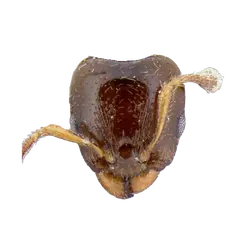
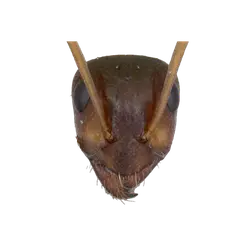
Fulakora degenerata - "Degenerate Dracula Ant"
A fascinating species belonging to the Amblyoponinae subfamily, commonly known as Dracula ants. These ants are specialized predators, notable for their unique feeding habits where workers feed their larvae by injuring prey and allowing the larvae to consume the hemolymph (insect blood). Fulakora degenerata workers are small, typically ranging from 3-5mm in length, and possess a slender body adapted for a subterranean life. They are cryptic ants, preferring to nest and forage beneath leaf litter and in the soil.
- Difficulty: Expert
- Origin & Habitat: Neotropical Region (Brazil, Costa Rica, Guatemala, Honduras, Mexico, Peru, Suriname, Colombia, Panama) in Microhabitats such as leaf litter and within the soil, preferring humid, forest-like environments. They can be found at elevations up to 1530 meters. Some related species have been observed nesting within termite mounds..
- Colony Type: Likely Monogyne (single queen), but specific information for F. degenerata is scarce. Related species are known to be monogyne with small colony sizes., semi-claustral (queen forages for her initial brood). founding.
- Size & Growth:
- Queen: 3-5mm
- Worker: 3-5mm
- Colony: Small (tens to low hundreds). Slow growth.
- Antkeeping:
- Temperature: Preferred temperature range is 24-28°C (75-82°F) to mimic their tropical habitat..
- Humidity: Requires high humidity, typically 70-90%, to thrive in their moist soil and leaf litter environment..
- Diapause: Not required. Not specified at Not specified.
- Nesting: Natural nests are simple, shallow hollows in soil, under leaf litter, or rotting wood. They need a nest that retains high humidity, such as a naturalistic setup with deep, moist substrate, or a custom formicarium designed for high moisture and soil-dwelling species..
- Behavior: Medium (primarily towards prey, but will sting if provoked) aggressiveness.
- Common Issues: Specialized diet difficulties, Maintaining high humidity, Mold growth in humid setup, Stress from disturbance, Colony stalling due to improper feeding or humidity.
One of the most mind-blowing aspects of keeping Fulakora degenerata is their incredibly unique feeding habits. Unlike most ant colonies that rely on sugary liquids or seeds, these Dracula ants are dedicated carnivores. Their workers don't just kill prey; they bring it back to the nest, gently pierce it, and then allow their larvae to feed directly on the hemolymph, or 'insect blood,' of the unfortunate victim. This isn't just a quirky behavior; it's a vital part of their care. You'll need to consistently provide live insect prey like small mealworms, roaches, or even soft-bodied invertebrates to ensure your colony thrives.
Delving deeper into their biology, Fulakora degenerata exhibits fascinating 'primitive' traits that set them apart from many common ant species in the hobby. For instance, their queens aren't strictly claustral; they're semi-claustral, meaning they venture out to forage for food, particularly when establishing their initial brood. Furthermore, you won't observe the typical trophallaxis (mouth-to-mouth food sharing) among these ants. Instead, the workers provide solid pieces of prey directly to the hungry larvae. This means your feeding strategy will need to adapt to these ancient behaviors, focusing on direct prey presentation rather than just a liquid feeder.
Don't expect a bustling, constantly active colony with F. degenerata. These ants are quite cryptic and, honestly, a bit sluggish compared to many other species. They prefer to stay out of sight, diligently working within their hidden tunnels beneath the substrate. Colony sizes are naturally quite small, usually numbering in the tens to a few hundred individuals at most. If you're an antkeeper who loves to constantly observe a large, visible colony, these secretive, smaller colonies might not be the best fit. However, for those fascinated by unique behaviors and willing to patiently observe, they offer a truly rewarding experience.
Creating the perfect habitat for Fulakora degenerata is paramount to their success. In their natural environment, they nest in simple, shallow hollows within loose soil, under leaf litter, or nestled in decaying wood. This strongly implies the need for a formicarium that can maintain consistently high humidity levels, ideally a naturalistic setup with a deep substrate layer. Adequate moisture is non-negotiable for their survival; a dry nest will quickly spell disaster. Yet, striking that balance is key-ensure your setup also has proper ventilation to prevent unsightly and harmful mold growth, which can quickly wipe out a delicate colony.