

Echinopla pallipes
- Scientific Name
- Echinopla pallipes
- Tribe
- Camponotini
- Subfamily
- Formicinae
- Author
- Smith, 1857
- Distribution
- Found in 2 countries
Echinopla pallipes Overview
Echinopla pallipes is an ant species of the genus Echinopla. It is primarily documented in 2 countries , including Indonesia, Malaysia. Detailed taxonomic data and occurrence records can be further explored via authoritative databases such as AntWeb or the Global Biodiversity Information Facility (GBIF).
Echinopla pallipes
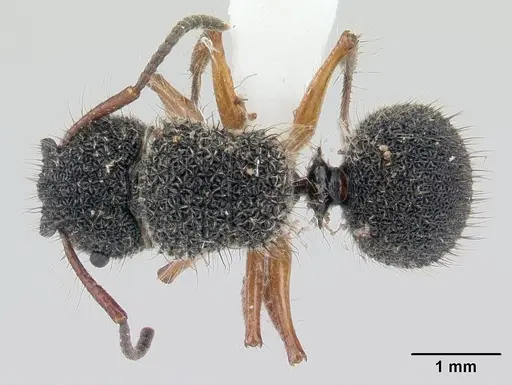
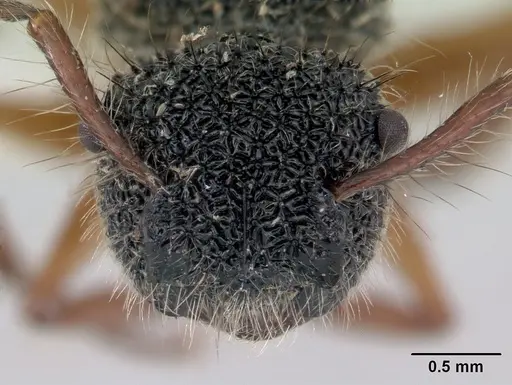
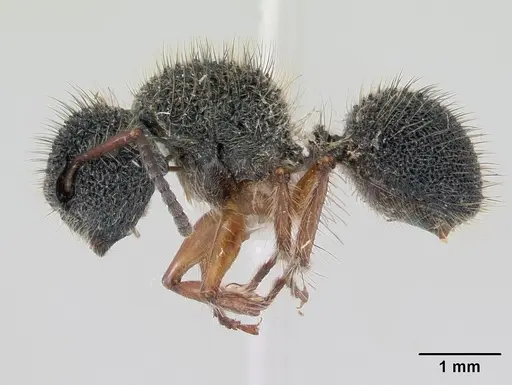
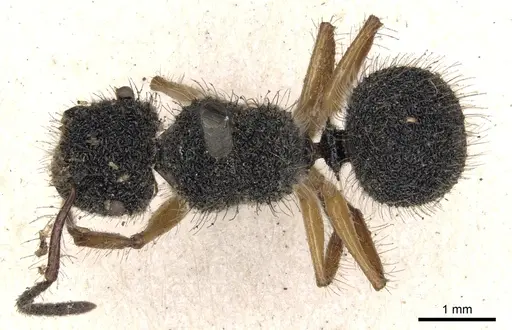
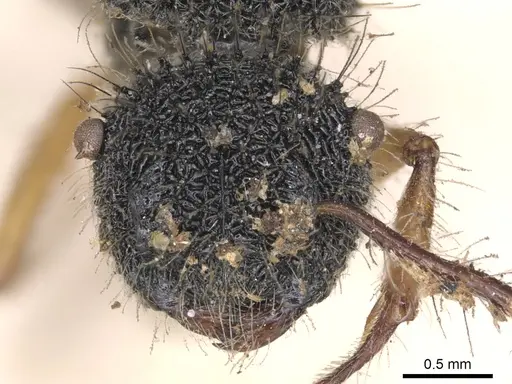
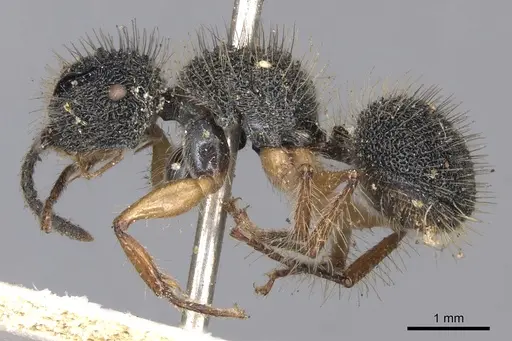
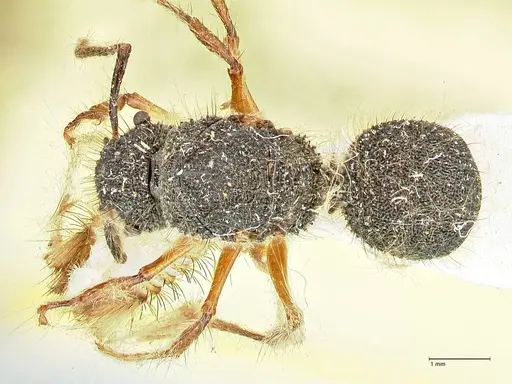
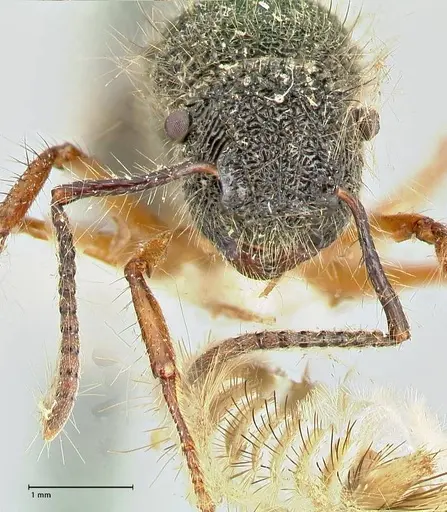
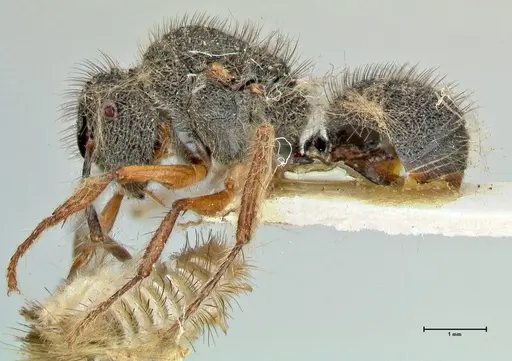
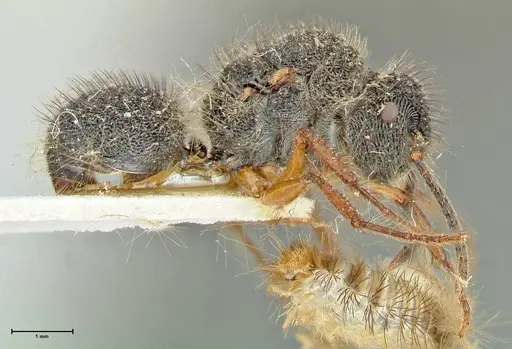
Echinopla pallipes is a small to medium-sized ant belonging to the Formicinae subfamily, native to Southeast Asia. Workers measure approximately 6mm in total length, making them smaller than their close relative Echinopla melanarctos. They have a distinctive appearance with a black body, reddish-brown mandibles and antennae, and notably pale legs, the feature that gives them their name 'pallipes' (pale legs). Their body is covered in small tubercles (bumpy projections), and they have a strongly arched mesosoma that forms a smooth dome shape. The eyes are positioned toward the back of the head, and the first gastral segment has a characteristic dense, pitted sculpture. This species belongs to the melanarctos-group of Echinopla ants and is found in dipterocarp and lower montane mixed dipterocarp forests across Borneo, the Philippines, and Thailand [1][2].
Quick Summary
- Difficulty: Unknown, no captive care data available
- Origin & Habitat: Native to Southeast Asia (Borneo, Indonesia, Malaysia, Philippines, Thailand). Found in dipterocarp forest and lower montane mixed dipterocarp forest at various locations including Sarawak and Sabah in Borneo, Luzon in the Philippines, and northern Thailand [1][2][3].
- Colony Type: Colony structure is unconfirmed. No published data on whether they are single-queen (monogyne) or multi-queen (polygyne) colonies.
- Size & Growth:
- Queen: Unconfirmed, queen described by Forel in 1913 but measurements not available in provided data [3]
- Worker: Approximately 6mm total length [1]. Head width 1.85-2.02mm (typical workers smaller than 2.02mm) [3].
- Colony: Unknown, no colony size data published
- Growth: Unknown
- Development: Unconfirmed, no development data available for this species (Related Echinopla species may provide rough estimates, but specific development timeline has not been studied)
- Antkeeping:
- Temperature: Inferred: Keep at 24-28°C based on their tropical forest habitat in Southeast Asia. Room temperature (22-25°C) is likely suitable as a starting point. Monitor colony activity and adjust as needed.
- Humidity: Inferred: Tropical forest ants require moderate to high humidity (60-80%). Keep nest substrate consistently moist but not waterlogged. Provide a water source.
- Diapause: Unlikely, as a tropical species from Southeast Asia, they probably do not require a winter diapause. However, some seasonal slowing may occur during cooler periods.
- Nesting: Inferred: In nature they likely nest in rotting wood, under bark, or in soil in forest environments. Captive recommendations: Y-tong (AAC) nests or naturalistic setups with moist substrate work well for Formicinae ants. Avoid completely dry conditions.
- Behavior: Behavior is poorly documented. Members of the genus Echinopla are generally less studied than common ant genera, but Formicinae ants typically show moderate activity levels. They are likely daytime foragers. Escape prevention should be moderate, workers at 6mm are not extremely small but can still escape through small gaps. Use standard barrier methods. No specific aggression data available, but they are not known to be particularly aggressive or dangerous. Sting risk is low, Formicinae ants rarely sting and their sting is mild even if present.
- Common Issues: No captive care literature exists, this is a rarely kept species with no established husbandry protocols, Wild-caught colonies may have parasites or diseases that are difficult to treat without species-specific knowledge, Humidity control is critical, too dry and colonies will fail, too wet can cause fungal issues, Limited availability, this species is not commonly available in the antkeeping hobby, Unknown founding behavior means successful colony establishment may be challenging
Species Identification and Distinguishing Features
Echinopla pallipes is a member of the melanarctos-species group within the genus Echinopla. Workers reach approximately 6mm in total length, making them smaller than the similar Echinopla melanarctos. The most distinguishing feature is their pale legs, which contrasts with the otherwise black body. Their mandibles and antennae are reddish-brown, and the tip of the gaster (abdomen) is yellowish-brown. The eyes are positioned toward the back of the head (posterior position), which helps distinguish them from similar species like E. tritschleri and E. cherapunjiensis. The body has weakly developed blunt spines on the head and mesosoma, and the first gastral segment has a distinctive dense, pitted (cribrate) sculpture. In dorsal view, each side of the petiole has a short spine [1][2][3].
Natural Distribution and Habitat
Echinopla pallipes is found across the Indomalaya region, specifically in Borneo, Indonesia, Malaysia, the Philippines, and Thailand. In Thailand, they have been recorded in the northern region (Tak province: Thung Yai) and the peninsula region (Narathiwat province: Halabala). In Borneo, specimens have been collected from Sarawak, Sabah, and Kalimantan Barat. The Philippines population is on Luzon Island. Their natural habitat is dipterocarp forest and lower montane mixed dipterocarp forest, these are humid, shaded tropical rainforest environments with dense canopy cover. This habitat preference suggests they are adapted to stable, warm, and moist conditions [1][4][3].
Taxonomy and Relatives
Echinopla pallipes belongs to the subfamily Formicinae (which includes genera like Camponotus, Lasius, and Polyrhachis) and the tribe Camponotini. The genus Echinopla contains about 30 described species, all distributed in Asia and Australasia. Within the melanarctos-group, E. pallipes is most similar to E. melanarctos but can be distinguished by its smaller size and pale legs. Other similar species include E. circulus, E. tritschleri, and E. cherapunjiensis. The genus is characterized by ants with tuberculate (bumpy) body surfaces and strongly arched mesosomas. This species was originally described by Frederick Smith in 1857 from Borneo, and the queen was later described by Forel in 1913 [1][2][3].
Current State of Captive Care Knowledge
Echinopla pallipes is an extremely rare species in the antkeeping hobby, and there is no published captive care information available. This species has not been established in captive breeding programs, and wild colonies are not commonly available. What we know comes entirely from museum specimens and scientific collection records. For prospective keepers, this means you would essentially be pioneering captive husbandry for this species. Any care recommendations would be based on inference from: (1) their tropical forest habitat suggesting warm, humid conditions, (2) their size (6mm workers) suggesting standard-sized nest chambers work, and (3) their subfamily (Formicinae) suggesting they are likely claustral founders like most related ants. However, these are educated guesses, not established protocols. If you obtain this species, careful observation and documentation of their behavior would be valuable contributions to antkeeping knowledge [1][3].
Inferred Care Recommendations
Based on limited data, here are provisional care recommendations for this species. For housing, use a Y-tong (AAC) nest or a naturalistic setup with moist substrate, both work well for Formicinae ants. The nest should have chambers scaled appropriately for 6mm workers. Temperature should be kept in the range of 24-28°C, which aligns with their tropical forest origin. Room temperature (22-25°C) may be acceptable. Humidity should be moderate to high (60-80%), with consistently moist but not waterlogged substrate. Provide a water source like a test tube with a cotton ball. For feeding, Formicinae ants typically accept sugar sources (honey water, sugar water) and protein (insects, small prey). Offer sugar water continuously and protein sources 2-3 times per week. Escape prevention should be standard, while not extremely small, use proper barriers. No diapause is recommended given their tropical origin. These recommendations are tentative and should be adjusted based on observed colony behavior [1][3].
Frequently Asked Questions
How long does it take for Echinopla pallipes to go from egg to worker?
The development timeline for this species has not been documented. No scientific papers have studied their brood development. As a rough estimate based on related Formicinae ants, expect approximately 6-10 weeks from egg to worker at optimal temperature (around 25°C). However, this is purely speculative for E. pallipes specifically.
What do Echinopla pallipes ants eat?
Feeding habits have not been specifically documented for this species. As Formicinae ants, they likely accept sugar sources (honey, sugar water) and protein (insects, small arthropods). In their natural habitat of dipterocarp forests, they probably forage for nectar and small invertebrates. Offer sugar water continuously and protein prey 2-3 times per week as a starting point.
Are Echinopla pallipes good for beginners?
No. This species is not recommended for beginners. There is virtually no captive care information available, they are rarely available in the hobby, and established husbandry protocols do not exist. Keeping this species would essentially be experimental. Beginners should start with well-documented species like Lasius niger, Camponotus species, or Tetramorium caespitum.
What temperature should I keep Echinopla pallipes at?
Temperature requirements are not confirmed for this species. Based on their tropical forest habitat in Southeast Asia, aim for 24-28°C. Room temperature (22-25°C) may be acceptable as a starting point. Monitor colony activity, if they seem sluggish, slightly increase temperature, if they avoid heated areas, reduce it. Use a heating cable on one side of the nest to create a gentle gradient if needed.
Can I keep multiple Echinopla pallipes queens together?
Colony structure is unconfirmed for this species. We do not know whether they are single-queen (monogyne) or multi-queen (polygyne) colonies in the wild. Combining unrelated queens has not been documented and is not recommended given the lack of information about their social structure.
How big do Echinopla pallipes colonies get?
Maximum colony size is unknown. No published data exists on colony size for this species. Based on worker size (6mm) and their genus, colonies likely reach several hundred workers at most, but this is an estimate.
Do Echinopla pallipes need hibernation?
Hibernation is unlikely required. As a tropical species from Southeast Asia, they are adapted to year-round warm conditions without distinct winter periods. Some seasonal slowing may occur during naturally cooler periods, but a formal diapause period is not recommended.
What type of nest should I use for Echinopla pallipes?
Nest type is not confirmed for this species. Based on inference from related Formicinae ants and their likely natural nesting in rotting wood or soil, a Y-tong (AAC) nest or a naturalistic setup with moist substrate would be appropriate. Ensure chambers are appropriately sized for 6mm workers.
Where can I get Echinopla pallipes ants?
This species is extremely rare in the antkeeping hobby. They are not commonly available from breeders or suppliers. If available at all, it would likely be through specialized dealers or if you collected a colony yourself from their natural range (with appropriate permits). This is not a species you are likely to find at typical ant shops.
Is Echinopla pallipes aggressive?
Aggression levels are not documented for this species. The genus Echinopla is not known for particularly aggressive behavior. They are likely to be moderate in temperament, similar to other Formicinae ants. They probably defend their nest if threatened but are not known as aggressive biters or stingers.
Why is there no care information for Echinopla pallipes?
This species has not been studied for captive husbandry because it is rarely kept in captivity. The scientific literature focuses on taxonomy and distribution, not antkeeping. Echinopla species in general are not common in the hobby, and E. pallipes specifically has never been established in captive breeding programs. Any keeper successfully maintaining this species would be pioneering new knowledge for the hobby.
References

This caresheet is licensed under CC BY-SA 4.0 .
Literature
Loading...Loading products...