

Echinopla melanarctos
- Scientific Name
- Echinopla melanarctos
- Tribe
- Camponotini
- Subfamily
- Formicinae
- Author
- Smith, 1857
- Distribution
- Found in 3 countries
Echinopla melanarctos Overview
Echinopla melanarctos is an ant species of the genus Echinopla. It is primarily documented in 3 countries , including Brunei Darussalam, Indonesia, Malaysia. Detailed taxonomic data and occurrence records can be further explored via authoritative databases such as AntWeb or the Global Biodiversity Information Facility (GBIF).
Echinopla melanarctos
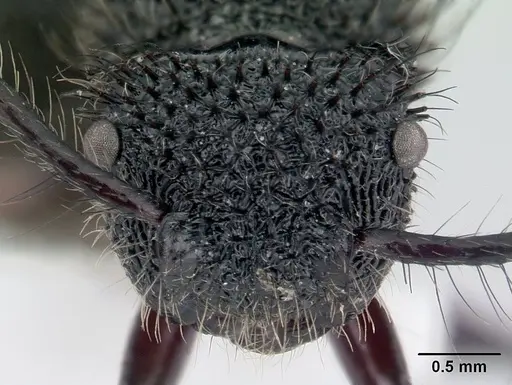
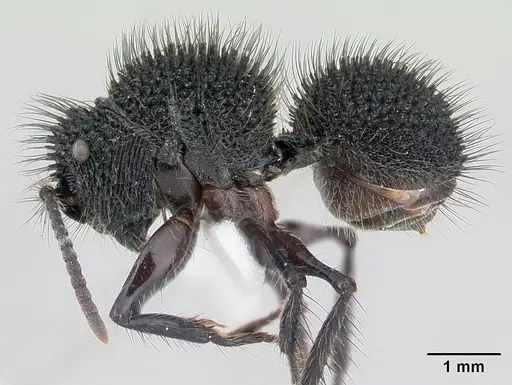
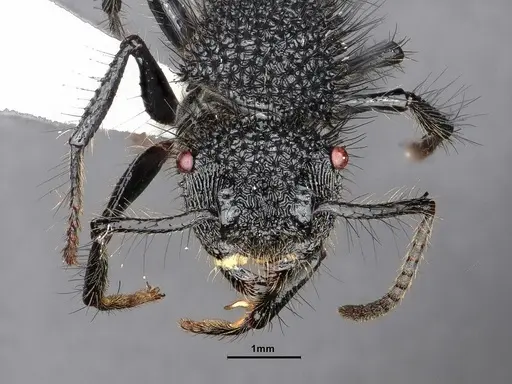
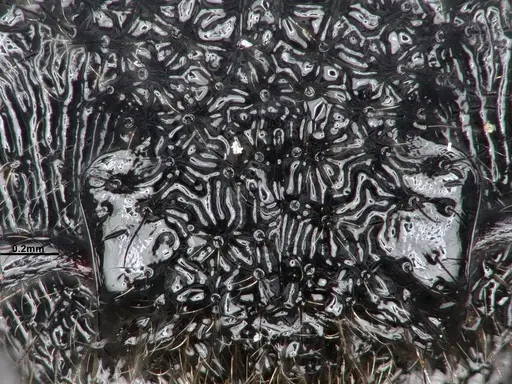
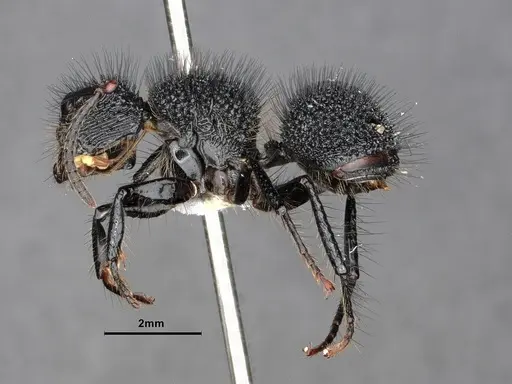
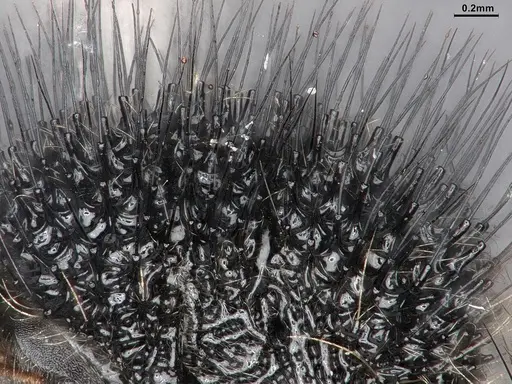
Echinopla melanarctos is a striking tropical ant native to Southeast Asia, including Singapore, Malaysia, Borneo, Sumatra, and Thailand. Workers measure 6.5-8.2mm and are instantly recognizable by their very spiny appearance, they have about 700 unique 'pedestal hairs' that stick up from their entirely black body like tiny umbrellas, a cuticular structure not found in any other ant species [1]. Queens are larger at 8.8-9.7mm and have reduced spines on their thorax. This is the type species of the genus Echinopla, meaning it was the first described and defines what the genus looks like [1]. Colonies are small with under 100 workers, nesting in dead hollow branches either on the ground or hanging in vegetation [AntWiki]. This species is known to be parasitized by Ophiocordyceps unilateralis (cordyceps fungus) in Asia [2].
Quick Summary
- Difficulty: Expert
- Origin & Habitat: Tropical Southeast Asia, found in Singapore, West Malaysia, Sumatra, and Borneo (Sabah and Sarawak). They live in lowland rainforest and nest in dead hollow branches lying on the ground or hanging in vegetation [1][3][AntWiki].
- Colony Type: Monogyne (single queen) colonies that are polydomous, meaning the colony occupies multiple connected nest sites. Colonies contain fewer than 100 workers [AntWiki].
- Size & Growth:
- Queen:{.size-link} 8.8-9.7 mm [1]
- Worker:{.size-link} 6.5-8.2 mm [1]
- Colony: Under 100 workers [AntWiki]
- Growth: Slow, small colony size suggests slow development
- Development: Unknown, no direct development data exists for this species (Based on related Formicinae and small colony size, expect development of 2-3 months to first workers)
- Antkeeping:
- Temperature: Keep warm at 24-28°C. This is a tropical species from Southeast Asian rainforests, so they need consistently warm conditions year-round.
- Humidity: High humidity around 70-85%. These ants live in rainforest environments and nest in dead wood that stays naturally moist. Keep the nest substrate damp but not waterlogged, with some drier areas for workers to regulate.
- Diapause: No, as a tropical species from near the equator, they do not require hibernation. Keep them at consistent warm temperatures year-round.
- Nesting: They naturally nest in dead hollow branches. In captivity, a naturalistic setup with cork or hardwood works well, you can use a Y-tong or acrylic nest with narrow chambers filled with dead wood or cork. They prefer tight, enclosed spaces that mimic their natural hollow branch habitat.
- Behavior: These ants are relatively docile and not aggressive. Workers are scavengers that collect small dead insects, they do not tend aphids or collect honeydew [AntWiki]. They are not known for stinging and are considered peaceful. They have moderate escape risk due to their larger size, but standard barriers like fluon work well. They are slow-moving compared to many ants and spend most of their time inside the nest. Polydomous colonies mean they may use multiple connected chambers or satellite nests.
- Common Issues: small colony size means any losses have big impact, these colonies stay small and take a long time to grow, tropical humidity requirements can be tricky to maintain consistently without mold problems, rare in the hobby so there is limited keeper experience to draw from, they do not accept sugar sources like honeydew, only protein from dead insects, wild-caught colonies may be stressed from collection and have high mortality, this species can be parasitized by cordyceps fungus, monitor colony health closely
Housing and Nest Setup
Echinopla melanarctos naturally nests in dead hollow branches, either lying on the ground or hanging in vegetation. For captivity, a naturalistic setup works best, use a formicarium filled with cork, dead wood, or similar materials that can hold moisture while providing dark, enclosed chambers. A Y-tong (AAC) nest with narrow passages also works well since it mimics the tight conditions of a hollow branch. The key is providing multiple connected chambers since these ants are polydomous, they naturally spread across several nest sites. Keep the nest material consistently moist but not soaking wet. Because they come from humid tropical rainforests, you will need to maintain high humidity (70-85%) around the nest. A water reservoir or moist substrate in the outworld helps maintain humidity. Use moderate ventilation to prevent mold while retaining moisture.
Feeding and Diet
These ants are scavengers that specialize in collecting small dead insects. In the wild, foragers do not visit any trophobionts (aphids, scale insects), they ignore sugar sources entirely and focus on protein from carrion [AntWiki]. In captivity, feed them small dead insects like fruit flies, small crickets, mealworms, or similar prey. Offer protein foods 2-3 times per week. Remove any uneaten prey after 24-48 hours to prevent mold. Do not expect them to accept sugar water, honey, or fruit, they are not interested in sweet liquids. This is unusual compared to many common ant species, so adjust your feeding expectations accordingly. Fresh killed insects are better than dried ones.
Temperature and Humidity
As a tropical species from Southeast Asia, Echinopla melanarctos needs warm, humid conditions. Keep the nest area at 24-28°C consistently, room temperature in most homes may be too cold. Use a heating cable or mat on one side of the nest to create a warm zone, but always provide a temperature gradient so ants can move between warmer and cooler areas. High humidity is critical (70-85%). The nest substrate should feel damp to the touch. You can achieve this by keeping a water reservoir connected to the nest or regularly misting the substrate. However, balance humidity with adequate ventilation to prevent mold growth, which can quickly kill small colonies. These ants do not need any winter cooling or diapause, maintain tropical conditions year-round.
Colony Structure and Growth
This species forms small colonies with a single queen and typically fewer than 100 workers [AntWiki]. The colony is polydomous, meaning it occupies multiple connected nest sites, this is unusual and something to consider when setting up their housing. Queens are significantly larger than workers (8.8-9.7mm vs 6.5-8.2mm) and have reduced spines on their thorax compared to workers [1]. Growth is slow, given the small maximum colony size, expect your colony to take many months or even years to reach maturity. Be patient with founding colonies. The unique pedestal hair structure (about 700 per ant) is visible under magnification and makes this species fascinating for those who enjoy observing ant morphology.
Behavior and Temperament
Echinopla melanarctos is a docile, non-aggressive species. Workers are slow-moving and spend most of their time inside the nest. They are not known for stinging and pose no danger to keepers. Their most notable behavior is the unique pedestal hairs covering their body, these specialized structures are unlike anything seen in other ant genera and are thought to provide some form of protection or sensory function. Colonies are polydomous, meaning they may establish satellite nests connected to the main colony. This is different from most ants that keep all workers in one nest. When keeping this species, do not be alarmed if workers spread to multiple chambers, this is natural behavior for them.
Frequently Asked Questions
How long does it take for Echinopla melanarctos to have first workers?
The exact development time is unknown, but based on related Formicinae and their small colony size, expect 2-3 months from egg to first worker at warm temperatures (around 26°C). Growth is slow and colonies remain small.
What do Echinopla melanarctos eat?
They are scavengers that eat small dead insects. Feed them small prey like fruit flies, small crickets, or mealworms. They do NOT eat sugar, honey, or honeydew, ignore sweet liquids entirely. Protein from insects is their only confirmed food source.
Are Echinopla melanarctos good for beginners?
No. This is an expert-level species due to their specific humidity requirements, unusual diet (no sugar), small colony sizes, slow growth, and rarity in the antkeeping hobby. They are challenging to keep and not recommended for beginners.
Do Echinopla melanarctos need hibernation?
No. As a tropical species from near the equator, they do not require any winter cooling. Keep them warm (24-28°C) and humid year-round without seasonal temperature changes.
How big do Echinopla melanarctos colonies get?
Colonies remain small with fewer than 100 workers at maturity. This is one of the smaller ant species in terms of colony size, so do not expect the large swarms you might get from species like Lasius or Camponotus.
Can I keep multiple Echinopla melanarctos queens together?
No. This species is confirmed monogyne, colonies have only a single queen. Multiple unrelated queens will fight. Only keep one queen per colony.
What temperature do Echinopla melanarctos need?
Keep them at 24-28°C consistently. Use a heating cable or mat to maintain these temperatures, as room temperature is often too cold for this tropical species.
What makes Echinopla melanarctos special?
They have about 700 unique 'pedestal hairs', specialized cuticular structures not found in any other ant genus. These give them their distinctive spiny appearance and make them fascinating for ant enthusiasts who enjoy morphology.
When should I move Echinopla melanarctos to a formicarium?
Wait until the colony has at least 15-20 workers and is actively using multiple chambers. Since they are polydomous naturally, they may do better in larger setups with multiple connected chambers from the start. A naturalistic setup with cork or dead wood works well.

This caresheet is licensed under CC BY-SA 4.0 .
CASENT0178497
View on AntWeb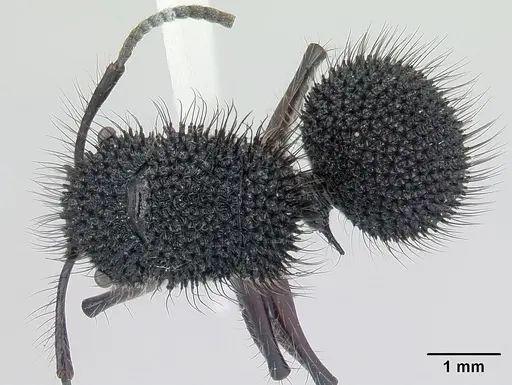
CASENT0884107
View on AntWeb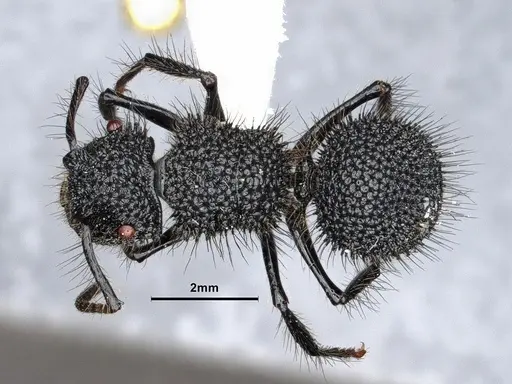
Literature
Loading...Loading products...