

Dinoponera hispida
- Scientific Name
- Dinoponera hispida
- Tribe
- Ponerini
- Subfamily
- Ponerinae
- Author
- Lenhart <i>et al.</i>, 2013
- Distribution
- Found in 1 countries
Dinoponera hispida Overview
Dinoponera hispida is an ant species of the genus Dinoponera. It is primarily documented in 1 countries , including Brazil. Detailed taxonomic data and occurrence records can be further explored via authoritative databases such as AntWeb or the Global Biodiversity Information Facility (GBIF).
Dinoponera hispida
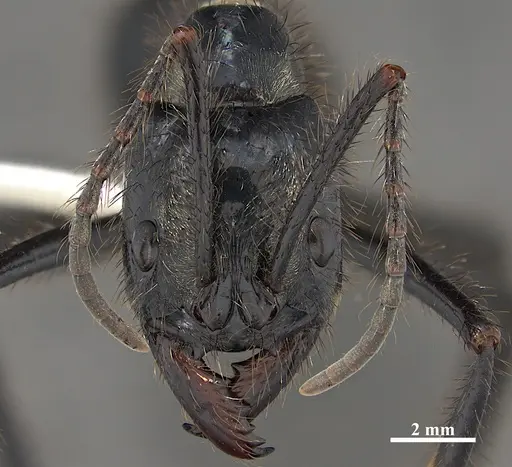
Dinoponera hispida is one of the largest ant species in the world, with workers measuring an impressive 30-32mm in total body length [1]. These massive ants have a striking appearance: their entire body is covered in conspicuous bristle-like setae (stiff hairs), and their smooth, shiny black integument displays a distinctive bluish luster, especially visible on the sides of the head [1][2]. The species was only described in 2013,making it one of the more recently discovered Dinoponera species. In the wild, they inhabit the Amazon region of southeastern Pará, Brazil, where they live in humid tropical forests [2].
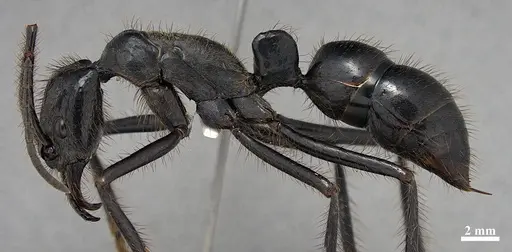
What makes D. hispida particularly interesting is how little we know about them, their biology has never been documented, and only the worker caste is known [3]. This makes them a true frontier species for antkeepers. They share their genus with other giant ants like the famous Dinoponera quadriceps, but D. hispida is distinguished by its bristle-covered body and the bulging shape of its petiole (the narrow 'waist' segment connecting the thorax and abdomen) [1].
Quick Summary
- Difficulty: Unknown, biology unstudied
- Origin & Habitat: Southeastern Amazon basin in Pará, Brazil. They come from humid tropical forests in the Tucuruí area, living in a Tropical Monsoon climate where the coldest month averages over 18°C with high annual precipitation [2].
- Colony Type: Unconfirmed, biology unstudied. Based on related Dinoponera species, likely single-queen colonies, but this is speculative.
- Size & Growth:
- Queen: Unknown, queen caste has not been described [3]
- Worker: 30.39-31.83 mm [1]
- Colony: Unknown, no colony data exists
- Growth: Unknown
- Development: Unknown, no development data exists (No research has documented the development timeline. Related Dinoponera species typically take several months, but specific timelines are unconfirmed.)
- Antkeeping:
- Temperature: Based on their Amazonian habitat, aim for 24-28°C. The coldest month in their range averages over 18°C, so they need warm conditions [2]. Use a heating cable on one side of the nest to create a gradient.
- Humidity: High humidity is essential, think humid tropical forest floor. Keep the nest substrate consistently moist but not waterlogged. Their native habitat has high annual precipitation [2].
- Diapause: Unlikely, as a tropical species from a region with no cold season, they probably do not require hibernation. However, some seasonal slowdowns may occur during drier periods.
- Nesting: In the wild, Dinoponera species typically nest in soil or rotting wood in forest habitats [2]. For captivity, a large acrylic or Y-tong nest with moist substrate works well. Given their massive size, they need appropriately scaled chambers.
- Behavior: Dinoponera ants are known for their potent sting and alert, active foraging behavior. Workers are robust and well-defended. They likely forage individually or in small groups rather than forming large foraging trails. Their large size means they can deliver a painful sting if provoked, handle with caution. Escape risk is low due to their size, but they are strong and determined, so secure lids are still necessary.
- Common Issues: no biological data exists, all care recommendations are educated guesses based on genus patterns, queen caste unknown, wild colonies have never been documented or studied, their large size requires appropriately scaled housing that may be difficult to source, tropical humidity requirements may promote mold in captive setups if not managed properly, potentially threatened in the wild due to mining and deforestation in their limited range [2]
Discovery and Taxonomy
Dinoponera hispida was only described in 2013 by Lenhart, Dash, and Mackay, making it one of the more recently discovered giant ant species [1]. The species is known only from workers collected in the Tucuruí region of Pará, Brazil, a very limited distribution [1]. The name 'hispida' comes from the Latin word for bristle, referring to the conspicuous bristle-like setae that cover their entire body [3]. They can be distinguished from related species like Dinoponera longipes and Dinoponera mutica by their unique combination of features: the bristle-like setae, the smooth shiny integument with bluish luster, and the bulging shape of their petiole [1]. The male caste remains unknown, and no queen has ever been documented for this species [1][2].
Natural Habitat and Distribution
This species has an extremely limited distribution in southeastern Pará, Brazil, known only from the Tucuruí area and surrounding regions including Carajás, Melgaço, and Parauapebas [2]. Their habitat is the Amazon region, specifically humid tropical forests with large trees, under a Tropical Monsoon climate [2]. The average temperature of the coldest month in their range exceeds 18°C, and they experience high annual precipitation. This means they are adapted to consistently warm, humid conditions year-round. Their conservation status is concerning: their distribution is affected by large-scale mining operations, the Tucuruí Hydroelectric Power Plant, and extensive deforestation [2]. This makes them a species of conservation concern in the wild.
Housing and Enclosure Setup
Because Dinoponera hispida workers reach an impressive 30-32mm in length, standard ant housing will not work, they need large, appropriately scaled enclosures [1]. A large acrylic formicarium or Y-tong nest with spacious chambers is essential. The nest should have a moisture reservoir to maintain high humidity, as these are forest-floor ants from a humid tropical climate [2]. Use a substrate that retains moisture well, such as a soil-gypsum mix or coconut fiber. Provide a temperature gradient using a heating cable on one side of the nest, aiming for 24-28°C in the warm zone. The outworld should be spacious enough for their large foragers and include a water source. Given their potent sting potential, ensure the enclosure has secure, escape-proof lids.
Feeding and Diet
The diet of Dinoponera hispida has never been documented, but related Dinoponera species are predators and scavengers, typically hunting small invertebrates. Based on genus patterns, they likely accept live prey such as large insects (crickets, mealworms, roaches), and may also scavenge on protein-rich foods. As large predatory ants, they probably need regular protein meals to sustain their massive workers. Sugar sources may or may not be accepted, offer honey or sugar water occasionally but do not rely on it as a primary food source. Feed them appropriately sized prey items (large enough to interest a 30mm ant but small enough to tackle). Uneaten prey should be removed to prevent mold in the humid setup.
Handling and Safety
Dinoponera ants are known for their potent sting, these are not ants you handle casually. Workers of related species are alert, active, and will defend their nest vigorously if threatened. Given the large size of D. hispida workers at 30-32mm, their sting is likely quite painful and could cause significant discomfort [1]. When working with them, use long forceps or tubes for transport, never your bare hands. They are not aggressive toward humans unless their nest is disturbed, but they are capable of delivering a serious sting. Keepers with allergies to insect stings should exercise particular caution. Their large size also means they can deliver more venom than smaller ants.
Current Knowledge Gaps
It cannot be overstated how little is known about Dinoponera hispida, the scientific literature contains virtually no biological data for this species [3]. We do not know: colony structure (monogyne vs polygyne), founding behavior (how queens establish colonies), nuptial flight timing, development timeline from egg to worker, queen size and morphology, male morphology, colony size in the wild, or any aspect of their daily behavior or social organization. Everything in this caresheet is either directly from the limited morphological research or inferred from related Dinoponera species and their Amazonian habitat. This makes D. hispida a true species for advanced antkeepers who enjoy the challenge of discovering and documenting new behaviors, you may literally be the first to observe behaviors that are completely new to science.
Frequently Asked Questions
How big do Dinoponera hispida ants get?
Workers are massive at 30.39-31.83mm, making them one of the largest ant species in the world [1]. The queen caste has never been described, so queen size is unknown.
Is Dinoponera hispida good for beginners?
No. This species is not recommended for beginners. Their biology has never been studied, we don't know basic requirements like colony structure or development time, and they require large, specialized housing. They are a species for experienced antkeepers who enjoy discovering and documenting new behaviors.
What do Dinoponera hispida ants eat?
Their diet has never been documented. Based on related Dinoponera species, they are likely predators and scavengers. Offer large live insects (crickets, mealworms, roaches) and protein-rich foods. Sugar sources may or may not be accepted, offer occasionally but do not rely on them.
What temperature do Dinoponera hispida need?
Based on their Amazonian habitat, keep them at 24-28°C. Their native region has average temperatures where the coldest month exceeds 18°C with high precipitation [2]. Use a heating cable to maintain warmth.
Where is Dinoponera hispida found in the wild?
They have an extremely limited distribution in southeastern Pará, Brazil, known only from the Tucuruí area and nearby regions including Carajás, Melgaço, and Parauapebas [2]. Their habitat is humid Amazonian tropical forests.
Can I keep multiple Dinoponera hispida queens together?
Unknown. The colony structure of this species has never been studied. We do not know if they are single-queen (monogyne) or multi-queen (polygyne) in the wild. Without this basic biological data, combining queens is not recommended.
How long does it take for Dinoponera hispida eggs to become workers?
Unknown. No research has documented the development timeline for this species or any related Dinoponera species in sufficient detail. Related species typically take several months, but specific timelines are unconfirmed.
Do Dinoponera hispida need hibernation?
Unlikely. As a tropical species from the Amazon region with no cold season, they probably do not require hibernation. Some seasonal slowdowns may occur during drier periods, but a full diapause is not expected.
Why is Dinoponera hispida so rare in the antkeeping hobby?
This species was only described in 2013 and has a very limited wild distribution in southeastern Pará, Brazil [1]. Their habitat is threatened by mining, hydroelectric development, and deforestation [2]. Additionally, their biology is completely unstudied, making them challenging to keep. They are not commonly available in the antkeeping hobby.
References

This caresheet is licensed under CC BY-SA 4.0 .
CASENT0887859
View on AntWeb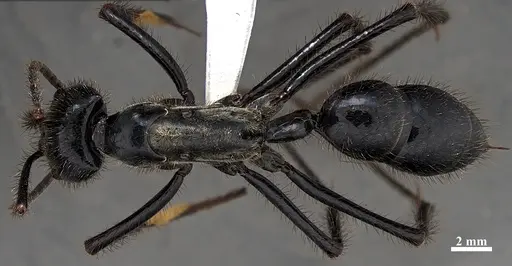
Literature
Loading...Loading products...