

Dinoponera quadriceps
- Scientific Name
- Dinoponera quadriceps
- Tribe
- Ponerini
- Subfamily
- Ponerinae
- Author
- Kempf, 1971
- Distribution
- Found in 2 countries
Dinoponera quadriceps Overview
Dinoponera quadriceps is an ant species of the genus Dinoponera. It is primarily documented in 2 countries , including Brazil, Peru. Detailed taxonomic data and occurrence records can be further explored via authoritative databases such as AntWeb or the Global Biodiversity Information Facility (GBIF).
Dinoponera quadriceps
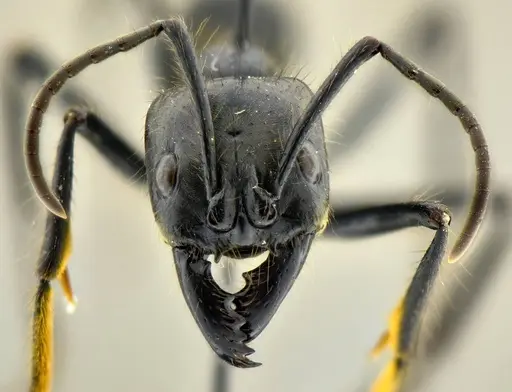
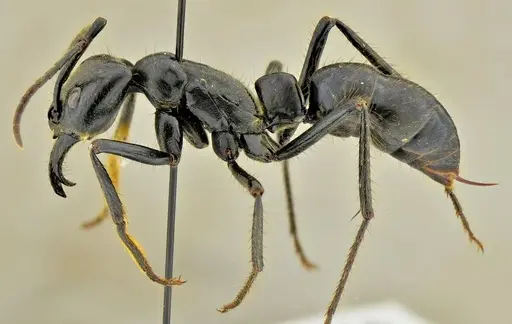
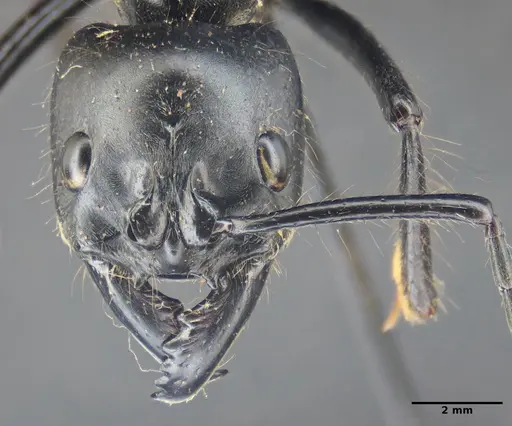
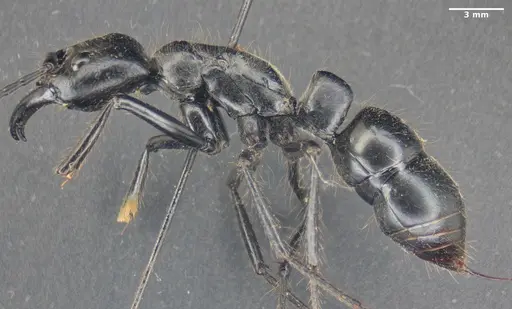
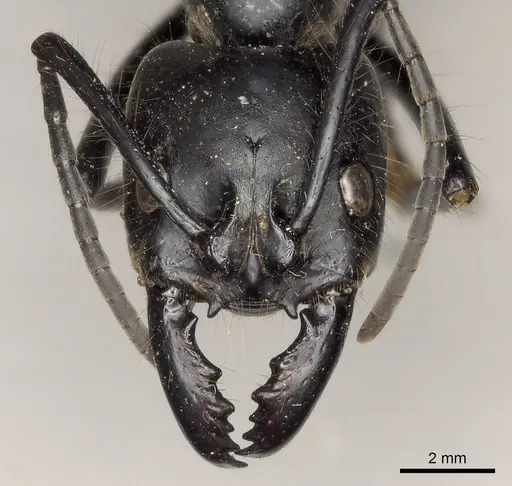
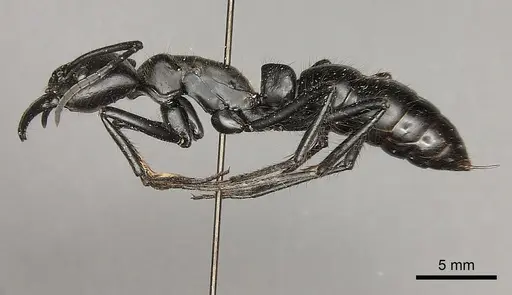
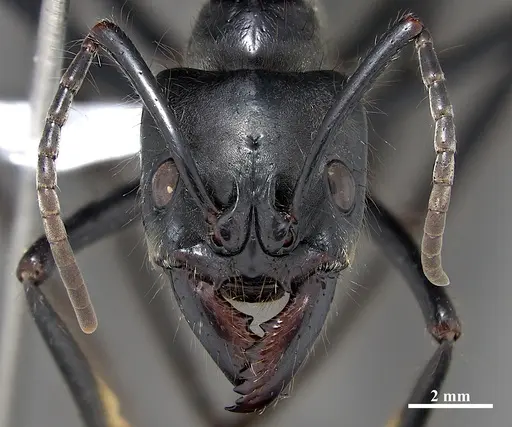
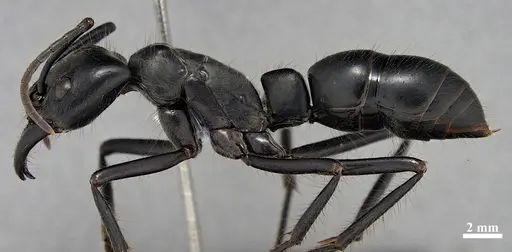
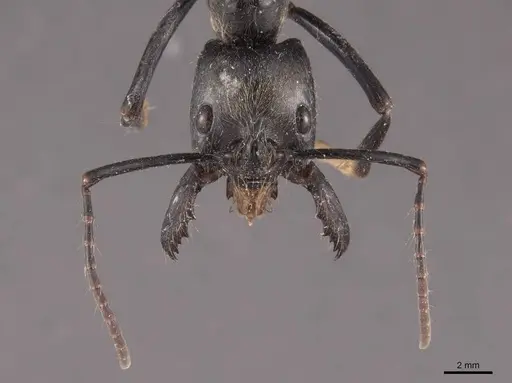
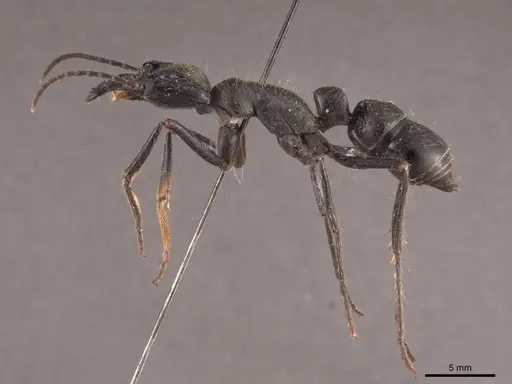
Dinoponera quadriceps is one of the largest ants in the world, with workers reaching an impressive 28-34mm in length. These giant ants are native to northeastern Brazil, where they inhabit diverse environments including the Caatinga (dry thorn woodland), Cerrado savanna, upland humid forests, and Atlantic forest regions. Workers are solid black with a finely micro-sculptured body surface and long, bristle-like hairs. Unlike most ant species, this species has completely lost the queen caste, instead, a mated worker called a 'gamergate' takes over the reproductive role, with all workers being morphologically similar and capable of developing ovaries [1][2].
What makes D. quadriceps truly fascinating is their complex social structure built around a strict dominance hierarchy. Only the highest-ranking worker (the alpha) can mate and reproduce, while lower-ranking workers perform different tasks based on their position. The alpha maintains dominance through specialized behaviors like 'gaster rubbing', bending her abdomen forward to rub pheromones onto subordinates. When challenged, the gamergate marks the pretender with chemicals from her Dufour gland, causing low-ranking workers to immobilize the challenger for days [3][4]. This species also produces medically relevant venom that has shown anti-inflammatory, antimicrobial, and pain-relieving properties in research [5].
Quick Summary
- Difficulty: Expert
- Origin & Habitat: Northeastern Brazil, found in Caatinga, Cerrado, upland humid forest, and Atlantic forest regions across Alagoas, Bahia, Ceará, Paraíba, Pernambuco, and Rio Grande do Norte states [6][7]. Nests are built underground at the base of trees and shrubs, typically 10-120cm deep with multiple chambers (up to 16) and 2-10 entrances [7][8].
- Colony Type: Queenless, colonies consist of a single mated worker (gamergate) that serves as the reproductive, plus 40-100 workers in a dominance hierarchy. This is a monogynous species with one reproductive at a time, though the gamergate can be replaced by the beta worker when she dies [1][2].
- Colony: Monogyne
- Special: Gamergates
- Size & Growth:
- Queen: N/A, queen caste has been secondarily lost. Reproduction is by gamergate (mated worker) [1].
- Worker: 28-34mm [6]
- Colony: 40-100 workers (average 82±29) [1][2]
- Growth: Slow, development takes approximately 90 days from egg to adult at 24°C [9]
- Development: Approximately 90 days at 24°C (egg ~10 days, larva ~33 days, pupa ~47 days) [9] (Development is temperature-dependent, faster at warmer temperatures but shorter adult lifespan. At 27°C, development takes ~100 days but adults only live ~105 days versus ~386 days at 24°C [9].)
- Antkeeping:
- Temperature: Keep around 24-26°C. This is a tropical species from warm Brazilian habitats where temperatures rarely drop below 18°C in the coldest month [7]. Avoid temperatures below 20°C as it slows development significantly. Room temperature is often suitable, but a heating cable on one side of the nest can create a gradient if needed.
- Humidity: Moderate to high. They nest in soil and need substrate that holds moisture well. Provide a water tube for drinking access. Mist the outworld occasionally but avoid waterlogging the nest. The natural habitat includes both dry Caatinga and more humid Atlantic forest, so they tolerate a range.
- Diapause: No, this is a tropical species from northeastern Brazil with no true hibernation. They remain active year-round, though foraging may decrease during extreme hot or dry periods [8].
- Nesting: Deep, multi-chambered underground nests in the wild. In captivity, a large naturalistic setup with soil or a spacious formicarium with multiple connected chambers works best. They need vertical space for their large bodies and multiple chambers for brood separation. A nest depth of at least 10-15cm is recommended. Y-tong (AAC) nests with large chambers can work but may need modification for their size.
- Behavior: These ants are primarily solitary foragers, they do not recruit nestmates to food sources. They are predatory, hunting insects and other arthropods on the ground. Workers are aggressive defenders of the nest and will readily sting intruders. They are diurnal, foraging during cooler parts of the day and avoiding midday heat. Their large size and potent venom mean they can deliver a painful sting, this should be considered when handling. They are not escape artists due to their size, but the sting makes careful handling important. The dominance hierarchy means only the alpha performs egg-care duties while lower-ranked workers handle foraging and nest maintenance [10].
- Common Issues: queenless colonies can be difficult to establish, you need a fully functional colony with an established gamergate, not a queen, their large size requires spacious setups that can be expensive and take up significant space, slow development means colonies grow very gradually, this can frustrate beginners expecting rapid growth, solitary foraging means they cannot efficiently tackle large prey items, food must be appropriately sized, sting is painful and can cause reactions in sensitive individuals, handle with caution, dominance hierarchy breakdown can occur if the gamergate dies and no clear replacement establishes, this can cause colony instability
Understanding the Queenless Social Structure
Dinoponera quadriceps is one of the few ant species that has completely lost the queen caste through evolution. Instead, reproduction is handled by a 'gamergate', a mated worker that serves as the colony's reproductive female. The colony maintains a strict linear dominance hierarchy where only the highest-ranking worker (alpha) can mate and lay eggs. When the alpha dies or is overthrown, the beta worker typically takes her place after about two weeks [2][3].
This creates a fascinating dynamic where all workers are morphologically identical and potentially reproductive, but only one achieves that status at a time. The alpha performs almost exclusively egg-care behaviors while lower-ranking workers handle foraging, nest maintenance, and defense. Interestingly, young workers (callows) tend to rapidly achieve high ranks in the hierarchy, within two weeks of emergence, they often rank in the top 4 positions, displacing older workers [3].
For antkeepers, this means you cannot establish a colony by introducing a queen (there isn't one). Instead, you need to acquire an established colony with a functioning gamergate. The social stability depends on the hierarchy remaining intact.
Feeding and Diet
These are predatory ants with a strongly carnivorous diet. In the wild, about 70% of their food is animal matter, primarily insects including beetles, flies, hemipterans, wasps, and orthopterans. They also eat other arthropods like spiders, centipedes, millipedes, and even small snails and earthworms. The remaining ~30% is plant matter, primarily fallen fruits like Eugenia (Myrtaceae) and occasionally seeds [11][12].
Workers forage solitarily with no recruitment, they search the ground individually and return in a nearly straight line once they find food. Foraging episodes last 10-175 minutes, with successful hunts averaging about 51 minutes. They do not dismember prey before transport, they carry entire insects or body parts back to the nest [11].
In captivity, feed them appropriately sized live or freshly killed insects. Crickets, mealworms, roaches, and other arthropods matching their prey size work well. Since they don't dismember prey, items should be no larger than 2-3cm. They will also occasionally accept fruit (like berries) but protein is essential. Feed them every few days, removing uneaten prey within 24 hours.
Temperature and Seasonal Care
As a tropical species from northeastern Brazil, D. quadriceps requires warm conditions. The natural habitat experiences temperatures where the coldest month averages above 18°C, with median annual temperatures around 25-26°C [13][7]. Keep your colony at 24-26°C for optimal development and activity.
Temperature significantly affects development speed and adult longevity. At 24°C, development from egg to adult takes about 90 days and adults live approximately 386 days. At 27°C, development slows to about 100 days but adult lifespan drops dramatically to only about 105 days [9]. This suggests room temperature (around 24°C) is actually ideal for colony longevity.
No hibernation or diapause is required, these ants remain active year-round. However, they are diurnal foragers that avoid the hottest midday hours in the wild, so ensure they have access to cooler areas of the setup during hot weather [11].
Nesting Requirements
In the wild, D. quadriceps builds extensive underground nests with 2-10 entrances, reaching depths of 10-120cm with up to 16 chambers. Nests are typically located at the base of trees or shrubs, often within 3 meters of a tree trunk. The deepest chambers contain brood, while shallower chambers serve for food storage and waste [8][9].
For captive care, provide a spacious naturalistic setup with deep soil (at least 10-15cm) or a large formicarium with multiple connected chambers. They need room to accommodate their large workers and the various chamber types (brood chambers, food storage, waste areas). A test tube setup is not suitable for this species due to their size and colony structure.
The nest should maintain moderate humidity, soil that holds moisture but isn't waterlogged. Provide a separate water tube for drinking access. Given their large size and need for multiple chambers, custom setups or large naturalistic terrariums are typically necessary.
The Venom and Sting
D. quadriceps possesses a potent venom delivered through their sting apparatus. Their venom is medically significant, research has documented anti-inflammatory, antimicrobial, antinociceptive (pain-relieving), and even neuroprotective properties. In Brazilian folk medicine, these ants have been used to treat conditions like rheumatism, asthma, and ear pain [5][14].
The venom contains dinoponeratoxins, bioactive peptides that have shown effectiveness against parasites, bacteria, and fungi in laboratory studies. The sting is painful due to the venom's effects on pain receptors and inflammation [15].
For antkeepers, this means: respect the sting. These are not ants to handle casually. If you need to work with them, use gentle techniques and avoid provoking defensive responses. The sting pain is significant and can cause localized swelling. Those with venom allergies should exercise particular caution.
Colony Dynamics and Hierarchy
The social organization of D. quadriceps revolves around a dominance hierarchy maintained through ritualized aggressive interactions. Six types of interactions establish rank: blocking, gaster rubbing, gaster curling, antennal boxing, immobilization, and leg biting. The alpha performs 94% of blocking behaviors while receiving none. Beta workers perform most antennal boxing (the most common interaction), while gamma and delta handle intermediate interactions [3].
When a high-ranker challenges the gamergate, she may be 'punished' through a process called sting smearing, the gamergate rubs chemicals from her Dufour gland onto the challenger. This triggers low-ranking workers to immobilize the pretender by grasping her legs and antennae for hours or even days. This punishment often results in the challenger losing her high rank, and many overthrown alphas die within days [4][3].
This complex hierarchy affects colony behavior, high-rankers do little work and focus on egg care, while low-rankers handle foraging and nest defense. The system is so refined that when food becomes available, interaction rates increase dramatically throughout the colony, with information flowing from foragers through inactive workers to caregivers in the brood chambers [16].
Frequently Asked Questions
How do I start a Dinoponera quadriceps colony?
You cannot start from a queen, this species has no queen caste. You must acquire an established colony with a functioning gamergate (mated reproducing worker). Wild colonies are founded through fission, where a group of workers leaves with a new gamergate to form a new nest. Purchase from a reputable ant keeper who has a stable colony.
What do Dinoponera quadriceps eat?
They are predatory ants that primarily hunt insects and other arthropods (beetles, flies, wasps, spiders, centipedes). About 30% of their diet is plant matter, mainly fallen fruits like Eugenia berries. Feed appropriately sized insects (2-3cm) and occasional fruit. They forage solitarily with no recruitment behavior.
How long does it take for eggs to develop into workers?
At 24°C, development takes approximately 90 days total: about 10 days as egg,33 days as larva, and 47 days as pupa. Higher temperatures speed development but drastically reduce adult lifespan, at 27°C, adults live only ~105 days versus ~386 days at 24°C.
How big do Dinoponera quadriceps colonies get?
Colonies typically reach 40-100 workers, with an average of around 82 workers. This is relatively small compared to many ant species. The maximum recorded is around 140 workers. Colonies reproduce through fission rather than growing indefinitely.
Are Dinoponera quadriceps good for beginners?
No, this is an expert-level species. They require large setups, specific temperatures, live prey feeding, and their painful sting demands careful handling. Additionally, the complex queenless social structure with dominance hierarchies is challenging to maintain. They are best kept by experienced antkeepers.
Do Dinoponera quadriceps need hibernation?
No. As a tropical species from northeastern Brazil, they do not hibernate. Keep them at warm temperatures (24-26°C) year-round. They remain active throughout the year, though foraging activity may decrease during extreme hot or dry periods.
Can I keep multiple Dinoponera quadriceps queens together?
This species is monogynous, only one reproductive (gamergate) exists at a time. There is no queen to keep with others. The colony has a single mated worker that serves as the reproductive, and if she dies, the beta worker typically replaces her. Introducing unrelated gamergates would likely result in fighting.
What temperature should I keep Dinoponera quadriceps at?
Keep them at 24-26°C. This is a tropical species from warm Brazilian habitats where temperatures rarely drop below 18°C. Room temperature is often suitable. Avoid temperatures below 20°C as development slows significantly. A slight temperature gradient allows them to regulate their own conditions.
Why is my Dinoponera quadriceps colony declining?
Several factors could cause decline: the gamergate may have died without a clear replacement establishing, leading to hierarchy collapse. Temperature stress (too cold or too hot), insufficient humidity, lack of appropriate prey, or disease can also cause problems. These are complex colonies that require stable conditions. Observe for signs of hierarchy disruption like increased aggressive interactions.
How does the queenless system work in Dinoponera quadriceps?
This species has completely lost the queen caste. Instead, one worker becomes the 'gamergate', a mated worker that reproduces. Only the highest-ranking worker (alpha) can mate and lay eggs. When the alpha dies, the beta typically replaces her after about two weeks. All workers are morphologically identical and potentially reproductive, but social hierarchy determines who actually reproduces.
What kind of nest setup do Dinoponera quadriceps need?
They need spacious, deep setups with multiple chambers, think naturalistic terrarium or custom formicarium. They nest 10-120cm deep in the wild with up to 16 chambers. Provide at least 10-15cm of substrate depth, multiple connected chambers for different activities (brood, food storage, waste), and moderate humidity. Test tubes are too small for this large species.
References

This caresheet is licensed under CC BY-SA 4.0 .
ANTWEB1014000
View on AntWeb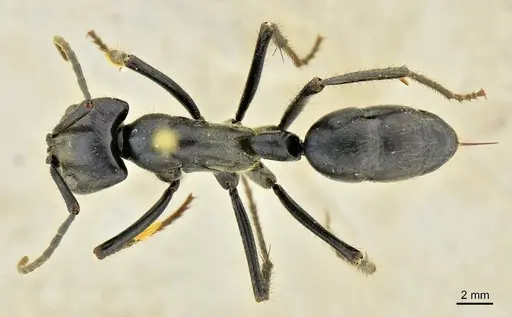
ANTWEB1047767
View on AntWeb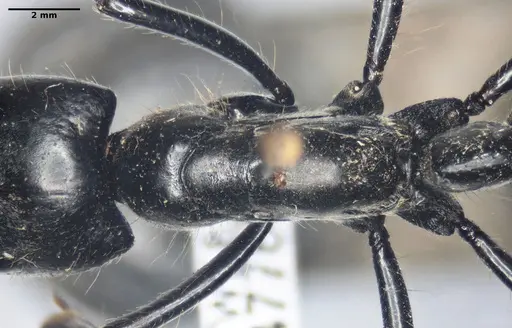
CASENT0217519
View on AntWeb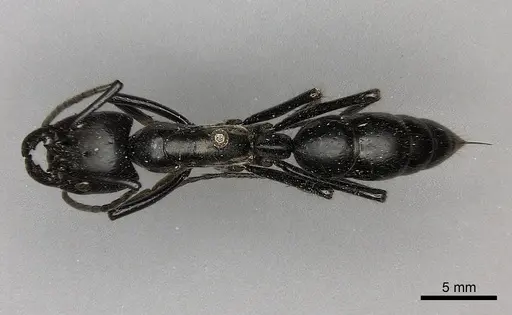
DZUP549804
View on AntWeb
DZUP549811
View on AntWeb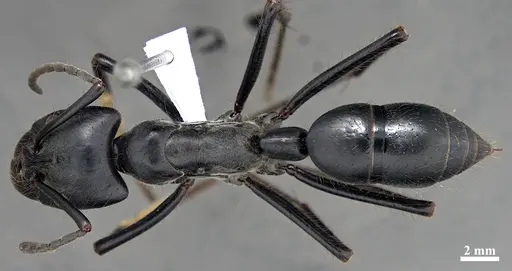
FMNHINS0000050367
View on AntWeb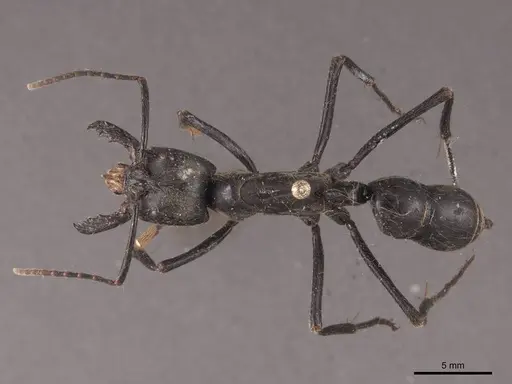
Literature
Loading...Loading products...