

Chelaner brachythrix
- Scientific Name
- Chelaner brachythrix
- Tribe
- Solenopsidini
- Subfamily
- Myrmicinae
- Author
- Heterick, 2001
- Distribution
- Found in 1 countries
Chelaner brachythrix Overview
Chelaner brachythrix is an ant species of the genus Chelaner. It is primarily documented in 1 countries , including Australia. Detailed taxonomic data and occurrence records can be further explored via authoritative databases such as AntWeb or the Global Biodiversity Information Facility (GBIF).
Chelaner brachythrix
Chelaner brachythrix is an exceptionally tiny ant species native to Western Australia, specifically the sand-plain heath and coastal woodland regions north of Perth [1]. Workers measure just 1.34-1.79mm in total length, making them among the smallest ants you can keep [1]. The species gets its name from the Greek 'brachythrix' meaning 'short hair', a reference to the very short, erect setae covering their bodies [1]. They are yellowish-brown (fulvous) in color and resemble Solenopsis fire ants but can be distinguished by their 3-segmented antennal club and larger eyes [1]. This is one of the rarest Australian ants in captivity, the species is known from only a handful of workers collected in the late 1970s and 1980s, and nothing is known about their colony structure, founding behavior, or queen reproduction in the wild.
Quick Summary
- Difficulty: Unknown, likely Expert due to extremely limited data
- Origin & Habitat: Western Australia, coastal woodland and sand-plain heath north of Perth [1]
- Colony Type: Unknown, only workers have ever been collected, no queens or colonies documented [1]
- Size & Growth:
- Queen: Unknown, no queens have been described [1]
- Worker: 1.34-1.79mm total length (HML) [1]
- Colony: Unknown, only 7 workers ever collected [1]
- Growth: Unknown
- Development: Unknown, no development data exists for this species (No data available, must infer from related Chelaner or Monomorium species)
- Antkeeping:
- Temperature: Unknown for this species. Based on their Western Australian habitat (Mediterranean climate with hot dry summers and mild winters), likely prefer temperatures in the low-to-mid 20s°C. Start around 22-26°C and observe colony activity.
- Humidity: Based on sand-plain heath habitat, likely prefer moderate to low humidity. Allow substrate to dry partially between waterings. Avoid overly damp conditions.
- Diapause: Unknown, Western Australian species may have reduced activity during the dry summer period rather than true winter diapause.
- Nesting: No specific nesting data exists. Based on related Monomorium species and their sand-plain habitat, likely nest in soil or under stones. A test tube setup with sand or soil substrate would be appropriate.
- Behavior: No behavioral observations have been documented for this species. Based on related small Myrmicines, they are likely generalist foragers that scavenge and may tend aphids for honeydew. Their tiny size means escape prevention must be excellent, they can squeeze through extremely small gaps. Do not handle without extreme caution due to their fragility and the complete lack of data on their sting ability.
- Common Issues: extreme rarity makes this species essentially unavailable in the antkeeping hobby, no documented colony structure means founding behavior is completely unknown, no data on queen size or reproduction prevents captive breeding, their tiny size creates extreme escape risk requiring fine mesh barriers, lack of any captive husbandry data means no established care protocols exist
Species Overview and Rarity
Chelaner brachythrix is one of the most poorly known Australian ant species. The entire scientific knowledge base consists of just 7 worker specimens collected between 1975 and 1989 from four locations: Eneabba, Burakin, and Ledge Point in Western Australia [1]. The species was originally described as Chelaner brachythrix by Heterick in 2001 before being transferred to the genus Chelaner in 2019 through molecular phylogenetic analysis [2]. The name 'brachythrix' comes from Greek meaning 'short hair', describing the distinctive very short, erect setae that cover the workers' bodies [1]. This species represents a significant gap in antkeeping knowledge, there is simply no captive data, no observed colonies, and no documented queen reproduction to draw from. Unless you have access to wild-caught specimens from Western Australia, this species is effectively unavailable to hobbyists.
Identification and Distinguishing Features
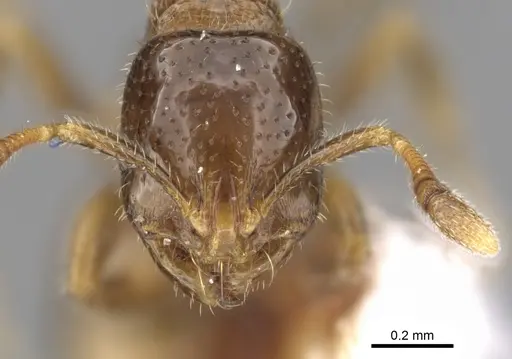
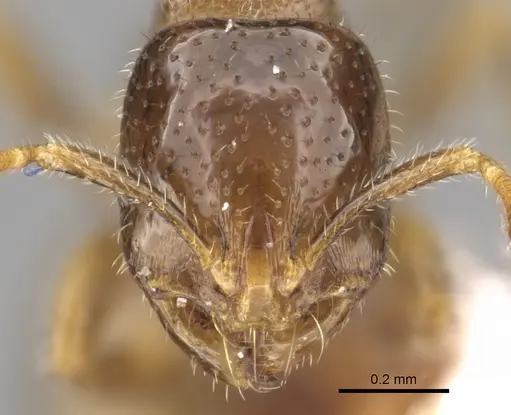
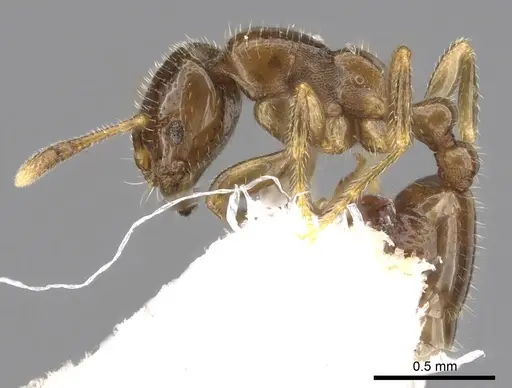
At just 1.34-1.79mm total length, Chelaner brachythrix is among Australia's smallest ants [1]. Workers are yellowish-brown (fulvous) in color and covered in very short, erect setae, this pilosity is their most distinctive feature [1]. They resemble Solenopsis fire ants but can be separated by their 3-segmented antennal club (versus 2-segmented in Solenopsis) and their notably larger eyes [1]. The head is square to rectangular with a slightly concave vertex, and the compound eyes are set in the anterior half of the head capsule [1]. The propodeum (the rear portion of the alitrunk) is smoothly rounded without any distinct angles or processes [1]. These identification features matter because accurate species ID is critical, misidentifying a tiny yellow ant could lead to keeping the wrong species entirely.
Natural Habitat and Distribution
This species appears to be confined to the sand-plains north and north-east of Perth, Western Australia [1]. The type locality at Eneabba and surrounding areas feature coastal woodland and sand-plain heath ecosystems [1]. This region has a Mediterranean climate with hot, dry summers and mild, wet winters. The ants were collected using pitfall traps, indicating they are ground-foraging and likely nocturnal or crepuscular to some degree [1]. The sand-plain heath habitat suggests they prefer well-drained, sandy soils typical of Western Australia's southwestern region. Nothing is known about their nesting preferences in the wild, no queen, colony, or nest has ever been documented.
Care Recommendations - Best Guesses Based on Relatives
Since no captive husbandry data exists for Chelaner brachythrix, any care advice must be considered a highly speculative estimate based on related Australian Monomorium and Chelaner species. Workers are extremely tiny at 1.34-1.79mm, so escape prevention must be excellent, use fine mesh barriers and ensure all openings are sealed. Temperature should likely be in the low-to-mid 20s°C, reflecting their Mediterranean climate origin. Humidity should be moderate, sandy habitats drain well, so avoid waterlogged conditions. Feeding would likely follow the general Monomorium pattern: sugar water or honey for energy, plus small protein sources like fruit flies or tiny insects. A test tube setup with a sand or soil substrate would be the most appropriate starting point. However, this is essentially an educated guess, success with this species would be genuinely pioneering work in the antkeeping hobby.
The Challenge of Keeping Data-Deficient Species
Chelaner brachythrix represents a category of species that experienced antkeepers should understand: those where scientific knowledge and captive experience are essentially nonexistent. Unlike common species like Lasius niger or Camponotus novaeboracensis where thousands of hobbyists have accumulated husbandry knowledge, this species has never been kept in captivity by anyone documented in the literature. There are no care guides, no success stories, no common problems identified. If you somehow obtained wild-caught specimens from Western Australia, you would be conducting original research with every observation. This is not a species to choose as your first ant, nor even your twentieth. The risk of accidentally killing a colony through well-intentioned but incorrect care guesses is extremely high. Consider instead starting with better-documented Australian species like Monomorium rothsteini or other Solenopsidini that have established captive protocols. [1]
Frequently Asked Questions
Can I buy Chelaner brachythrix ants?
No. This species is essentially unavailable in the antkeeping hobby. Only 7 workers have ever been collected, all from remote locations in Western Australia between 1975 and 1989. No queens or colonies have ever been documented, so there is no source for captive-bred colonies.
How do I keep Chelaner brachythrix?
No established care protocols exist. If you somehow obtained wild-caught specimens, you would need to experiment cautiously. Based on related species, use a test tube setup with sandy substrate, maintain temperatures in the low-to-mid 20s°C, and provide sugar water plus tiny protein sources. However, this is entirely speculative, success would be pioneering work.
What does Chelaner brachythrix look like?
Workers are extremely tiny at 1.34-1.79mm, yellowish-brown (fulvous) in color, and covered in very short erect setae. They have a 3-segmented antennal club and relatively large eyes for their size. The head is square to slightly rectangular with a slightly concave top.
Where does Chelaner brachythrix live?
Only in Western Australia, specifically the sand-plain heath and coastal woodland areas north and north-east of Perth. Known localities include Eneabba, Burakin, and Ledge Point.
How big do Chelaner brachythrix colonies get?
Unknown. No colony has ever been documented. The entire scientific record consists of 7 worker specimens, we have no data on maximum colony size, queen reproduction, or colony structure.
What do Chelaner brachythrix eat?
Unknown specifically, but likely similar to other small Monomorium species: nectar/honeydew for sugar sources and tiny insects or other arthropods for protein. No direct observations of their diet exist.
Is Chelaner brachythrix a good beginner ant?
Absolutely not. This is an expert-level species in terms of difficulty, not because of complex care requirements, but because no care requirements have ever been documented. There is no established protocol, no success stories, and no community knowledge to draw from. Choose a well-documented species instead.
Does Chelaner brachythrix need hibernation?
Unknown. As a Western Australian species from a Mediterranean climate, they may reduce activity during the dry summer rather than undergo true winter diapause. No seasonal behavior has been documented.
Can I keep multiple Chelaner brachythrix queens together?
Unknown. No queen has ever been documented, so we have no information about their colony structure or whether they are single-queen (monogyne) or multi-queen (polygyne). Combining unrelated foundresses would be entirely experimental with no guidance available.
References

This caresheet is licensed under CC BY-SA 4.0 .
CASENT0902294
View on AntWeb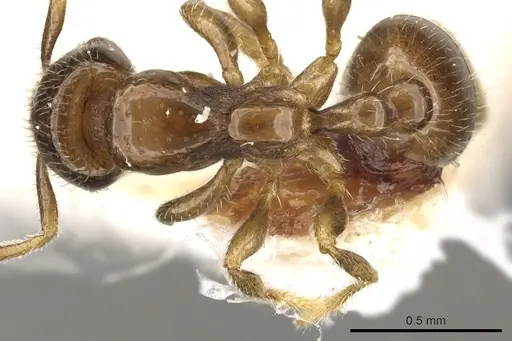
Literature
Loading...Loading products...