

Carebara brasiliana
- Scientific Name
- Carebara brasiliana
- Tribe
- Crematogastrini
- Subfamily
- Myrmicinae
- Author
- Fernández, 2004
- Distribution
- Found in 1 countries
Carebara brasiliana Overview
Carebara brasiliana is an ant species of the genus Carebara. It is primarily documented in 1 countries , including Brazil. Detailed taxonomic data and occurrence records can be further explored via authoritative databases such as AntWeb or the Global Biodiversity Information Facility (GBIF).
Carebara brasiliana
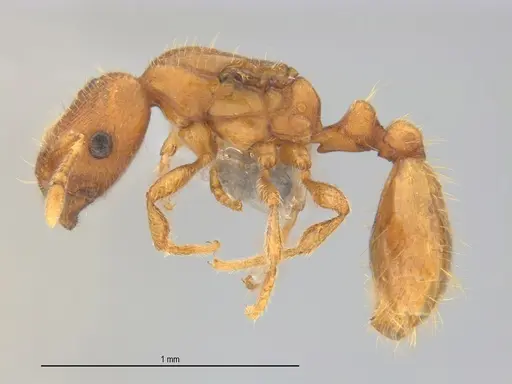
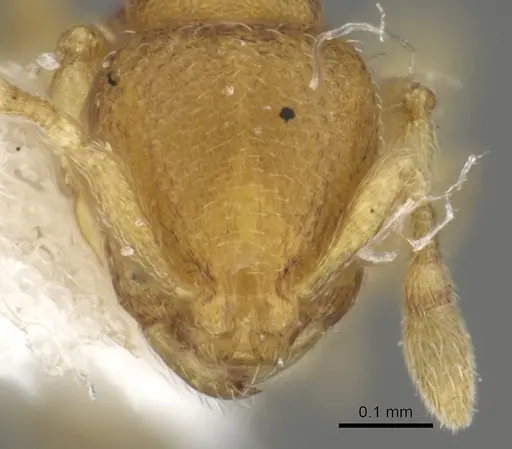
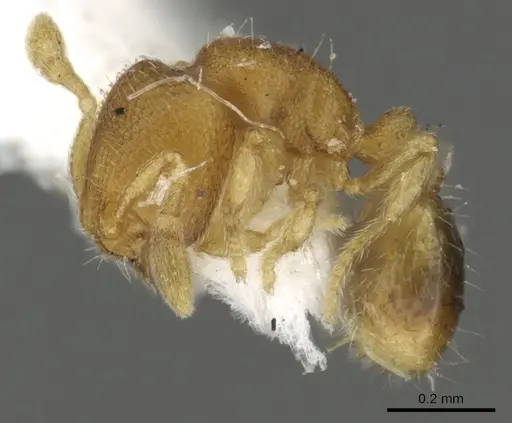
Carebara brasiliana is an extremely tiny myrmicine ant native to Brazil, measuring just 1.2-1.3mm in total length [1]. Workers have distinctive morphological features including eyes reduced to a single ommatidium (essentially blind), dense short curved pubescence on the head, and about 15 standing hairs on the promesonotum [2]. This species belongs to the Carebara escherichi species complex and was described by Fernández in 2004 [1]. The most notable aspect of this species is its nesting biology, type specimens were collected from within nests of Camponotus rufipes, suggesting a close association with larger ant species [1][3].
Quick Summary
- Difficulty: Expert
- Origin & Habitat: Native to southeastern Brazil, specifically São Paulo state (Botucatu, Barueri, Santana de Parnaiba, Salesópolis) and Santa Catarina West region. Found in leaf litter in subtropical forest habitats, collected via leaf litter extraction methods (Winkler and folhico) and pitfall traps [4][3].
- Colony Type: Colony structure is unconfirmed. The species has been collected from Camponotus rufipes nests, suggesting a potential social parasitic or commensal relationship with larger ants [1]. Further research needed on queen morphology and colony organization.
- Size & Growth:
- Queen: Unknown, queen caste has not been described in the scientific literature
- Worker: 1.23-1.29mm total length (TL), head width 0.30-0.31mm, head length 0.35-0.37mm, scape 0.19-0.20mm, mesosoma length 0.30-0.32mm, gaster 0.38mm [1][2]
- Colony: Unknown, colony size has not been documented
- Growth: Unknown, no development data available
- Development: Unknown, development timeline has not been studied (No data available on egg-to-worker development. Related Carebara species in the genus typically develop in 4-8 weeks at tropical temperatures, but this is an estimate with low confidence.)
- Antkeeping:
- Temperature: Based on Brazilian subtropical distribution, aim for 22-26°C. This is an estimate based on habitat climate rather than direct thermal studies.
- Humidity: Based on leaf litter collection in subtropical Brazilian forests, they likely prefer moderate to high humidity (60-80%). Keep the nest substrate consistently moist but not waterlogged.
- Diapause: Unknown, no data on overwintering requirements. Given the tropical/subtropical distribution, they likely do not require a true diapause but may have reduced activity during cooler months.
- Nesting: Natural nesting occurs within Camponotus rufipes nests. In captivity, a naturalistic setup with fine chambers scaled to their tiny size would be appropriate. Given their minute size and likely association with host species, they may require careful introduction to a host colony if attempting to keep them as social parasites. Test tube setups with very fine mesh are essential for escape prevention.
- Behavior: These are extremely tiny ants with eyes reduced to a single ommatidium, meaning they have very poor vision and likely rely heavily on chemical and tactile communication [1]. Workers are slow-moving based on their morphology and habitat. Escape prevention is critical due to their minute size, they can squeeze through the tiniest gaps. Temperament is unknown but likely non-aggressive given their size and likely parasitic/commensal lifestyle. They are not known to sting and their tiny size makes any sting harmless to humans.
- Common Issues: escape prevention is critical due to their extremely small size, standard mesh will not contain them, colony establishment is challenging given their apparent association with Camponotus host species, no information on queen biology makes captive breeding extremely difficult, slow growth and small colony sizes may frustrate keepers expecting visible progress, humidity control is important but specific requirements are unknown
Discovery and Type Material
Carebara brasiliana was described in 2004 by Fernando Fernández based on worker specimens collected from various locations in São Paulo state, Brazil [1]. The holotype worker was collected in Botucatu on December 19,1990,by B.H. Dietz [3]. Paratype workers were collected from multiple locations including Barueri (1968), Santana de Parnaiba (1970), Salesópolis (1997), and Boracéia (1997) [1]. Notably, one paratype worker was collected 'in Camponotus rufipes nest' in Rubião Junior, Botucatu, on January 27,1991 [1][3]. This association with Camponotus rufipes nests is the most significant biological information available for this species and suggests either social parasitism or a commensal relationship.
Identification and Morphology
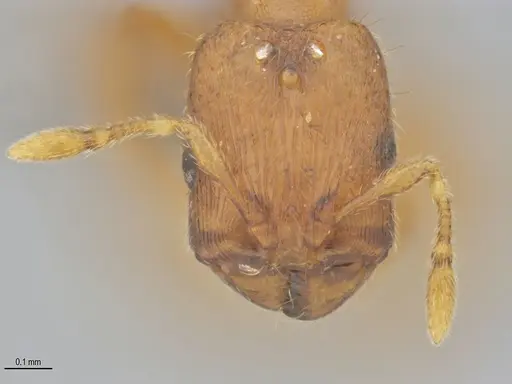
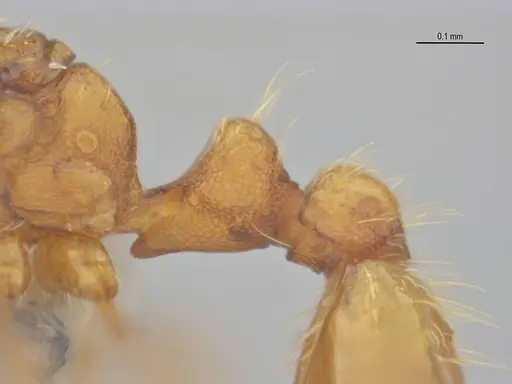
Workers of Carebara brasiliana are among the smallest ants, measuring just 1.23-1.29mm in total length [1]. The head is slightly longer than wide with a concave posterior border and faintly concave lateral sides. The eyes are extremely reduced, consisting of just a single ommatidium, essentially these ants are nearly blind [1][2]. The mandibles have 4 teeth, and the median portion of the clypeus has two longitudinal carinae that diverge strongly toward the front [1]. The dorsum of the head and promesonotum are densely sculpted with shallow foveolated punctures. Standing hairs are present on the promesonotum (about 15) and various body parts, but notably absent from the scapes and legs [2]. This species can be distinguished from the similar Carebara pilosa by the complete absence of standing hairs on the legs [2].
Distribution and Habitat
Carebara brasiliana is known only from Brazil, primarily in the southeastern São Paulo state [1]. Recent surveys have also recorded the species in Santa Catarina state, specifically in the western region around Chapecó [4]. The species has been collected exclusively from leaf litter in subtropical forest environments using specialized extraction methods like Winkler traps and folhico (leaf litter extraction), as well as pitfall traps [4][3]. This indicates they are ground-dwelling leaf litter ants (epigaeic) that prefer the humid microclimate of forest floor debris. The limited distribution and specialized habitat requirements make this species challenging to locate in the wild.
Keeping Considerations
Carebara brasiliana represents a significant challenge even for experienced antkeepers due to several factors. First, their extreme tiny size (just over 1mm) requires exceptional escape prevention, even standard fine mesh will not contain them. Second, and most critically, the apparent association with Camponotus rufipes nests suggests this species may require a host ant colony to establish and survive. Without the queen caste being described, we cannot confirm whether they are social parasites (permanently dependent on host workers), temporary parasites (queen invades, kills host queen, then raises her own workers), or commensals (simply living in association without direct parasitism). Until more research clarifies the biology, keeping this species successfully will require either locating wild colonies already established with hosts or significant trial and error. They are not recommended for beginners and likely not suitable for captive breeding at this time. [1]
Frequently Asked Questions
How big are Carebara brasiliana workers?
Workers are extremely tiny, measuring just 1.23-1.29mm in total length. This makes them one of the smallest ant species in the world. Their head width is only 0.30-0.31mm [1].
Where does Carebara brasiliana live?
This species is known only from Brazil, specifically São Paulo state (Botucatu, Barueri, Santana de Parnaiba, Salesópolis) and recently recorded in Santa Catarina. They live in leaf litter in subtropical forests [4][1].
Why were Carebara brasiliana found in Camponotus nests?
Type specimens were collected from within Camponotus rufipes nests, suggesting this species has a close association with larger ants. This could indicate social parasitism (living off the host colony), temporary parasitism (queen invades and replaces host queen), or a commensal relationship (simply using the nest space without harming hosts). More research is needed to confirm the exact nature of this relationship [1][3].
Can I keep Carebara brasiliana in a test tube?
Test tubes can be used but present challenges. The extreme tiny size means escape prevention must be exceptional, standard cotton plugs and even fine mesh may not contain them. Additionally, if they require a host ant colony, a simple test tube setup will not support them. This species is not recommended for typical antkeeping setups.
Do Carebara brasiliana ants have eyes?
They have extremely reduced eyes consisting of just a single ommatidium. This means they have very poor vision and likely rely primarily on chemical (pheromone) and tactile communication [1][2].
How long does it take for Carebara brasiliana to develop from egg to worker?
This is unknown, no development data exists for this species. Related Carebara species typically develop in 4-8 weeks at tropical temperatures, but this is just an estimate with very low confidence.
Are Carebara brasiliana good for beginners?
No. This species is not recommended for beginners. They are extremely tiny (escape risk is very high), their colony structure and biology are poorly understood, and they may require a host ant species to survive. They are considered an expert-level species.
Do Carebara brasiliana ants sting?
They are not known to sting, and given their extreme tiny size (just over 1mm), any potential sting would be completely harmless to humans. Their main defense is likely chemical (producing repellents) rather than stinging.
What do Carebara brasiliana eat?
This is unknown. As extremely small leaf litter ants, they likely feed on tiny arthropods, honeydew, or may receive food from their host ant species if they are parasites. No feeding observations have been documented.
Do Carebara brasiliana need hibernation?
Unknown. Given their distribution in subtropical Brazil, they likely do not require a true diapause but may have reduced activity during cooler months. No specific overwintering data exists.
Can I keep multiple queens together?
Unknown. The queen caste has not been described, so we have no information about colony founding or queen behavior. If they are parasitic, multiple queens would likely not be maintained.
Is Carebara brasiliana invasive anywhere?
No. This species is only known from Brazil and has not been recorded as invasive anywhere.
References

This caresheet is licensed under CC BY-SA 4.0 .
ANTWEB1062545
View on AntWeb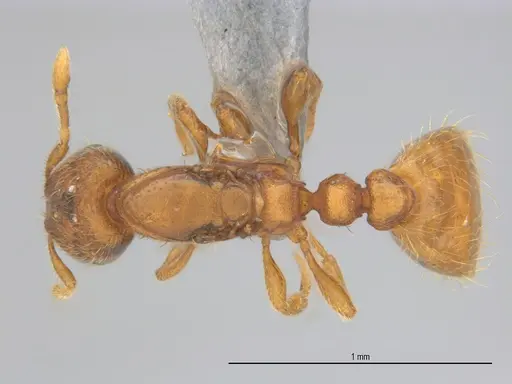
CASENT0902392
View on AntWeb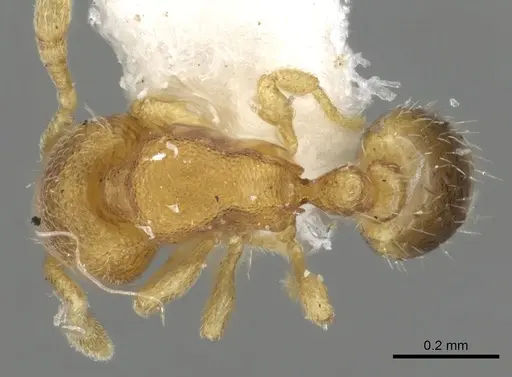
Literature
Loading...Loading products...