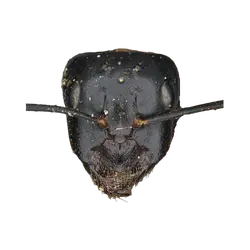
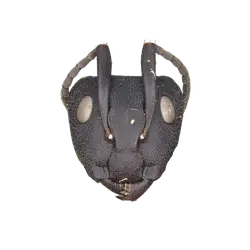
Camponotus niveosetosus - "Hairy Sugar Ant"
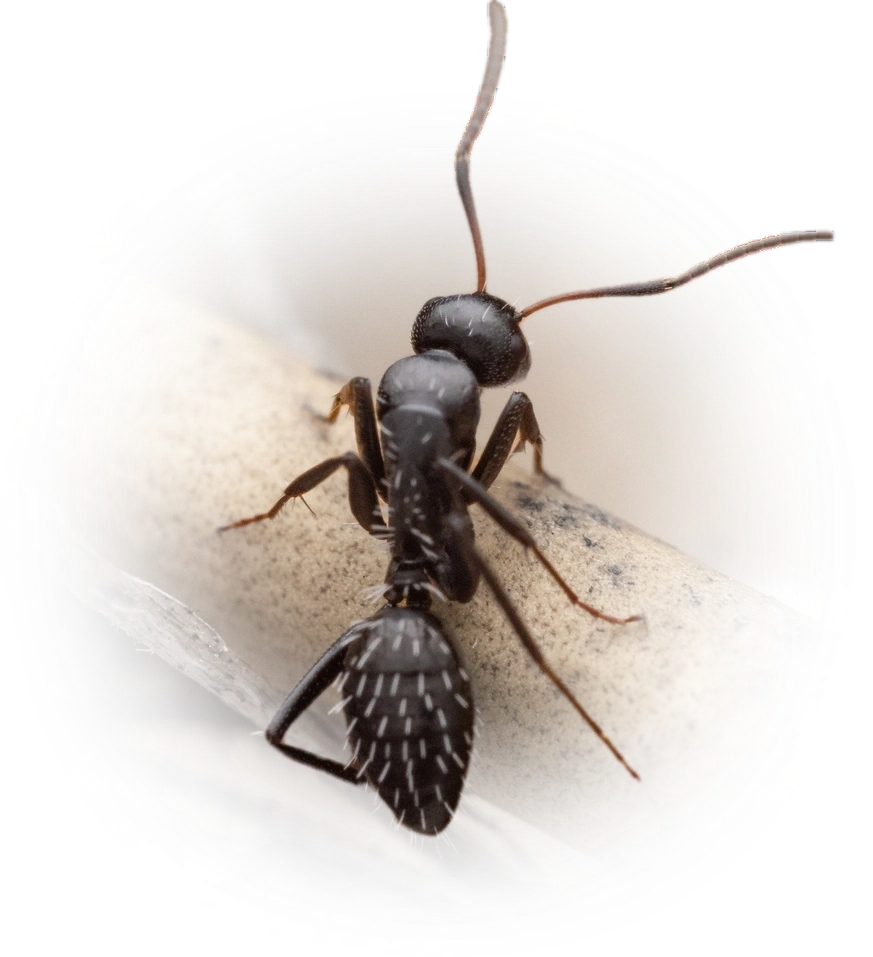
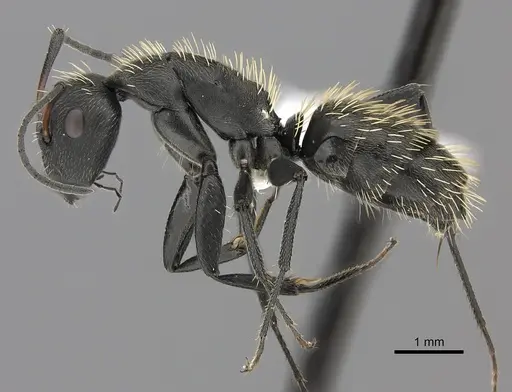
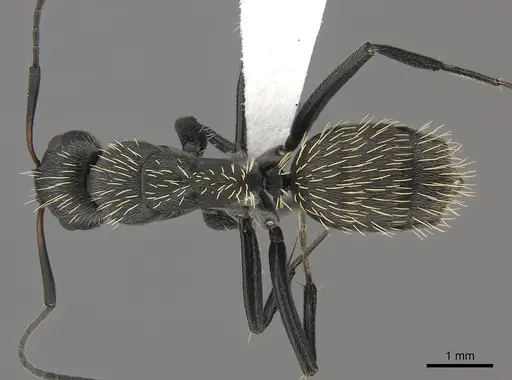
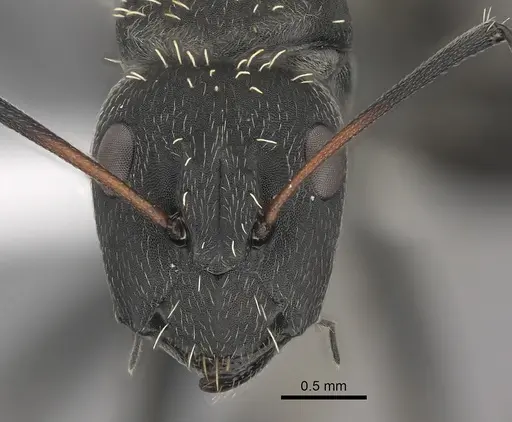
Camponotus niveosetosus, often called the Hairy Sugar Ant, is a smaller species of carpenter ant characterized by its dark grey to black body adorned with abundant, stiff, almost snow-white hairs on its thorax and gaster. Their antennae and tarsi are reddish-brown, and their mandibles are a dark reddish-brown. Beyond the prominent white hairs, they also have a finer, yellowish, decumbent (lying flat) pubescence. This species is known for its polymorphic workers, meaning there can be significant size differences within the worker caste. Like many other Camponotus species, they are omnivores, foraging for a variety of food sources, including honeydew and insects.
- Difficulty: Medium
- Origin & Habitat: Eastern Afrotropics, including Kenya, South Africa, Botswana, Eswatini, Namibia, and Madagascar. in Diverse habitats such as gardens, fynbos, grasslands, savanna, and various woodlands, from sea level to middle altitudes..
- Colony Type: Monogyne (single queen) to Oligogyne (multiple queens but isolated, no brood mixing), claustral founding.
- Size & Growth:
- Queen: Not specified
- Worker: 6-14mm
- Colony: Large (tens of thousands). Medium growth.
- Antkeeping:
- Temperature: Maintain a temperature range of 24-29°C for optimal development, ideally around 25°C. Providing a temperature gradient with a warmer area (80-85°F / 26-29°C) during the day and a cooler area (70-75°F / 21-24°C) at night can mimic natural fluctuations..
- Humidity: The nest area should be kept slightly moist but not overly wet. Exact humidity levels are not as critical as consistent moisture; ants can tolerate a broad range. Aim for around 50-70% in the nest. The outworld can be drier..
- Diapause: Required. 3-6 months at 5-15°C.
- Nesting: In the wild, Camponotus species often nest in the ground, rotten branches, or hollow wood. For captive keeping, they thrive in formicariums made of wood, cork, or even acrylic setups with a good humidity system. Ensure the nest has adequate space for a growing colony and a moist substrate like a sand and soil mixture..
- Behavior: Low (towards handler, may bite if threatened) aggressiveness.
- Common Issues: Mold in nest, Humidity fluctuations, Colony stalling if diapause is neglected, Overfeeding leading to waste.
Camponotus niveosetosus colonies exhibit polymorphism, meaning their worker ants come in various sizes, from smaller workers (minors) that typically care for the brood and maintain the nest, to larger workers (majors) or even super majors that can be as large as or exceed the queen's size. These larger workers, with their strong mandibles, often play a crucial role in defense and processing tougher food items. Observing the development of these different worker castes as your colony grows is one of the most fascinating aspects of keeping this species.
Providing a consistent food supply is paramount for a thriving Hairy Sugar Ant colony. They have a generalistic diet, consuming both sugary liquids like honey water or fruit, and protein sources such as small insects (e.g., fruit flies, mealworms, crickets). It's important to offer a varied diet to ensure all their nutritional needs are met. Always provide food in small amounts to prevent mold growth, which can be detrimental to the colony's health.
Like many temperate ant species, Camponotus niveosetosus requires a period of diapause, often referred to as 'hibernation' by antkeepers, to maintain long-term colony health. This suspended development is crucial for their internal clock and reproductive cycle. Typically, a diapause of 3 to 6 months at cooler temperatures (around 5-15°C) is recommended. Failing to provide a proper diapause can lead to stunted growth, smaller workers, reduced brood production, and potentially a shorter lifespan for the queen.
When setting up a nest for Camponotus niveosetosus, consider their natural nesting habits. While they can adapt to various artificial setups, replicating aspects of their preferred environment-such as slightly moist substrates and the option for excavation-can lead to a more content and active colony. Ensure the formicarium is escape-proof, as Camponotus species are known to be quite adept at finding their way out if given the chance.
While generally not aggressive towards handlers, Camponotus niveosetosus workers do possess chewing mouthparts and can bite if they feel threatened. This is a defensive mechanism, and usually, any discomfort from a bite is minor and short-lived. However, as with any ant species, minimizing disturbances to the colony will reduce the likelihood of defensive behaviors and ensure a more relaxed environment for your ants.
Frequently Asked Questions
What kind of nest setup is best for Camponotus niveosetosus?
For these Hairy Sugar Ants, a formicarium that offers a slightly moist environment is ideal. Think about setups made from wood or cork, as these mimic their natural nesting preferences in dead wood. Acrylic nests with a reliable hydration system can also work well, allowing you to observe their intricate tunnel systems. Just make sure there’s a good humidity gradient!
Do I need to hibernate my Camponotus niveosetosus colony?
Absolutely! Diapause, often called 'hibernation' by antkeepers, is essential for the long-term health and vitality of your Camponotus niveosetosus colony. This period of inactivity helps regulate their internal biological clock and ensures successful reproduction. Without it, you might see issues like smaller workers, reduced brood, and a shorter queen lifespan.
How long should diapause last for these ants and at what temperature?
A good rule of thumb for Camponotus niveosetosus is a diapause period of about 3 to 6 months. During this time, the ideal temperature range is typically between 5-15°C (40-59°F). A wine cooler or a cool, dark part of your home can often provide these conditions. Remember to gradually introduce and remove them from diapause to minimize stress.
What should I feed my Hairy Sugar Ants?
Camponotus niveosetosus are omnivores, so a diverse diet is key! Offer them sugary delights like honey water, sugar water, or small pieces of fruit. For protein, which is crucial for brood development, provide small feeder insects such as fruit flies, mealworms, or crickets. Always serve food in small portions to prevent mold and keep their foraging area clean.
Are Camponotus niveosetosus aggressive or do they sting?
While they are generally not aggressive towards antkeepers, Hairy Sugar Ants can bite if they feel threatened. However, they do not possess a sting. Any bite is usually minor and won't cause lasting harm. As with any colony, minimizing vibrations and disturbances will keep them calm and reduce the likelihood of defensive behavior.
How large can a Camponotus niveosetosus colony get?
These colonies can grow quite large, potentially reaching tens of thousands of individuals. With consistent care, proper feeding, and a successful diapause, you can expect to see a substantial colony develop over time, showcasing their impressive worker polymorphism.
What are minors and majors in a Camponotus niveosetosus colony?
Camponotus niveosetosus, like many other Camponotus species, are polymorphic. This means their worker caste isn't uniform in size. Minors are the smaller workers, often focused on brood care and nest maintenance. Majors are significantly larger workers, possessing stronger mandibles, and typically take on roles like defense, crushing larger food items, and storing liquids in their gasters. Observing these different sizes is a highlight for many antkeepers!
How fast do these ants grow?
Camponotus niveosetosus typically have a medium growth rate. While not as explosively fast as some smaller species, a healthy colony with proper heating and nutrition will show steady development from egg to adult worker. Their growth can be noticeably boosted with a well-managed heating setup.
What kind of humidity is needed for the outworld?
For the outworld, the exact humidity isn't as critical as it is within the nest. A typical room humidity is usually fine, as long as the nest itself maintains its slightly moist conditions. Some antkeepers even prefer a drier outworld to discourage mold and mites. You can always provide a small water source like a test tube feeder in the outworld for foragers.
How long do Camponotus niveosetosus queens live?
Camponotus queens are known for their longevity! While specific data for Camponotus niveosetosus isn't always readily available, many Camponotus queens can live for a very long time, often exceeding 10-15 years, and sometimes even up to 20 years with excellent care. This makes them a long-term commitment for any antkeeper.