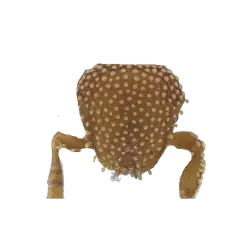
Calyptomyrmex loweryi - "Hidden-Headed Ant (unofficial, based on genus characteristics)"
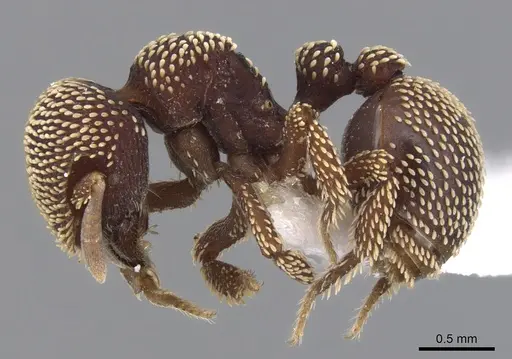
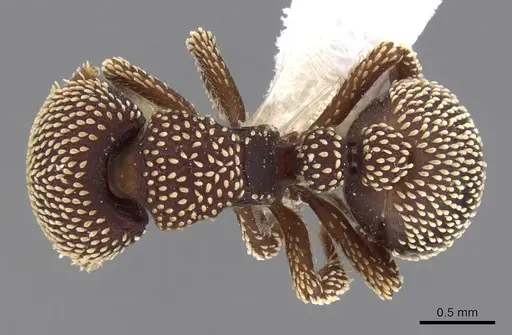
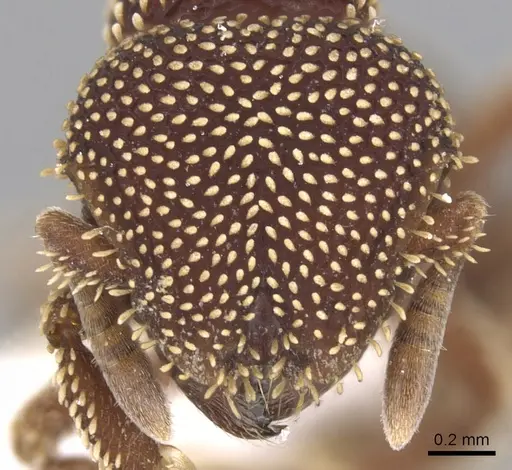
Calyptomyrmex loweryi is a fascinating, small ant species known for its unique appearance. Workers have spatulate (spatula-shaped) hairs on their head and body that lie flat, giving them a somewhat camouflaged, dull reddish-brown look. Their heads are notably broad and angular above the antennal scrobes, which are distinct depressions where their antennae can retract. These ants are rarely encountered, often found foraging individually or in small groups on the ground or within leaf litter. They are part of the Myrmicinae subfamily.
- Difficulty: Hard
- Origin & Habitat: Southeast Asia, including the Philippines (type locality), northern Borneo (Malaysia: Sabah, Sarawak), and Singapore. in Primarily rainforests, but also found in rubber plantations and reafforestation areas. They nest in rotten logs, under large logs, and within leaf litter..
- Colony Type: Monogyne, claustral founding.
- Size & Growth:
- Queen: Not specified
- Worker: 1.05-1.14mm
- Colony: Small (hundreds). Slow growth.
- Antkeeping:
- Temperature: Aim for typical tropical rainforest temperatures, likely in the range of 24-28°C. Stable temperatures are key to their well-being..
- Humidity: High humidity is crucial, mimicking their natural rainforest habitat. Maintain levels between 70-90%..
- Diapause: Not required. Not specified at Not specified.
- Nesting: Given their natural nesting habits, they prefer nests that simulate rotten wood or soil. Ytong, naturalistic setups with wood inserts, or even specialized soil-based formicaria would be ideal. They are subterranean/leaf litter nesters..
- Behavior: Low (primarily defensive) aggressiveness.
- Common Issues: Humidity fluctuations, Lack of suitable substrate for camouflage, Improper diet (especially protein source), Colony stalling due to stress.
Calyptomyrmex loweryi are quite rare in the wild and are known for their secretive nature, often found individually or in small numbers within leaf litter. This cryptic behavior extends to their foraging, which can make observing their natural habits a challenge for antkeepers. Recreating a dark, humid environment with plenty of leaf litter and small rotten wood pieces in their outworld can encourage more natural foraging behaviors and provide enrichment.
Their distinctive spatulate hairs, which give them a camouflaged appearance, also help them to retain soil particles on their bodies. This unique adaptation suggests that providing a suitable substrate like fine loam or sand in their nest and outworld might be beneficial for their comfort and natural inclination to cover themselves. Such a setup could also help maintain the high humidity levels they require. Observing if they utilize the substrate for camouflage could be a fascinating aspect of their care.
The diet of Calyptomyrmex species generally consists of arthropod eggs, with some observations of larval hemolymph feeding in other members of the genus. For Calyptomyrmex loweryi, a diet rich in small insect eggs, such as those from crickets or other feeder insects, is likely essential. Supplementing this with a small amount of sugar water or honey may provide necessary carbohydrates, but protein sources in the form of eggs will be paramount for colony development. Keep an eye on their feeding preferences, as they can be quite specialized predators.
These ants are considered monogyne, meaning colonies typically have only one queen. This fact implies that pleometrosis (multiple queens founding a colony together) is not a natural behavior for this species. When acquiring a colony, ensuring it consists of a single queen will be important for long-term stability and success. Their small colony size estimate and slow growth rate further emphasize the need for careful, consistent care to help them thrive.
Frequently Asked Questions
What kind of habitat should I prepare for my Calyptomyrmex loweryi colony?
To truly thrive, your Calyptomyrmex loweryi ants need a setup that closely mimics their native rainforest floor. Think high humidity, around 70-90%, and a consistent warm temperature, ideally between 24-28°C. For their nest, consider a naturalistic setup like Ytong or a formicarium with rotten wood or loam inserts. They are subterranean/leaf litter nesters, so offering plenty of fine substrate and leaf litter in their outworld will encourage natural behaviors.
What do Calyptomyrmex loweryi ants eat?
These intriguing ants are primarily predators of arthropod eggs. So, for their diet, focus on offering small insect eggs, such as those from crickets. You can supplement this with a tiny bit of sugar water or honey for carbohydrates. Observing their feeding habits closely will help you fine-tune their diet.
Are Calyptomyrmex loweryi difficult to keep?
Yes, Calyptomyrmex loweryi are considered a 'Hard' difficulty species to keep. Their specific humidity, temperature, and dietary needs, coupled with their naturally secretive behavior and slow colony growth, require dedicated care and attention to detail from experienced antkeepers.
What is the typical size of a Calyptomyrmex loweryi colony?
Calyptomyrmex loweryi colonies are relatively small, typically reaching only a few hundred workers. Don't expect a massive supercolony with this species; their charm lies in their unique characteristics and specialized care.
Do Calyptomyrmex loweryi workers sting?
Yes, Calyptomyrmex loweryi workers do possess a sting. However, their aggressiveness towards handlers is generally low, so while caution is always advised, they are not typically considered highly aggressive.
Why are these ants called 'Hidden-Headed Ants'?
While not an official common name for Calyptomyrmex loweryi specifically, the genus Calyptomyrmex is sometimes informally referred to as 'Hidden-Headed Ants' due to their unique antennal scrobes-deep grooves on their head where they can retract and 'hide' their antennae. This, combined with their camouflage, makes them quite cryptic.
Do Calyptomyrmex loweryi queens start colonies alone?
Yes, Calyptomyrmex loweryi queens are monogyne, meaning a single queen typically founds and leads the colony. You won't find them engaging in pleometrosis, where multiple queens start a nest together.
How do Calyptomyrmex loweryi workers use their spatulate hairs?
Their distinctive spatulate hairs are believed to help them retain soil and leaf litter particles on their bodies. This acts as a natural camouflage, helping them blend seamlessly into their subterranean and leaf litter environments, which is crucial for their survival as ground foragers.
Where can I find Calyptomyrmex loweryi in the wild?
These ants are native to Southeast Asia, particularly widespread across northern Borneo (Malaysia and Singapore) and the Philippines. They've been observed in various forest types, from rubber plantations to primary rainforests, often found within rotten logs, under large logs, or in leaf litter.
Do Calyptomyrmex loweryi need diapause?
No, Calyptomyrmex loweryi do not require diapause. They originate from tropical regions with consistent warm temperatures and high humidity, so maintaining stable conditions year-round is ideal for their captive care.
What are common issues faced when keeping Calyptomyrmex loweryi?
Antkeepers might encounter challenges like maintaining consistent high humidity levels, providing the precise dietary needs (especially arthropod eggs), preventing mold in the nest due to high humidity, and ensuring the colony doesn't stall due to stress or improper conditions. Their secretive nature can also make monitoring their health and progress a bit tricky.