

Brachymyrmex nebulosus
- Scientific Name
- Brachymyrmex nebulosus
- Tribe
- Myrmelachistini
- Subfamily
- Formicinae
- Author
- LaPolla & Longino, 2006
- Distribution
- Found in 3 countries
Brachymyrmex nebulosus Overview
Brachymyrmex nebulosus is an ant species of the genus Brachymyrmex. It is primarily documented in 3 countries , including Costa Rica, Honduras, Mexico. Detailed taxonomic data and occurrence records can be further explored via authoritative databases such as AntWeb or the Global Biodiversity Information Facility (GBIF).
Brachymyrmex nebulosus
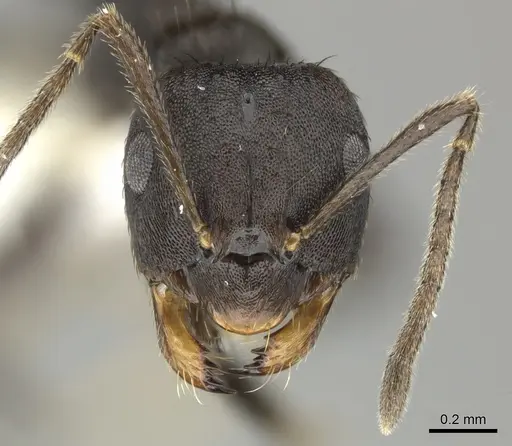
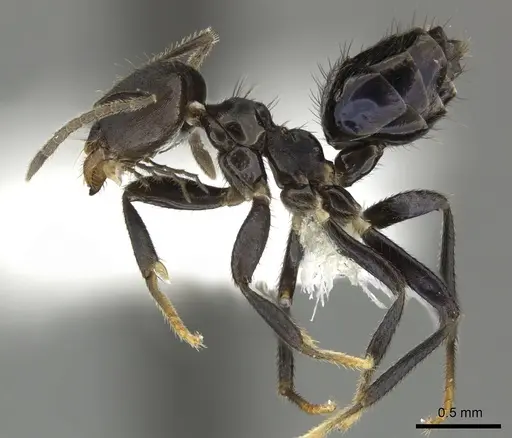
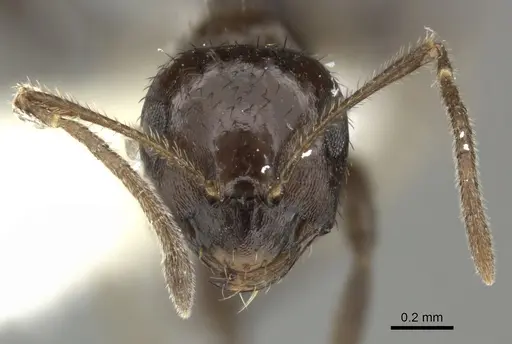
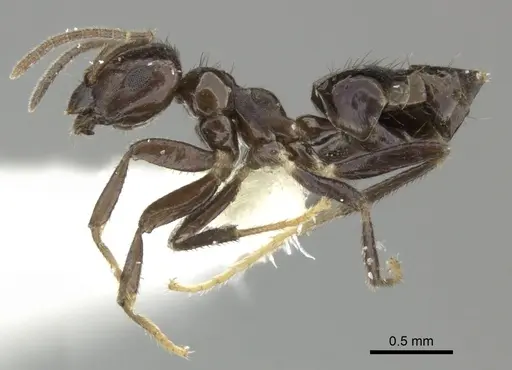
Brachymyrmex nebulosus is a small to medium-sized ant measuring around 2.9mm in total length. Workers are dark brown to blackish-brown with a shiny appearance, and they have a distinctive hour-glass shaped middle body (mesosoma) that sets them apart from most other Brachymyrmex species. They also have erect hairs on their legs and scapes, a rare trait in this genus. The clypeus has a conspicuous 'lip' structure, and the face is smooth with abundant erect hairs. This species was described in 2006 and is known only from a handful of specimens collected in Costa Rica and Mexico at around 800m elevation in the transition zone between cloud forest and lowland dry forest [1][2]. In the field, these ants remarkably resemble Crematogaster ants in both appearance and behavior, they move quickly on vegetation and have similar body proportions [1].
Quick Summary
- Difficulty: Expert
- Origin & Habitat: Pacific slope of Costa Rica (Puntarenas Province) and Mexico, at approximately 800m elevation in the moist forest transition zone between cloud forest and lowland dry forest. Found in mosaics of forest patches, pastures, scrubby vegetation, and road edges [1][2].
- Colony Type: Colony structure is unconfirmed. Only a handful of workers have ever been collected, no queen or colony samples exist. Likely single-queen based on genus patterns, but this is unconfirmed.
- Size & Growth:
- Queen: Unknown, no queen specimens have been collected or described
- Worker: 2.90mm total length (workers measure 0.70-0.73mm head width) [1][2]
- Colony: Unknown, only workers have been collected, no colonies studied
- Growth: Unknown
- Development: Unconfirmed, no breeding or development data exists for this species (Development timeline is completely unstudied. Based on related Brachymyrmex species and tropical Formicinae, expect 4-8 weeks at warm temperatures, but this is a rough estimate.)
- Antkeeping:
- Temperature: Based on their cloud forest origin at 800m elevation, they likely prefer moderate temperatures in the low-to-mid 20s°C range. Avoid high heat. Start around 22-25°C and monitor colony activity.
- Humidity: Moist forest transition zone suggests they need moderate to high humidity. Keep nest substrate consistently moist but not waterlogged. Provide a humidity gradient so ants can choose their preferred zone.
- Diapause: Unknown, being a tropical species from moderate elevation, they may not require true hibernation but may have seasonal activity patterns related to wet/dry seasons in their native range.
- Nesting: No specific nesting data exists. In captivity, provide a test tube setup initially, transitioning to a Y-tong or plaster nest with chambers scaled to their small size. The natural nesting substrate is likely rotting wood or soil in moist forest edges.
- Behavior: In the field, these ants are highly active on vegetation in open scrubby areas and move in a manner very similar to Crematogaster, quick, erratic movements. They are likely generalist foragers. Escape prevention should be moderate, at 3mm they are not extremely tiny but can still squeeze through small gaps. Use standard barrier methods.
- Common Issues: This species has never been kept in captivity, there is no established husbandry knowledge or captive breeding success to reference, Extremely limited distribution data means environmental requirements are largely inferred, not confirmed, No queen or colony specimens exist in research collections, wild colonies have never been studied, Risk of collecting wild colonies is high since only a few specimens exist and the species may be rare or localized, Without established captive colonies, keepers have no foundation to build husbandry protocols upon
Species Overview and Identification
Brachymyrmex nebulosus is one of the rarest and least-studied ant species in the hobby. Described in 2006 by LaPolla and Longino, this species is known from only a handful of worker specimens collected in Costa Rica and potentially Mexico. Workers measure approximately 2.9mm total length with a head width of 0.70-0.73mm. The species is distinctive within Brachymyrmex for its large size, dark blackish-brown color, shiny appearance, hour-glass shaped mesosoma, and most notably the presence of erect hairs on the legs and scapes, a trait shared by only a handful of Brachymyrmex species. The clypeus has a conspicuous 'lip' structure that distinguishes it from related species. In the field, these ants are remarkably convergent in appearance and behavior with Crematogaster ants, they move quickly on vegetation and have similar body proportions, making them easy to misidentify without close examination [1][2].
Natural Habitat and Distribution
This species has an extremely limited known distribution. All confirmed specimens come from two nearby sites on the Pacific slope of Costa Rica just below the Monteverde Cloud Forest Reserve in Puntarenas Province, at approximately 800m elevation. This location is in a moist forest transition zone between cloud forest and lowland dry forest. The habitat consists of mosaics of forest patches, pastures, scrubby vegetation, and road edges. Specimens have been collected from vegetation in open scrubby areas. There are also unconfirmed specimens from Mexico that strongly resemble this species, though they may represent a variety or separate species. The specific epithet 'nebulosus' means 'misty' in Latin, referring to the type locality near Monteverde Cloud Forest Reserve and the historical uncertainty about its genus placement [1][2].
Challenges of Keeping This Species
Brachymyrmex nebulosus presents extreme challenges for antkeeping due to virtually complete absence of biological and husbandry data. Only worker specimens exist in research collections, no queens, no colonies, no breeding observations, and no nuptial flight data have ever been documented. This is not a species that can be responsibly kept by most hobbyists. There are no established protocols, no known successful captive colonies, and no foundation of accumulated husbandry knowledge to draw upon. The species may be naturally rare or localized, and collecting wild colonies would be ethically questionable given how little is known about wild populations. For these reasons, Brachymyrmex nebulosus should be considered an expert-only species that is not suitable for captive husbandry at this time. If research colonies ever become available through ethical breeding programs, keepers would need to essentially pioneer all aspects of care through careful experimentation [1][2].
Inferred Care Requirements
While confirmed care requirements do not exist, we can make educated inferences from related species and habitat data. Being from an 800m elevation cloud forest transition zone in Costa Rica, they likely experience moderate temperatures (low-to-mid 20s°C) year-round with high humidity. They probably prefer moist conditions but not saturated. As small Formicinae, they likely feed on honeydew, small insects, and may tend aphids. Nesting likely involves rotting wood or soil in shaded, moist areas. If a keeper were to attempt keeping this species, they would need to start with a well-humidified test tube setup at around 22-25°C, provide small live prey, and monitor closely for any signs of stress. Every aspect of care would be experimental. The lack of any queen or colony specimens means we do not even know basic colony structure (monogyne vs polygyne) or founding behavior [1][2].
Frequently Asked Questions
Can I keep Brachymyrmex nebulosus as a pet ant?
No. This species is not suitable for captive keeping at this time. Only a handful of worker specimens have ever been collected, no queens or colonies exist in research collections, and there is absolutely no established husbandry knowledge. This is an expert-only species that has never been kept in captivity.
How big do Brachymyrmex nebulosus colonies get?
Unknown, no colony has ever been studied. We only have worker specimens, and colony size data does not exist.
What do Brachymyrmex nebulosus ants eat?
Unconfirmed. Based on genus patterns and their behavior (foraging on vegetation like Crematogaster), they likely are generalist foragers that eat honeydew, small insects, and may tend aphids. No direct feeding observations exist.
What temperature do Brachymyrmex nebulosus need?
Inferred to be moderate, around 22-25°C based on their cloud forest origin at 800m elevation in Costa Rica. They likely prefer cooler conditions than typical tropical ants. This is an estimate, not confirmed data.
Do Brachymyrmex nebulosus need hibernation?
Unknown. As a tropical species from moderate elevation, they likely do not require true hibernation but may have seasonal activity patterns related to wet/dry seasons in their native range.
How long does it take for Brachymyrmex nebulosus to develop from egg to worker?
Unconfirmed, no breeding or development data exists for this species. Based on related Brachymyrmex and tropical Formicinae, a rough estimate would be 4-8 weeks at warm temperatures, but this is entirely speculative.
Where can I get a Brachymyrmex nebulosus queen?
This species is essentially unavailable in the antkeeping hobby. No established captive colonies exist, and the species is only known from a handful of wild specimens. Ethical acquisition is not possible at this time.
Are Brachymyrmex nebulosus good for beginners?
Absolutely not. This is one of the least suitable species for beginners, there is no captive care knowledge whatsoever, no established protocols, and the species may be naturally rare. This is an expert-only species that should not be kept until substantial research is available.
What is the best nest type for Brachymyrmex nebulosus?
Unknown, no captive colonies have ever been kept. If attempting, a well-humidified test tube or small Y-tong/plaster nest with chambers scaled to their 3mm size would be the most logical starting point, but this is entirely experimental.
Can I keep multiple Brachymyrmex nebulosus queens together?
Unknown, no colony structure data exists. We do not know if this species is monogyne (single queen), polygyne (multiple queens), or anything about their colony founding behavior.
Is Brachymyrmex nebulosus aggressive?
Unknown. In the field they behave like Crematogaster, quick-moving on vegetation, but no aggression observations exist. Most Brachymyrmex species are not particularly aggressive.
References

This caresheet is licensed under CC BY-SA 4.0 .
CASENT0609689
View on AntWeb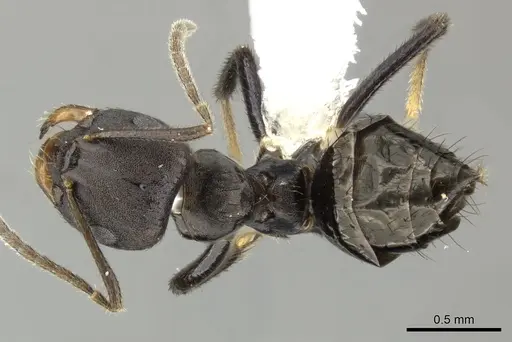
CASENT0619184
View on AntWeb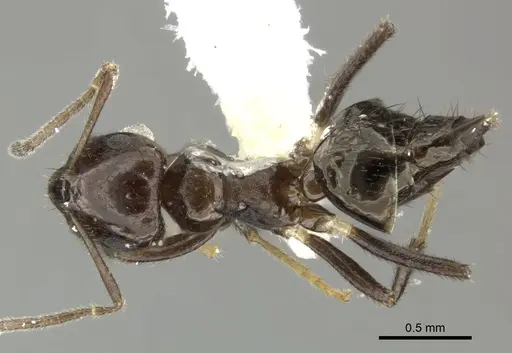
Literature
Loading...Loading products...