

Atta opaciceps
- Scientific Name
- Atta opaciceps
- Tribe
- Attini
- Subfamily
- Myrmicinae
- Author
- Borgmeier, 1939
- Distribution
- Found in 1 countries
Atta opaciceps Overview
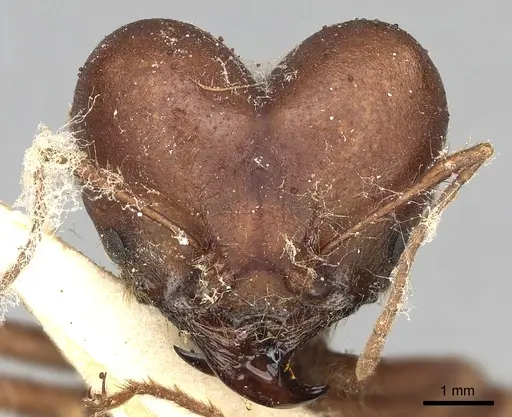
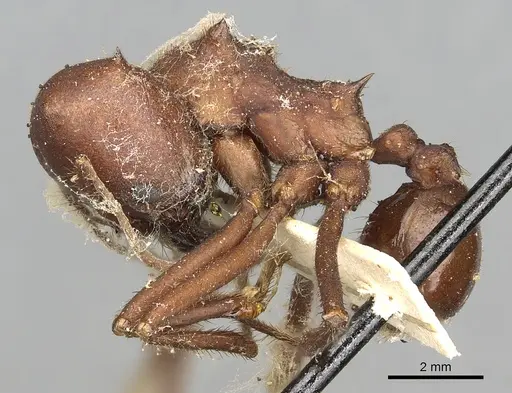
Atta opaciceps is an ant species of the genus Atta. It is primarily documented in 1 countries , including Brazil. Detailed taxonomic data and occurrence records can be further explored via authoritative databases such as AntWeb or the Global Biodiversity Information Facility (GBIF).
Atta opaciceps
Atta opaciceps is a leaf-cutting ant found only in the Caatinga biome of northeastern Brazil, making it the only leafcutter ant endemic to this dry, desert-like forest region [1]. Unlike their rainforest relatives, these ants have evolved to handle high temperatures and low humidity [1]. Workers cut semicircular pieces from dicotyledonous plants (broadleaf plants, not grasses) and carry them back to underground nests where they cultivate fungus gardens [2][1]. Colonies build impressive nest mounds up to 5 meters across with multiple entrances arranged in a radial pattern as the colony grows [3].
This species represents a unique ecological adaptation within the Atta genus, having shifted from tropical rainforest habitats to the seasonally dry, hot conditions of the Caatinga [1]. Their foraging is strictly limited to dicot plants, they will not accept monocot grasses [1][4]. Alates (winged reproductives) fly during the day, with females having a thorax length of approximately 7.8 mm [5].
Quick Summary
- Difficulty: Expert
- Origin & Habitat: Endemic to the Caatinga biome of northeastern Brazil (states of Piauí, Ceará, Rio Grande do Norte, Paraíba, Pernambuco, Sergipe, Bahia, and Alagoas), a hot, semi-arid seasonal dry forest [6][1][7].
- Colony Type: Single-queen colonies (monogyne) typical for the genus, though specific colony structure documentation is limited. Colonies likely reach millions of workers like other Atta species.
- Colony: Monogyne
- Founding: Claustral
- Size & Growth:
- Queen: Approximately 8-10 mm (estimated from alate thorax length of 7.82 mm [5]).
- Worker: Highly polymorphic: minims (~2-3 mm), media (~4-8 mm), and majors (soldiers) up to 12+ mm (genus typical, specific measurements unconfirmed).
- Colony: Likely reaches millions of workers in mature colonies (genus pattern), though specific maximum size unconfirmed for this species.
- Growth: Slow initially during founding, then rapid expansion once the fungus garden establishes. Full size takes several years.
- Development: Approximately 6-10 weeks at optimal temperatures (inferred from Atta genus patterns), with nanitic workers (first generation) potentially developing faster. (Development rate depends heavily on fungus garden health and temperature. No specific studies document exact timelines for this species.)
- Antkeeping:
- Temperature: Warm conditions preferred, adapted to Caatinga heat. Start at 26-30°C with a gradient. They tolerate higher temperatures and greater daily fluctuations than tropical Atta species [1][8].
- Humidity: Moderate humidity (50-60%) with excellent ventilation. Unlike rainforest Atta, they are adapted to semi-arid conditions and tolerate drier air, but the fungus garden requires consistent moisture [1].
- Diapause: No, this is a tropical/subtropical species that remains active year-round.
- Nesting: Requires a sterile fungus garden setup. Use a clear container with sterile substrate (sterilized leaf paste, fecal matter, and fungus). The nest must allow for expansion as the fungus garden grows.
- Behavior: Day-active species with alates flying during daylight hours [5]. Workers use trail pheromones for recruitment, showing strong responses to their own species' trails but weak responses to other Atta species [9]. They dispose of waste in underground chambers or outside the nest [3]. Escape prevention is critical, even the smallest gaps allow tiny worker ants to exit.
- Common Issues: fungus garden contamination with mold or alien fungi kills the colony within days, sterility is absolutely critical., feeding monocot grasses (corn, wheat, grass) instead of dicot leaves leads to colony starvation, they forage exclusively for dicots [1]., insufficient space, colonies grow massive and require room for extensive fungus gardens and foraging areas., inadequate ventilation causing stagnant air and mold growth in the fungus garden., temperature too low, they are warmth-loving and adapted to hot Caatinga conditions [1].
Natural History and Caatinga Adaptation
Atta opaciceps occupies a unique niche as the only leaf-cutting ant adapted to the Caatinga, a seasonally dry tropical forest in northeastern Brazil characterized by high temperatures and low rainfall [1]. This harsh environment has selected for physiological and behavioral traits distinct from their rainforest cousins. They share adaptations for heat and aridity with Atta capiguara, another dry-habitat specialist [1].
The species shows significant differences in soil preferences compared to other Atta, tolerating lower organic carbon content and different pH levels typical of the Caatinga's nutrient-poor soils [8]. Their nests can reach 5 meters in diameter with multiple entrances, suggesting extensive underground tunnel systems necessary for maintaining fungal gardens in hot, dry conditions [3]. Unlike many Atta that forage on both monocots and dicots, A. opaciceps specializes exclusively on dicotyledonous plants, which may represent an adaptation to the specific plant community of the Caatinga [1][4].
The Fungus Garden - Critical Care Requirements
Like all Atta species, A. opaciceps is an obligate fungus-grower. They cultivate Leucoagaricus gongylophorus (or related basidiomycete fungi) in underground gardens, feeding the fungus fresh leaf material and harvesting specialized nutrient-rich structures called gongylidia [2]. The fungus is the ants' sole food source, without it, the colony starves.
Captive maintenance requires extreme sterility. The fungus garden must be established from a fresh pellet carried by the queen during her nuptial flight, or transferred from an established colony. Substrate typically consists of sterilized leaf material mixed with ant fecal pellets. Any contamination with alien fungi, mites, or mold will rapidly destroy the garden. The setup needs a humid chamber (to prevent the fungus from drying) but with adequate ventilation (to prevent CO2 buildup and mold). Clear containers allow observation of garden health, healthy fungus appears white to grayish with visible gongylidia clusters.
Feeding and Diet - Dicots Only
Research confirms that A. opaciceps forages exclusively for dicotyledonous plants (broadleaf plants) and will not accept monocot grasses [1][4]. In the wild, they attack cassava plants and various forest species, cutting characteristic semicircular notches in leaves [2][10].
In captivity, you must provide fresh dicot leaves, rose, bramble, oak, and fruit tree leaves are commonly accepted by Atta species. Avoid grasses, corn, wheat, or bamboo. Leaves should be washed to remove pesticides and surface contaminants, then placed in the foraging area. The ants will cut fragments and carry them to the garden. Remove old leaf material before it molds. They also require a carbohydrate source, offer diluted honey water or sugar water in the foraging area, though their primary nutrition comes from the fungus garden.
Temperature and Humidity Management
As a Caatinga endemic, A. opaciceps tolerates higher temperatures and lower humidity than tropical rainforest Atta [1]. The Caatinga experiences temperatures regularly exceeding 30°C with significant daily fluctuations and seasonal drought [8].
Start with a temperature gradient of 26-30°C, potentially allowing basking spots up to 32-35°C. They likely tolerate wider temperature ranges than A. cephalotes or A. sexdens [8]. Humidity should be moderate, aim for 50-60% relative humidity in the foraging area, with the fungus garden chamber kept more humid (damp but not waterlogged). Good ventilation is essential to prevent mold in the garden while maintaining the moderate humidity these dry-habitat ants prefer. Heating cables should be placed on the side or top of the nest, not underneath, to avoid creating condensation that could flood the fungus garden.
Nest Construction and Space Requirements
Wild colonies construct nest mounds up to 5 meters in diameter with numerous entrances distributed radially as the colony matures [3]. They maintain underground disposal chambers for waste, though some colonies dispose of garbage outside the nest [3].
In captivity, start with a small fungus garden chamber (sterile plastic container or acrylic nest) connected to a foraging arena. The setup must be expandable, Atta colonies grow from a few dozen workers to potentially millions, requiring successive upgrades to larger enclosures. Use fine mesh (under 0.5 mm) and Fluon or talc barriers on all ventilation openings and lid edges, even minor workers can squeeze through incredibly small gaps. The foraging area should be large enough to accommodate leaf-cutting activities without crowding.
Behavior and Communication
Atta opaciceps is a day-flying species, with nuptial flights occurring during daylight hours [5]. Workers communicate foraging trails using species-specific pheromones from the hindgut. Research shows they exhibit strong following behavior to their own trail pheromones (mean response 163.33), weak response to Atta sexdens trails (19.8), and moderate response to Atta cephalotes trails (95.83) [9]. This chemical specificity helps prevent interspecific competition in areas where multiple Atta species overlap.
Colonies maintain strict hygiene, carrying waste materials to disposal chambers or depositing it outside the nest entrance [3]. Workers display typical Atta polymorphism: minims tend the fungus garden, media cut and transport leaves, and majors (soldiers) defend the nest.
Frequently Asked Questions
Can I keep Atta opaciceps in a test tube?
No. Unlike many ant species, Atta opaciceps cannot be kept in test tubes. They are fungus-growing ants that require an immediate substrate for the queen to start her garden. The queen carries fungal spores in her mouth and must establish the fungus garden right away. You need a sterile setup ready before obtaining a queen.
What do Atta opaciceps eat?
They eat fungus that they cultivate on fresh leaves. You must feed them fresh dicotyledonous plant leaves (broadleaf plants like rose, oak, or bramble). Critically, they forage exclusively for dicots and will not accept grasses or monocots [1]. They also appreciate sugar water or honey water in the foraging area.
How long until Atta opaciceps gets their first workers?
The egg to worker timeline is unconfirmed for this specific species, but based on other Atta species, expect approximately 6-10 weeks at optimal temperatures (26-30°C). The first workers (nanitics) will be smaller than subsequent generations.
Do Atta opaciceps need hibernation or diapause?
No. They come from the hot Caatinga region of Brazil and remain active year-round. Do not cool them for hibernation, this could harm the temperature-sensitive fungus garden.
Are Atta opaciceps good for beginners?
Absolutely not. Leaf-cutting ants are among the most challenging ants to keep in captivity. They require sterile fungus garden maintenance, precise temperature and humidity control, massive space as the colony grows, and a constant supply of fresh leaves. One mold contamination event can kill the entire colony. They are suitable only for expert antkeepers with significant experience.
Why did my Atta opaciceps fungus garden turn green or moldy?
Mold contamination is the most common cause of colony death. The garden requires sterile conditions, any alien fungus, bacteria, or mold outcompetes the cultivated fungus. Ensure all leaves are washed, avoid over-wetting the substrate, provide adequate ventilation, and never introduce unsterilized materials to the nest.
Can I feed Atta opaciceps grass or lettuce?
No. Research confirms they forage exclusively for dicotyledonous plants and will not accept monocot grasses [1]. Lettuce is a dicot and may be accepted, but they prefer woody plant leaves. Avoid grasses, corn, wheat, bamboo, or palm leaves entirely.
How hot should I keep my Atta opaciceps colony?
Keep them warm, around 26-30°C with a gradient. They are adapted to the hot Caatinga biome and tolerate higher temperatures better than tropical rainforest Atta species [1]. However, avoid overheating the fungus garden, use side or top heating, not bottom heating, to prevent condensation issues.
How big do Atta opaciceps colonies get?
Like other Atta species, they likely reach millions of workers in mature colonies. However, they start small with just a few workers. You will need to progressively upgrade enclosure sizes as the colony grows, eventually requiring very large setups with multiple fungus gardens.
Can I keep multiple Atta opaciceps queens together?
No. Atta are typically monogyne (single queen). Combining queens will result in fighting and death. Even if you find multiple queens from the same nuptial flight, house them separately.
References

This caresheet is licensed under CC BY-SA 4.0 .
CASENT0281783
View on AntWeb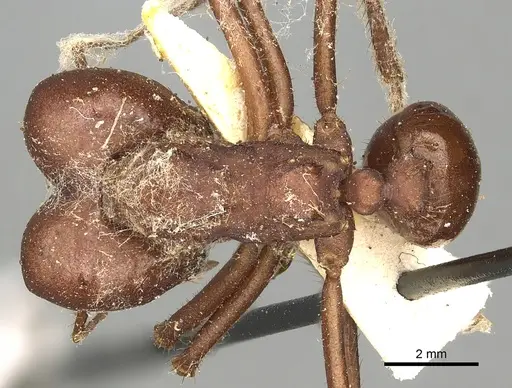
Literature
Loading...Loading products...